
Toronto · Web design
Website design in Toronto that wows, then converts
Web design in Toronto is the planning, writing, design and build of a business website that customers can use on any device. Canada Create is a Toronto web design company: our web designers bring design, content and development into one project with fees in writing.
Custom web design for Toronto and GTA businesses, from North York to downtown: WordPress, Webflow and Shopify websites that help customers understand you, enquire, book or buy.
- BBB A+ accredited
- 18 years in business
- Mon to Fri 9 to 6, Sat 10 to 2
Get a custom proposal for your web design
Send your current site and what you want the new one to do. We reply within one business day. After discovery, you receive a written proposal with scope and fees before work starts.
Please do not share passwords or other sensitive details here. We never sell your contact information and we comply with Canadian privacy law
(privacy policy).
A website built for your customers and your team
A clear reason to choose your business
Design and content that explain your offer, show relevant work and help customers decide whether to enquire, book or buy.
A considered redesign
Existing content, customer journeys and search visibility are part of the brief, with the migration work and launch checks agreed in scope.
An experience suited to your audience
Mobile usability, performance and accessibility requirements considered together and checked against the agreed project scope.
A site your team can manage
An editing experience suited to your staff, recorded handover training and clear arrangements for support after acceptance.
Discovery, pages, features and care: our Toronto web design services
Your written proposal identifies the pages, content, features and services included in the fixed project fee. Hosting, platform subscriptions and paid apps are shown separately.
- Discovery and platform choiceA recommendation based on your goals, audience, content, connected tools and the people who will run the site.
- Pages and content scopeA custom proposal for the pages and material needed to explain the business and support customer decisions.
- Custom website designDesktop and mobile designs for you to review with your branding and content before development.
- Website developmentAn agreed build on WordPress, Webflow, Shopify, WooCommerce or a custom platform, with the features your project needs.
- Copywriting and migrationAgreed pages written or refreshed for your buyers, and existing content moved where needed. AI-assisted work receives human review before your final approval.
- Search and usability readinessAgreed search, performance and accessibility requirements included in the build and launch review.
- Enquiries and connected toolsAgreed forms, booking, CRM and analytics connections, checked against the customer actions and staff needs defined for the project.
- Launch and handoverLaunch checks and recorded training. Ongoing maintenance is available separately.
What a website costs
Every website is scoped and quoted as a fixed-fee project after discovery. These project types help start the conversation; the written proposal confirms your deliverables, fees, taxes, payment milestones and ongoing costs.
Focused marketing site
Quoted in writing
Professional services and local businesses that need a small set of strong service pages, lead forms and a site their team can update.
- Discovery and agreed pages
- Custom design
- Build and search readiness
- Launch and training
Marketing site with CMS
Quoted in writing
Businesses that publish often or need blog, case study, team and service collections, CRM-connected forms and migration from an existing site.
- Core website project
- Content publishing requirements
- Agreed integrations
- Existing-content migration
Multi-location, multilingual or ecommerce
Quoted in writing
Location pages, more than one language, online stores, portals, booking systems or large content migrations.
- Agreed content and website scope
- Language, location or store needs
- Specified custom features
- Handover and support scope
SEO after launch (optional)
Quoted separately after discovery
Businesses that want ongoing search and content work after the website launches. Scope, fees and term are agreed separately.
- Agreed search priorities
- Content work
- Website monitoring
- Reporting
The main cost drivers are design and page requirements, content, features, integrations, migration, languages and locations. Hosting, subscriptions, paid apps, maintenance and advertising are separate where applicable.
Websites that do their job
Choose the right website project for your business
Most visitors decide in a few seconds whether your website looks like a business they can trust. Web design in Toronto is the planning, writing, design and development of a business website: the pages customers need, the words on them, a design that fits your brand, and the forms, booking or store behind them, built so search engines and AI answers can read it. Canada Create has designed websites since 2008, is BBB Accredited with an A+ rating and works from 126 Willowdale Ave. in North York.
Six areas of work:
- Discovery: your customers, services and what the site must do
- Site structure and page planning for search and enquiries
- Custom design for desktop and phone, to accessibility standards
- Copywriting, photography direction and content migration
- Builds on WordPress with our WordPress developer in Toronto, or online stores through ecommerce website design and development in Toronto
- Launch, hosting, training and care after go-live
Your website should make the quality of your business easy to see and the next step easy to take. Canada Create is a web design company in Toronto, and our web designers build custom websites for businesses that need clearer service enquiries, online bookings, product sales or a stronger platform for growth. As a web design agency, we bring design, content and development into one agreed project, with the scope and fixed fee set out in writing after discovery.
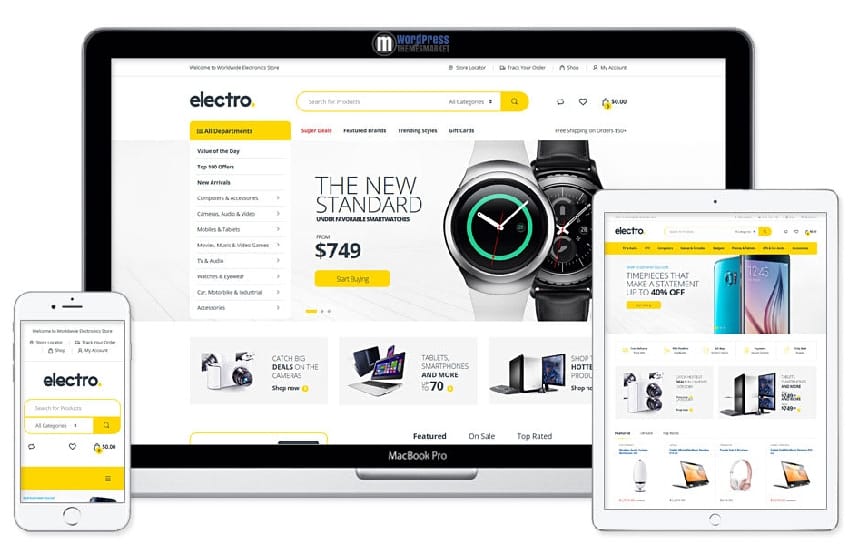
You may be launching a business, replacing an outdated site or trying to make a busy website easier to manage. We help you decide what is worth keeping, what needs to change and which investment serves the business now. A focused improvement can be the right answer when the existing site is sound. A full redesign makes sense when the brand, content and customer experience all need attention.
Canada Create was established in 2008 and is based in Toronto. We bring website design, development and marketing together for businesses across Canada. That means your website can be planned alongside the SEO, advertising and enquiry handling you need, with each service clearly scoped.
A website that fits how your business sells
A service company needs to help a prospect understand the offer and make a useful enquiry. An online store needs customers to evaluate products and complete a purchase. A growing organization may need both a persuasive public website and a better way for staff to manage its content. The project should reflect those differences.
- A focused marketing website: for businesses that need a clear introduction, useful service pages, credible examples and a straightforward way to enquire.
- A growing content-led website: for teams publishing services, case studies, articles, staff profiles or updates regularly, with an editing experience suited to the people doing the work.
- A redesign or platform move: for an established site whose brand, content, features or day-to-day management no longer fit the business. Existing customer journeys and search visibility are part of the brief.
- A store, booking website or custom application: for businesses that need transactions, availability, customer accounts or connections to other systems.
- A multi-location or multilingual website: for organizations serving different communities, with the content, responsibilities and translation requirements agreed before the build.
Tell us which customers you want to reach, what you want them to do and what is frustrating your team today. We use that conversation to recommend the right project, rather than assuming every business needs the same size of website.

Custom design that feels like your business
Your website should reflect your brand and the standard of work customers can expect. We design around your services, products and audience, with layouts you can review before development. You see how the site will present your business on desktop and phone, using your content and branding.
If you have an established identity, we work with it. If the logo, photography or messaging needs attention, we can include that work in the proposal. Bringing those decisions into the same project helps avoid a polished new website filled with outdated material.
The editing experience matters as much as the appearance. Tell us who will update prices, add projects, publish articles or change team profiles. We plan those everyday tasks into the scope and provide handover training, so your team understands the parts of the site it will manage.
Choose a platform you can live with after launch
Canada Create builds on WordPress, Webflow, Shopify, WooCommerce and custom platforms. The recommendation depends on the website you need, the tools you already use and the people responsible for running it. We explain the choice and its ongoing costs before you commit.
WordPress
A choice to consider for service websites, publishing, larger content collections and businesses that want flexibility over hosting. We agree how your team will edit the site and how maintenance will be handled. Explore WordPress development.
Webflow
A choice to consider for a design-led marketing website with a manageable publishing workload. The proposal identifies the editing requirements, platform subscription and any connected services. Explore Webflow development.
Shopify and WooCommerce
For online stores that need product information, checkout, payments, shipping and order management. Catalogue size, business rules and connections to other tools shape the build. Explore ecommerce website design.
Custom websites and applications
For portals, booking services, calculators or business requirements that call for a custom solution. We define the operating and support responsibilities alongside the features. Explore app development.
Keeping a suitable existing platform can avoid unnecessary disruption. Where changing platforms is worthwhile, the recommendation should account for the content, customer activity and staff workload affected by the move.
Content, enquiries and search belong in the same project

A visitor should leave with a clear understanding of what you offer and whether it fits their needs. Our copywriting scope can cover service explanations, company and team information, project examples and the questions that come up before a sale. Your knowledge of the business gives that content its substance.
We can research and draft the agreed pages, including AI-assisted work with human review, editorial judgement and applied expertise. You review and approve the final content before publication. Your team confirms the accuracy of business claims and the rights to photographs, testimonials and other supplied material.
Forms, online booking and CRM connections should make the website useful to the people answering enquiries, too. We agree where requests need to go, what your staff needs to receive and which connections the project includes. Testing those customer actions is part of preparing the site for launch.
Search readiness is included in the agreed website scope. Ongoing search growth is a separate service: our SEO team can continue working with you after launch. We also discuss the enquiries and actions you want to measure, so reporting is relevant to the business. Recorded activity will depend on the agreed setup, visitor consent and the information available.
A redesign that respects the website you already have
If your current website brings in customers, you have something worth preserving. Before recommending a rebuild, we discuss the pages, content and customer actions that matter today, as well as the problems the new site needs to solve.
The proposal identifies the migration work and launch checks included in your project. Important existing content, customer access and search visibility receive attention alongside the new design. We also agree the post-launch checks and responsibility for resolving issues.
A redesign can still change search performance. We plan redirects and content carry-over to reduce avoidable disruption; rankings, traffic and enquiries after launch also depend on competitors and search engine changes, which no agency controls. If continued SEO work is needed, it is discussed as its own investment.
Mobile usability, accessibility and a practical care plan
Customers need to be able to read the site, understand the offer and complete the intended task on the device they have. We design for desktop and mobile use, test the agreed features and review performance before launch. The goal is a useful experience for your audience, with requirements set for the actual website rather than a universal score promise.
If your organization has accessibility requirements, raise them at discovery. We agree the target standard, testing and any formal assessment or remediation as named deliverables. Ontario’s public website accessibility guidance helps organizations understand the requirements that may apply. Your organization and advisers remain responsible for confirming its obligations.
Hosting and maintenance also need a clear owner. We explain the available care options and what your team or provider will handle after launch. Updates, security monitoring and backups are ongoing responsibilities, not a one-time design feature. See our website hosting service for the available hosting scope.

What does your next website need to do? Send your current site, priority services and the change you want to make. We will help define a suitable project and prepare a written scope and fee after discovery.
Web hosting and website design
A new website is only as dependable as the place it runs. When web hosting and website design are planned together, the server is chosen for the site you are actually building rather than picked afterwards on price alone. A brochure site, a busy online store and a booking system with customer accounts each need different storage, memory, caching and backup arrangements, and those choices affect how fast pages load and how the site copes with a busy day.
When hosting is part of your project, we cover:
- Plan selection matched to your platform, expected traffic and the features the site uses.
- Domain, DNS and email records checked before launch so your mail keeps working when the new site goes live.
- SSL certificates so every page loads securely.
- A staging copy where changes are tested before they reach your live website.
- Backups and recovery with the frequency and storage agreed in writing.
Accounts are set up in your name where the provider allows, so you keep control of the domain and the hosting relationship. If you already have a host you are happy with, we can build for that environment and tell you clearly if anything about it would hold the new site back. Managed options are described on our website hosting page.
Website design for different buying decisions
The website needs to support the decision your customer is making. These are examples of project needs we can discuss and scope with you.
B2B and professional services
Help prospects understand complex services, evaluate your experience and bring the right people into a sales conversation. The project can include service information, team profiles, approved case studies, resources and CRM-connected enquiries.
Online stores and booking businesses
Help customers decide what to buy or book, then complete the transaction. We discuss catalogue or availability management, payment requirements, customer questions and the systems your staff uses to fulfil orders or appointments.
Law firms
Present your practice areas and lawyers clearly and support appropriate intake. Your firm reviews professional claims and advertising requirements. Explore lawyer website design.
Dental, medical and health clinics
Make services, practitioners, locations and appointment information easier to understand. Booking and enquiry requirements are agreed with the clinic, including what information is suitable to collect. Explore dental website design and medical website design.
Construction, trades and local services
Show the work you do, where you work and what a prospective customer should know before requesting a quote. Project photography and service information can help communicate the quality and fit of your business. Explore construction website design.
Real estate
Present your team, developments or property services with a site suited to the way prospects research and enquire. Listing and other third-party connections are scoped separately where needed. Explore real estate website design.
Schools, non-profits and small teams
Make important information easier to find and routine updates easier to manage. We discuss the needs of parents, donors, members or customers, alongside accessibility requirements and the time your team can devote to the site.
Redesigns and sites that fit every screen
Two common starting points have their own service pages: replacing a site that has done its job for years, and making sure a site works as well on a phone as on a desk.
Refresh, redesign or rebuild
Something usually prompts the change: a competitor launches a sharper site, a new service line has nowhere to live, or a sales rep hesitates to send the link. Naming that problem decides the size of the project, because a visual refresh, a structural redesign and a full rebuild on a new platform solve different things. Our website redesign service starts with an audit of the pages, links and enquiry paths that already work, then plans redirects so rankings and inbound links carry over. Content is sorted into what moves across, what gets rewritten and what is retired. Launch checks continue into the period after go-live, and the finished site is set up so your own team can edit it.
One layout that adapts to each screen
A visitor may find you on a phone in a parking lot, check again on a laptop at work and show a partner on a tablet that evening. Responsive web design builds one site, planned phone first, whose layout rearranges as the screen changes: three columns become one, menus fold into a single button, and photos crop to suit the shape. The details decide whether it works in practice, so tap targets are sized for thumbs, phone numbers dial with one tap, forms ask only for what is needed, and pages stay light on mobile networks. Testing happens on real phones and browsers, and a sound existing site can sometimes be fixed rather than replaced.
Interface and journey design
Apps, portals and task-heavy websites need design work that starts with what people are trying to do. That work has its own page.
Research, prototypes and interface design
Websites, apps and customer portals succeed when people can finish the task they came for and recover when something goes wrong. UX design begins with research into what customers and staff are trying to accomplish, maps those journeys and turns them into prototypes that can be tried before development starts. For an existing product, a UX audit is a useful first step, showing where people hesitate or give up. For apps, portals and dashboards, the work extends to onboarding, notifications and patterns that feel familiar on iPhone and Android. You receive interface designs and specifications ready to hand to developers, with accessibility planned into the components rather than added at the end.
What you need to bring to the project
You do not need a finished creative brief before contacting us. A useful starting point is your current website, the services or products you want to emphasize, the audience you want to reach and any business date the project needs to support.
As the scope takes shape, we ask for the brand assets and material you have, access to the relevant business accounts, the tools the site must connect to and a person who can coordinate feedback. Tell us what content is missing so we can include the right writing, photography or migration work.
You review the planned pages, design direction, content and completed website at agreed points. The written schedule includes your review dates and dependencies.
What web design costs in Toronto and what changes the fee
A small site with ready-to-use content is a different investment from a redesign with years of articles, several locations and connected business systems. We quote the agreed website project as a fixed fee after discovery, rather than presenting one price as suitable for every business.
- Design and page requirements: the different page layouts, audiences and customer tasks the site must support.
- Content and brand work: what needs writing, approval, translation, photography or migration.
- Features and connections: stores, booking, customer accounts, CRM connections and other business requirements.
- Existing website complexity: the content, functions and customer access that need to carry into the new site.
- Testing and acceptance: the agreed accessibility, device, performance and functional requirements.
- Running the website: hosting, platform subscriptions, paid apps, licences and separately purchased maintenance.
The proposal separates the build fee from recurring and third-party costs. It also states deliverables, review points and the work your team will provide. Read more about what goes into a website design quote.
If you are comparing an agency, an independent designer and a website builder, consider how much work your own team can take on. The right fit depends on the scope, the skills needed and the support available. Canada Create is a fit when you want design, content, development and marketing considerations brought together under one agreed project.
How to compare web design companies in Toronto
The selected projects on this page show different kinds of work: a service website for Trillium Specialty Pharmacy, an accommodation booking website for NAPA and an online classified marketplace for Ballroom Beauty. Use the published examples to assess the design and project fit. They illustrate delivered work rather than a promise of your future business results.
Canada Create has been in business since 2008 and is a BBB Accredited Business with an A+ rating. You can also read the Google reviews displayed on this page. When we discuss your project, ask which examples are closest to your needs, what your team will need to approve and what support will look like after acceptance. Ask the same of every Toronto web design company you compare: who designs and builds the site, what is delivered at each stage, whether the domain, hosting and site are in your name, and whether its Google reviews come from real clients. Be cautious of anyone who promises first-page rankings with a new website.
Related work is explained on its own pages: WooCommerce development and landing page design in Toronto.
Why Toronto companies hire Canada Create to design their websites
Canada Create has designed and built websites since 2008 and holds a BBB A+ rating with zero complaints. Designers, writers, developers and search staff work on the same project, so the site is planned for enquiries and search from the first wireframe rather than patched after launch. You can see delivered work in projects such as Trillium Specialty Pharmacy and NAPA’s booking website, and the reviews on this page are pulled live from Google.
Related guides: how to improve website load time, DIY website builder versus hiring a designer, and how long a custom website build takes.
Ownership, handover and support after launch
Advertising accounts, analytics properties, Google Business Profiles, domains and social media accounts are set up in your name where the platform allows, and remain yours. The finished custom work belongs to you. We provide the agreed files and access needed to operate the delivered work.
The handover includes training for your team. Ongoing maintenance, new features, content changes, SEO and advertising have their own scope. Choosing that support before launch helps your team know who to contact and what is covered.
Meetings can take place online or at our office at 126 Willowdale Ave., Suite #3, Toronto. Reach our Toronto line at (416) 273-9030 or our toll-free sales line at +1 (800) 808-9235. Call (416) 273-9030, Monday to Friday, 9 am to 6 pm, and Saturday, 10 am to 2 pm. After hours, our 24/7 AI agent answers the toll-free line, +1 (800) 808-9235, and we’ll follow up the next business morning.
Send your current website and what you want the next one to achieve. We reply within one business day. After discovery, you receive a written proposal with scope and fees before work starts.
Areas we serve outside Toronto: Mississauga, Brampton, Ottawa, Calgary, Edmonton, Vancouver, Hamilton and Windsor. See all locations.
Talk to a strategist
Ready when you are?
Request a custom proposal
Tell us your goals, budget and timeline. You get a custom proposal and a named strategist, so your next stage of growth starts now.
How a website project runs
The proposal sets the milestones, review dates and content or access needed from your team. Timing depends on the site, migration, features and approvals. You review the planned work and design before the full build, then the completed site before launch.
- Define the project Discovery
Tell us what the website needs to achieve, who it serves and what your current site or team is struggling with.
- Agree the scope Written proposal
Review the platform recommendation, deliverables, content responsibilities, fixed fee and schedule before work starts.
- Review the design Design approval
See the key pages with your brand and content on desktop and mobile, and provide feedback at the agreed review points.
- Review the website Build and content
We prepare the agreed pages and features for review. Your team confirms the business information, supplied assets and final content.
- Prepare for launch Testing and acceptance
The agreed website features, customer actions, device experience and migration requirements are checked before go-live.
- Launch and hand over Launch and training
Receive recorded training and the agreed operating access, with ongoing care available under its own scope.
Web design work for Toronto companies
Explore published website projects and the work delivered. For sector-specific services, see law firm websites, construction websites and dental websites.
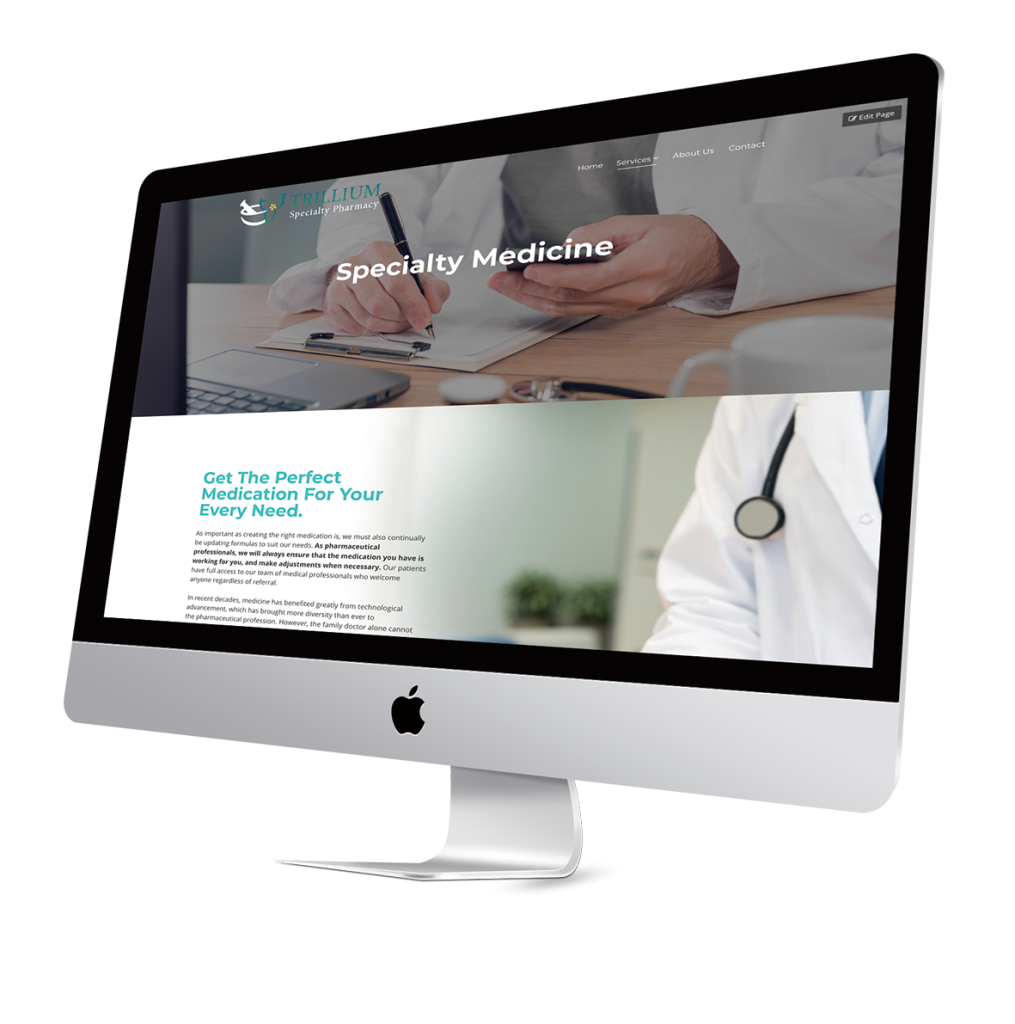
Trillium Specialty Pharmacy
Responsive website
Website design and development presenting pharmacy services with a responsive interface. View the published project and design examples.

North American Private Accommodations
NAPA booking website
Responsive accommodation website with search and online booking, supported by a refreshed brand identity.
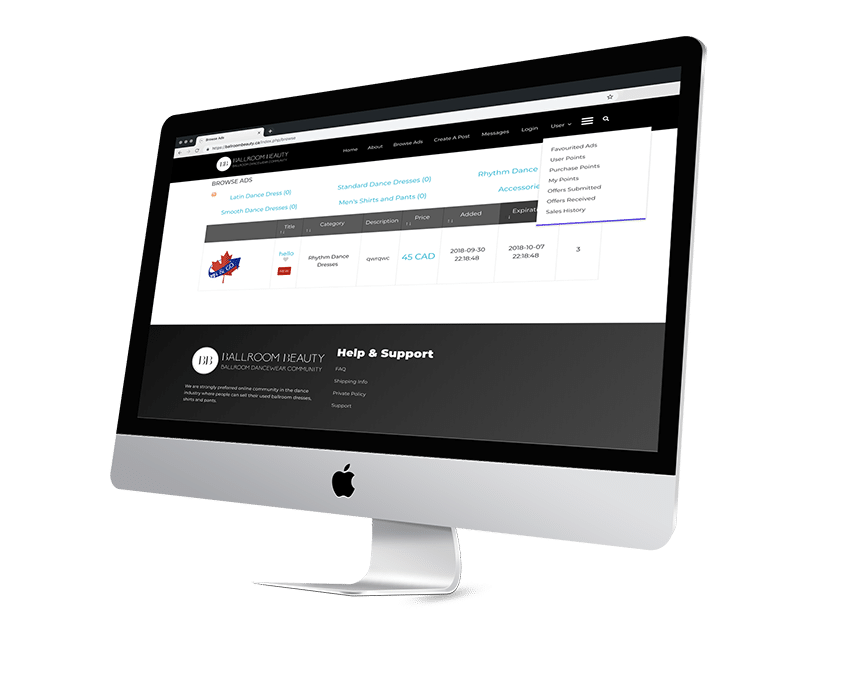
Ballroom Beauty
Online classified marketplace
Custom website with classified listings, search, buyer-seller messaging and payment functionality.
Why businesses choose Canada Create for web design
In business since 2008
Website and marketing experience serving businesses in Canada.
A choice of platforms
WordPress, Webflow, Shopify, WooCommerce and custom options considered around your business needs.
Scope and fees in writing
Understand the deliverables, project fee, review points and recurring costs before work begins.
Website and marketing together
Content, search readiness and enquiry handling considered alongside the design, with ongoing marketing available separately.
Requirements made clear
Usability, accessibility and performance requirements discussed before the build and recorded in the project scope.
Support beyond the build
Handover training, with hosting, maintenance, SEO and advertising available under their own scope.
BBB Accredited, A+ rated
A BBB Accredited Business with an A+ rating. Published projects and Google reviews help you assess the fit.
Ownership explained upfront
Accounts set up in your name, and custom work that belongs to you.
Web design in Toronto: questions buyers ask
What does web design typically cost a Toronto business?
It depends on the kind of project: a focused marketing site, a content-led site that publishes often, a redesign or platform move, a store or booking site, or a multi-location or multilingual site. Platform choice, copywriting, migration of existing content and connections to CRM or booking tools all shape the fee. Canada Create agrees the scope after discovery and quotes the fees in writing, along with the ongoing platform costs you should expect.
Does web design still pay off for Toronto companies in 2026?
It does when the project matches how the business sells. A focused improvement can be the right answer when the existing site is sound, while a full redesign makes sense when the brand, content and customer experience all need attention. We start by asking which Toronto customers you want to reach, what you want them to do and what frustrates your team today.
Are Toronto web designers being replaced by AI?
Not in the work that decides whether a site succeeds. We can research and draft agreed pages with AI-assisted work, but human review, editorial judgement and knowledge of your business give the content its substance. Your team still confirms the accuracy of business claims and the rights to photos and testimonials before anything is published.
What is the best way to build a website in 2026 for a Toronto business?
Choose the platform after you know who will run the site, not before. WordPress suits service websites and larger content collections, Webflow suits a design-led marketing site with a manageable publishing load, and Shopify or WooCommerce suits online stores, while portals and calculators may need a custom build. We explain the choice and its ongoing costs, then plan the editing tasks your Toronto team will handle into the scope.
Which of the seven C's do Toronto websites tend to miss?
The seven C's describe the parts of a site a customer touches, from context and content through to commerce. Toronto sites often look polished, which covers context, yet fall short on communication, such as forms that route to the right person, and on connection, such as links between the site, Business Profile and other channels. Testing those customer actions before launch is part of every build we do.
Can a Toronto business let an AI tool create its website?
An AI tool can produce a draft site, but someone still has to confirm the pages fit how the business sells. Forms, booking and CRM connections have to send requests to the right staff, and search readiness, migration from an old site and accessibility requirements need planning. We use AI-assisted drafting where it helps and present final content for your approval.
What does a Toronto ecommerce web design project cover?
Product information, checkout, payments, shipping and order management, built on Shopify or WooCommerce depending on your catalogue size, business rules and the tools you already use. Connections to inventory or other systems are scoped as named features. We also plan who on your Toronto team will add products and manage orders, and train them before launch.
When does a Toronto business need custom web design instead of a template?
When the site needs portals, booking, calculators or connections to other systems, or when a template cannot present your services the way customers expect. A template can be fine for a simple marketing site, and keeping a suitable existing platform can avoid disruption. We recommend the approach after discovery and put it in a written scope for your Toronto project.
How do I choose a web design company in Toronto?
Look for a company that recommends a project after hearing your goals, rather than selling every business the same size of site. Visit its office address on a map, read its live Google reviews and BBB file, and confirm in writing that your business will hold the domain and analytics. Canada Create has been based in Toronto since 2008, at 126 Willowdale Ave., Suite 3, and every Toronto proposal states its fee in writing.

Get a custom proposal for your next project
Review the offer, budget and enquiry process before committing your marketing spend.