
How to choose a web design agency in Toronto: what to check before you sign

A website is the one marketing asset every other channel depends on. Ads, search, social and referrals all end on it, and the agency you choose to build it will shape your results for years. Toronto has hundreds of web design agencies, from one-person studios to large firms, and most of them can make something attractive. The harder question is which one will build a site that brings in enquiries, stays fast and secure, and remains yours when the project ends. This guide gives Toronto business owners a way to answer that question step by step.
Want names to start with? See our shortlist of the best web design companies in Canada, checked on public reviews and record.
Decide what the site has to do before you look at portfolios
Every good web project starts with a job description for the site. A clinic needs online booking and location pages that rank. A manufacturer needs a product catalogue that sales reps can send to buyers. A restaurant group needs menus, reservations and a page per location that Google can match to a search. A B2B software company needs clear positioning, case studies and a demo request that routes into its CRM.
Write one page: who the visitors are, what they should do on the site, which pages make money, and the systems the site must connect to (booking, CRM, payments, email, inventory). Share it with every agency. The proposals you get back will tell you immediately who read it.

Portfolio: look past the screenshots
Any portfolio looks good as a gallery of home pages. Ask to see three live sites the agency built for businesses like yours, then do four things with each.
- Open it on your phone. Most Toronto visitors arrive on a phone. Check that the menu, forms and calls to action work with a thumb and that the pages load without a long blank wait.
- Search for the business. Type the business name and a service into Google. A well-built site appears for its own name and for at least some of its services. If it only appears for its name, the build was design without search in mind.
- Test a form. Fill one in and see what happens. Confirmation page, error handling and a message that says what happens next are small signs of careful work.
- Ask how old it is. A site that still looks right and loads fast two years later says more about an agency than a launch-day screenshot.
What should be in a Toronto web design proposal
A proposal is a plan, not a brochure. It should name the pages the site will have, the content each needs and who writes it, the platform and why it fits, how search is built in from the start, how the site will measure enquiries, and what happens after launch. The sections below are the ones that matter most.
Platform and ownership
WordPress, Shopify, Webflow and custom builds each suit different businesses. The platform is less important than the terms: you should own the domain, the hosting account, the site files and every account connected to it. Ask the question plainly: who owns the accounts? The only acceptable answer is you.
Content
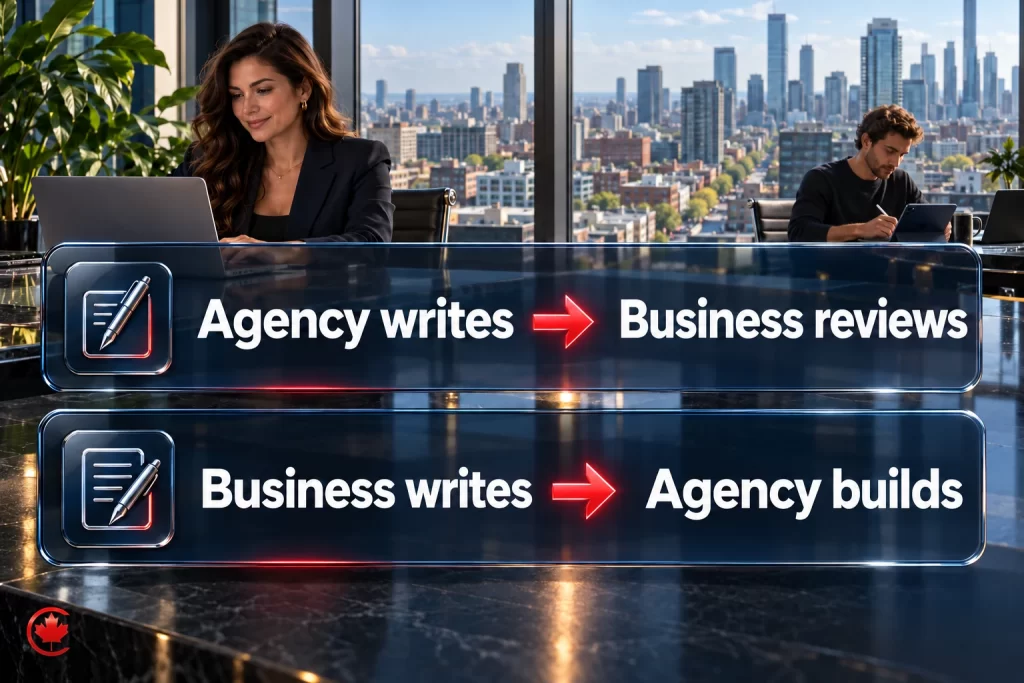
Most late and over-budget web projects stall on content. Ask who writes the pages, how industry regulations are handled (clinics, law firms, financial services and real estate all have advertising rules), whether the writing is in Canadian English, and how photos will be sourced. An agency that expects you to supply all the copy should say so on day one.
Search built in
Page structure, headings, internal links, speed, structured data and the plan for ranking should be part of the design, not an add-on quoted after launch. Ask how the agency decides which pages to build and which searches each page targets.
Measurement
Calls, forms, bookings and chats should be tracked from launch day, with a simple monthly view of where enquiries came from. If the proposal does not mention analytics and conversion tracking, ask.
After launch
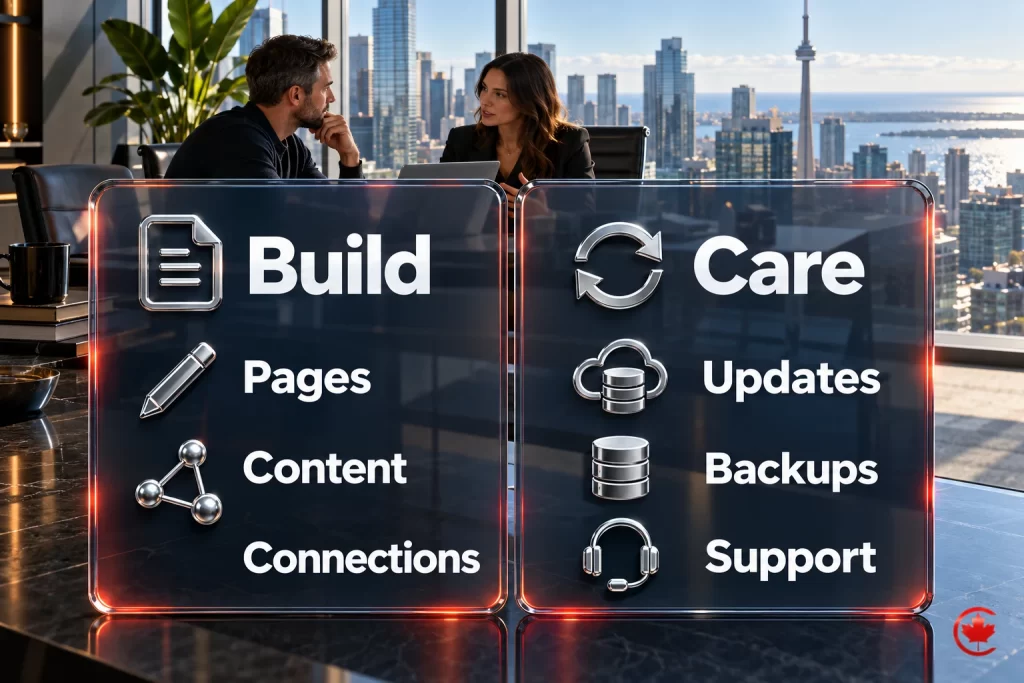
Updates, security, backups, uptime and small changes need a home. Ask what the agency offers, what it costs and what the response time is. Ask what happens if you prefer to handle maintenance yourself or with another provider.
Questions that reveal how an agency really works
- Who will I speak to during the project, and who actually designs and builds?
- How many rounds of design revisions are included, and how are extra requests handled?
- Will the site be built on a theme, a page builder or custom code, and what does that mean for speed and future changes?
- How do you make the site accessible? Ontario’s accessibility law applies to many organizations, and building to WCAG from the start is cheaper than fixing it later.
- Can you show me a site you built that loads fast on a phone, and the numbers to prove it?
- What do you need from us, and by when, for the project to stay on schedule?
- Can I speak to a client whose site has been live for more than a year?
We design and build fast, accessible websites for Canadian businesses, with SEO built in from day one.
Warning signs
- A quote without a discovery conversation. A price given before anyone has asked about your business is a price for a template.
- Design mockups before a sitemap. Pretty pages designed before the structure is agreed usually get rebuilt.
- Stock everything. Stock photos, placeholder copy and generic icons make a Toronto business look like every other business. Ask what will be real.
- No talk of speed. Slow sites lose visitors and rankings. If performance never comes up, it will not be in the build.
- Accounts in the agency’s name. Hosting, domain or analytics registered to the agency is a problem waiting to happen.
Comparing proposals
Score each proposal on the same lines: understanding of the job the site has to do, the page plan, the content plan, search and measurement built in, ownership, the people on the project, and after-launch care. Fees matter, but compare what is included before comparing totals, and ask each agency to quote the work in writing after a discovery conversation so the scope is yours and not a template’s.
A realistic timeline
A well-run small business site takes roughly eight to twelve weeks from kickoff to launch: discovery and sitemap in the first two weeks, design in weeks three to five, content and build in weeks five to nine, review, testing and launch after that. Larger sites with ecommerce, bookings or integrations take longer. Most delays come from content and approvals on the client side, so ask the agency what it needs from you and when.

The same checks apply when you hire outside Toronto; our page on Calgary web design and website development shows how they apply to an Alberta business.
How Canada Create builds websites in Toronto
Canada Create has designed and built websites for Toronto and Canadian businesses since 2008, with search, measurement and maintenance planned from the first conversation rather than added afterwards. Every project begins with discovery and a written custom proposal, every account stays in the client’s name, and the same team that builds the site can run the search and advertising that send visitors to it. If you are comparing agencies, we are glad to be one of the proposals. See our web design services in Toronto, ecommerce website design and website hosting and care.
Frequently asked questions
What is the most useful test when choosing the right web design agency?
Ask for three live sites the agency built for businesses like yours, then test them yourself. Open each one on your phone, search Google for the business and one of its services, and fill in a form to see what happens next. Ask how old each site is, since one that still loads fast years later says more than a launch-day screenshot. The results tell you more than any gallery of home pages.
What is the typical cost of designing a website in Toronto made up of?
Website cost follows the number of pages, who writes the content, the platform and the systems the site must connect to, such as booking, CRM, payments or inventory. Ecommerce and integrations add the most work. Line up the inclusions side by side before looking at the bottom line. Ask each agency to quote in writing after a discovery conversation so the scope reflects your business.
Why is a website design price given before any discovery a warning sign?
A price offered before anyone has asked about your business is usually a price for a template. Mockups drawn before the sitemap is agreed tend to get rebuilt. Stock photos, placeholder copy and generic icons often come with the same approach. Ask what will be real on your site before you compare Toronto website design prices.
What does a web design agency deliver besides the visual design?
A full proposal names the pages, the content each needs and who writes it, the platform and why it fits, and how search is built in. It also explains how calls, forms, bookings and chats will be tracked from launch day. After-launch care, including updates, security, backups and uptime, should be covered too. If any of these are missing, ask before you sign.
What web design agency costs continue after the site launches?
Updates, security, backups, uptime monitoring and small changes all need someone responsible after launch. Ask what the agency offers for this care, what it costs and how fast it responds. Also ask what happens if you would rather handle maintenance yourself or with another provider. These answers belong in the proposal, not in a later invoice.
Does a business website in Canada need to meet accessibility standards?
Ontario's accessibility law applies to many organizations, and other provinces have their own rules. Building to WCAG from the start costs less than fixing an inaccessible site later. Ask every web design agency how it makes sites accessible and how it tests them. Check the current requirements for your organization with the province before launch.
Does it matter whether web design services build on WordPress, Shopify or Webflow?
Each platform suits different businesses, and custom builds suit others. Ownership matters more than the platform: you should own the domain, the hosting account, the site files and every connected account. Ask too whether the site will use a theme, a page builder or custom code, since that affects speed and future changes. The only acceptable answer to who owns the accounts is you.
How long does a web design company usually need to build a small business site?
A well-run small business site takes roughly eight to twelve weeks from kickoff to launch. Sites with ecommerce, bookings or integrations take longer. Most delays come from content and approvals on the client side. Ask the agency exactly what it needs from you and by when.
Should a web design and development agency build SEO into the site from the start?
Yes, because page structure, headings, internal links, speed and structured data are set during the build. Search added after launch usually means rework. Ask how the agency decides which pages to build and which searches each page targets. Canada Create plans search, measurement and maintenance from the first conversation on every website project.