
Toronto · Graphic design company
Graphic design company in Toronto for print and digital
Graphic design services for businesses across Canada: logos, marketing design, print, packaging, signage, social graphics and presentations, quoted in writing with files you own.
Graphic design for Toronto and GTA businesses, from North York to downtown: print, digital, packaging, signage and brand assets.
- BBB A+ accredited
- 18 years in business
- Mon to Fri 9 to 6, Sat 10 to 2
Get a graphic design quote
Tell us what you need designed, where it will be used and your deadline. A designer replies within one business day.
Please do not share passwords or other sensitive details here. We never sell your contact information and we comply with Canadian privacy law
(privacy policy).
What good design should do for your business
Look established
One consistent brand across every format buyers see.
Get noticed
Marketing design that stops the scroll and points to one action.
Explain faster
Clear layouts and infographics people understand at a glance.
Save time
Templates and style guides your team can reuse.
What our graphic design covers
Scoped in writing after a short brief.
- Logo and brand assetsMarks, colour, type and file sets for every use.
- Print designBrochures, flyers, posters, cards, menus and reports.
- Digital and social graphicsPosts, stories, banners and email graphics sized per platform.
- Marketing designAd creative, landing visuals and campaign material in every size.
- Packaging and labelsBoxes, labels and inserts matched to your dielines.
- Signage and large formatSigns, wraps, banners and trade show booths.
- Presentations and sales materialDecks, proposals and sell sheets your team can edit.
- Infographics and illustrationData, processes and ideas made visual.
Graphic design pricing
Projects and ongoing design, each priced in writing.
Single project
Quoted in writing
A poster, flyer, brochure, sign, deck or ad set.
- Written brief
- Design and agreed revision rounds
- Print or web files
- Source files
Campaign or launch set
Quoted in writing
Matching print and digital design for a launch, event or campaign.
- Concept directions
- Ad sizes and social formats
- Print pieces
- Style notes for the set
Ongoing design
Quoted in writing
A steady monthly flow of social, ad and sales material.
- Monthly design plan
- Social and ad creative
- Editable templates
Every project is quoted in writing after the brief. Cost depends on scope, concept work, content, revision rounds, production, licensed assets and timeline. Printing, licences and ad spend are listed separately.
Brief, concept, refine, deliver
How we design work that performs
Graphic design services in Toronto that work as hard as they look
Make your business easier to understand, trust and choose, everywhere your brand appears. Graphic design in Toronto is the planning and production of the logos, print pieces, digital and social graphics, packaging, signage and presentations that carry your brand, each built for the place it will be seen. Canada Create is a graphic design company that has worked from its Toronto office at 126 Willowdale Ave., Suite #3, in North York, since 2008, and is a BBB Accredited Business with an A+ rating.
Our graphic design services cover six areas of work, and your quote names the ones you need:
- Logos and brand assets: marks, colour palettes, type and simple brand guides.
- Print design: brochures, flyers, posters, business cards and catalogues, prepared for the printer.
- Digital and social design: ad creative, social graphics, and email and website graphics.
- Packaging and signage: labels, boxes, dielines, storefront and trade show graphics.
- Presentations and infographics: decks and data graphics that explain an idea quickly.
- Templates and files: editable templates and source files your business owns.
We design every piece around the job it has to do and produce it to one consistent standard, so your brand looks like the same company everywhere it appears.
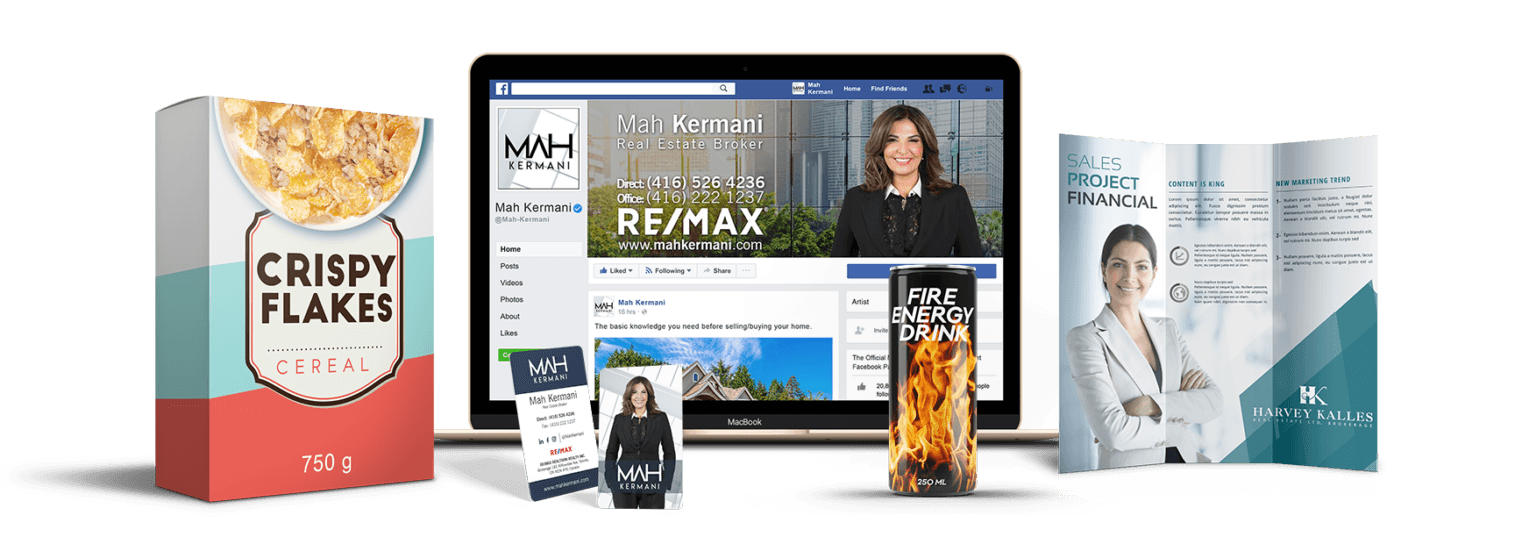
Our designers have worked beside our SEO, advertising and web teams since 2008, from our office at 126 Willowdale Ave., Suite #3, Toronto. That combination is the main reason businesses choose a full graphic design company over a one-off supplier: we design ads knowing how they will be targeted, social graphics knowing how each platform crops them and print knowing how it will be produced. The work is judged by what it does for your business, and it is built to perform as well as it looks.
What graphic design services include
Most businesses need design in many formats at the same time. A logo has to work on a website and on the side of a van. A brochure has to match the trade show booth. Social posts have to feel like they came from the same company as the proposal deck. We handle print and digital design in one studio, so style, colour and typography stay consistent from one piece to the next. These are the graphic design services we provide most often.
Logo design and brand assets
A logo is the mark people remember, and it has to hold up at every size, from a browser tab to a sign above your door. We design logos around a clear idea, test them in one colour and in reverse, and deliver the full file set: vector originals, web versions and print versions. When a business needs a complete identity with positioning, a full visual system and a detailed brand guide, our branding agency team leads that work, and this page covers the everyday design that follows.
Print design
Brochures, flyers, business cards, rack cards, postcards, posters, menus, catalogues, annual reports and direct mail. Print has its own rules: bleed, safe zones, colour profiles, paper stock, folds and finishes. We prepare every file to your printer’s specifications and check the production proof, because paper, ink and screens reproduce colour differently. If you already have a printer, we send files in the format they ask for. If you do not, we can manage production through our signs and printing service so design and output stay with one team.
Digital and social media graphics
Social posts, stories, carousels, cover images, email headers, website banners and blog graphics each have their own dimensions and their own attention span. We design one-off pieces and reusable templates sized for each platform, with text that stays readable on a phone. For businesses that post often, we build a library of editable templates in your brand, so your team can produce consistent posts between design projects without breaking the look.
Marketing design and ad creative
Marketing design is design with a measurable job: display ads, social ads, landing page visuals, promotional posters, email campaigns, lead magnets and seasonal offers. Each piece has to stop someone, say one thing clearly and point to one action, inside the size and text rules of each platform. Because our advertising team manages Google Ads and social campaigns every day, our designers build ad sets in every size a campaign needs and prepare fresh variations before an audience grows tired of the same image. Campaign design also covers the pieces around the ad: the landing page, the email header, the in-store poster and the post that announces the offer. When they share one look and one message, people who meet the offer in several places recognize it faster.
Packaging and label design
On a shelf, packaging has a few seconds to explain what the product is and why it is worth picking up. We design boxes, labels, bags, sleeves and inserts with the practical details handled: dielines from your manufacturer, required text, barcodes and room for the English and French wording that many consumer products sold in Canada carry. You supply the approved wording, and we make sure it fits the layout without crowding the design. The goal is packaging that looks right in an online product photo and in a store aisle.
Packaging design also has to survive production. We check the dieline against the real structure, keep text and barcodes clear of folds, glue flaps and trim lines, and set colours for the printing method your manufacturer uses, whether digital, offset or flexographic. Labels for jars, bottles and pouches need to wrap without distorting the logo, and small items need type that stays readable at the printed size. When a product range grows, we build a shared layout system where only the colour, flavour or variant panel changes, so new items can be added quickly and still look like one family on the shelf.
Signage, trade show and large format
Storefront signs, window graphics, vehicle wraps, pop-up banners, wayfinding and booth backdrops are read from a distance, often by someone walking or driving past. That changes the design: fewer words, larger type and stronger contrast. We design large format pieces at the correct scale and resolution and coordinate specifications with the sign company or with our own production team.
Presentations, proposals and sales material
A sales deck or proposal is often the last thing a buyer reads before deciding. We design presentation templates in PowerPoint, Keynote or Google Slides, proposal layouts, one-page sell sheets, case study templates and investor pitch decks. Your team keeps editing these files long after the project ends, so we build them with master slides and set styles that are easy to update without breaking the layout.
Infographics, illustration and diagrams
Some information is easier to understand as a picture: a process, a comparison, a timeline or a set of numbers. We turn data and explanations into infographics, diagrams, icon sets and custom illustrations for reports, websites, social posts and training material, using only the figures you supply or that come from sources you approve.
Web graphics, motion and merchandise
Design often continues into other formats. Website graphics, icons and page layouts connect with our web design team, so a new look carries straight into your site. Animated logos, social videos and animated ads are handled by our motion graphics designers from the same brand files. We also prepare artwork for uniforms, apparel, promotional products, report and ebook covers, and event material, sized and set up to each supplier’s requirements.
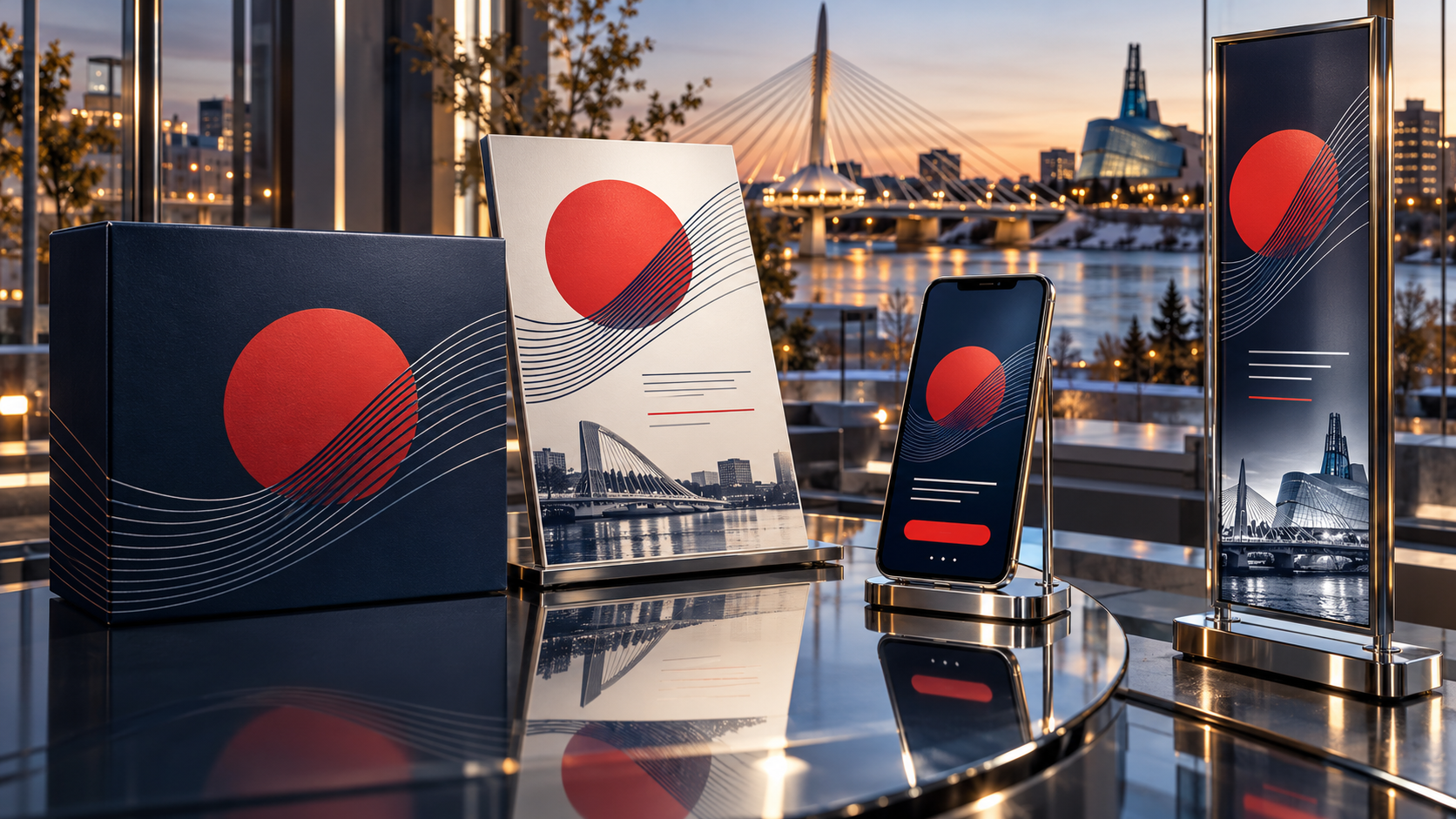

The main types of graphic design
People often ask how many types of graphic design there are. Design schools and industry writers group the field in different ways, and lists of seven or eight types are common. The categories below are the ones most businesses will recognize, and knowing them helps you brief a designer and compare quotes on equal terms.
- Visual identity design: logos, colour palettes, typography and the rules that tie a brand together.
- Marketing and advertising design: ads, social graphics, email campaigns, posters and promotional material.
- Publication design: brochures, catalogues, reports, magazines, books and menus.
- Packaging design: boxes, labels, bags and everything a product ships or sells in.
- Environmental design: signage, wayfinding, window graphics, murals and trade show booths.
- User interface design: the visual layer of websites and apps, from buttons to page layouts.
- Motion design: animated logos, explainer videos, animated ads and social video.
- Illustration for business: custom drawings, icons, infographics and product illustration.
Most small and mid-sized businesses need four or five of these at once. That is why a single studio covering print and digital design usually produces a more consistent result than several separate suppliers who never see each other’s work.
Why consistent print and digital design matters
Buyers form an opinion about a company before they speak to anyone there. They see a website, a sign, an ad or a business card and decide whether the business looks established. When every piece looks like it came from a different company, that judgement gets harder. When the design is consistent, each piece reinforces the last one and the brand becomes easier to recognize.
Consistency also saves money. A defined set of colours, fonts, layouts and templates means new material is faster to produce, suppliers make fewer mistakes and staff stop reinventing the look for every flyer. The style guide we deliver with larger projects exists for exactly this reason: it keeps the design working after we hand it over.
Good design supports your marketing too. A clear ad image gives people a reason to click. A landing page with a strong visual hierarchy makes the form easier to find and finish. A package that explains itself is easier to pick up. Because Canada Create also runs SEO, advertising, web design and lead generation, our designers see how their work behaves in live campaigns and adjust the next round with that information.
Presentation design
Presentation design turns the material your team already has into slides a room can follow. Most decks struggle for simple reasons: too much text on each slide, charts that are hard to read from the back of a meeting room, and a different look every time someone builds a new version. We start with what the presentation has to achieve, whether that is a sales meeting, an investor pitch, staff training or a conference talk, and shape the slide order around that goal before any design work begins.
The work usually covers:
- Master templates in PowerPoint, Keynote or Google Slides with title, section, content, chart and closing layouts set up properly.
- Redesigns of existing decks that keep your content and give each slide one clear idea.
- Charts, diagrams and icons drawn in your brand colours and readable on a projector or a shared screen.
- A version for email, because a deck sent after a meeting has to make sense without anyone presenting it.
Every file is built so your staff can add slides and update figures without breaking the layout. If the deck supports a proposal or a sales process, we match it to your sell sheets and proposal templates, so a buyer sees one consistent company from the first meeting to the final decision.
Infographic design
Infographic design helps when an idea has more steps, comparisons or numbers than a paragraph can carry comfortably. A good infographic gives the reader one main point at a glance and the detail on a closer look. We plan the story first: what the reader should understand, which figures support it and what order makes sense. Then we design the layout, charts and icons around that structure rather than decorating a list of facts.
Common uses include:
- Process and timeline graphics that explain how a service works from first call to finished job.
- Comparison charts for options, plans or product features.
- Annual report and impact graphics for nonprofits and associations.
- Social and blog graphics that summarize a longer article.
- Training and safety diagrams for staff and job sites.
We use only the numbers you supply or that come from sources you approve, and we label every chart clearly so it cannot be misread. Each infographic is delivered in sizes for print, web pages and social media, with editable source files and a text version for your website, so people using screen readers get the same information.
How our graphic design company runs a project
Every project follows the same path, whether it is a single poster or a full set of launch materials. The steps keep the work focused, keep feedback organized and keep the deadline realistic.
1. Brief and discovery
We start with a conversation about what the piece has to do, who will see it, where it will appear and what it must include. We ask for anything you already have: logo files, brand guides, photos, copy, examples you like and examples you do not. The result is a short written brief that we both approve before design starts. Most revision problems come from an unclear brief, so we treat this step seriously.
2. Research and direction
Before designing anything, we look at your competitors and your category so your work stands apart instead of blending in. For larger projects we explore several directions and present them as rough concepts, each with a short explanation of the thinking behind it. You choose the direction to develop, which avoids polishing an idea that was never the right one.
3. Design and refinement
We develop the chosen direction into finished designs and share them for review. Feedback is collected in one consolidated round at a time, so comments from different people in your company do not contradict each other. The number of revision rounds is set in writing at the start, and we tell you in advance if a request would go beyond it.
4. Proofing and production files
Once the design is approved, we check spelling, contact details, colours and sizes, then prepare final files for their destination: print-ready PDFs with bleed and crop marks, web-optimized images, editable templates or packaging files matched to the manufacturer’s dieline. For print jobs we recommend a physical proof before the full run, because paper and ink never look exactly like a screen.
5. Delivery and handover
You receive the final files in an organized folder with clear names, together with the source files for the work you paid for. Larger projects include a short style guide. If your team or another supplier will use the files, we walk them through what is in the folder and how to use it.
File formats, ownership and licensing
Design files are only useful if you can use them. We deliver vector files (AI, EPS, SVG or PDF) for logos and anything that needs to scale, high-resolution files for print, and PNG, JPG or WebP files sized for websites and social media. Colours are specified for print (CMYK and, where needed, Pantone) and for screens (RGB and HEX), so each supplier has a consistent reference. Material, ink, lighting and display differences still need proofing.
Third-party fonts, stock and pre-existing tools retain their licences. Font permissions vary by foundry and use, including desktop, web and app use. Stock licences also differ: an extended licence may cover some resale uses but does not automatically allow use in a logo or trademark. We check the intended use, document licensed assets in the handover and create original artwork where required. We never reuse a client’s custom work for anyone else.
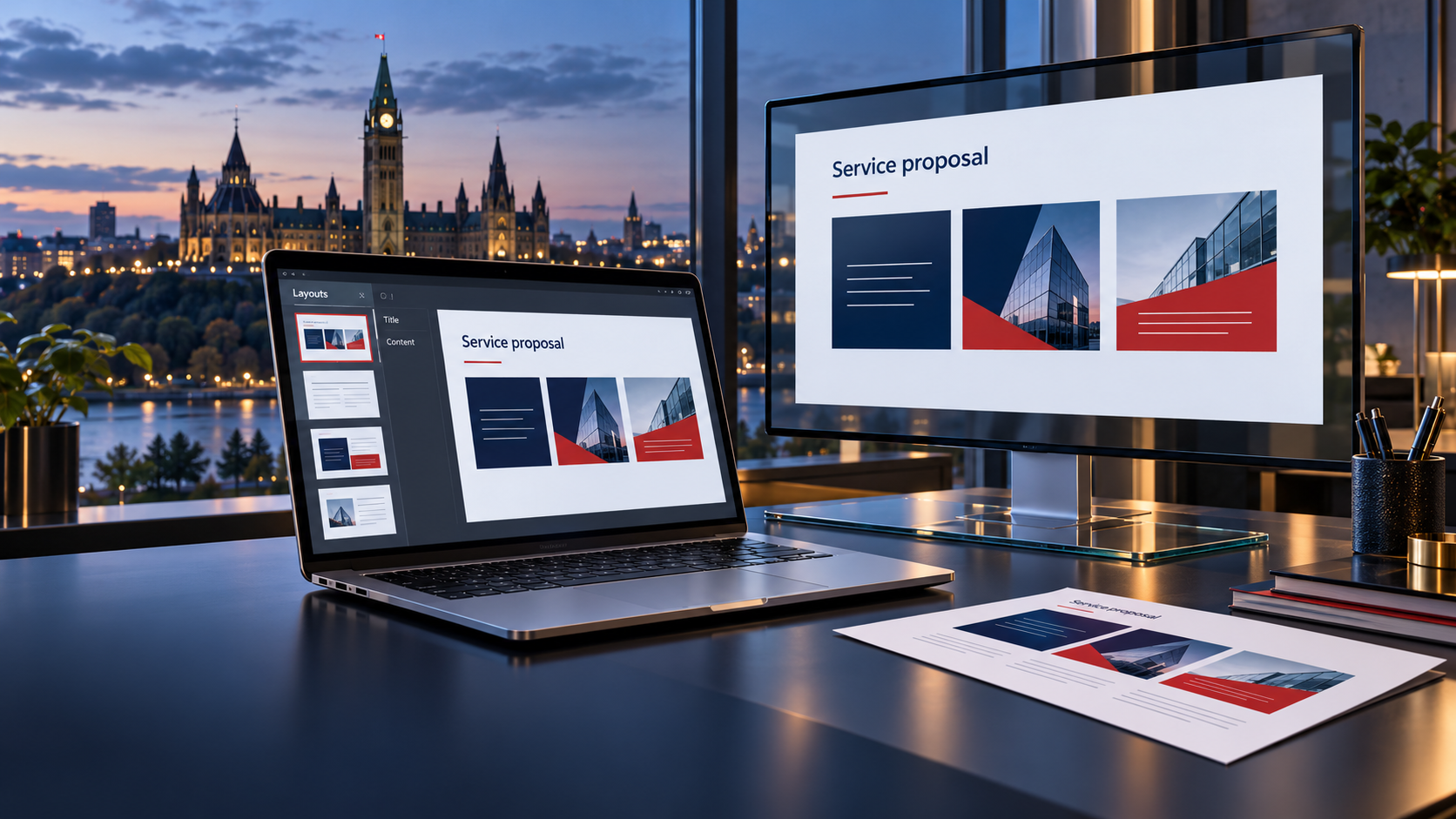
What graphic design costs in Toronto and what changes the fee
Cost is the question we hear most, and the honest answer is that it depends on scope. Two projects with the same name can be very different jobs. A poster for a single event and a poster series for a national campaign are both called poster design, yet one needs a single layout and the other needs a system that adapts to many sizes and print runs. That is why we quote every project in writing after the brief instead of publishing a price list. The main cost drivers are:
- Scope: how many pieces, sizes and formats are needed.
- Concept work: whether we are creating a new direction or working inside an existing brand guide.
- Content: whether copy, photography or illustration must be created or is supplied.
- Revisions: the number of review rounds agreed at the start.
- Production: print preparation, packaging dielines, templates and versions for different markets.
- Licensed assets: fonts, stock photos or illustrations that carry their own licence costs.
- Timeline: rush work that has to move ahead of scheduled projects.
What a poster costs. A poster shows how these drivers work. A poster that uses your existing brand, supplied text and supplied photos is a small job. A poster that needs a new concept, custom illustration, several sizes and coordination with a printer is a larger one. Printing is a separate cost from design and depends on size, paper, quantity and finish.
How designers charge. Across the market, designers charge in three main ways: by the hour, by the project or through a monthly retainer or subscription. Hourly billing can be hard to budget because the total is unknown until the work is done. We quote by the project for one-off work and by the month for ongoing design, so you know the fee before anything starts. Ongoing design covers a steady flow of material, such as monthly social graphics, ad creative or sales collateral, with a written list of what is included.
What sits outside the design fee. Printing, sign fabrication, stock asset licences and advertising spend are separate from design. We show each one on its own line, so you can see what you pay us and what goes to printers, platforms or licence holders. If you are also investing in search, we scope SEO after discovery and can include design support for those campaigns in the same proposal.
Freelancer, marketplace, subscription or design company
Businesses shopping for graphic design services will see marketplaces, freelancer portfolios, design contests, subscription studios and agencies in the same search results. Each model can work. The right choice depends on how much design you need, how much managing you want to do and how closely the design has to connect to your marketing.
| Option | Works well for | Watch for |
|---|---|---|
| Freelance marketplace | Small, clearly defined tasks with a fixed brief | Quality varies widely, and you manage the brief, feedback and file checks yourself |
| Independent freelancer | A trusted designer with a steady style | Availability during busy periods and a narrower range of formats |
| Design contest site | Seeing many rough ideas quickly | Little research behind entries, and originality and ownership checks fall to you |
| Design subscription | A high volume of routine requests | Queue-based turnaround and less strategy behind each piece |
| In-house designer | Constant daily design needs | Salary, software and training costs, and one person’s range of skills |
| Full-service design company | Design that must connect to ads, web, SEO and print | Make sure scope, revision rounds and file ownership are in writing |
Canada Create sits in the last group. You get one team for print and digital design, one point of contact and a direct line to the people running your campaigns and website. For many businesses the deciding factor is accountability: the same team can trace an issue across creative, campaign setup and production, then agree the corrective work instead of passing you between suppliers.
Is professional graphic design still worth it in 2026?
Design tools have changed quickly. Template platforms and AI image generators let anyone produce a social post or a draft logo in minutes, and that is useful for quick internal work. The question for a business is different: what does the design have to achieve, and what happens if it looks like everyone else’s?
Templates and AI tools can be useful, but the output still needs professional review. Check the spelling, visual details, consistency, production resolution and editing options. Some tools produce vectors and layered files; others deliver flat images. Ownership and permissions depend on the source material, human contribution and applicable terms, which matters when artwork will become a logo, packaging or a reusable brand asset.
Professional design brings a clear brief, creative judgement, consistency across formats and production-ready delivery. Our team can use AI for research, concepts, imagery and production tasks where it helps, then review and refine the work before presenting it for your approval. The value is the decisions and applied expertise behind the finished design, whether the workflow uses traditional tools, AI or both.
Working with our design team
Most projects run entirely online, with briefs, reviews and approvals handled by video call and shared proofs, which is how we work with clients across Canada. Clients near the office are welcome to meet in person, bring printed samples or review physical proofs with us.
You work with the same team from brief to handover. Feedback goes to the designers doing the work, and you always know who is responsible for your project. Canada Create has been designing and marketing for businesses since 2008 and is a BBB Accredited Business with an A+ rating. Call (416) 273-9030, Monday to Friday, 9 am to 6 pm, and Saturday, 10 am to 2 pm. After hours, our 24/7 AI agent answers the toll-free line, +1 (800) 808-9235, and we’ll follow up the next business morning.
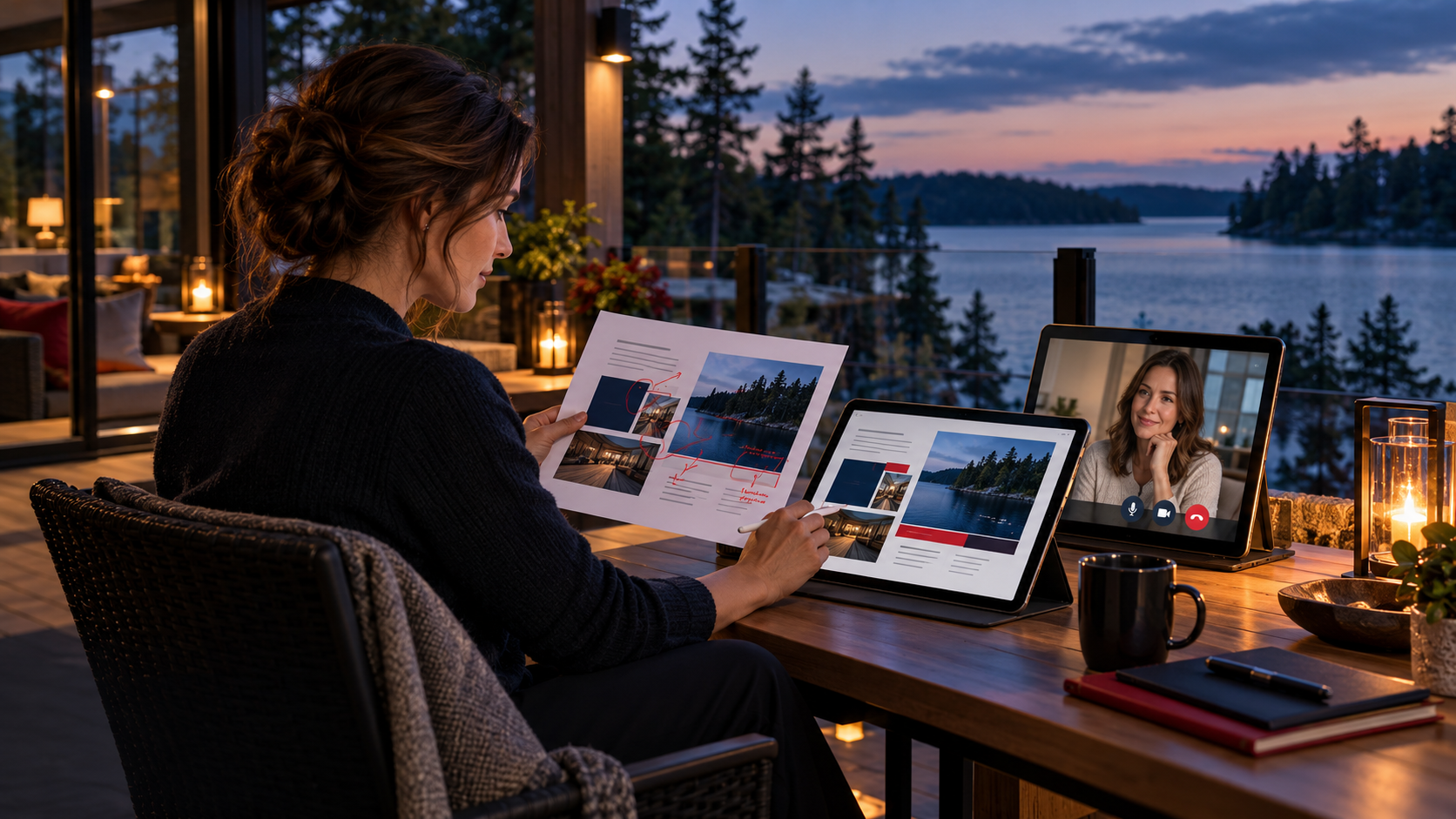
What we need from you to get started
You do not need a finished brief to contact us. A short description of the project, your deadline and any existing brand files is enough for the first conversation. If you have examples of design you admire, even from other fields, bring them along. They show us your taste faster than any written description.
Refreshing an existing brand
Not every business needs a new logo. Often the better choice is a refresh: tidying the existing mark, updating the typeface, tightening the colour palette and fixing the inconsistent materials that have built up over the years. A refresh keeps the recognition you have already earned while making the brand look current. We will tell you plainly which option fits your situation.
Accessible design and layouts for more than one language
Readable design helps more people use your material. We check contrast, type size, spacing and layout in the intended formats. For digital work, important information should be available as real text or an appropriate text alternative; complex charts may need a fuller explanation. Screen-reader reading order and document structure are tested in the agreed output, because visual layout alone does not make a PDF or page accessible. Tell us about your accessibility requirements at the brief stage so they inform the design and testing scope.
Many Canadian businesses publish material in English and French, and some serve customers in other languages too. Translated text often runs longer than the original, so a layout designed for one language can break in another. We plan layouts with room for longer copy and keep both versions balanced on packaging, signs and forms. Translation itself should come from a qualified translator you choose; we set the supplied text and check that nothing is lost in the layout.
How to compare graphic design companies in Toronto
A few questions will tell you a lot about a designer or studio before you decide:
- Do they ask about your goals first? A designer who jumps straight to colours and fonts without asking who the work is for is guessing.
- Can they show relevant work? Look for examples in the formats you need, such as packaging, signage or presentation decks, not only attractive logos.
- Is the scope in writing? Deliverables, file formats, revision rounds and the deadline should all be agreed before work starts.
- Who owns the files? Confirm that you receive the source files and own the final designs once the project is paid.
- Can they handle production? Designs that a printer or sign company cannot produce cost time and money to fix.
- Will they be around next year? Brands need updates, new pieces and quick fixes. A studio with a long track record is easier to rely on than a contact who may move on.
- Who does the design work? Ask whether the designer you meet is the one who designs your pieces.
- What do real clients say? Read the studio’s Google reviews before you decide.
We welcome these questions and answer them in writing in every quote.
Common design mistakes we fix
Many projects start with a problem rather than a blank page. Logos supplied only as small, blurry JPGs that cannot be printed on a sign. Brochures designed in RGB that print dull and muddy. Social templates with text too small to read on a phone. Three slightly different shades of the brand colour across the website, the business cards and the trucks. A trade show banner with a paragraph nobody will read from the aisle. Each of these is fixable, and fixing them is often the fastest way to make a business look more established without starting over.
Turnaround times
Timelines depend on scope and on how quickly feedback comes back. As a guide, a single poster or a set of social graphics usually takes days rather than weeks, while a launch set, packaging or a new logo takes several weeks to allow for concepts, refinement and proofing. Packaging also depends on the manufacturer’s schedule. We confirm the timeline in the quote and flag early if anything puts it at risk.
Design for clinics, trades, retail and B2B firms
Design has to speak to the right audience. The approach that suits a restaurant would look out of place on a law firm’s proposal. These are the kinds of businesses we design for most often.
Professional services
Lawyers, accountants, consultants and financial advisors need design that signals trust and competence: clean identities, clear proposals, polished presentation decks and business cards that feel substantial.
Healthcare and clinics
Dental offices, physiotherapy and chiropractic clinics, medical spas and specialists need calm, clear design for signage, patient forms, brochures and social posts, with information that is easy to read. Clinics should confirm that each piece follows the advertising rules of their regulatory body before it is published.
Home services and trades
Contractors, HVAC, plumbing, roofing and lawn care companies need design that works on vehicles, lawn signs, door hangers, uniforms and quote sheets, where the name and phone number must be readable at a glance.
Restaurants, retail and consumer products
Menus, packaging, labels, window graphics, promotional posters and social content that make people want to walk in, order or pick the product off the shelf.
Technology and B2B companies
Software, manufacturing and industrial firms need pitch decks, product sheets, trade show booths, infographics and diagrams that make complex offers easy to understand.
Related guides: what branding is and why it matters, Canva alternatives for design work, and ways to deal with creative block.
Start your graphic design project
Tell us what you need designed, when you need it and where it will be used. Request your custom proposal: use the form on this page. Call (416) 273-9030, Monday to Friday, 9 am to 6 pm, and Saturday, 10 am to 2 pm. After hours, our 24/7 AI agent answers the toll-free line, +1 (800) 808-9235, and we’ll follow up the next business morning.
Talk to a strategist
Ready when you are?
Request a custom proposal
Tell us your goals, budget and timeline. You get a custom proposal and a named strategist, so your next stage of growth starts now.
How a graphic design project runs
A written brief first, then concepts, refinement and organized files. The sample timing below is confirmed for your project in the quote.
- Brief Day 1
Goals, audience, formats and deadline.
- Research Week 1
Your category and competitors.
- Concepts Week 1 to 2
Directions to choose from.
- Refinement Agreed rounds
Feedback in organized rounds.
- Proofing Before delivery
Text, colours and sizes checked.
- Handover Final
Print, web and source files.
One team for graphic design, ads and web, with your approval first
One accountable team
SEO, ads, website and intake run together.
Design and marketing together
Designers work beside ads and web teams.
Your approval first
Nothing published without your review.
Free consultation
Start with a free consultation and a custom proposal.
Graphic design Toronto: questions buyers ask
Which graphic design services can a Toronto business order?
The usual range covers logos and brand assets, print design such as brochures, menus and reports, social and digital graphics, ad creative, packaging and labels, signage and large format, presentations, and infographics. Most businesses need several of these at once, which is why we handle print and digital in one studio. That keeps colour, type and style the same from a van wrap to a pitch deck.
How are graphic design services priced for a business?
Price depends on scope, concept work, how much content you supply, revision rounds, production needs, licensed assets and the deadline. A single poster or ad set is quoted as a project, while a steady flow of social and sales material can be quoted monthly. Printing, licences and ad spend are listed separately. Every quote is written up after we receive your brief.
What does a graphic designer do on a marketing project?
A designer works from a written brief, develops concept directions, refines the chosen one and delivers files ready for where the piece will appear. For print that means bleed, safe zones and colour profiles matched to the printer. For social and ads it means sizes and crops for each platform, with text that stays readable on a phone.
Can AI tools take over a company's graphic design?
AI tools can produce quick drafts and variations. The work that still needs a designer is keeping every piece consistent with your brand, preparing files that print correctly, sizing ads to each platform's rules and making sure fonts and images are properly licensed. Generated images should be checked before they carry your name.
What are the main do's and don'ts of graphic design for marketing?
Do give every ad or poster one message and one action, and keep text readable at phone size. Do use the same fonts and colours everywhere so people recognize the brand. Avoid crowding a layout to fit more in, and never approve print colour from a screen alone, because paper, ink and screens reproduce colour differently.
How many colours should a business use in its graphic design?
A common guideline keeps a layout to about three colours: one dominant, one supporting and one accent for the button or detail that should stand out. Your brand palette should set those choices, so the same blue is not reinvented on every flyer. Neutral colours for text and backgrounds sit outside that count.
Is ongoing monthly graphic design available as a package?
Yes, ongoing design runs from a monthly plan covering social and ad creative and sales material. It usually includes a library of editable templates in your brand, so your team can make consistent posts between design projects. The monthly scope is written down and priced before work starts.
Can graphic design and printing be handled by one team?
Yes. We prepare every file to the printer's specifications and check the production proof. If you already have a printer, files go in the format they ask for, and if you do not, production can run through our signs and printing service so design and output stay together.
How do I choose a graphic design agency in Toronto?
Ask whether you receive the source files, how many revision rounds are included and whether print and digital are designed by the same team. A designer who knows how ads are targeted and how platforms crop images will make work that suits its channel. Canada Create's designers sit beside its SEO, advertising and web teams and have done so since 2008.

Get a custom proposal for your next project
Review the offer, budget and enquiry process before committing your marketing spend.