
How Long Should a Custom Website Build Actually Take in Toronto?
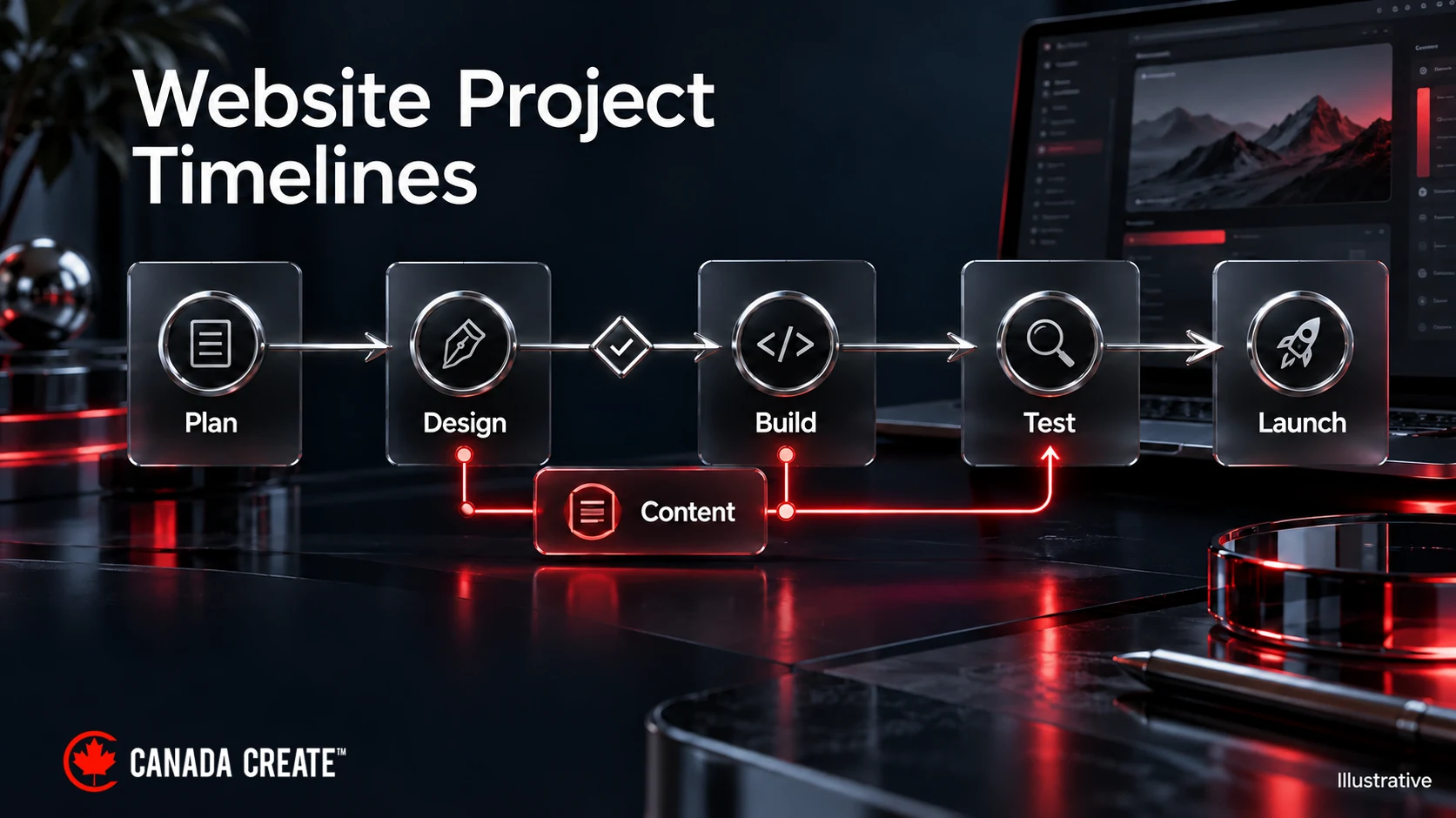
Here is the direct answer before the detail. An illustrative planning window for a scoped small or mid-sized business website is 8 to 14 weeks from kickoff to launch, covering discovery, design, development, content, and testing. A larger catalogue, custom integration, migration, accessibility testing or approval process can extend that window; the project schedule should follow discovery.
What a website timeline needs to tell you
Business owners researching this question are usually trying to set a realistic internal timeline before a launch, product release, or event, and want to know whether a quoted timeline from a web design partner is reasonable or inflated. Getting this wrong in either direction causes real problems: an unrealistically short timeline sets up a rushed, lower-quality build, while an unclear one makes it hard to distinguish planned work from delays.
Prospects often ask Canada Create about timelines during discovery, especially when quotes suggest different launch dates.
When to revisit a website schedule
A few concrete signals suggest your project timeline needs a closer look:
- You have been quoted 4 to 6 weeks for a genuinely custom multi-page site. Ask what scope, content readiness, team capacity and testing assumptions make that date achievable. Duration alone does not tell you whether a build is custom.
- Your project has been “in progress” for more than 20 weeks with no launch date in sight. Ask for completed milestones, remaining dependencies and a revised forecast. Complexity, resourcing, approvals and content can all affect progress.
- Nobody has asked you for your content and copy yet, three weeks into the project. Content readiness is one of the biggest hidden timeline risks. Late content requests can force layout changes or delay testing.
- You do not have a written project timeline with phase-by-phase milestones. Vague verbal timelines without milestones are a common source of scope disputes and delays later in the project.
How feedback and content affect the schedule
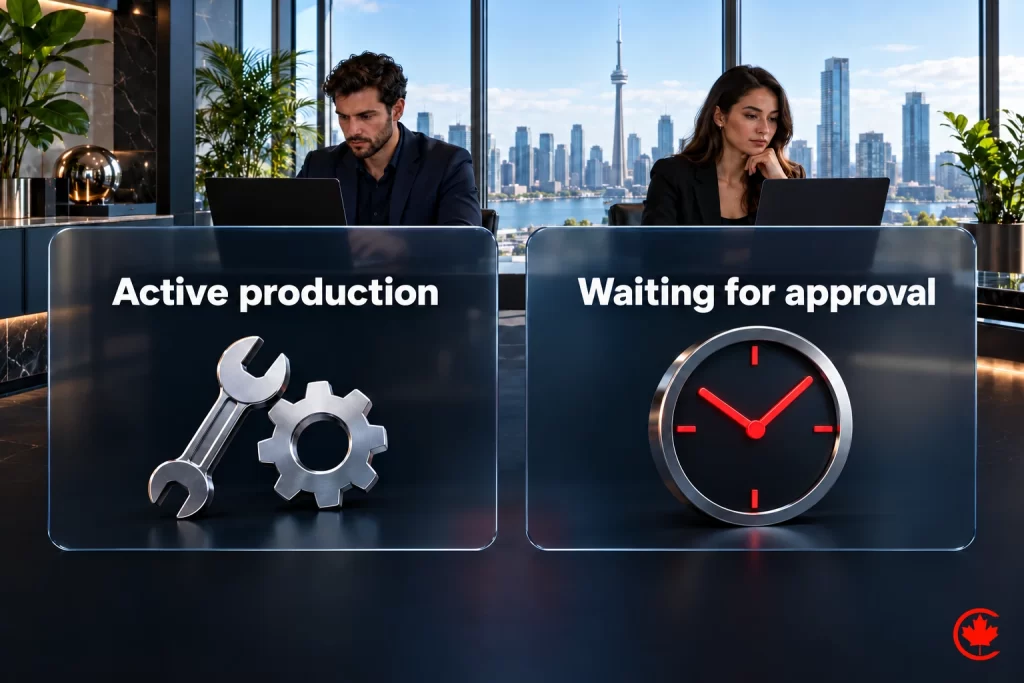
The most common mistake is underestimating how much client-side feedback speed affects the timeline. A design phase quoted at two weeks can stretch to five or six weeks if the client takes a week or more to review and respond to each round of revisions. The build timeline is a partnership between the agency’s speed and the client’s responsiveness, and slow feedback can delay work even when development is progressing.
The second mistake is underestimating content readiness. Content planning before detailed layouts can reduce rework, because layouts get designed around placeholder text that does not match the final content’s length or tone.
Plan the project by phase
| Phase | Illustrative planning duration | What causes delays here |
|---|---|---|
| Discovery and scoping | 1 to 2 weeks | Unclear goals, too many stakeholders without a decision-maker |
| Design (wireframes to final visual design) | 2 to 4 weeks | Slow client feedback, too many rounds of revision |
| Content preparation | Runs in parallel, 2 to 4 weeks | Content not prioritized until design phase is already underway |
| Development and build | 3 to 5 weeks | Scope additions mid-build, third-party integration issues |
| Testing, QA, and launch prep | 1 to 2 weeks | Cross-browser and mobile issues found late, SEO setup rushed |
We design and build fast, accessible websites for Canadian businesses, with SEO built in from day one.
Late content is one avoidable source of delay. Naming that risk clearly at kickoff, rather than after it happens, is what keeps timelines honest.
It also helps to separate the timeline for launch from the timeline for full optimization. A launched site is not necessarily a finished one. Test analytics before launch. Post-launch indexing and conversion measurement need their own review period, which depends on crawl activity, traffic and the number of meaningful actions recorded. Businesses that expect a launched site to be fully optimized on day one often end up making premature changes based on data that has not yet stabilized. Building that post-launch settling period into your internal expectations from the start avoids a lot of unnecessary second-guessing in the first month after going live.
What to prepare before kickoff
Many delays happen before any design work starts, while the team waits for access or decisions. Gathering the following before kickoff can save days in the first weeks of a project:
- Access: logins or delegated access for the domain registrar, DNS, current hosting, Google Business Profile, Google Analytics and Search Console.
- Brand assets: logo files in vector format, colours, fonts and any brand guidelines.
- Content inventory: a list of the pages you need, who will write each one and which existing pages can be reused.
- Photos and video: the images you own and the rights to use them, plus a plan for any new photography.
- Third-party accounts: booking, CRM, payment, email marketing and other tools the site must connect to, with an administrator who can approve the connection.
- A decision-maker: one person who can approve designs and content, with a named backup for holidays.
Photography deserves an early date of its own. A shoot needs scheduling, editing and approval, and layouts built around placeholder images often need adjusting once real photos arrive.
How a redesign of an existing site changes the schedule
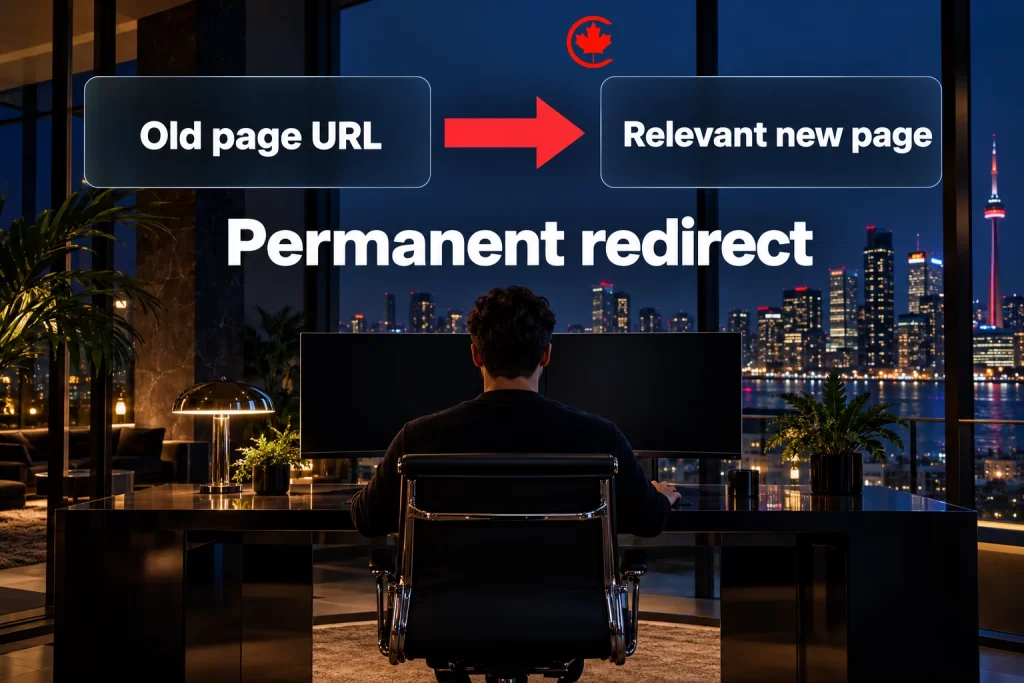
Replacing an existing website adds work that a brand new site does not need. The team has to list every current URL that receives traffic or links, decide where each one should point, and set up redirects so visitors and search engines reach the right new page. Pages that rank well need their useful content carried over, not rewritten from scratch without checking what made them perform.
Launch also involves more steps: moving DNS, checking that email records are untouched, testing forms and tracking on the live domain, and submitting the new sitemap. Choose a launch day when your team is available to check the site and answer customers, and avoid your busiest period of the year. A launch window early in the week leaves time to fix anything found before the weekend.
Accessibility and bilingual content
In Ontario, the Accessibility for Ontarians with Disabilities Act requires public sector organizations and businesses or non-profits with 50 or more employees to make their public websites meet WCAG 2.0 Level AA, with limited exceptions. Even when the rule does not apply to your organization, building accessibly from the start is faster than fixing it after launch. Allow time for colour contrast checks, keyboard testing, alt text and accessible forms within the design and testing phases.
A French version, or any second language, adds more than translation. Each page needs a translated version reviewed by someone fluent, language switching and hreflang set up correctly, and forms and emails that work in both languages. Plan translation to start as soon as the English content is approved, so it does not become the last task holding up launch.
Organizations in the capital region, where both languages and accessibility often come up in the same brief, can see how we plan them together on our Ottawa web design and website development page.

Choose the right build approach
Once you have a realistic sense of what a proper custom build timeline looks like, the next decision many businesses face is whether a fully custom build is the right investment at all compared to a strong template-based build. Our companion piece on template versus custom websites for contractors breaks down exactly where each option makes sense. For the complete picture of how Canada Create scopes and manages custom website timelines, our Toronto website development service page covers the full process.
Frequently asked questions
How long does a custom website build usually take for a Toronto business?
The post gives 8 to 14 weeks from kickoff to launch as an illustrative planning window for a scoped small or mid-sized business site. That covers discovery, design, development, content and testing. A large catalogue, custom integrations, a migration, accessibility testing or a slow approval process can push it out. The real schedule should be set after discovery.
Is three months enough to build a custom website for a business?
It can be, for a clearly scoped small or mid-sized site where content and approvals arrive on time. Slow feedback is the usual reason it is not, since a design phase planned for two weeks can stretch to five or six when each round waits a week for comments. Ask for a written timeline with milestones for each phase so you can tell planned work from delay.
What should a small business prepare before a website build so it stays on schedule?
Gather logins or delegated access for the domain registrar, DNS, hosting, Google Business Profile, Google Analytics and Search Console. Have vector logo files, brand colours and fonts ready, along with a list of pages and who writes each one. Note the booking, CRM, payment and email tools the site must connect to. Name one decision-maker who approves designs and content, with a backup for holidays.
Why does a website built from scratch often run past its quoted date?
Client feedback speed and late content are the two causes owners most often underestimate. Layouts designed around placeholder text frequently need rework once the real copy arrives. Scope added mid-build and problems with third-party integrations also slow development. Naming these risks at kickoff keeps the timeline honest.
Should I worry if a web designer quotes four to six weeks for a custom multi-page site?
Not automatically, but ask what makes that date possible. Find out what they assume about scope, content readiness, team capacity and testing. Duration alone does not show whether a build is truly custom. A project with no written phase milestones is a bigger warning sign than a short estimate.
Does redesigning an existing website take longer than building a brand new one?
Usually it adds work. Every current URL with traffic or links has to be listed, matched to a new page and redirected. Useful content from pages that rank well should be carried over after checking what made them perform. Launch day also involves moving DNS, protecting email records, testing forms and tracking on the live domain and submitting a new sitemap.
Do accessibility and French content add time to a small business website in Ontario?
Yes, and both are faster to plan for at the start. Ontario's accessibility law requires public sector bodies, and private or non-profit organizations that employ at least 50 people, to meet WCAG 2.0 Level AA on public websites, with limited exceptions. Contrast checks, keyboard testing, alt text and accessible forms belong inside design and testing. A French version needs fluent review, working language switching and forms that work in both languages.
Is a new website fully finished on the day it launches?
A launched site is not the same as an optimized one. Indexing and conversion measurement need their own review period after launch, which depends on crawl activity, traffic and how many meaningful actions are recorded. Making big changes before the data settles often leads to wrong conclusions. Test analytics before launch so that period starts with clean numbers.