
YouTube ads for Canadian businesses: formats, targeting and what to measure

YouTube advertising offers video placements including in-stream, in-feed and Shorts. Choose a format and campaign objective around the action you want viewers to take, then measure the resulting enquiries or sales. Google’s video ad format guidance describes how placements, skipping and billing differ. This guide covers those choices, creative planning and practical measurement for Canadian businesses.
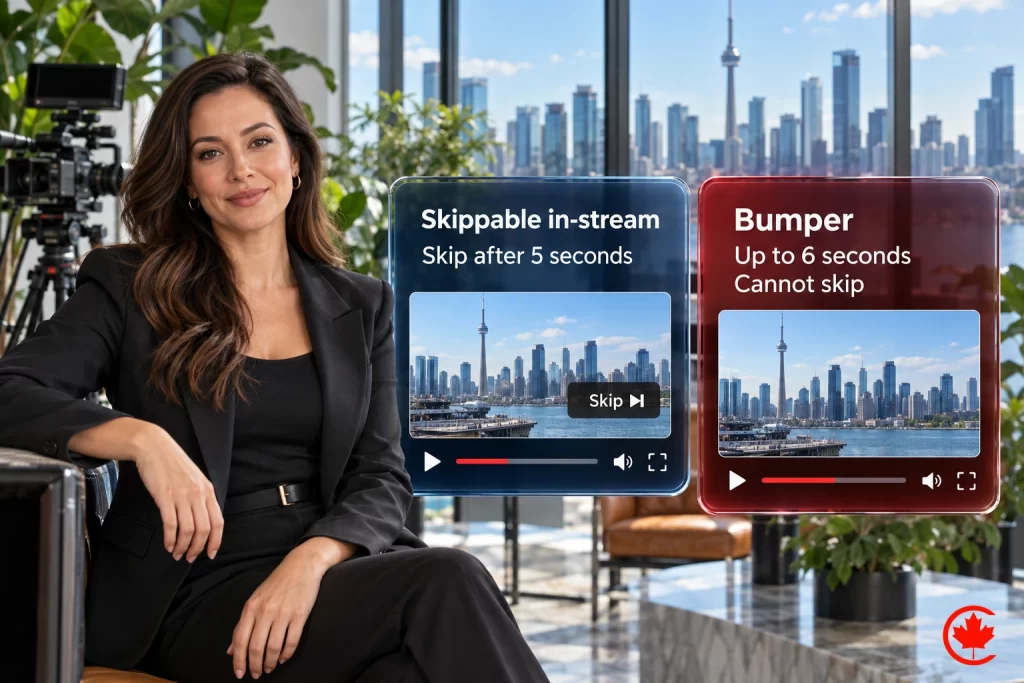
Formats and when to use them
| Format | What it is | Best for |
|---|---|---|
| Skippable in stream | Plays before, during or after videos; viewers can skip after 5 seconds | A video message with a clear next step; billing depends on the bidding strategy |
| Non skippable in stream | Short ads viewers cannot skip | Awareness with a single clear message |
| Bumper ads | Very short non skippable ads | Reminders and frequency |
| In feed video | Appears in search results and the home feed | Reaching people actively looking for a topic |
| Shorts ads | Vertical ads between Shorts | Mobile audiences and fast creative testing |
We build and run Google Ads campaigns measured on calls, forms and booked jobs, not clicks.
Campaign type and ad format are different decisions. Demand Gen channel controls include YouTube in-stream, in-feed and Shorts. Check the options available for your objective and account before choosing formats and bidding.
YouTube is planned with the other video platforms in our social media advertising in Toronto.
Targeting that works for local and B2B businesses
- Custom segments from search terms: reach people who recently searched for your services on Google.
- Your data: website visitors, customer lists and video viewers, used with consent and within Google’s policies.
- Location: radius around your service area or specific cities.
- Topics and placements: channels and videos your buyers watch.
- Life events and in market audiences: moving, starting a business, shopping for services.
Sensitive categories such as health, housing and finance have targeting limits. Plan creative that works for broader audiences in those industries.
Creative that earns the view
- Hook in the first five seconds: name the viewer’s problem or show the result.
- Show your brand early, so viewers can identify the advertiser before skipping.
- One message and one call to action per ad.
- Captions on, because many people watch without sound.
- Vertical versions for Shorts and mobile.
- Use footage that accurately shows the people, premises, product or service behind the offer. Test the message rather than assuming one production style will win.
Our video production and motion graphics teams produce ad cuts in every aspect ratio.

Following up with people who watched
Most viewers will not act the first time they see a video ad, especially for services with a longer decision. Linking your YouTube channel to Google Ads lets you build audience segments of people who viewed your ads or videos, visited your channel or engaged with your content, where those audiences are available for your account and campaign type.
- Show a shorter follow up ad, such as a testimonial, a product demo or an answer to a common objection, to people who watched most of your first ad.
- Use search and display remarketing to stay visible to viewers who later visit your website.
- Exclude recent customers and people who already converted, so budget goes to new prospects.
- Limit how often the same person sees your ads, so the follow up feels helpful rather than repetitive.
Remarketing follows Google’s personalized advertising policies, which restrict its use in sensitive categories such as health and personal finance. Check the rules for your industry before building these lists.
Measure beyond clicks
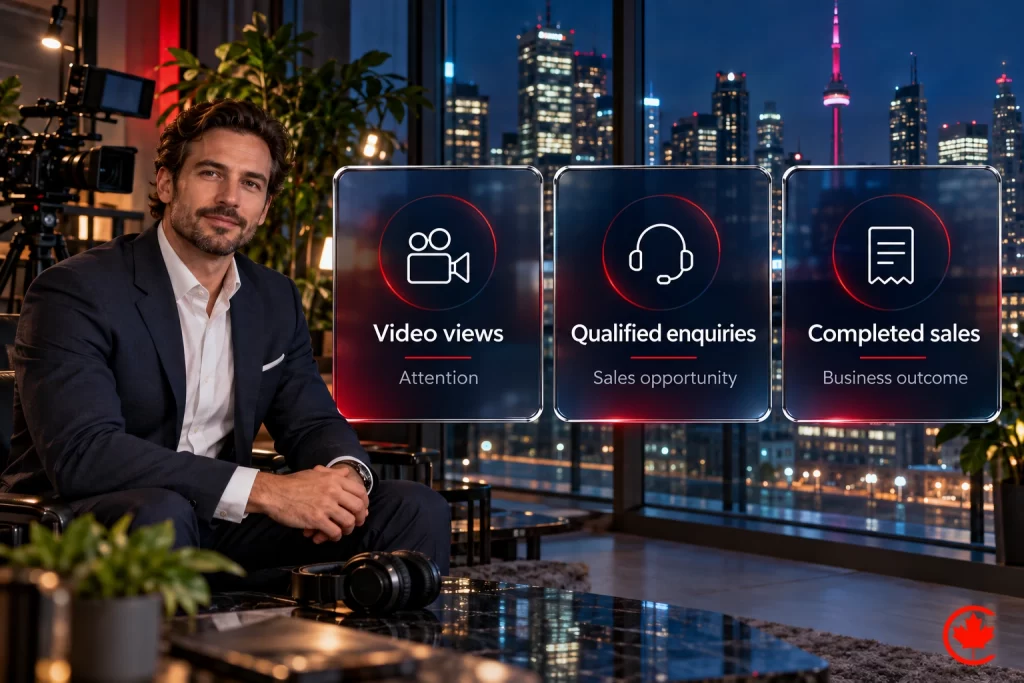
- Track conversions on your site with Google Ads conversion tracking and GA4.
- Watch view through and engaged view conversions, but judge them carefully against other channels.
- Use brand lift or search lift studies when budgets allow.
- Use changes in branded search and direct traffic as context, not proof that the campaign caused additional sales.
- Import qualified leads and sales from your CRM.
Common mistakes with YouTube ads
- Running a TV spot unchanged. A slow opening that builds to the brand at the end loses most viewers at the skip button. Recut it so the hook and brand come first.
- Sending viewers to the homepage. A landing page that continues the ad’s message and makes the next step obvious usually converts better than a general homepage.
- Targeting too broadly. A small test spread across every audience type produces too little data to learn from. Start with two or three clearly different audiences.
- Judging on views alone. Cheap views are easy to buy. Look at what happens after the view: site visits, enquiries, sales and branded searches.
- Never refreshing creative. People who see the same ad repeatedly start to skip it. Plan new cuts or new hooks before results start to fade.
- Ignoring placements. Review where your ads appeared and exclude channels or content that do not suit your brand.
Budgeting
Set a test budget, a qualified-outcome definition and a review point that allows for the sales cycle. Keep the test focused enough to learn from the available volume. If running video alongside Search, reconcile conversions across both channels before changing allocations. See how much Google Ads costs.

Planning a first test campaign
A first YouTube campaign is easier to judge when it is planned as a test with a clear question, rather than as an open-ended spend. A simple plan looks like this:
- Write down the question. For example, can video reach new prospects in our service area who later contact us, at a cost we can live with?
- Pick one objective and one main conversion, such as a quote request, booked call or purchase, and confirm it is tracking correctly before launch.
- Prepare two or three creative versions that test different hooks or offers, each with horizontal and vertical cuts.
- Choose a small number of audiences, such as custom segments from your service search terms and your own website visitors.
- Set a review schedule. Check delivery and placements in the first week, then judge outcomes only after enough time has passed for your normal sales cycle.
- Decide in advance what result would justify expanding, adjusting or stopping the test.
Reaching English and French speaking viewers
Canadian businesses that serve Quebec or bilingual markets should plan language from the start. Google Ads lets you target users by language setting, and YouTube viewers in the same city may browse in English or French. Produce separate English and French versions rather than subtitling one ad, so the voice, on screen text and call to action all match the viewer. If you advertise to consumers in Quebec, the Charter of the French language applies to commercial advertising, so make sure French versions are available and that landing pages and forms are in French too. Track the two language versions as separate ad groups or campaigns, so you can see how each performs.
Compliance points
Video ads are advertising like any other: claims must be accurate, regulated professions must follow their own advertising rules, and prescription drug treatments cannot be promoted with results or testimonials. See healthcare advertising rules and lawyer advertising rules.
Want YouTube campaigns built and run? See our YouTube advertising service, and compare with what works in TikTok ads in Canada.
Frequently asked questions
Is it worth paying for YouTube ads as a Canadian business?
It can be, if you treat the first campaign as a test with a clear question and a measured outcome. A useful question is whether video reaches new prospects in your area who later contact you, at a cost you can live with. Judge the answer on enquiries and sales, not cheap views. Decide before launch what result would justify expanding, adjusting or stopping.
How much does a 30-second YouTube ad cost to run?
There is no fixed price for a 30-second spot, since billing depends on the format, the bidding strategy and the audience you choose. Skippable in-stream ads, for example, let viewers skip after five seconds, and how you pay depends on the bid strategy you set. Set a test budget with a clear qualified-outcome definition and a review point that allows for your sales cycle. If you also run Search, reconcile conversions across both before moving money.
How do YouTube ads work for a business that has never advertised on video?
YouTube offers several placements, including skippable and non-skippable in-stream ads, bumpers, in-feed video and Shorts. You pick a campaign objective around the action you want viewers to take, then choose formats that suit it. Campaign type and ad format are separate decisions, so check what your account and objective allow. Count the enquiries and sales it produces, not only the views.
How do you make YouTube ads that people watch instead of skipping?
Name the viewer's problem or show the result in the first five seconds, and show your brand early so people know who is speaking before they can skip. Keep each ad to one message and one call to action, with captions on for people watching without sound. Make vertical cuts for Shorts and mobile. A TV spot that saves the brand for the end usually needs recutting first.
How can a local business use YouTube for business advertising in its own area?
Target a radius around your service area or specific cities, then layer in custom segments built from the search terms people use for your services on Google. Your own data, such as website visitors and customer lists, can be used with consent and within Google's policies. Housing, health and finance carry targeting limits, so plan creative that works for broader audiences there. Start with two or three clearly different audiences instead of spreading a small test thin.
Are YouTube ads bought through Google Ads in Canada?
Yes, YouTube campaigns are set up and paid for inside a Google Ads account. Linking your YouTube channel to Google Ads lets you build segments of people who viewed your videos or visited your channel, where your campaign type allows it. Google Ads conversion tracking and GA4 then record what viewers do on your site. Importing qualified leads and sales from your CRM gives a truer picture than clicks.
Which content is not allowed in YouTube ads for regulated businesses?
Claims in video ads must be accurate, and regulated professions such as law and health care follow their own advertising rules on YouTube as anywhere else. Prescription drug treatments cannot be promoted with results or testimonials in Canada. Remarketing is restricted in sensitive categories such as health and personal finance. Before building the campaign, confirm what your regulator currently allows.
What should you measure after you pay for YouTube ads?
Track site conversions with Google Ads conversion tracking and GA4, and import qualified leads and sales from your CRM. View-through and engaged-view conversions are worth watching, but compare them carefully with other channels. Branded search and direct traffic give context, though they do not prove the campaign caused extra sales. Brand lift or search lift studies help when the budget supports them.
Should YouTube ads for Canadian businesses be produced in English and French?
If you serve Quebec or bilingual markets, plan both languages from the start, since viewers in the same city may browse in either. Separate English and French versions usually work better than subtitling one ad, because the voice, on-screen text and call to action all match. When the ads target consumers in Quebec, the French language charter extends to that advertising, landing pages and forms included. Run each language as its own ad group or campaign to see how each performs.