
Push vs Pull Marketing: The Difference and When Each Works
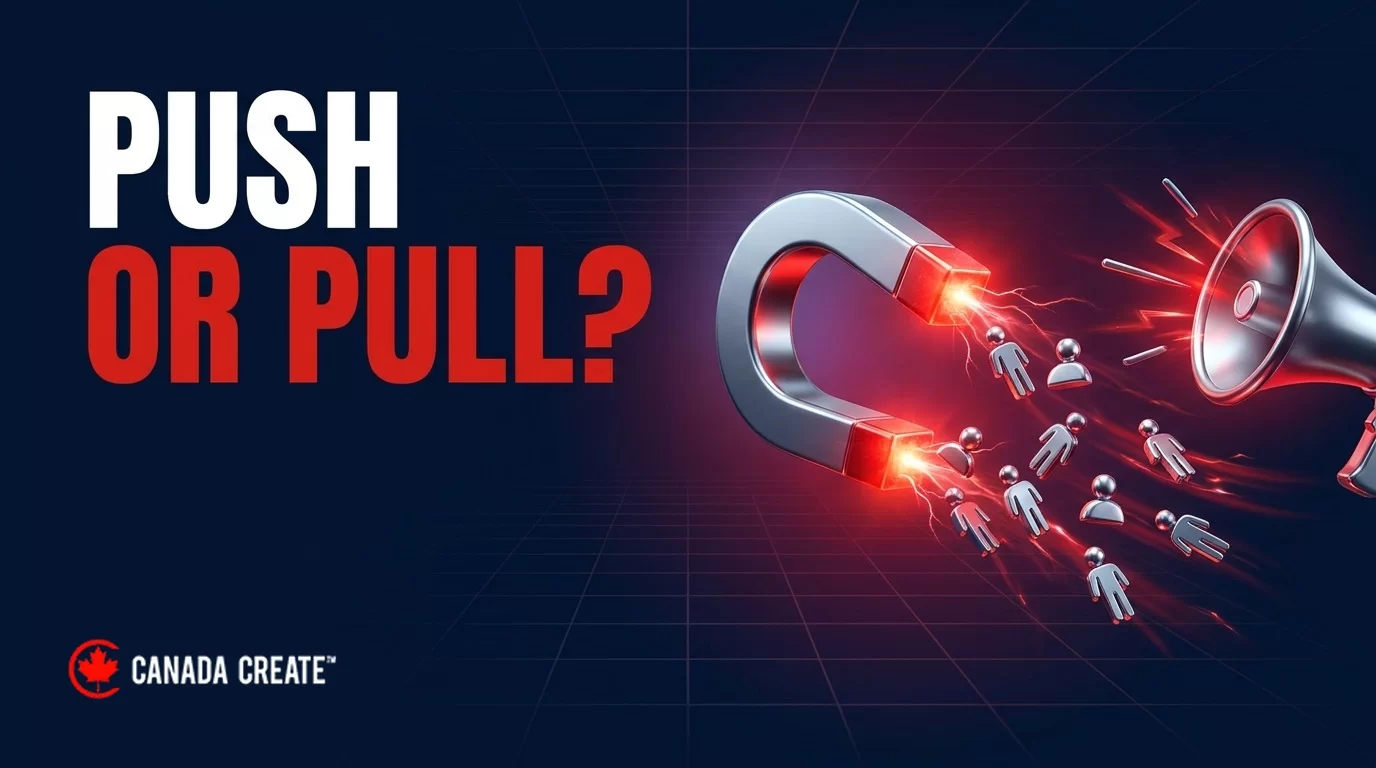
Push marketing puts your offer in front of people who were not looking for it: display and social ads, TV and radio, flyers, trade promotions. Pull marketing makes your business easy to find and choose when people are already looking: search, your Google Business Profile, reviews, useful content and referrals. Push creates demand; pull captures demand that already exists. Most small businesses need some of both, but pull channels usually bring the enquiries that are most ready to buy, while push is how new products and new markets get noticed.
Push vs pull marketing at a glance
| Push marketing | Pull marketing | |
|---|---|---|
| Who starts it | The business reaches out | The customer searches or asks |
| Customer’s state of mind | Not yet looking | Already has a need |
| Typical channels | Display, social and video ads, TV, radio, flyers, trade shows, retailer promotions | SEO, Google Business Profile, search ads, reviews, content, referrals, email to subscribers |
| Speed | Fast to start, stops when spend stops | Slower to build, keeps working |
| Best for | New products, new markets, launches, awareness | Services people search for, repeat demand, high-trust purchases |
| Main measure | Reach, cost per thousand impressions, cost per lead | Rankings, enquiries from search and maps, conversion rate |
We set marketing strategy, measures and priorities for businesses in Toronto and across Canada, scoped in writing after a free review.
What push and pull mean in digital marketing
The terms started in distribution. A manufacturer “pushes” a product through the supply chain by selling it hard to wholesalers and retailers with discounts, displays and sales calls. It “pulls” a product through by advertising to consumers so they ask the store for it, and the store has to stock it.
In digital marketing the meaning shifted. Push now usually means reaching people who did not ask: interruption ads on social and video, display banners, sponsored placements. Pull means being there when people search: organic search, maps, search ads on high-intent keywords, helpful articles, reviews and word of mouth. That is why you will see consumer advertising called “pull” in a textbook and “push” in a digital marketing blog. Both are right in their own context; what matters is whether the customer was looking for you when they met you.
Examples of push and pull marketing
Five push examples
- A bakery runs Instagram ads to people within five kilometres before Thanksgiving.
- A new kombucha brand gives retailers a launch discount and an in-store display.
- A home builder sponsors a local radio segment.
- A software company runs YouTube ads to a lookalike audience of its customers.
- A gym drops flyers in nearby condo buildings in January.
Five pull examples
- A plumber ranks in the map results for “emergency plumber Hamilton”.
- An accounting firm publishes a clear guide to filing deadlines that people find in search.
- A dental clinic keeps its Google Business Profile current and answers every review.
- A furniture store runs search ads only on “sofa store Ottawa” type searches.
- A contractor’s past clients refer neighbours after a thank-you follow-up.
Is Coca-Cola push or pull marketing?
Both. Coca-Cola’s consumer advertising builds demand so people look for the drink by name, which is pull in the supply chain sense. At the same time, its distribution, retailer agreements, coolers and in-store displays push the product into every store and restaurant. Big consumer brands rely on that combination: advertising makes people want the product, and push into the channel makes sure it is there when they reach for it. A small business rarely has the budget for both at that scale, which is why choosing the right mix matters.
When push marketing works best
- Nobody searches for it yet. A new product category, a new location or a service people do not know exists.
- Timing drives sales. Seasonal offers, events, launches and limited runs.
- The product sells on sight. Food, fashion, home décor and other visual products do well with social and video ads.
- You need data fast. Paid social can test offers and audiences in days.
Push has rules in Canada. Commercial email and texts need consent under Canada’s anti-spam legislation, every message needs an unsubscribe that takes effect within 10 business days, and telemarketing calls must respect the National Do Not Call List. Buying an email list does not give you consent.
When pull marketing works best
- People already search for what you do. Plumbing, law, dentistry, accounting, renovations, B2B services.
- Trust decides the sale. Reviews, credentials and useful content do the persuading before the first call.
- You want enquiries that keep coming. Rankings, a strong profile and good content keep bringing leads after the work is done.
- Your sales team is small. Pull brings people who are ready to talk, so less time goes into chasing.
How to choose the mix for a small business
- Check demand first. If people already search for your service in your area, start with pull: your Google Business Profile, a clear page per service, reviews and search ads on high-intent terms.
- Add push to fill gaps. Use social or video ads to launch something new, reach a new area or remind past visitors (remarketing).
- Measure both the same way. Compare cost per qualified lead and lead to customer rate, not clicks or reach. Our marketing KPI examples show the formulas.
- Connect them. Push often creates the brand searches that pull then captures. Watch whether searches for your business name rise during a push campaign.
- Review quarterly. Shift budget toward whichever side brings customers at the lower cost.
The 5 main marketing strategies, and where push and pull fit
Lists of “five main strategies” vary, but most include these, each of which leans push or pull:
- Search engine optimization: pull
- Content marketing: pull
- Paid advertising: search ads lean pull, social and display lean push
- Email marketing: pull when sent to subscribers who opted in; push when it is unsolicited, which in Canada needs consent first
- Social media: organic posting is mostly pull for existing followers; paid reach is push
Canada Create’s own lead generation is inbound: it is built on pull channels, with paid push used to support them, never cold lists. Our inbound marketing work applies the same approach for clients. Choosing that balance for your business, and measuring it, is part of marketing strategy and fractional CMO work.
Frequently asked questions
What is push and pull in digital marketing?
Push means reaching people who are not looking for you yet, with social, display and video ads, sponsored posts or promotions. Pull means being found when people are already looking, through search, your Google Business Profile, reviews, content and referrals. Push creates demand; pull captures it.
What is the difference between push and pull marketing?
Push marketing starts with the business reaching out to an audience that has not asked; pull marketing starts with the customer searching or asking for a solution. Push is fast to start and stops when spending stops, while pull takes longer to build and keeps bringing enquiries.
Is Coca-Cola push or pull marketing?
Both. Its consumer advertising builds demand so people ask for it by name (pull), while its distribution, retailer agreements and in-store displays push the product into stores and restaurants. Large consumer brands combine the two.
What are 5 examples of push or pull marketing?
Push: social media ads, display banners, TV or radio spots, flyers and retailer promotions. Pull: ranking in search, appearing in Google Maps results, helpful articles, reviews and referrals from happy customers.
What is the difference between push and pull strategies in supply chain management?
In a supply chain, push means producing and shipping based on forecasts and promoting the product to retailers, while pull means producing or stocking in response to actual customer orders. In marketing, the same idea becomes promoting to the channel (push) versus creating consumer demand that pulls the product through (pull).
What are the 5 main marketing strategies?
Lists vary, but most include search engine optimization, content marketing, paid advertising, email marketing and social media. SEO and content lean pull, social and display ads lean push, and email is pull when sent to subscribers who opted in.
Is email marketing push or pull?
Email to people who subscribed is mostly pull, because they asked to hear from you. Unsolicited email is push and, in Canada, needs consent under the anti-spam law before you send it, along with sender details and a working unsubscribe.
Is SEO push or pull marketing?
SEO is pull marketing. It helps your pages and Google Business Profile appear when people search for what you offer, so the customer comes to you with a need already in mind.
Which is better for a small business, push or pull?
If people already search for your service in your area, start with pull because those enquiries are closer to buying. Add push to launch something new, reach a new area or remind past visitors, and compare both on cost per qualified lead.