
How Long Does SEO Take to Show Results in Toronto?

Before committing to SEO, define what a result means for your business: an indexed page, relevant search traffic, a qualified enquiry or revenue. These are different milestones, and a useful plan measures each without promising that they arrive on a fixed schedule.
The short answer: there is no dependable Toronto-wide deadline for rankings or revenue. Google’s SEO Starter Guide says changes can take from hours to several months to be reflected, and some make no noticeable difference. That is a range for search changes, not a forecast of bookings or payback.
Use the stages below to agree on the work, the evidence to collect and the next review decision. Set project delivery dates separately from estimates of search impact.

Why the Search and Starting Point Matter
Evaluate the specific services, neighbourhoods and search results relevant to your business. A city name alone does not establish how hard a search is to compete for or how long your site will take to improve.
For a search such as “personal injury lawyer Toronto,” review the existing results and your own page’s usefulness and accessibility. Our Local SEO services can assess those starting conditions and identify work to prioritize.
Compare the actual neighbourhoods you serve, but create separate pages only where they offer distinct, useful information. A series of nearly identical location pages is not a reliable shortcut to local visibility.
Not sure how long SEO will actually take for your site? We’ll show you exactly where you stand and what’s realistic.
Canada Create has run SEO for Toronto businesses since 2008. We audit your site, review relevant competitors and discuss priorities and measurement before recommending a plan.
SEO Milestones to Plan and Measure
Foundation Work: Establish the Baseline
Start with a technical review, search-intent mapping and accurate business information. Check issues such as duplicate content, broken links and missing metadata. Record which issues affect important pages so that the plan has a clear order of work.
After a fix, verify the saved page and check Google’s view with URL Inspection. Requesting a recrawl does not guarantee immediate indexing. For a new site, check discovery and access directly rather than adding an assumed extra number of days to the plan.

Early Signals: Check Discovery and Visibility
Use Search Console to compare impressions, clicks and queries for the pages changed. Match the comparison periods and note seasonality or other changes. An isolated position change is a prompt to investigate, not proof that the campaign is succeeding.
Track local results separately from ordinary website search performance. Keep the query and observation location consistent, and compare profile interactions with relevant customer enquiries.
Business Signals: Check Relevant Enquiries
Check whether visits reach the relevant service pages and whether the resulting calls or forms match your target customers. Agree on what counts as a qualified enquiry before using lead totals to assess the work.
Record which enquiries became customers where your tracking permits it. Keep the attribution method and gaps visible so that an increase in overall sales is not automatically assigned to SEO.
Ongoing Review: Compare Value With Cost
Compare the cost of the work with attributable business outcomes and the remaining opportunity. Continue, revise or stop particular activities based on that evidence. An elapsed month does not establish that SEO has paid for itself.
What to Assess by Industry in Toronto
Use the business model to decide what to inspect and measure. The following are planning priorities, not sector-specific promises about when results will arrive:
Our SEO team plans, fixes and reports on the work in this guide every month for Canadian businesses.
Dental clinics: check service information, appointment routes and local profile accuracy. See our dental SEO services page. Law firms: make practice areas, professional information and enquiry routes clear. See our law firm website design services. Restaurants: keep hours, menus and reservation details current. Explore restaurant website design. Real estate: review the usefulness and currency of property and area information. See our real estate website design services. See also our SEO for lawyers in Toronto.
For other sectors, define the customer’s decision and the information needed to make it. Use that to prioritize pages and measurement rather than borrowing a timeline from an unrelated business.
What to Prioritize
Prioritize work with a clear diagnosis and a way to verify the change:
Access problems: fix unintended blocking, server errors and missing links to important pages. Useful content: address the questions customers need answered. Accurate local information: correct services, hours and contact details. Measurement: preserve a baseline and record deployment dates. Domain age, a publishing schedule or a faster page does not provide a reliable ranking deadline.
What Can Complicate the Assessment
Multiple simultaneous changes: a redesign, URL migration and campaign launch can make attribution difficult. Unresolved access problems: verify that fixes reach the live site. Unclear goals: rankings, visits and revenue answer different questions. Missing records: changing providers without preserving access and a change log makes the next review harder. A provider change alone does not reset a site’s history.
How to Assess Progress Before Revenue Changes
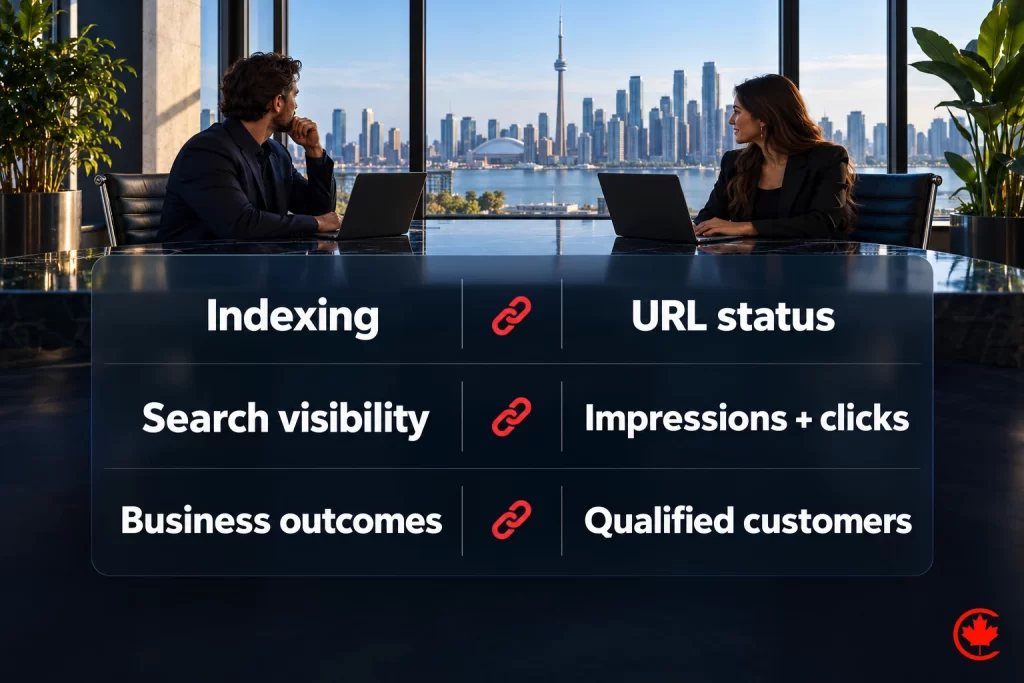
At each agreed review, check three separate layers:
Access and indexing: inspect important URLs and exclusion reasons in the Page indexing report. Search visibility: review relevant queries, impressions and clicks in the Performance report. Business response: compare qualified enquiries and attributable customers using your agreed tracking method.
If the agreed indicators are not improving, ask which work was delivered, whether Google can see it and what evidence supports the next step. A useful review should identify a diagnosis or a test, not simply ask you to wait longer.
Common Myths About SEO Timelines
“SEO has a fixed completion date.” Delivery milestones can be scheduled; search impact cannot be guaranteed. “More keywords mean faster results.” Prioritize useful pages and customer needs rather than an arbitrary keyword count. “Paid ads and SEO are interchangeable.” Paid placement and organic visibility are different channels, with their own budgets and measurement. Neither establishes the other’s results.
The Bottom Line
A credible SEO plan explains the starting point, the work, the measurement limits and the review decisions. Judge progress using those records rather than a universal month-by-month promise or a claim that staying with the same provider guarantees better results.
If you want an honest look at where your site actually stands and a realistic timeline based on your specific industry and competition, we’ll walk through it on a free call, no scripted pitch, just a straight answer. Book your free 20-minute strategy call, explore our full SEO services, or see how we’ve done it for other Toronto businesses in our portfolio.
Frequently asked questions
How long does it take for SEO to be effective for a Toronto business?
There is no dependable Toronto-wide deadline for rankings or revenue, so start by defining what effective means for you: an indexed page, relevant search traffic, a qualified enquiry or revenue. Each of those is a separate milestone and arrives on its own schedule. A sound plan sets delivery dates for the work and keeps them apart from estimates of search impact.
How long does Google take to reflect an SEO update to a page?
Google's SEO Starter Guide says changes can take anywhere from hours to several months to be reflected, and some make no noticeable difference at all. After a fix, check the saved page and then use URL Inspection to see Google's view of it. Asking for a recrawl does not promise immediate indexing.
How long before SEO shows results on a brand-new website?
Check discovery and access directly instead of padding the plan with an assumed number of extra days. Confirm that important pages are linked, not blocked by mistake and free of server errors, then inspect those URLs in Search Console. Domain age alone gives no reliable ranking deadline.
How can I tell if my SEO is working while rankings are still moving?
Look at three layers at each review. First, access and indexing in the Page indexing report; second, queries, impressions and clicks in the Performance report; third, qualified enquiries and customers measured with the tracking method you agreed on. One position change on its own is a reason to investigate, and it proves little about the campaign.
Is it worth paying for SEO when the results take time to arrive?
It is worth it when the cost of the work compares well with outcomes you can attribute to it and with the opportunity still left. Use that evidence to continue, revise or stop particular activities. Simply reaching another month does not show that SEO has paid for itself.
What should I expect from an SEO agency during the wait for results?
Expect a clear account of the starting point, the work being done, the limits of the measurement and the decision at each review. If agreed indicators are flat, the agency should say which work was delivered, whether Google can see it and what supports the next step. A useful review ends with a diagnosis or a test, never just a request to wait longer.
Does the type of business change how long SEO takes to show results?
The business model decides what to inspect and measure, so it shapes the plan more than any borrowed timeline. A dental clinic would check service information, appointment routes and its local profile, while a restaurant keeps hours, menus and reservation details current. For other sectors, map the customer's decision and the information needed to make it.
What can make SEO seem to take longer to kick in?
Launching a redesign, a URL migration and a campaign together makes it hard to tell which change did what. Fixes that never reached the live site, unclear goals and missing change logs also slow the assessment. Changing providers does not reset a site's history, but losing access and records makes the next review harder.