
How restaurants get more customers in Canada

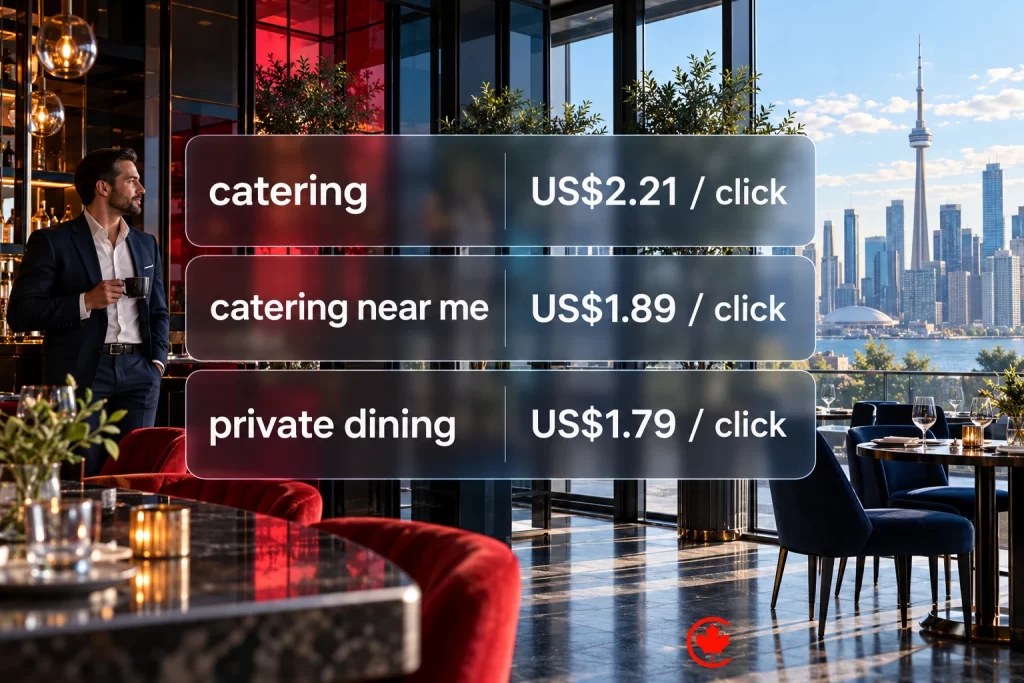
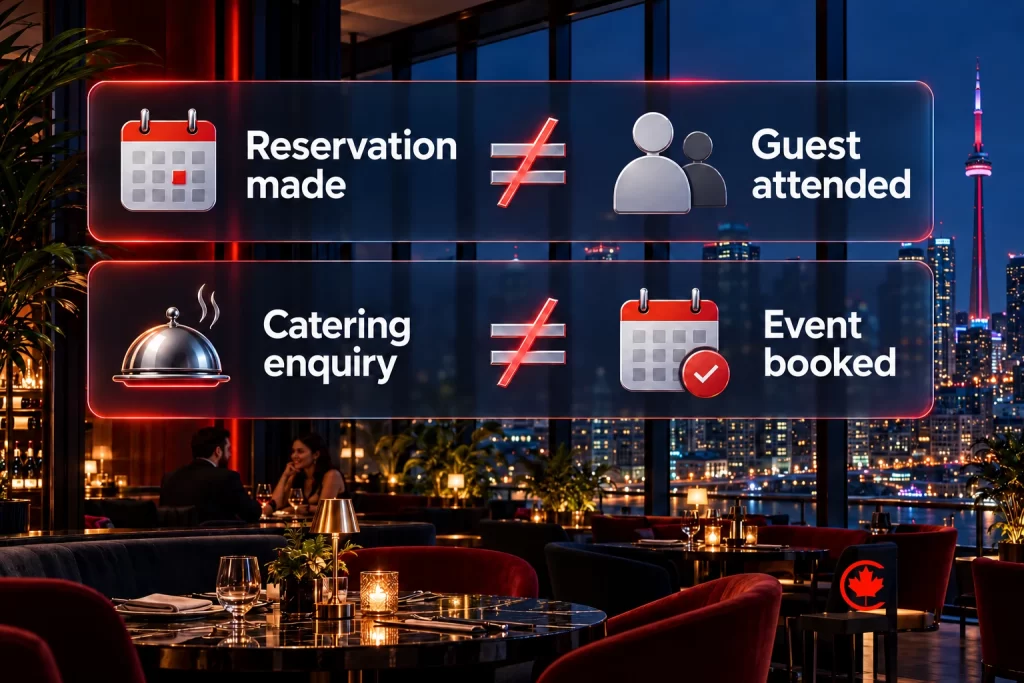
Restaurants live and die on local discovery and repeat visits. Diners decide in minutes, usually from a phone, by looking at photos, the menu, reviews and how easy it is to book. Demand outside the dining room is real too: “catering” draws an estimated 14,800 searches a month in Canada, although a search is not the same thing as a booking. This guide covers the channels that fill tables in Canada, from the map pack to delivery apps, email and events, plus the rules on menus, alcohol and pricing.
Win “near me” searches
- Choose the most specific cuisine category on your Google Business Profile and keep hours, holiday hours and the menu current.
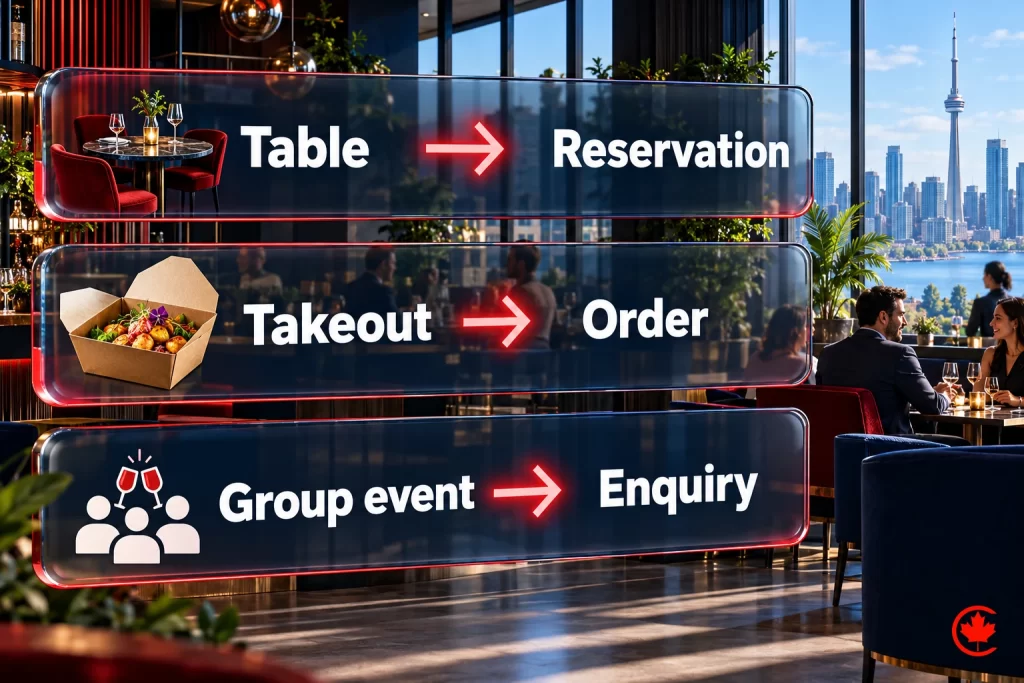
- Add the reservation and order links directly to the profile.
- Upload real, appetizing photos of dishes, the room and the patio, and refresh them with each menu change.
- Reply to every review, and use feedback to fix what customers mention.
Read the Google Business Profile optimization guide.
How to get more reviews the right way
Reviews are often the deciding factor between two restaurants on the same street, and both the number and the freshness of reviews matter to diners scanning a map listing. The safest way to get more of them is simply to ask, consistently, at the moments when guests are happiest.
- Print a short link or QR code to your Google review page on the bill folder, takeout bags and receipts.
- Add a review request to the thank you email that follows an online reservation or order.
- Train servers to mention reviews when a guest compliments a dish, without pressing anyone.
- Ask every guest the same way, not only the ones you expect to be happy.
Avoid offering discounts, free desserts or draws in exchange for reviews. Google’s review policies do not allow incentivized reviews, and the Competition Bureau treats fake or misleading reviews as deceptive marketing. Never write reviews for your own restaurant or ask staff and family to do it. When a negative review arrives, reply calmly, thank the guest, address the specific issue and invite them to contact a manager directly. Future diners read the reply as much as the complaint.
A website that turns lookers into diners
| Must have | Why |
|---|---|
| Menu as a web page, not only a PDF | Supports readable mobile layouts and search discovery |
| Reservation button in the header | Captures the decision immediately |
| Direct online ordering | Can reduce marketplace commissions; ordering and payment fees may still apply |
| Private events and catering pages | High value bookings with separate search demand |
| Location, parking and transit details | Removes the last reason not to come |
We help restaurants win local searches, reservations and repeat guests.
Our guide on what a restaurant website needs goes deeper, and our restaurant website design service in Toronto covers the build.
Delivery apps versus direct ordering
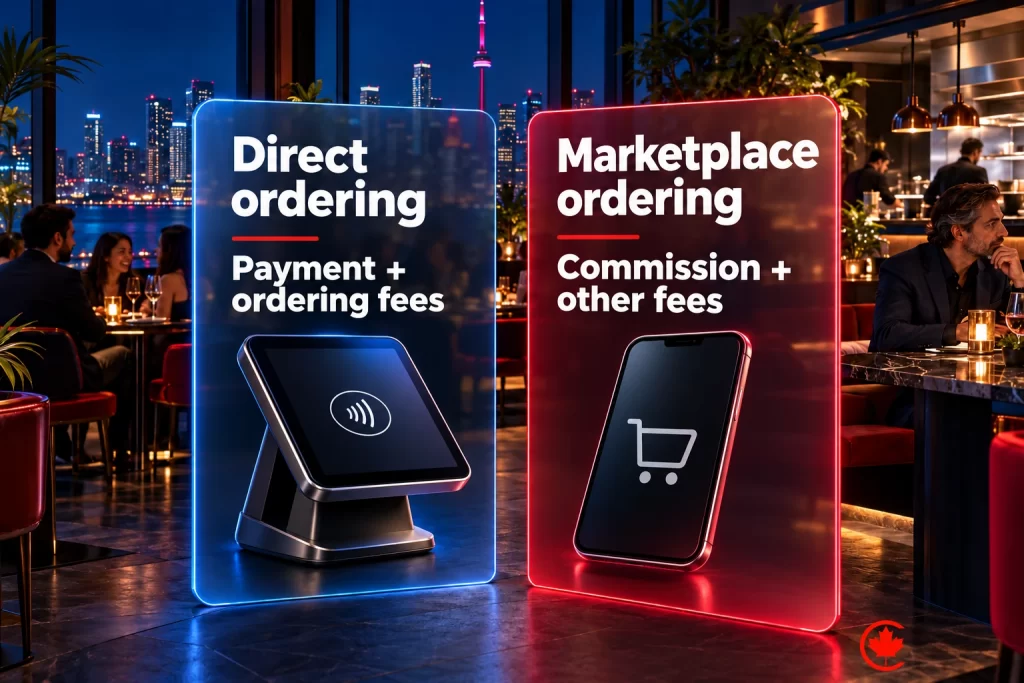
Delivery apps bring new customers but take a commission on every order. Use them for discovery, and move repeat customers to direct ordering with your own app or website, loyalty rewards and email offers sent with consent. See our app development for restaurants.
Selling catering and private events
Catering and private dining are often the most valuable bookings a restaurant takes, and they are bought differently from a Friday night table. The person searching is usually planning ahead for an office, a family celebration or a community group, and they want answers before they call.
- Give catering and private events their own pages with sample menus, group sizes you can handle, the rooms or spaces available, lead times and what is included, such as setup, staff or rentals.
- Add photos of real events, set tables and platters, not only individual plates.
- Use a short inquiry form that asks for the date, guest count, budget range and type of event, so you can reply with a useful quote quickly.
- Reply to inquiries the same day where you can. Planners often contact several venues at once.
- Keep a list of past event clients and contact them before the next holiday season or annual event.
Social media and content
- Short videos of dishes being made, the team and the atmosphere.
- Seasonal menu launches and limited time specials.
- Local creator visits, clearly disclosed. See influencer marketing rules.
- Events: trivia nights, tasting menus, chef collaborations.
Planning marketing around the Canadian seasons
Restaurant traffic in Canada swings with the weather and the calendar, so a marketing plan works best when it is built around the year rather than started from scratch each month.
- Spring: announce patio opening dates early, update photos as soon as the patio is set up and push Mother’s Day reservations several weeks ahead.
- Summer: promote patio seating, takeout for parks and cottages, and catering for graduations, weddings and corporate picnics.
- Fall: launch the seasonal menu, start selling holiday party packages in September and October, and reach office managers who book group dinners.
- Winter: focus on comfort menus, delivery, gift cards and Valentine’s Day, and fill quieter weeknights with events such as tasting menus or trivia.
Keep a simple calendar of these moments with a reminder to update your Business Profile hours, website banner, email list and social posts for each one. Holiday hours are especially important: diners who arrive to a closed door often leave a review about it.
Turn first visits into regulars
- Collect emails and phone numbers with consent through reservations and WiFi sign in.
- Birthday and anniversary offers.
- A simple loyalty program.
- Follow up with private event and catering clients after every booking.
Rules restaurants should know
- In Ontario, chains with 20 or more locations operating under the same or substantially the same name and offering substantially the same standard food items must display calories for covered items under the Healthy Menu Choices Act.
- Alcohol advertising in Ontario follows the AGCO’s advertising standards; avoid promoting excessive drinking.
- Advertised prices must include mandatory fees; hidden service or delivery charges can count as drip pricing under the Competition Act.
- Allergen and dietary claims, such as gluten free, must be accurate.
- Marketing emails and texts need CASL consent.
Paid ads that work for restaurants
Search ads for catering, private events and “restaurant near me” during dinner decision times, and social ads for launches and events, measured on reservations and orders. See the industry CPC study.
How to tell which marketing brings in diners
Most restaurants spend on several channels at once and then cannot tell which one filled the room. A few simple habits make the picture much clearer.
- Use separate tracking links for the reservation button on your Business Profile, website, social profiles and email campaigns, so your booking system shows where each reservation started.
- Give each promotion its own code or name, for example a code for an email offer and a different one for a social ad.
- Compare direct online orders with marketplace orders month by month, and work out what each one actually earns after commissions and fees.
- Track catering and private event inquiries separately, since a single large booking can be worth more than a week of regular covers.
- Ask new guests how they heard about you when they book by phone, and log the answer.
Review the numbers monthly. Channels that bring in repeat guests and direct orders usually deserve more attention than channels that only bring one time visits at a discount.
See our restaurant advertising and marketing service.
Frequently asked questions
How can a restaurant attract more customers from searches on their phone?
Win the "near me" search by picking the most specific cuisine category in your Google listing and keeping hours, holiday hours and the menu current. Put reservation and order links right on the profile, and upload real photos of dishes, the room and the patio each time the menu changes. Diners decide in minutes from photos, the menu, reviews and how easy it is to book.
How can a restaurant raise sales through catering and private dining?
Give catering and private events their own pages with sample menus, group sizes, available rooms, lead times and what is included, such as setup or staff. Use a short inquiry form asking for date, guest count, budget range and event type, and reply the same day where you can, since planners contact several places at once. Contact past event clients before the next holiday season.
How much do people in Canada search for restaurant catering?
The word "catering" draws an estimated 14,800 searches a month in Canada. A search is not the same as a booking, so treat it as a sign of demand outside the dining room rather than a forecast of orders. A dedicated catering page with real event photos gives those searchers something to act on.
Should a fast food or takeout restaurant depend on delivery apps for new customers?
Delivery apps are useful for discovery but take a commission on every order. Use them to reach new diners, then move repeat customers to direct ordering through your own website or app, loyalty rewards and email offers sent with consent. Direct ordering can reduce marketplace commissions, although ordering and payment fees may still apply.
How can a restaurant engage customers on social media?
Short videos of dishes being made, the team and the atmosphere tend to hold attention, along with seasonal menu launches and limited time specials. Events such as trivia nights, tasting menus and chef collaborations give people a reason to come back. Local creator visits work too, as long as any material connection is clearly disclosed.
What should a restaurant's yearly marketing plan cover in Canada?
Build the plan around the weather and the calendar instead of starting fresh each month. Spring is for patio openings and Mother's Day reservations, summer for patio seating and catering, fall for the seasonal menu and holiday party packages, and winter for comfort menus, delivery, gift cards and Valentine's Day. Update Business Profile hours for each holiday, because diners who find a closed door often leave a review about it.
How should a restaurant respond to an unhappy customer's review?
Reply calmly, thank the guest, address the specific issue and invite them to contact a manager directly. Future diners read the reply as closely as the complaint. Never write reviews for your own restaurant, and avoid free desserts, discounts or draws in exchange for reviews, since Google's policies do not allow incentivized reviews.
Which advertising rules do restaurants in Ontario need to follow?
Advertised prices must include mandatory fees, because hidden service or delivery charges can count as drip pricing under the Competition Act. Alcohol advertising follows the AGCO's standards, and Ontario chains with 20 or more locations under the same name must show calories for covered items under the Healthy Menu Choices Act. Allergen claims such as gluten free must be accurate, and marketing emails and texts need CASL consent.
How can a restaurant track how many customers each marketing channel brings in?
Use separate tracking links for the reservation button on your Business Profile, website, social profiles and emails, so the booking system shows where each reservation began. Give every promotion its own code, compare direct and marketplace orders after fees, and log how phone bookers heard about you. Track catering inquiries on their own, since one large booking can outweigh a week of regular covers.