
Cyber security companies for small business: what to check
Searching for cyber security companies usually starts after something has already gone wrong: a phishing email that almost got clicked, a client asking about your data practices, or a competitor’s breach in the news. Plenty of firms claim to offer “complete” cyber security services, yet many small and mid-sized businesses end up paying for enterprise services they do not need, or paying too little for coverage that leaves real gaps.
Canada Create provides web design, hosting, SEO and cyber security services for businesses across Canada. Our cyber security compliance consulting includes readiness assessments, policies, controls and evidence preparation. This guide explains what IT security companies cover, what a business should prioritize, and how to evaluate the scope and responsibilities of a security engagement.
What IT security companies do (and do not do)
IT security companies generally fall into three groups: managed security service providers (MSSPs) that monitor networks around the clock, IT consultancies that handle security as part of broader IT support, and specialist firms that focus on penetration testing or compliance audits. For a small business, the right fit depends on what you are trying to protect.
A retailer taking online payments has different priorities than a law firm storing confidential client files or a clinic handling personal health information under Ontario’s health privacy law (PHIPA). Generic “we do IT security” pitches often miss this distinction and bundle services that do not match the business.
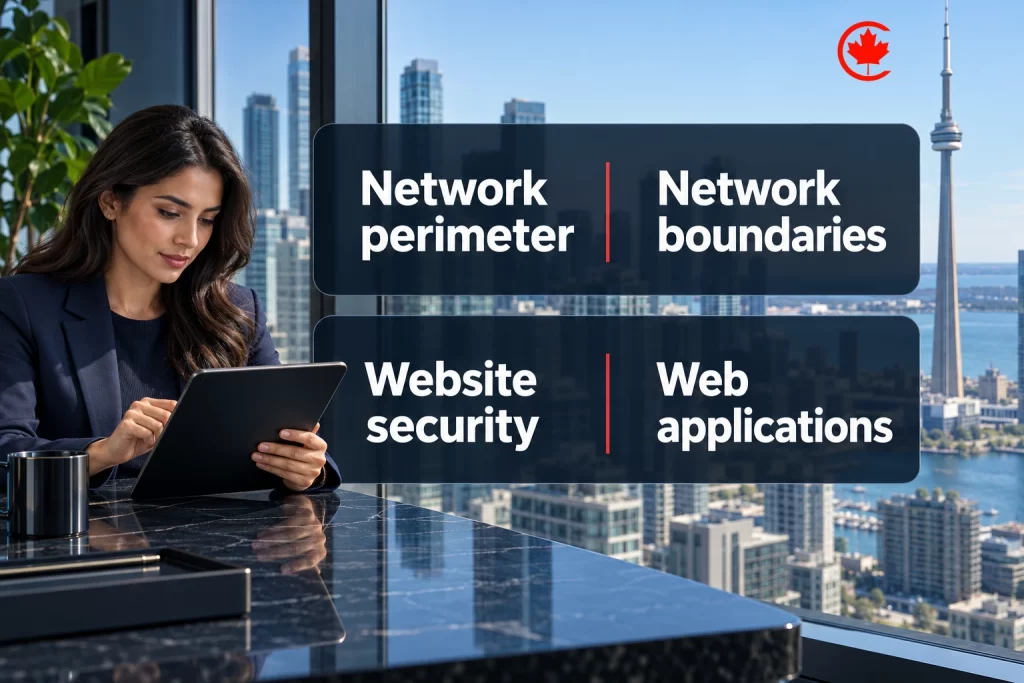
Where this connects to our work is the website and web application layer. A business can have a locked-down internal network and still run a WordPress site with outdated plugins, weak admin passwords and no monitoring for malware or defacement. That is the layer we handle directly: hosting security, SSL configuration, application-level firewall rules, regular software updates, and monitoring for vulnerabilities exploited through the public website rather than the internal network.
How website security fits into a broader IT security plan
Many small businesses treat their website as separate from “real” IT security, and that is a mistake. Websites are compromised through outdated content management systems, vulnerable plugins and weak hosting configurations, and a hacked site can become an entry point into other systems or damage your reputation even when internal networks stay untouched.
Security needs to be planned into a build and its ongoing operation. The written scope should assign each responsibility below; a website build does not automatically include continuing maintenance:
- Keeping core software, plugins and themes updated on a regular schedule rather than waiting for something to break.
- Enforcing strong authentication for anyone with admin access to the site.
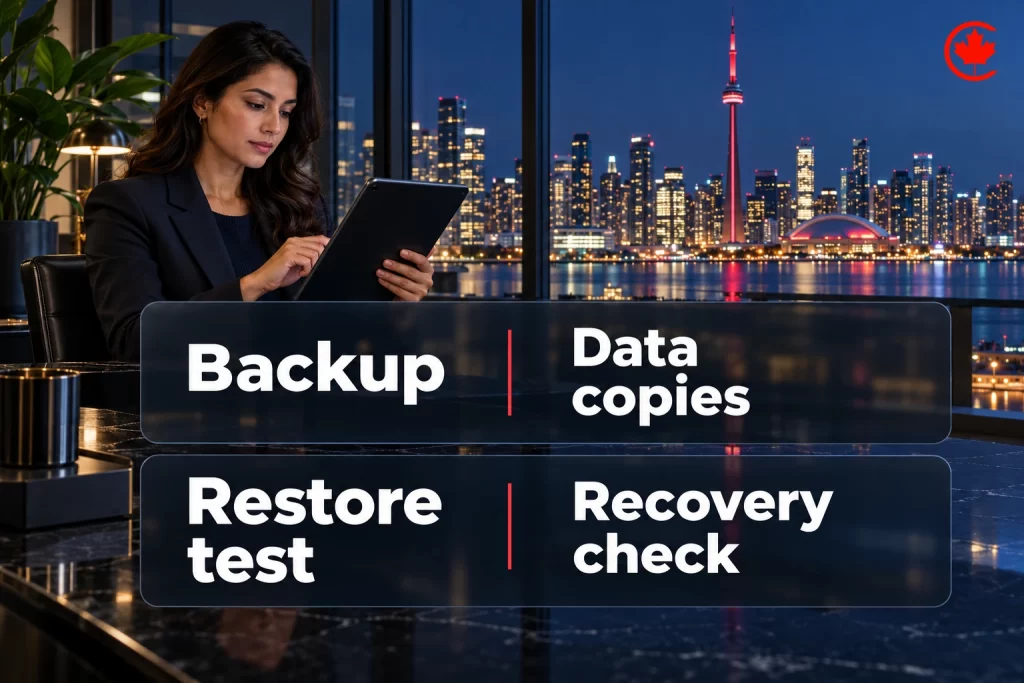
- Configuring hosting environments with proper firewalls, malware scanning and backups that are actually tested.
- Setting up SSL correctly, not just installing a certificate and forgetting about renewal and configuration details.
- Monitoring for unusual traffic patterns or defacement attempts, especially for ecommerce clients.
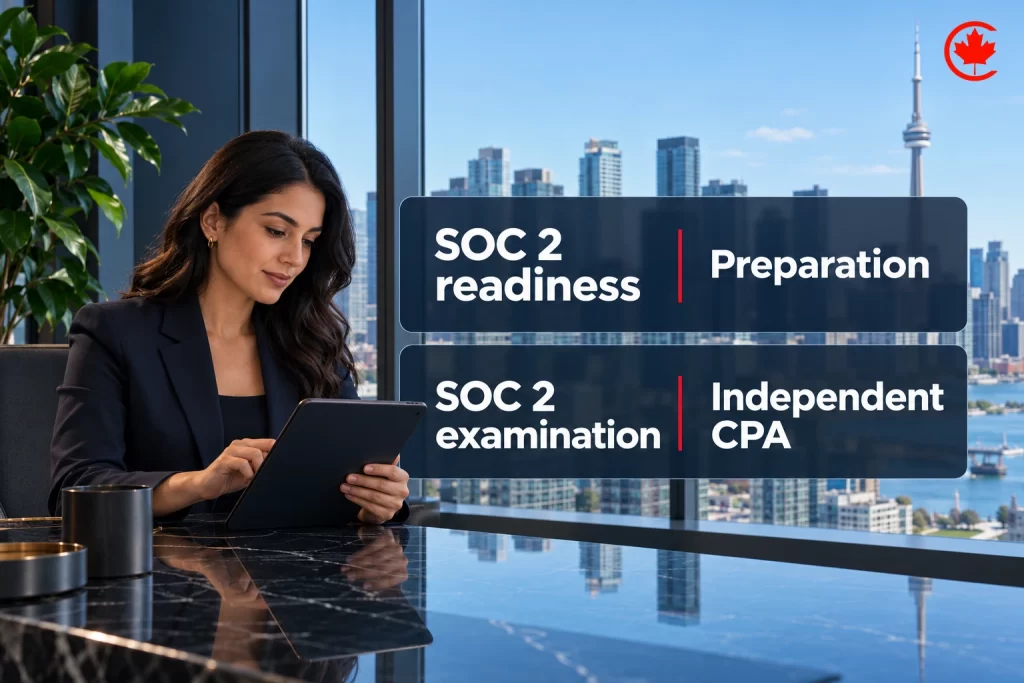
Network security, endpoint protection and compliance work need a clearly defined scope and named responsibilities. Canada Create offers SOC 2 readiness support, including gap assessments, policies, controls and evidence preparation, and coordinates work with your IT team and other providers where needed. An independent licensed CPA firm performs the SOC 2 examination and issues the report; readiness consulting does not replace that examination.
If you need a security review of your website, whether that is an audit of your current WordPress setup or a rebuild with security built in from day one, book a consultation with us. You can also see how we approach website hosting.
What to ask before hiring a cyber security company
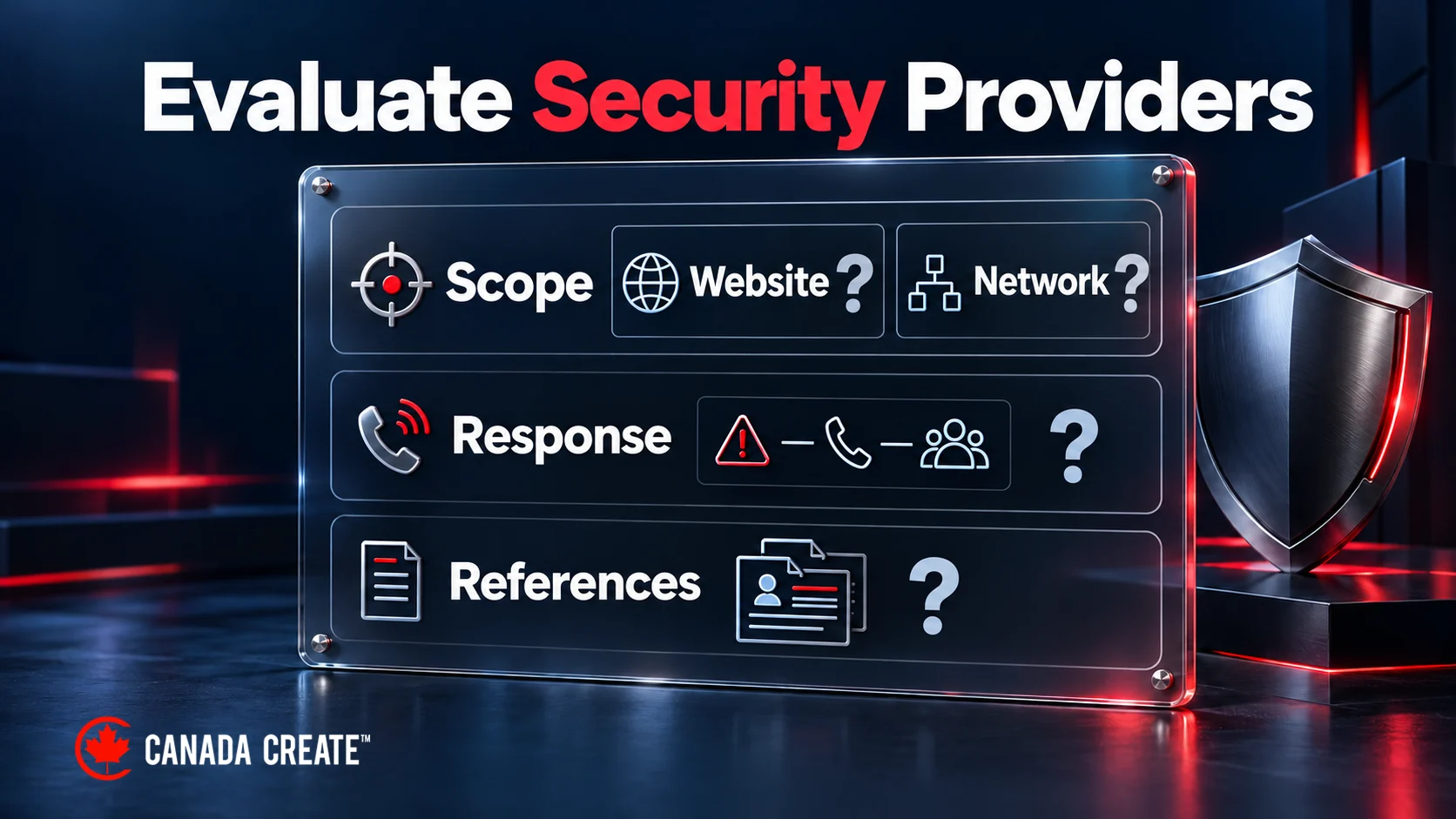
Whether you are evaluating a full-scope IT security company or checking whether your website needs attention, a few questions cut through the sales noise:
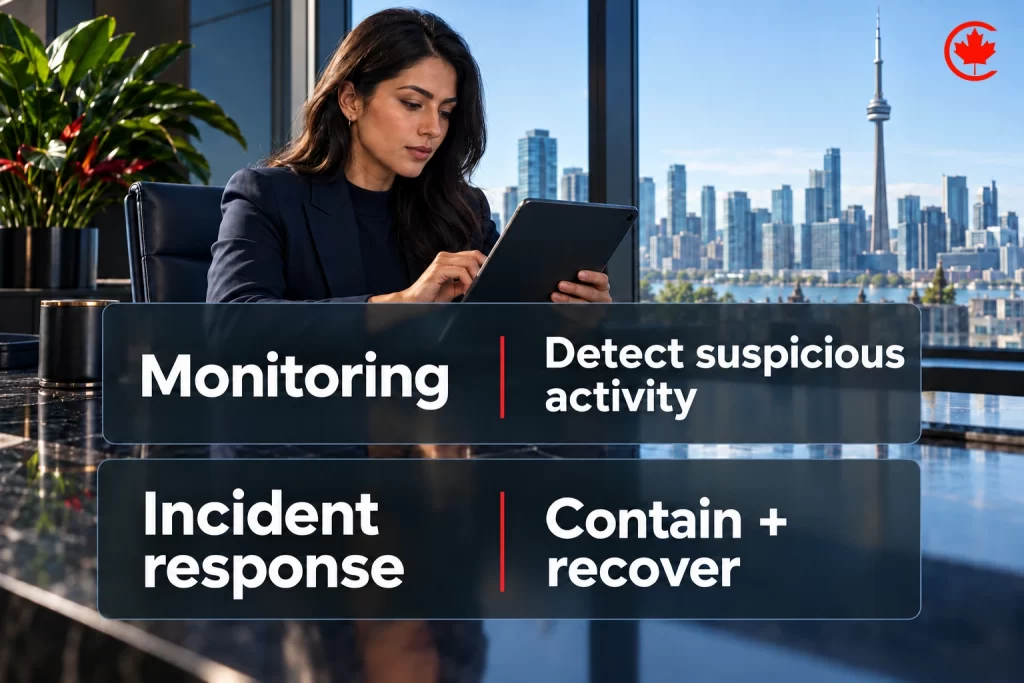
- What exactly is included in ongoing monitoring, and how often do you report? Vague answers here are a red flag.
- Do you have experience with businesses our size and in our industry? Check that the proposed services match your requirements, and compare itemized fees for the same scope.
- How do you handle an actual incident, not just prevention? Response time and process matter as much as prevention tools.
- Is website and application security included, or is that a separate service? Network security and website security are often handled by different specialists, and it is worth knowing which one you are buying.
- Can you provide references from businesses like ours? A real track record beats a polished sales deck.
Clients sometimes ask us for a second opinion on the website and hosting part of a security proposal before they sign. We are happy to have that conversation, even outside a formal engagement.
We plan and deliver cyber security services for businesses in Toronto and across Canada, scoped in writing after a free review.
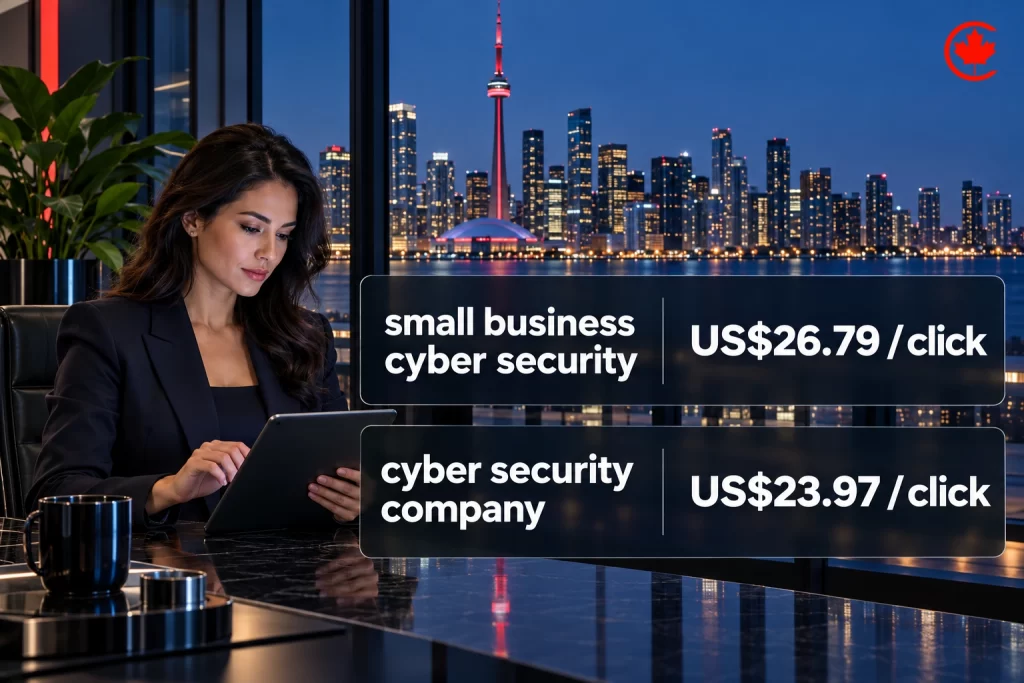
Why small businesses are targets
Small businesses are attractive targets precisely because owners assume they are too small to matter. Automated attacks do not check company size, and a compromised website or leaked customer list can undo years of trust.
Preventive controls and tested recovery can reduce the cost and disruption of an incident, although costs depend on the exposure and event. If you are comparing IT security companies because something already went wrong, or because you want to get ahead of a problem, include a review of your website and hosting in that process rather than leaving it for later.
Want a second opinion on your website’s security before you commit to a broader IT security contract? Reach out to Canada Create. Request your custom proposal after discovery.
Canada Create, 126 Willowdale Ave., Suite #3, Toronto, ON M2N 4Y2 (our Toronto office). Call (416) 273-9030, Monday to Friday, 9 am to 6 pm, and Saturday, 10 am to 2 pm. After hours, our 24/7 AI agent answers the toll-free line, +1 (800) 808-9235, and we’ll follow up the next business morning.
Frequently asked questions
What should a small business check when choosing a cyber security company?
Start with what you need to protect, because a retailer taking online payments, a law firm holding confidential files and a clinic covered by Ontario's PHIPA have different priorities. Ask what ongoing monitoring includes, how incidents are handled and whether website and application security is in scope. Compare itemized fees for the same scope and ask for references from businesses like yours.
What are red flags when hiring a cyber security company?
Vague answers about what monitoring covers and how often you get reports are the clearest warning. Be wary of generic pitches that bundle enterprise services you do not need, or that cannot explain how they respond to a real incident rather than only prevent one. A polished sales deck with no references from similar businesses is another one.
What kinds of cyber security services do IT security companies offer?
They generally fall into three groups. Managed security service providers monitor networks around the clock, IT consultancies handle security as part of broader IT support, and specialist firms focus on penetration testing or compliance audits. Network security and website security are often handled by different specialists, so confirm which one you are buying.
What basic security rules should a small business apply to its website?
Update core software, plugins and themes on a schedule instead of waiting for something to break, and enforce strong authentication for every admin user. Host the site with proper firewalls, malware scanning and backups you have actually tested restoring. Configure SSL correctly, watch its renewal, and monitor for unusual traffic or defacement.
Why do cyber attackers target small businesses in Canada?
Automated attacks do not check company size, and owners who assume they are too small to matter often leave gaps open. A compromised website or leaked customer list can undo years of trust. Preventive controls and tested recovery can reduce the cost and disruption of an incident, though that depends on the exposure.
Does cyber security for a small business need to cover its website?
Yes. Websites are compromised through outdated content management systems, vulnerable plugins and weak hosting setups, and a hacked site can become an entry point into other systems. A business can lock down its internal network and still run a WordPress site with old plugins and no malware monitoring.
Can a cyber security company issue a SOC 2 report for a small business?
No, an independent licensed CPA firm performs the SOC 2 examination and issues the report. A security provider can offer readiness support, such as gap assessments, policies, controls and evidence preparation. Readiness consulting prepares you for the examination and does not replace it.
What should the written scope say before you hire a security contractor?
It should assign each responsibility by name: updates, admin authentication, hosting firewalls, malware scanning, tested backups, SSL and monitoring. A website build does not automatically include continuing maintenance, so check that ongoing work is listed. Network security, endpoint protection and compliance work each need a clearly defined scope too.