
How naturopaths and acupuncturists get more patients

Naturopathic and acupuncture clinics have strong search demand and a particular marketing challenge. “Acupuncture” draws about 49,500 searches a month in Canada, “naturopath” about 22,200 and “naturopath near me” about 12,100. Their marketing also needs careful attention to professional standards, platform policies and health-claim evidence. Clinics that grow build trust through credentials, clear explanations of what a visit involves, benefits information and careful, evidence-aware language.
This guide covers how naturopathic and acupuncture clinics in Canada market themselves: search demand, regulation and titles, the claims rules, local search, service and practitioner pages, benefits and receipts, content, paid search, referral relationships, retention and measurement.
Search demand
| Search | Estimated monthly searches in Canada |
|---|---|
| acupuncture | 49,500 |
| naturopath | 22,200 |
| naturopath near me | 12,100 |
We plan and run naturopathic marketing for clinics and practices in Toronto and across Canada, scoped in writing after a free review.
All three searches cost relatively little per click compared with many professional services terms, and they sit close together, with “naturopath” slightly higher than the other two. These national estimates are not local campaign quotes, current bids or costs per booked or attended appointment. Overlapping search volumes do not represent unique patient counts.
These national estimates provide search-demand context, but click prices alone do not establish whether a campaign is affordable. Many searchers are early in their research. They want to understand what naturopathic medicine or acupuncture involves, whether practitioners are regulated and whether their benefits cover visits before they book.

Regulation and titles
- Naturopathic doctors are regulated in several provinces, including Ontario, British Columbia, Alberta, Saskatchewan, Manitoba and Nova Scotia. In Ontario, the College of Naturopaths of Ontario regulates the profession and sets advertising standards.
- Acupuncture and traditional Chinese medicine are regulated in provinces including Ontario, British Columbia, Alberta, Quebec and Newfoundland and Labrador. In Ontario, the College of Traditional Chinese Medicine Practitioners and Acupuncturists of Ontario regulates practitioners, and other regulated professionals such as physiotherapists and chiropractors may also perform acupuncture within their scope.
Show each practitioner’s actual registered title and registration. Patients increasingly check, and a clear credentials section is one of the strongest trust signals you can offer.
Claims: what you can and cannot say
Health claims are where most problems arise. Across regulators, platforms and consumer protection law, the common expectations are:
- No unsupported or prohibited claims that a treatment will cure or prevent a disease.
- No claims that are not supported by adequate evidence.
- No content that discourages patients from conventional medical care, including vaccination.
- No unsupported superiority claims over other practitioners.
- Natural health product claims limited to what Health Canada has authorized for that product.
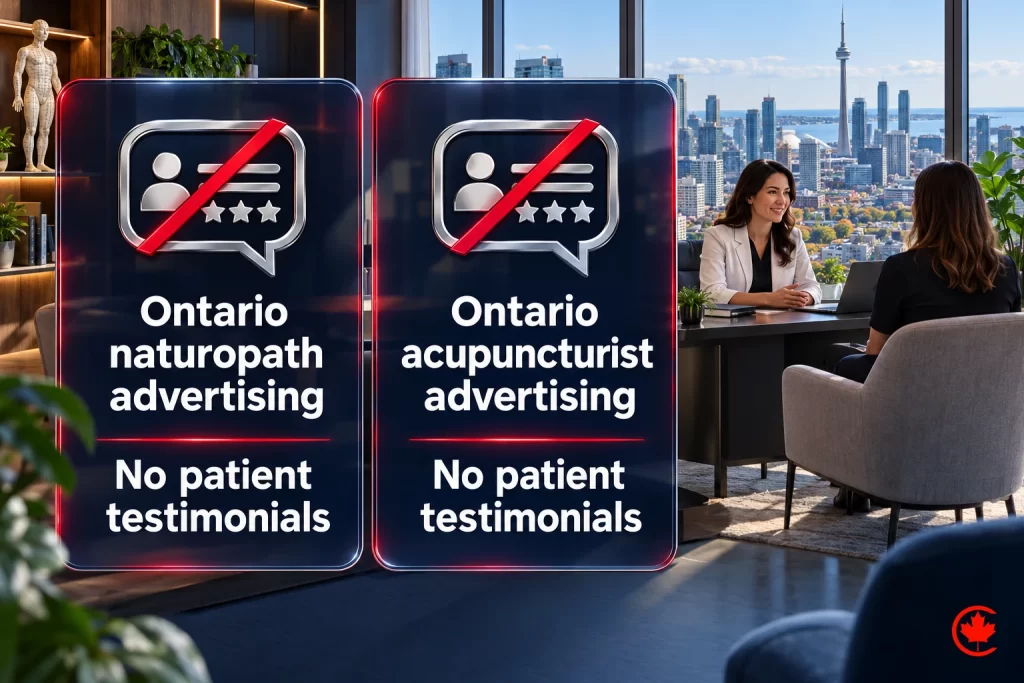
- Testimonials only where your college permits them. Ontario naturopaths and registered acupuncturists cannot use patient testimonials in advertising.
Write in measured language: describe what a visit involves, the practitioner’s approach and the areas of health they commonly see, and invite patients to discuss their goals. Read healthcare advertising rules in Canada for the wider rules.
Local SEO
- Use your real clinic name and the most accurate primary category, with secondary categories for each regulated service you offer.
- Keep one profile per real location, with hours, a booking link and virtual visit options where permitted.
- List services and add real photos of the clinic and practitioners.
- Keep your details consistent across directories.
- Check your regulator’s review rules before making requests. Ontario naturopaths and registered acupuncturists should not solicit patient testimonials. Consent does not override advertising restrictions, and replies must protect confidentiality.
See the Google Business Profile optimization guide for step by step detail.
Service and practitioner pages
Separate pages for naturopathic medicine, acupuncture and each other service you offer help patients and search engines understand your clinic. A strong service page explains:
- What the first visit involves and how long it takes.
- What happens at follow-up visits.
- Which practitioners provide the service and their registration.
- Fees, receipts and direct billing.
- How the service can work alongside a family doctor’s care.
- How to book, in person or virtually.
Practitioner profiles should cover training, registration, areas of focus, languages and a short personal introduction. Patients often choose the person before the clinic.
Benefits and receipts
Many workplace benefit plans reimburse naturopathic and acupuncture visits when the practitioner is registered. A benefits page should explain what plans commonly cover, which plans you bill directly, what receipts include and what to check with the plan. A reminder before plan years reset brings back patients with unused coverage.

Content that builds trust
| Topic | Why it works |
|---|---|
| What to expect at your first naturopathic visit | Removes uncertainty for new patients |
| How acupuncture appointments work | Answers a common pre-booking question |
| How to check whether a practitioner is registered | Builds trust and shows you stand behind your credentials |
| Using your benefits for naturopathic or acupuncture care | High intent and practical |
| Working alongside your family doctor | Reassures cautious patients |
Have practitioners review every article, check the evidence and permitted wording for any health claim, and date the content.
Paid search
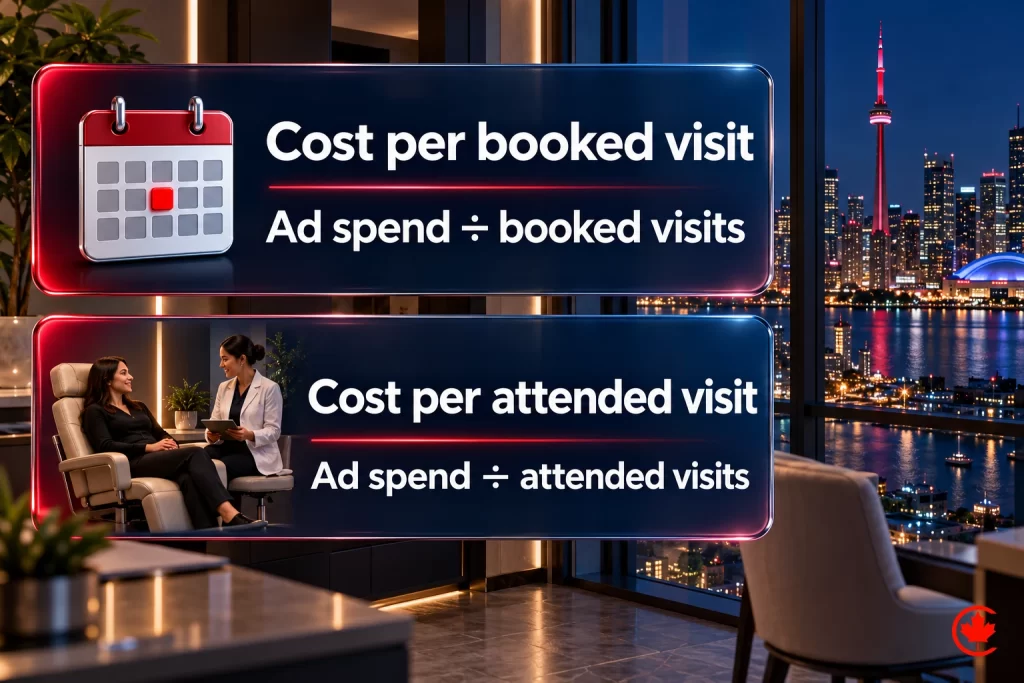
Paid search may help new clinics and new practitioners, but affordability depends on cost per attended appointment, not click price alone. Run campaigns by service and location, target searches with clear intent such as naturopath near me or acupuncture plus a neighbourhood, and send every click to a page with booking. Google and Meta restrict certain health claims and targeting, so ads focus on access, credentials and booking. Exclude searches for schools, courses and jobs.
Referral relationships
Family physicians, physiotherapists, chiropractors, midwives, fertility clinics and pharmacists sometimes refer patients for complementary care. A short professionals page, clear communication with the patient’s consent and respect for other providers’ roles build those relationships over time. Keep any referral arrangements within your college’s rules.
Retention
Care plans often involve several visits. Rebooking at checkout, reminders based on the plan your practitioner recommends and helpful newsletters to patients who have agreed to receive them keep care on track. Newsletters need consent under Canada’s anti-spam law, and care reminders should stay separate from promotions.
Measuring results
| Measure | What it shows |
|---|---|
| New patients by source and service | Which channels and services grow |
| Rebooking rate | Whether first visits become care plans |
| Practitioner utilization | Where to focus marketing |
| Cost per new patient | Whether paid search is worth it |
First visit experience
New patients are often unsure what a naturopathic or acupuncture visit involves. A smooth first visit turns curiosity into a care plan:
- Send intake forms before the visit through a secure system, with a clear explanation of how information is protected.
- Explain how long the visit lasts and what will happen.
- Discuss goals, history and how care can work alongside the patient’s other providers.
- Agree on a plan and book the next visit before the patient leaves.
- Follow up with a short summary and any educational material the practitioner recommends.
Virtual care
Some naturopathic services can be delivered virtually where regulation allows. Explain clearly which services are available online, which provinces you can serve under your registration, how virtual visits work and what technology patients need. Virtual care pages can reach patients beyond your local area, but registration and licensing limits must be respected.
Dispensary and product content
Clinics with a dispensary need extra care. Product pages and social posts must stay within the claims Health Canada has authorized for each natural health product, and should never suggest that a product replaces medical care. Separate product promotion from clinical advice, and make sure practitioners recommend products based on the patient’s needs, not sales targets.
Multidisciplinary clinics
Many clinics combine naturopathic medicine, acupuncture, massage, physiotherapy or chiropractic care. This can be a real advantage, because patients can access several services in one place. Make it easy to navigate: separate pages for each service, clear practitioner profiles with each person’s registration, and a booking system that lets patients choose a service and practitioner. Cross-referrals within the clinic should always be based on the patient’s needs.
A worked example
Consider an integrative clinic with two naturopathic doctors and one registered acupuncturist. Its website describes services in general terms, uses some outdated health claims and does not explain benefits. In the first month it reviews its college standard, rewrites service pages in measured language, updates practitioner profiles and completes its Google profile. In the second month it publishes a benefits page, connects online booking and launches local search campaigns for naturopath and acupuncture searches. In the third month it publishes first visit guides and approaches a local physiotherapy clinic and a midwifery practice. By the end of the quarter the clinic can see new patients by source and service and its rebooking rate. Use those figures to decide which service pages and referral relationships deserve further work.
A 90 day plan
- Days 1 to 30: review your college’s advertising standard, update practitioner profiles with registration details and tidy your Google Business Profile.
- Days 31 to 60: publish service and benefits pages, connect online booking and launch local search campaigns.
- Days 61 to 90: publish two trust-building articles, contact referral partners and review new patients and rebooking by source.
Want help growing an integrative clinic? See our naturopathic marketing and SEO for healthcare services, or read the clinic marketing guide.
Frequently asked questions
What do people want to know before they book a naturopath?
Many searchers are early in their research and want to understand what naturopathic medicine involves, whether practitioners are regulated and whether their benefits cover visits. Pages that explain the first visit, follow-up visits, fees, receipts and direct billing answer those questions. Practitioner profiles matter too, since patients often choose the person before the clinic.
How should a naturopathic clinic show that its practitioners are regulated in Canada?
Show each practitioner's actual registered title and registration, because patients increasingly check. Naturopathic doctors are regulated in several provinces, including Ontario, British Columbia and Alberta, and in Ontario the College of Naturopaths of Ontario sets advertising standards. A clear credentials section is one of the strongest trust signals a clinic can offer.
What can naturopaths say in marketing about whether their treatments help?
Avoid unsupported claims that a treatment will cure or prevent a disease, and make no claim that adequate evidence does not support. Describe what a visit involves, the practitioner's approach and the areas of health they commonly see, then invite patients to discuss their goals. Google and Meta also restrict certain health claims, so ads usually focus on access, credentials and booking.
Can naturopaths and acupuncturists in Ontario use testimonials to build trust?
No, Ontario naturopaths and registered acupuncturists cannot use patient testimonials in advertising, and patient consent does not override that restriction. Check your regulator's rules before asking for reviews, and protect confidentiality in any reply. Credentials, clear visit explanations and a guide on checking a practitioner's registration build trust instead.
Who can provide acupuncture in Ontario apart from registered acupuncturists?
The College of Traditional Chinese Medicine Practitioners and Acupuncturists of Ontario regulates acupuncturists, and other regulated professionals such as physiotherapists and chiropractors may also perform acupuncture within their scope. Acupuncture is regulated in several other provinces too, including British Columbia, Alberta and Quebec. Each practitioner's marketing should show their own registered title.
Should a clinic offering naturopathy and acupuncture give each service its own page?
Yes, separate pages help both patients and search engines understand the clinic. Each page should explain the first visit and its length, follow-ups, who provides the service and their registration, fees and receipts, and how it can work alongside a family doctor's care. A booking system that lets patients choose both service and practitioner makes the next step easy.
How can a naturopathic clinic reassure patients who worry about the drawbacks?
Publish practical content such as a guide to the first appointment, how to check whether a practitioner is registered and how care can work alongside a family doctor. Have practitioners review every article, check the evidence behind any health claim and date the content. Measured, honest language reassures cautious patients more than enthusiasm does.
Can a naturopathic clinic advertise that its approach is better than other care?
No, unsupported superiority claims over other practitioners are a common problem across regulators and platforms. Content must never discourage patients from conventional medical care, including vaccination. Describe your approach on its own terms and show respect for other providers' roles.
What should a clinic avoid when promoting natural health products from its dispensary?
Product pages and social posts must stay within the claims Health Canada has authorized for each natural health product. Never suggest a product replaces medical care, and keep product promotion separate from clinical advice. Practitioners should recommend products on the patient's needs, not sales targets.