
How optometry and hearing clinics get more patients

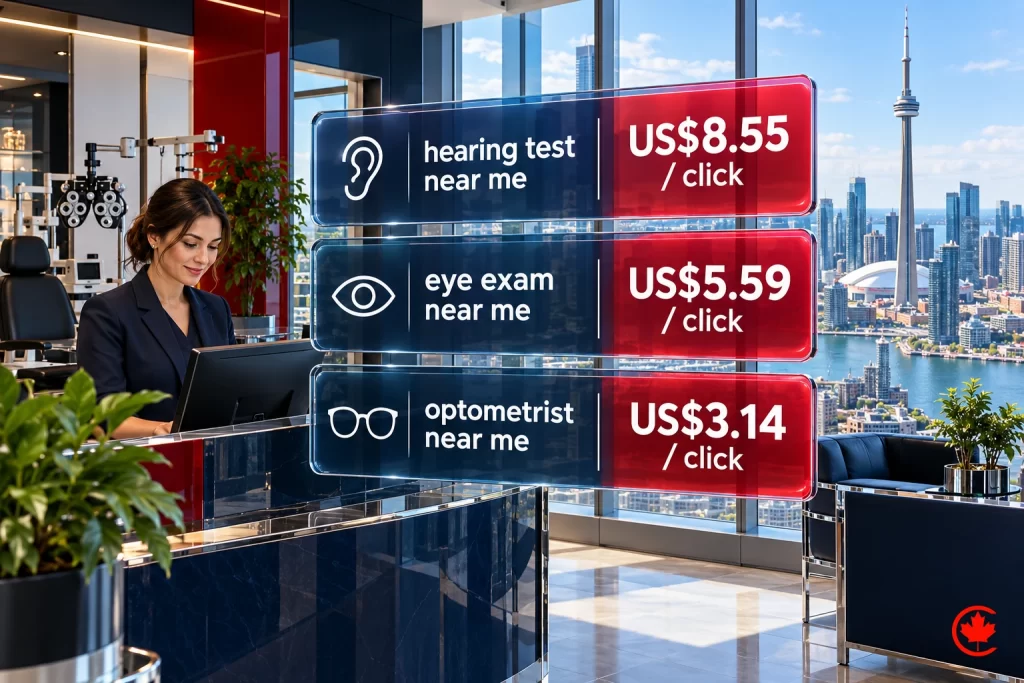
Optometry and hearing clinics share a business model that most clinic marketing advice ignores. Each combines a regulated health service, an eye exam or a hearing assessment, with a retail purchase: glasses, contact lenses or hearing aids. Patients search for both. “Optometrist near me” gets about 74,000 searches a month in Canada, “eye exam near me” about 33,100, “hearing aids” about 18,100 and “hearing test near me” about 5,400. The clinics that grow win the exam, earn the purchase and bring patients back on schedule.
This guide covers how eye care and hearing clinics in Canada market themselves: search demand, how patients choose, coverage and funding pages, local search, service and product pages, retail promotion within the rules, paid search, recalls and retention, and how to measure the whole cycle.
Search demand
| Search | Estimated monthly searches in Canada | Estimated cost per click, compared within this table |
|---|---|---|
| hearing test near me | 5,400 | Highest |
| hearing clinic near me | 3,600 | Higher |
| eye exam near me | 33,100 | Moderate |
| optometrist near me | 74,000 | Lower |
| hearing aids | 18,100 | Lowest |
We plan and run optometry marketing for clinics and practices in Toronto and across Canada, scoped in writing after a free review.
Rows are ordered from highest to lowest estimated cost per click. These national estimates are not local campaign quotes, current bids or costs per booked or attended appointment. Overlapping search volumes do not represent unique patient counts.
These national estimates provide search-demand context for eye care and hearing services. The listed hearing-test and hearing-clinic searches have higher estimated click costs than the eye-care searches, but the table does not explain why. Plan budgets around your actual appointment, fitting and follow-up economics, rather than search volume alone.
How patients choose a clinic
Eye care patients mostly want convenience: a clinic nearby, good reviews, evening or weekend hours, online booking and clarity about coverage. Parents look for children’s exams and myopia management. Contact lens wearers want renewals without hassle. Many compare clinic optical shops with retail chains and online sellers on frame selection and price.
Hearing patients often take years to act on hearing loss, and many are prompted by a family member. They want a calm, unhurried assessment, honest advice on whether they need hearing aids, clear pricing, funding information and support after fitting. Adult children frequently do the research for a parent.
Coverage and funding pages
Coverage questions drive many searches and calls. Explain them accurately for your province:
- Eye exams: in Ontario, OHIP covers eligible exams for people aged 19 and under, people aged 65 and older, and adults aged 20 to 64 with specified conditions. Covered intervals differ: seniors without an eligible medical condition generally qualify every 18 months. Confirm current eligibility before promising coverage. Other provinces differ.
- Eyewear: workplace benefit plans often cover glasses or contact lenses up to a limit.
- Hearing aids: Ontario’s Assistive Devices Program helps eligible residents pay for hearing aids, and some patients have coverage through workplace plans, Veterans Affairs Canada or workers’ compensation. Explain what applies and how your clinic helps with paperwork.
- Direct billing: list the plans you bill directly and what the patient needs to bring.
Clear coverage pages rank for high intent searches, reduce calls and remove one of the biggest reasons people delay booking.
Local SEO for eye care and hearing clinics
- Use your real clinic name and accurate primary categories, such as optometrist or hearing aid store, with secondary categories only for services you offer.
- One profile and one location page per real clinic, with hours, parking and accessibility.
- List services and products, and add real photos of the exam rooms, optical and team.
- Connect online booking to your profile.
- Check each practitioner’s regulator before requesting reviews or using testimonials. Ontario optometrists cannot use testimonials in advertising. Where review requests are permitted, invite honest feedback without incentives or selecting only satisfied patients; keep replies general.
Many clinics run inside a mall or a medical building. Make sure the address and directions on your profile help people find the entrance.
Service and product pages
For eye care: routine eye exams for each age group, children’s exams, myopia management, dry eye assessment and treatment, contact lens exams and fittings, diabetic eye exams, urgent eye visits if you see them, and the optical with frame brands and lens options.
For hearing care: hearing tests, hearing aid fittings and follow-up, tinnitus support, hearing protection and custom earplugs, repairs and batteries, and pages for families helping a parent.
Each page should explain what happens, how long it takes, coverage, the professionals involved and how to book. Use only evidence-supported clinical claims permitted by the applicable rules, and describe each professional’s actual registration: optometrists, opticians, audiologists and hearing instrument practitioners are regulated differently, and rules vary by province.
Retail promotion within the rules
Eyewear and hearing aid promotions can work, but they sit inside professional rules and consumer protection law:
- Offers must be accurate, with clear terms on what is included and any conditions.
- Advertised prices must include mandatory fees, apart from taxes.
- Avoid pressure tactics, especially with older patients.
- Do not suggest that a product replaces a professional assessment.
- Check your college’s standard on offers and free services before launching.
Seasonal content works well: back to school eye exams in late summer, a reminder to use eyewear benefits before year end, and hearing protection before summer festivals and hunting season.
Paid search
Eye exam campaigns can help reach people who are ready to book; test their cost per appointment in your area. Run them by service and location, send each to the matching page with online booking and schedule ads around open appointments. Hearing campaigns should focus on hearing tests and consultations, with landing pages that explain the process and funding. Add negatives for jobs, schools and product manuals. Track bookings, not only clicks. Health advertising policies apply, so ads focus on access and booking rather than health claims.
Recalls and retention
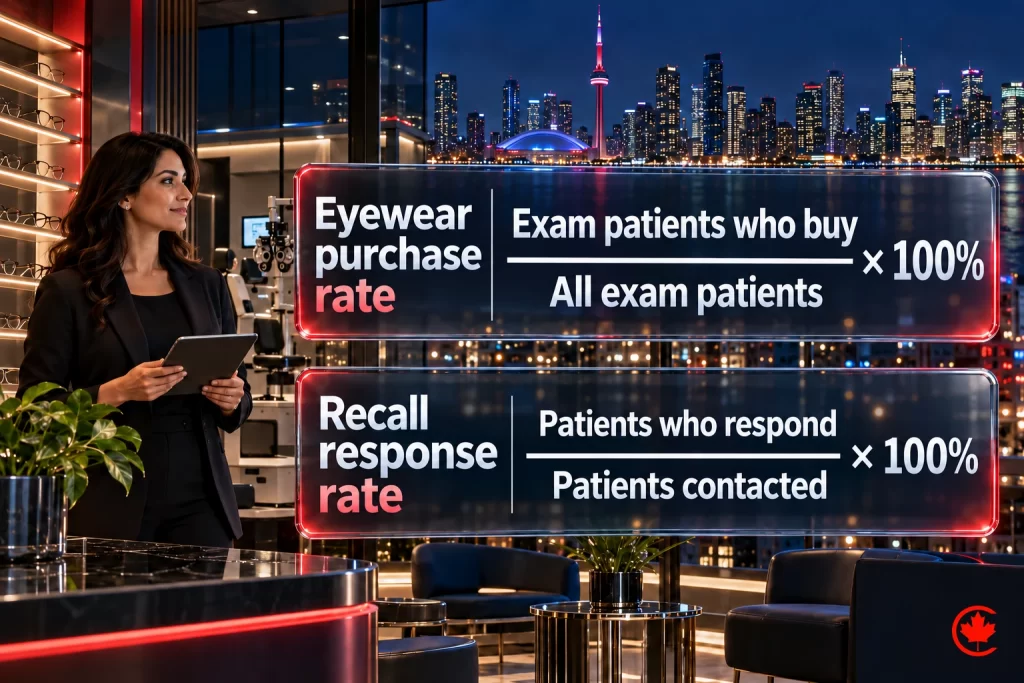
Eye care and hearing care are recurring relationships. Recall reminders for annual or two-year exams, contact lens renewals, hearing aid check-ups and battery or warranty reminders bring patients back. These care communications are separate from promotional email, which needs consent under Canada’s anti-spam law. Track recall response rates by message and channel, and adjust timing and wording. See online booking for clinics for connecting booking with reminders.
Referral relationships
Family physicians, ophthalmologists, ENT specialists, pharmacists and retirement homes all refer patients. A short page for professionals, easy referral forms and reliable reports back keep those referrals flowing. Retirement homes and community centres often welcome hearing screening events and talks on eye health.
Measuring the full cycle
| Measure | What it shows |
|---|---|
| New patient exams by source | Which channels bring new patients |
| Exam to eyewear purchase rate | Whether the optical captures the sale |
| Hearing test to fitting rate | Whether the hearing journey converts |
| Recall response rate | Whether patients come back on schedule |
| Revenue per new patient by channel | Where to invest next |
Winning the optical sale
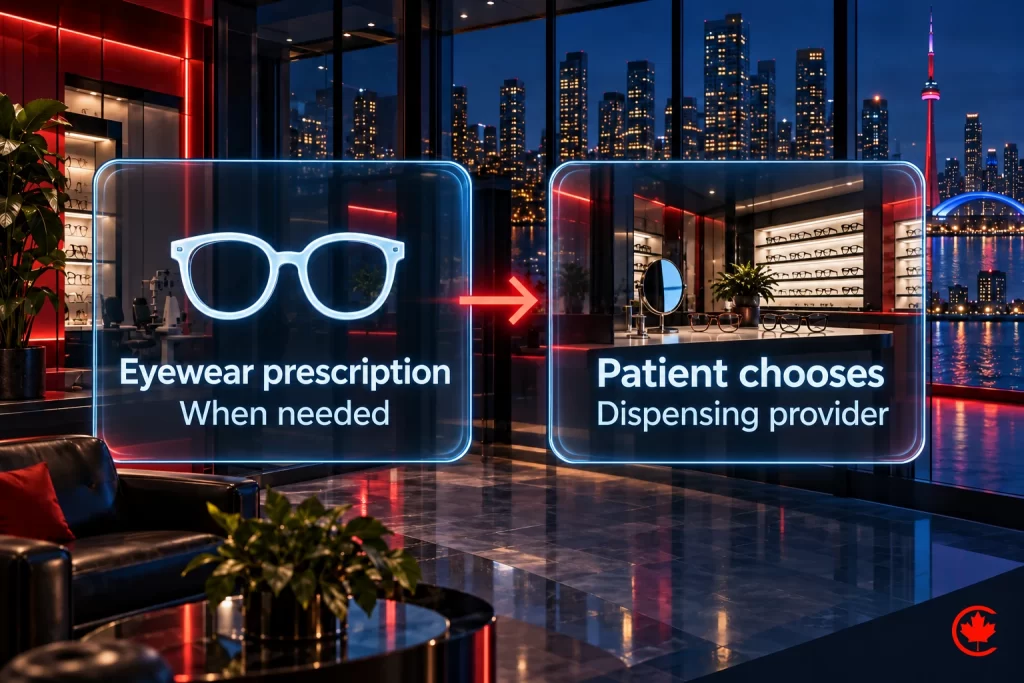
Many patients leave after an eye exam with a prescription and buy glasses elsewhere. Keeping the purchase starts before the exam:
- Show frame brands, lens options and price ranges on your website, so patients know you are competitive before they arrive.
- Explain the value of in-clinic fitting, adjustments, lens measurements and follow-up service.
- Make benefit use easy: direct billing, help understanding coverage and reminders when coverage renews.
- Train the team to walk patients from the exam room to the optical with a clear explanation of what the prescription means for their lenses.
- Offer online frame browsing or appointment-based styling sessions.
Track the share of exam patients who buy eyewear in the clinic. It is one of the clearest measures of whether the business model is working.
The hearing aid journey
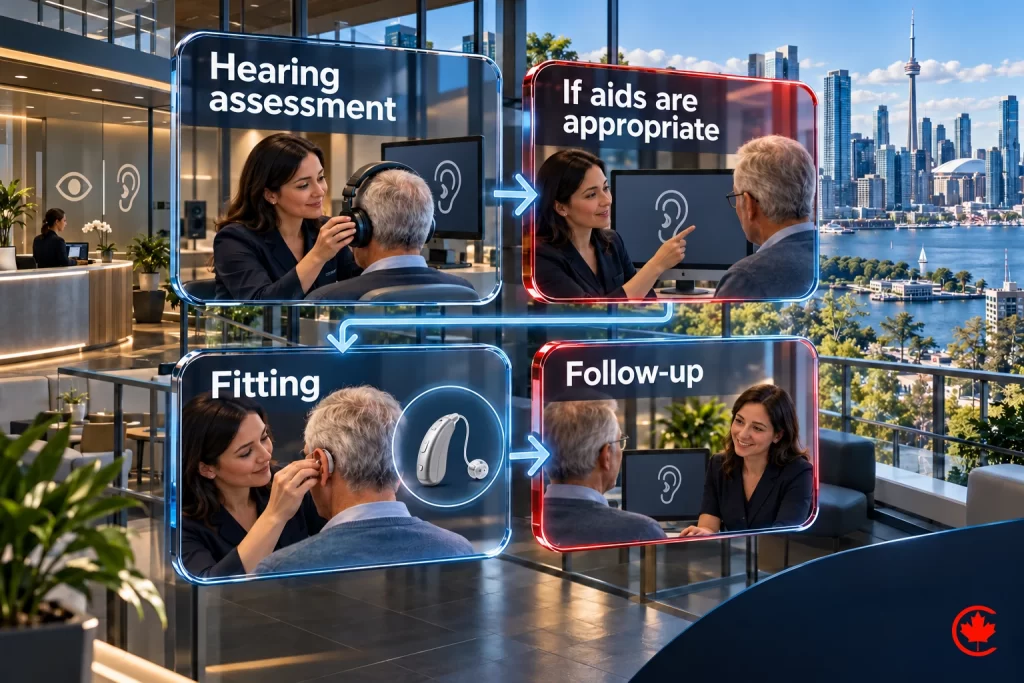
Hearing aid patients move slowly and need reassurance. A clear, staged journey helps:
- Awareness: content on signs of hearing loss, for patients and for family members.
- Hearing test: an easy booking process and a clear explanation of the appointment.
- Consultation: honest advice on whether hearing aids are needed and which options fit the person’s lifestyle and budget.
- Funding: help with provincial programs, workplace coverage or other funding sources.
- Fitting and follow-up: adjustment visits and support during the first weeks.
- Ongoing care: cleaning, check-ups and eventual replacement.
Each stage deserves content, and each handoff deserves a follow-up. Avoid pressure tactics, especially with older patients, and give families clear information they can review together.
Children and families
Parents are a key audience for eye care. Pages and campaigns ahead of the school year can remind parents about children’s eye exams, explain coverage in your province and describe myopia management if you offer it. Family booking, where several members can be seen in one visit, is a practical convenience worth promoting.
Partnerships in the community
- Family physicians and pharmacists who see patients with diabetes or vision complaints.
- Retirement homes and community centres for hearing screening events and eye health talks.
- Schools and parent associations for back to school reminders, within any rules the school sets.
- Workplaces that want hearing protection or eye safety sessions.
A worked example
Consider a clinic group with two optometry locations and one hearing clinic. Its Google profiles are incomplete, appointments can only be booked by phone and the website does not explain coverage. In the first month it completes each profile, connects online booking and publishes coverage and direct billing pages. In the second month it launches local search campaigns for eye exams and hearing tests, builds a children’s eye exam page and checks each profession’s rules before setting up a review process. In the third month it sets recall reminders, plans a back to school campaign and adds content for families helping a parent with hearing loss. By the end of the quarter the group can see new patients by source and the share who buy eyewear or hearing aids. Those results show whether to focus next on exam bookings, fittings or recalls.
A 90 day plan
- Days 1 to 30: tidy each clinic’s Google Business Profile, connect online booking and publish clear coverage pages.
- Days 31 to 60: build service pages for exams, children, dry eye and hearing tests, and launch local search campaigns.
- Days 61 to 90: set up recall reminders, plan a seasonal campaign and review revenue per new patient by channel.
Want help growing an eye care or hearing practice? See our optometry marketing and healthcare marketing services, or read the clinic marketing guide and healthcare advertising rules in Canada.
Frequently asked questions
How do optometry and hearing clinics attract new patients?
Eye care patients mostly want convenience: a nearby clinic, good reviews, evening or weekend hours, online booking and clear coverage information. Hearing patients often wait years and are prompted by a family member, so they want a calm assessment, honest advice, clear pricing and support after fitting. Adult children often research for a parent, so speak to them too.
How should an optometry clinic describe the different eye and hearing professionals on its website?
Describe each person's actual registration, because optometrists, opticians, audiologists and hearing instrument practitioners are regulated differently and the rules vary by province. Use only evidence-supported clinical claims the applicable rules permit. Each service page should name the professionals involved and explain what happens and how long it takes.
How can an optometry clinic help people searching nearby find the right location?
List the clinic under its real name with accurate primary categories, and give each clinic one profile and one location page showing hours, parking and accessibility. If the clinic sits inside a mall or medical building, make sure the address and directions lead people to the entrance. Ontario optometrists cannot use testimonials in advertising, so check your regulator before setting up any review process.
How can an optometry clinic keep the eyewear sale after the eye exam?
Show frame brands, lens options and price ranges online so patients know you are competitive before they arrive. Explain the value of in-clinic fitting, adjustments and follow-up, make benefit use easy with direct billing, and walk patients from the exam room to the optical. Track the share of exam patients who buy eyewear in the clinic.
How should an eye clinic accepting new patients explain OHIP coverage for exams?
In Ontario, OHIP covers eligible eye exams for people aged 19 and under, people 65 and older, and adults aged 20 to 64 with specified conditions, and covered intervals differ. Confirm current eligibility before promising coverage, and note that other provinces differ. A clear coverage page with the plans you bill directly reduces calls and removes a common reason people delay booking.
How should an optometry and hearing clinic guide patients considering hearing aids?
Treat it as a staged journey: content on signs of hearing loss, an easy hearing test booking, honest advice on whether aids are needed, help with funding and adjustment visits after fitting. In Ontario, the Assistive Devices Program helps eligible residents pay for hearing aids, and some patients have workplace or Veterans Affairs Canada coverage. Avoid pressure, especially with older patients, and give families information they can review together.
How can a family eye care clinic market children's eye exams?
Run pages and campaigns ahead of the school year that remind parents about children's exams, explain coverage in your province and describe myopia management if you offer it. Family booking, where several members are seen in one visit, is a practical convenience worth promoting. Schools and parent associations may share back to school reminders within their own rules.