
How landscaping and snow removal companies win contracts

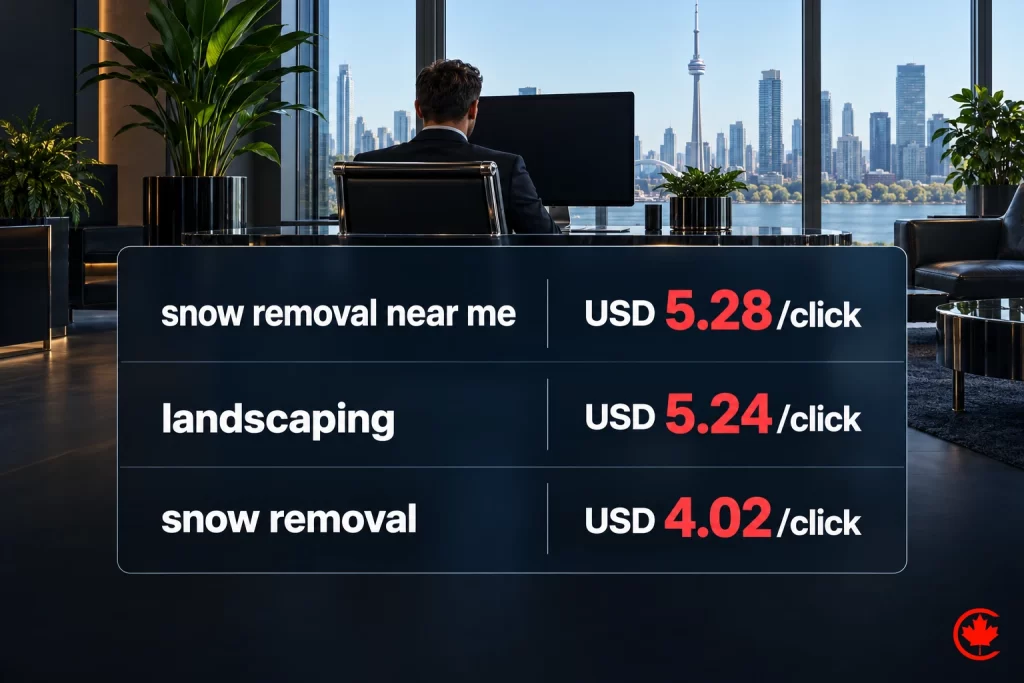
Landscaping and snow removal share crews, trucks and customers, and in Canada they are two halves of the same business year. In Canada, “landscaping” draws an estimated 18,100 searches a month, “snow removal” about 9,900 and “snow removal near me” about 3,600. Estimated click costs for “snow removal near me” and “landscaping” are close to each other and higher than for “snow removal”, and actual campaign costs vary. These searches overlap, so they should not be added up into a count of unique customers. Companies that smooth their revenue sell seasonal contracts early, fill the shoulder seasons and keep commercial clients on multi season agreements. This guide covers how.
The year at a glance
| Period | Sell |
|---|---|
| Late winter | Spring clean up, design and build projects for the coming season |
| Spring | Lawn care plans, planting, hardscaping and patios |
| Summer | Maintenance plans, irrigation and lighting |
| Late summer and early fall | Snow removal contracts, fall clean ups, aeration |
| Winter | Snow service delivery, holiday lighting, design consultations for spring |
We plan and run landscaping marketing for home service companies in Toronto and across Canada, scoped in writing after a free review.
Show the work
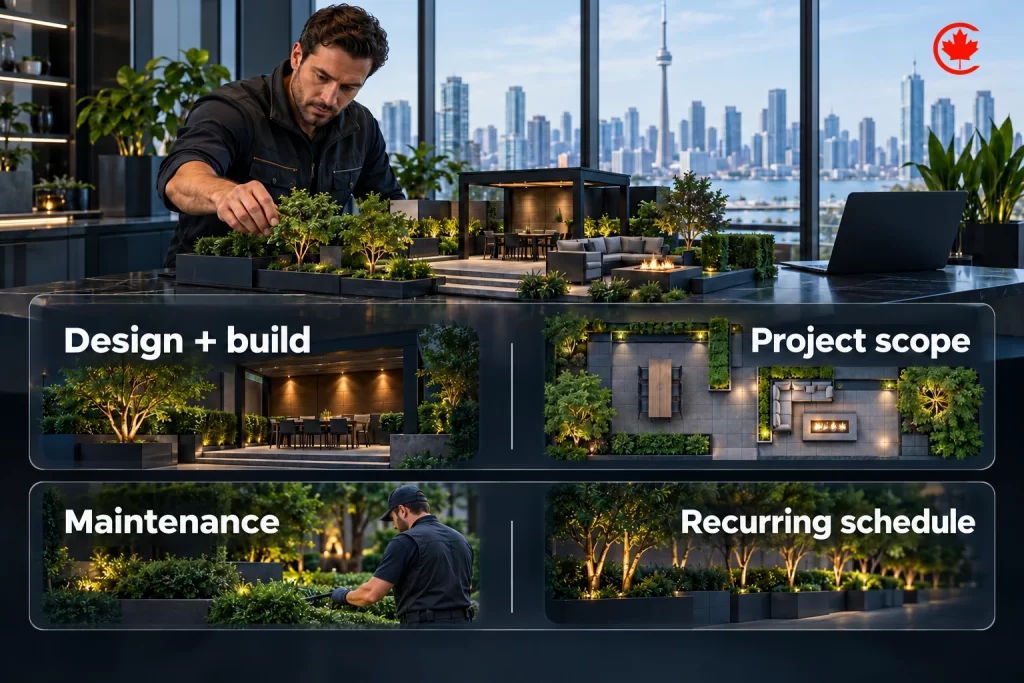
- Project galleries for patios, retaining walls, gardens and lighting, with before and after photos taken with permission.
- Drone shots of larger properties. See our drone photography.
- 3D designs for hardscaping projects so clients can picture the result.
Snow removal contracts
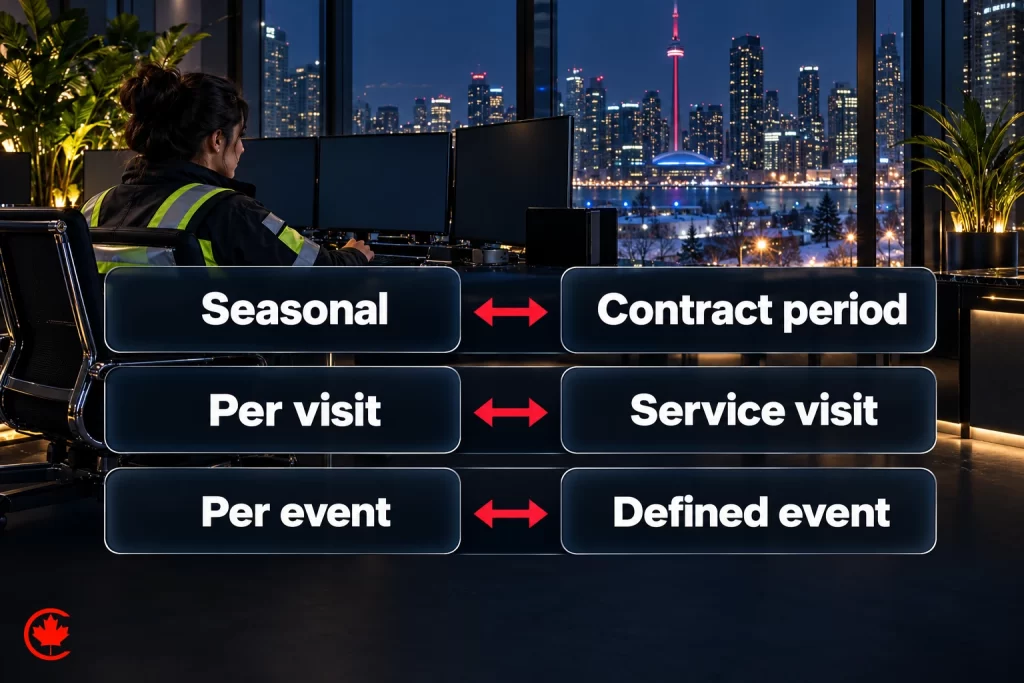
- Explain contract types clearly: per visit, seasonal or per event, with triggers and response times.
- Show coverage areas on a map.
- Sell early: many homeowners and businesses sign before the first snowfall.
- Commercial clients want proof of insurance, documented service logs and reliability.
Winning commercial and property management contracts
Commercial properties, condominium corporations and property managers often buy landscaping and snow services together, and they usually compare several bids. Winning these accounts depends less on advertising and more on how well you answer the buyer’s questions about reliability and risk.
- Prepare a short capabilities document with your service area, crew and equipment, insurance coverage, safety practices and the types of properties you already maintain.
- Explain how you document service: site visit logs, timestamps, photos and salt or de-icing records. Property managers need these when a slip and fall claim arrives.
- Describe your storm plan in plain words: when crews go out, how sites are prioritized and how the client is kept informed.
- Find out when local condominium boards and property managers review contracts and reach out before that window, often in spring for landscaping and summer for snow.
- After you win an account, a short review at the end of each season keeps the relationship strong and opens the door to renewal and added services.
Following up on estimates
Many landscaping quotes are lost not because the price was wrong but because nobody followed up. Homeowners planning a patio or garden project often take weeks to decide, and a polite, timely follow up keeps you in the running.
- Send the estimate quickly after the site visit, with photos or a sketch of what you discussed.
- Follow up a few days later to answer questions, and again before your schedule fills for the season.
- Explain what the client can do now to hold a spot, such as approving the design or choosing materials.
- Record why lost quotes were lost, so you can adjust your offer or your target customers.
Product and claim accuracy
Ontario restricts the use of pesticides for cosmetic purposes on lawns and gardens, so describe lawn care treatments accurately. Environmental claims should describe specific, supportable practices. For pesticide products, Health Canada’s advertising guidance rejects broad unqualified green claims and describing the product itself as “organic”; follow the applicable product rules.
Local search and reviews
Use accurate service areas on your Google Business Profile, build pages for each service and city, and ask for reviews at the end of each project or season. Read the Google Business Profile guide.
Systems for recurring revenue
Recurring maintenance and snow contracts need scheduling, renewals and billing reminders. A landscaping CRM keeps renewals on time and lets you upsell spring services to winter clients.
Selling the next season to current clients
The cheapest new contract is usually one from a client you already serve. Because landscaping and snow removal run on opposite halves of the year, every client in one season is a natural prospect for the other.
- Offer snow clients a spring clean up and lawn care plan before the snow melts, and offer summer maintenance clients a snow contract in August.
- Walk the property at the end of each season and note what the client might need next, such as drainage work, a tired patio or new plantings, then send a short written suggestion.
- Ask satisfied clients for referrals to neighbours, since crews already working on a street can add nearby properties efficiently.
- Send renewal notices well before the season starts, with any changes to the service explained clearly.
Keep each client’s history in one place so every crew member and office staff member knows what the client has bought, what was promised and when they were last contacted.
Ads by season
Run landscaping campaigns in spring and summer and snow removal campaigns in late summer and fall, with negative keywords for DIY, equipment and jobs. Click cost alone does not show whether ads are profitable. Compare cost per booked contract with its expected gross profit and your service capacity.
Marketing through uncertain winters
Snow removal revenue depends on weather nobody can predict, and that affects how you market it. Seasonal contracts give clients a known cost and give you predictable revenue, while per visit and per event pricing shifts more of the weather risk to the client. Be clear in your marketing about which model you offer and what each one includes, such as the snowfall trigger, the number of visits, salting and the response time after a storm ends. Clients who understand the terms are less likely to dispute invoices after a heavy or a light winter.
Use your website and email list to communicate during the season too. A short post or message before a major storm explaining your plan reassures existing clients and shows prospects how you operate.

See our landscaping marketing service and the home services marketing guide.
Frequently asked questions
How do customers find landscaping and snow removal companies near them?
Most start with a local search, so set accurate service areas on your Google Business Profile and give every service and town you cover its own page. Ask for reviews at the end of every project or season. Project galleries, drone shots of larger properties and 3D hardscaping designs help a visitor picture the result.
What should a landscaping or snow removal service agreement spell out for clients?
Name the type, whether per visit, seasonal or per event, along with the snowfall trigger, number of visits, salting and response time after a storm. Show the coverage area on a map. Clients who understand the terms are less likely to dispute invoices after a heavy or a light winter.
How do landscaping companies win commercial and condominium snow contracts?
These buyers compare several bids and care most about reliability and risk, so prepare a short capabilities document covering service area, crews, equipment, insurance and safety practices. Explain how you log service with timestamps, photos and de-icing records, which property managers need if a slip-and-fall claim arrives. Reach boards and managers before they review suppliers, often in spring for landscaping and summer for snow.
How should a snow removal company present seasonal versus per-visit driveway pricing?
Explain which model you offer and what each includes. Seasonal agreements give the client a known cost and the company predictable revenue, while per-visit and per-event pricing shifts more of the weather risk to the client. Being clear up front avoids arguments after an unusual winter.
Can a landscaping business make steady money from snow removal?
It can, because landscaping and snow removal share crews, trucks and customers and fill opposite halves of the year. Companies that smooth revenue sell seasonal agreements early, fill the shoulder seasons and keep commercial clients on multi-season agreements. A CRM keeps renewals, scheduling and billing reminders on time.
When should a new snow removal company start selling its winter service?
Late summer and early fall, since many households and businesses sign before the first snowfall. Run snow removal ads from late summer through fall, with negative keywords for DIY, equipment and jobs. Send renewal notices to existing clients well before the season starts.
Is snow removal a natural add-on for landscaping clients?
Yes, every client in one season is a natural prospect for the other. Offer snow clients a spring clean-up and lawn care plan before the snow melts, and offer summer maintenance clients a snow agreement in August. Walking the property at the end of each season shows what the client may need next.
Can landscapers in Canada advertise organic or green lawn treatments?
Only with care. Ontario restricts pesticides for cosmetic use on lawns and gardens, so describe lawn treatments accurately. Health Canada's advertising guidance rejects broad unqualified green claims and calling a pesticide product organic, so describe specific, supportable practices instead.
Why do landscaping and snow removal companies lose quotes they could have won?
Often nobody followed up, since clients planning a patio or garden can take weeks to decide. Send the estimate soon after the site visit with photos or a sketch, follow up a few days later, and again before the schedule fills. Record why each lost quote was lost so you can adjust the offer or the target customer.