
How to get commercial cleaning contracts: a practical guide for Canadian cleaning companies
Commercial cleaning contracts are the backbone of a stable cleaning business. One office, clinic or building cleaned five nights a week can be worth more than dozens of one time residential jobs, and the work repeats month after month. The challenge is getting in the door: facility buyers already have a cleaner, switching feels risky to them, and they rarely search for a new provider until something goes wrong. This guide explains how Canadian cleaning and janitorial companies win commercial cleaning contracts in a repeatable way, from choosing the right targets to pricing, proposals, marketing and keeping the accounts you win.
It is written for owners of cleaning companies with a few employees up to a few hundred, whether you are moving from residential into commercial work or trying to grow an established janitorial business.
Decide which commercial accounts you want
“Commercial cleaning” covers very different work. A small dental office, a 40,000 square foot office tower, a school, a car dealership, a warehouse and a condominium common area each need different staffing, equipment, schedules, security procedures and pricing. Companies that win contracts consistently choose a few segments and become known for them.
Before you market anything, answer these questions:
- Facility types. Which buildings can you clean well today: offices, medical and dental clinics, retail, restaurants, industrial, education, condominiums, places of worship, gyms?
- Size. What is the largest building you can staff reliably every night, including when someone calls in sick?
- Geography. Which areas can your supervisors reach quickly for inspections and emergencies?
- Schedule. Can you staff evenings, overnights and weekends? Day porter service?
- Specialties. Floor care, carpet extraction, window cleaning, disinfection protocols for clinics, post construction cleans?
Write the answers down. They become your target list, your website structure and your sales pitch.
Understand who buys commercial cleaning
The person who signs is rarely the person who complains about the floors. In most buildings, several people influence the decision:
- Property managers handle multi tenant buildings and condominium common areas. They care about tenant complaints, budgets, insurance and reliability, and they often manage several buildings, so one good relationship can lead to more.
- Facility managers in larger companies care about consistency, documented procedures, supply management, security and reporting.
- Office managers and practice managers in smaller businesses and clinics care about a clean space every morning, trustworthy staff and quick responses when something is missed.
- Owners and finance leads care about total cost and value.
Your marketing and proposals should answer each person’s concern. A property manager wants to hear about tenant satisfaction and fast issue resolution; a clinic administrator wants to hear about infection control routines and staff training.
Get your credentials in order before you sell
Commercial buyers ask for proof early. Have these ready:
- Commercial general liability insurance with a certificate you can send quickly. Many buyers require specific limits and want to be named as additional insured.
- Workplace safety coverage. In Ontario, buyers commonly ask for a WSIB clearance certificate before work starts. Other provinces have their own workers’ compensation boards.
- Bonding if your buyers request it.
- Background checks for staff, and security clearances where the building requires them.
- Written procedures: cleaning checklists by area, key and alarm handling, incident reporting, WHMIS training for chemicals and how you handle quality inspections.
Show only credentials and certifications you actually hold. Claims about “green” or “eco” cleaning need to be accurate and supportable under the Competition Act; describe the specific products and practices you use.
Where commercial cleaning contracts come from
Most companies win contracts through a mix of channels. Relying on one is risky.
Referrals and existing relationships
Your current clients, their neighbours and the property managers you already work with are the warmest source. Ask satisfied clients for introductions, especially property managers who oversee other buildings. Contractors, renovation companies and office furniture installers also see buildings before they open and can refer post construction and ongoing work.
Direct outreach
A short, well researched outreach program still works: a list of target buildings in your area, the name of the property or facility manager, a brief introduction focused on their type of building and an offer of a free walkthrough. Follow up politely over several weeks. Commercial email in Canada must follow CASL: implied consent may apply when the recipient has conspicuously published their business email address, or caused it to be published, without a refusal of unsolicited messages and your message relates to their role. Keep evidence of those conditions, include sender identification and an unsubscribe, and honour opt-outs. A copied or purchased address alone does not establish consent.
Search and maps
When a buyer is unhappy with their current cleaner, many search “office cleaning” or “commercial cleaning” plus their city. A Google Business Profile with the right categories, a website with a page for each facility type and genuine reviews from commercial clients put you in that search. Our commercial cleaning leads service covers this channel in depth.
Paid search
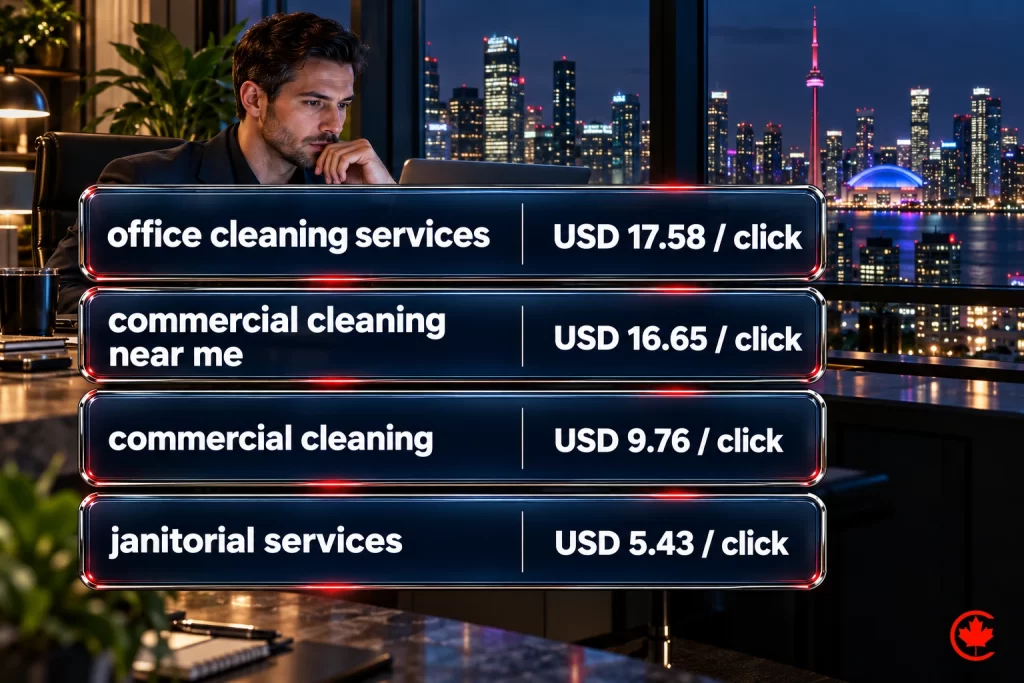
Google Ads can put you in front of buyers the moment they start looking. Commercial cleaning campaigns need tight targeting: separate campaigns for office, medical, industrial and condominium cleaning, and strong negative keywords for job seekers, residential cleaning and supply searches. Track walkthrough requests, not just clicks.
Subcontracting
Large national facility services companies often subcontract buildings to local cleaners. The margins are thinner, but subcontracting can fill crews, build references and teach you how larger accounts are run.
Public tenders
Governments, school boards, hospitals and other public bodies buy cleaning through public procurement. Federal opportunities are posted on CanadaBuys, and provinces and municipalities use their own portals, such as the Ontario Tenders Portal. Public tenders are detailed and competitive, with strict submission rules, mandatory site visits and evaluation criteria. Start with smaller opportunities that match your capacity, read every requirement and never miss a deadline.
Build a website that commercial buyers trust
Commercial buyers check your website before they reply to an email or return a call. A credible commercial cleaning site has:
- A clear headline that says you clean commercial facilities in specific areas.
- A page for each facility type you serve, explaining your routines, scheduling and quality checks for that setting.
- Insurance, workplace safety coverage, screening and training described plainly.
- Real photos of your team, equipment and the kind of buildings you clean (with permission).
- A simple walkthrough request form that asks for building type, approximate size, frequency and timing.
- Fast loading pages that work on a phone.
Avoid stock photos of people in spotless white uniforms holding spray bottles. Buyers have seen them a thousand times.
Run walkthroughs that win
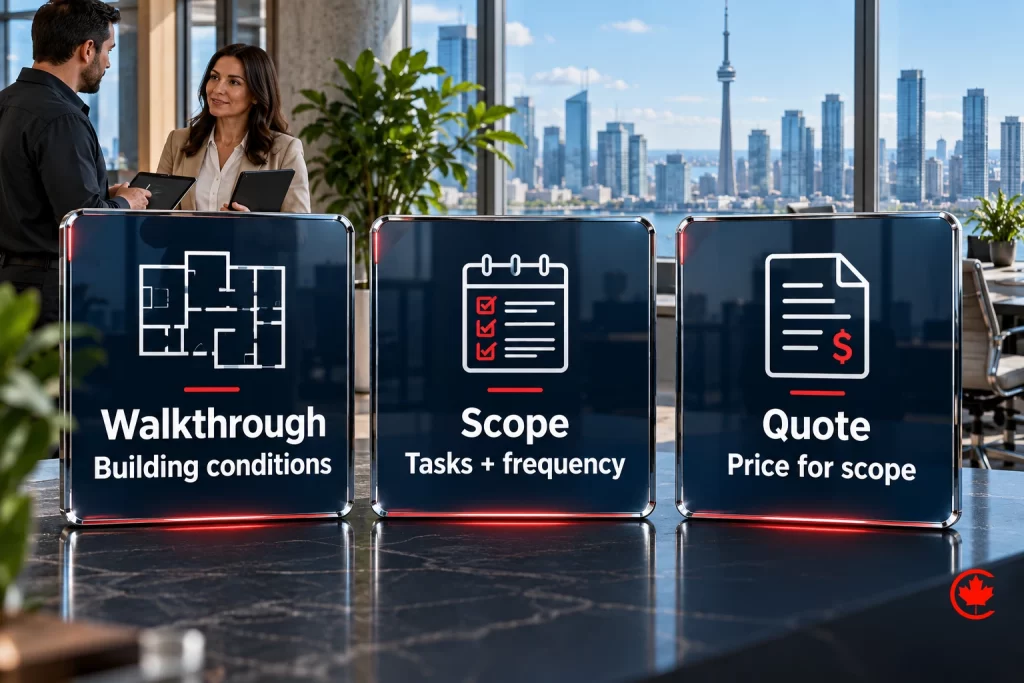
The walkthrough is where most contracts are won or lost. Treat it like a consultation, not a sales pitch:
We plan and run cleaning company marketing for home service companies in Toronto and across Canada, scoped in writing after a free review.
- Arrive prepared. Know the building type, approximate size and who you are meeting.
- Ask about the current problems. Missed areas, inconsistent staff, poor communication and slow responses are common reasons buyers switch. Listen carefully; your proposal should solve exactly these issues.
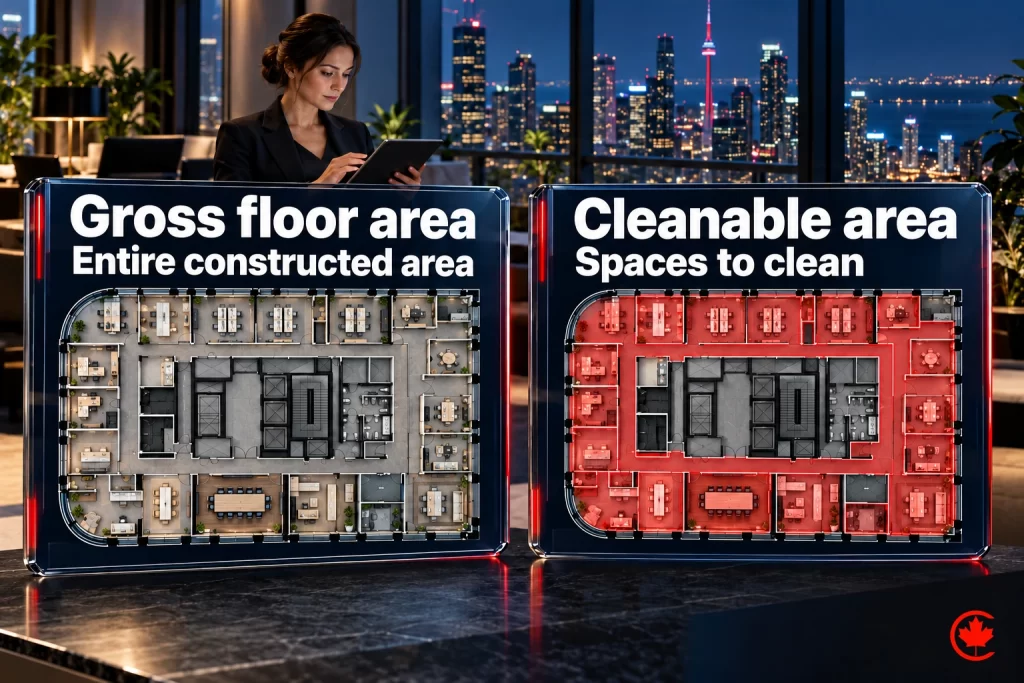
- Measure and note everything. Square footage by area, floor types, washrooms and fixtures, kitchens, high traffic zones, access and security procedures, storage for supplies and equipment.
- Clarify scope. Nightly tasks, weekly tasks, periodic work (floor stripping and waxing, carpet extraction, high dusting, windows), consumables and who supplies them.
- Agree on the next step. Confirm when the proposal will arrive, and deliver it on time.
Price commercial cleaning work carefully
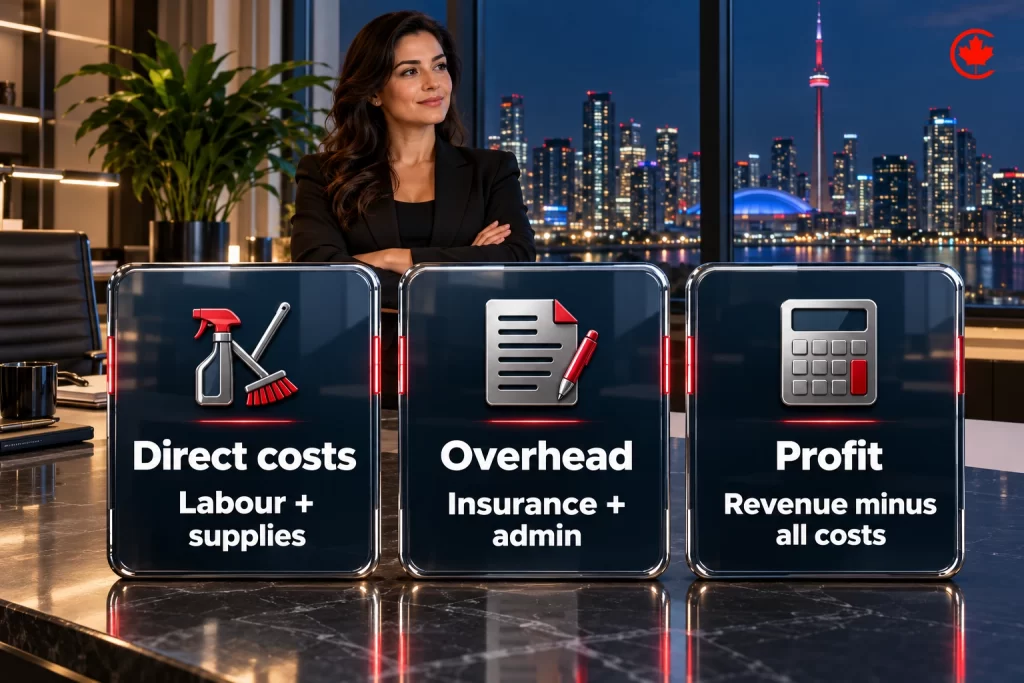
Pricing is where many cleaning companies either lose bids by guessing high or win work they cannot afford to do. Build every price from your own costs:
- Labour hours. Estimate the time each area needs using your own production rates by space type and task, then add travel, supervision and inspection time.
- Labour cost. Wages, statutory deductions, workers’ compensation premiums, vacation pay and training.
- Supplies and equipment. Chemicals, consumables if included, equipment wear and replacement.
- Overhead. Insurance, vehicles, office, software and management time.
- Margin. The profit you need to grow and absorb surprises.
Market rates vary widely by city, building type and schedule, so do not rely on a generic price per square foot from the internet. Track your actual hours on every account for the first few months and adjust future bids based on what you learn.
Write proposals that are easy to say yes to
A strong cleaning proposal is short, specific and professional. Include:
- A one paragraph summary of what you heard during the walkthrough and how you will address it.
- A scope of work by area and frequency, in a clear table.
- Staffing, supervision and quality inspection approach.
- Security, key and alarm procedures.
- How issues are reported and how fast you respond.
- Insurance and workplace safety documentation.
- Pricing, what is included and what is extra.
- A start plan, including the first week’s handover.
Have the agreement itself reviewed by a lawyer before you use it.
Use LinkedIn and local networking
Property and facility managers are active on LinkedIn and in local associations such as building owners and managers associations, facility management groups and chambers of commerce. Owners who show up consistently (sharing practical posts about seasonal cleaning, floor care or preparing an office for winter, and attending local events) build familiarity long before a buyer is ready to switch. Keep it helpful, not salesy.
Keep the contracts you win
Winning a contract is expensive. Keeping it is where the profit is. The cleaners who keep accounts for years do the same simple things well:
- Start strong. Over staff the first two weeks, inspect daily and check in with the client at the end of week one.
- Inspect regularly. Supervisors use a checklist and share results with the client.
- Make it easy to report problems. One phone number or email, a fast acknowledgement and a fix the same night where possible.
- Keep staff consistent. Buyers notice turnover; consistent crews build trust.
- Review quarterly. A short meeting to review quality, upcoming events and periodic work keeps the relationship healthy and opens doors to extra services.
Happy clients can become useful references. Ask for permission to use written testimonials and for introductions to other properties. Request Google reviews neutrally from all eligible clients, without selecting only satisfied clients or offering incentives.
Measure what actually brings contracts
Track each lead from first contact to signed agreement: where it came from, whether a walkthrough happened, whether you submitted a proposal and whether you won. After a few months you will see which channels bring buyers who sign and which only bring tire kickers. Put your time and budget into the winners. A simple CRM makes this easy and reminds you to follow up on proposals that went quiet.
Common reasons cleaning companies lose bids
When a proposal does not win, the reason is usually one of a few things:
- Vague scope. Buyers compare proposals line by line. If yours does not show tasks by area and frequency, it looks less professional than one that does.
- Missing documents. A late insurance certificate or missing workplace safety clearance can disqualify an otherwise strong bid.
- Price without explanation. A higher price can win if the proposal shows why: supervision, inspections, consistent staff and faster response.
- No follow up. Many buyers take weeks to decide. A polite check in after a week, and again later, keeps you in the conversation.
- Weak first impression. An outdated website, a generic email address or a walkthrough that started late can undermine trust before pricing is even discussed.
Ask for feedback when you lose. Many buyers will tell you why, and the answer helps you win the next one.
Use one time work as a door opener
Buyers who are not ready to switch their regular cleaner may still need a one time service: carpet extraction, floor stripping and waxing, window cleaning, a post renovation clean or a deep clean before an inspection or event. These jobs let a facility manager see your crew, your communication and your quality without the risk of changing providers. Do them exceptionally well, leave a short written summary of what was done and follow up a few weeks later. Many ongoing contracts start this way.
When to get help with marketing
Many owners handle referrals and walkthroughs themselves but struggle to keep a steady flow of new opportunities. That is where a marketing partner can help: building facility type pages, managing search and ads, setting up tracking and CRM follow up and keeping your Google Business Profile active. If you also serve homes, our cleaning company marketing page explains how residential and commercial funnels work together, and our lead generation page covers broader B2B lead programs.
Frequently asked questions
Where do commercial cleaning contracts usually come from?
Most companies win them through a mix of channels: referrals from current clients and property managers, direct introductions to target buildings, search and maps, paid search, subcontracting and public tenders. Relying on a single channel is risky. Contractors and renovation companies can also refer post-construction and ongoing work.
How do I get clients for a commercial cleaning business when buyers already have a cleaner?
Facility buyers rarely look for a new cleaner until something goes wrong, so be visible and credible before that moment. Speak to each decision maker's concern: tenant complaints for property managers, documented procedures for facility managers, infection control for clinic administrators, and total cost for owners. Property managers often oversee several buildings, so one good relationship can lead to more.
Which types of commercial cleaning should a company focus on?
Choose a few segments you can clean well today, such as offices, medical and dental clinics, retail, industrial or condominium common areas, and become known for them. Be honest about the largest building you can staff every night, the areas your supervisors can reach quickly and whether you can cover overnights. Those answers shape your target list, website and pitch.
What credentials do buyers ask for before awarding a commercial cleaning contract?
Have a commercial general liability certificate ready to send, often naming the buyer as additional insured. In Ontario, buyers commonly ask for a WSIB clearance certificate, and bonding, staff background checks and written procedures for keys, alarms, incidents and WHMIS training may be requested. Green cleaning claims must be accurate and supportable under the Competition Act.
How do businesses find commercial cleaning services near them?
An unhappy buyer often searches office cleaning or commercial cleaning plus their city. A maps listing set up under accurate cleaning categories, a website page per facility type and genuine reviews from commercial clients put you in that search. The website should make walkthrough requests easy.
Can a cleaning company email office managers about its services under CASL?
Sometimes. Implied consent may apply when the recipient conspicuously published their business email without saying they refuse unsolicited messages, and your message relates to their role. Keep evidence of those conditions, include sender identification and an unsubscribe, and honour opt-outs; a copied or purchased address alone is not consent.
Is subcontracting for large facility services companies worth it for a cleaning business?
It can be, though margins are thinner than on direct accounts. Large national facility companies often subcontract buildings to local cleaners, which can fill your crews and build references. It also teaches you how larger accounts are run before you bid on them yourself.
How should a cleaning company run Google Ads to land commercial contracts?
Split campaigns by office, medical, industrial and condominium cleaning, and add strong negative keywords for job seekers, residential cleaning and supply searches. Send each campaign to the matching facility page. Measure walkthrough requests rather than clicks.
How can a cleaning company get government and public sector cleaning contracts?
Governments, school boards, hospitals and other public bodies buy cleaning through public procurement, so you bid on posted tenders rather than wait for an enquiry. Have insurance certificates, workers' compensation clearance and written procedures ready before you bid. Smaller firms often gain the references public buyers expect by subcontracting first.