
Toronto · Venue website design
Wedding venue website design in Toronto
A venue site that answers what couples ask before they book a tour, loads fast on a phone and that your own team can keep current.
Websites for wedding venues in Toronto and the GTA and across Canada: room and ceremony pages, packages, galleries, video tours, date enquiry forms and tour booking your team can update.
- BBB A+ accredited
- 18 years in business
- Mon to Fri 9 to 6, Sat 10 to 2
Get a custom proposal for your wedding venue website
Send us your current site and tell us about your rooms and packages, and we will send a custom proposal with fees quoted in writing. We reply within one business day.
Please do not share passwords or other sensitive details here. We never sell your contact information and we comply with Canadian privacy law
(privacy policy).
Venue website design features couples look for before a tour
A page for every space
Capacity, layouts, photos and packages for each room and ceremony site.
Enquiries with the right details
Date, guest count and space captured in a short form couples finish on a phone.
Galleries that load fast
Real weddings organized by space and season without slowing the site.
A site your team can edit
Coordinators update dates, packages and menus without a developer.
What a venue website build includes
The written proposal sets the exact pages and features; these are the usual parts.
- Space pagesOne page per room or ceremony site with capacity, floor plans and photos.
- Package and menu pagesWhat each package includes, sample menus and price guidance with fees shown clearly.
- Real wedding galleriesGalleries and short stories organized by space, season and style, with consent on record.
- Video and 360 toursWalkthroughs and tours embedded so they load only when played.
- Enquiry and tour bookingA short date enquiry form and a tour booking step with confirmations.
- Practical pagesCatering, vendors, parking, accommodation and accessibility answered plainly.
- Wedding format pagesCeremony only, elopement, micro wedding and cultural wedding pages as you offer them.
- Editing, accessibility and redirectsA content system for your team, WCAG build and old addresses redirected.
How a venue website is priced
Every website is quoted in writing after a free review. Hosting and software licences are shown separately.
Single space venue site
Quoted in writing
Venues with one main room or ceremony site
- Home and space page
- Package and menu pages
- Gallery and enquiry form
- Practical FAQ page
Multi room venue site
Quoted in writing
Halls, hotels and estates with several spaces
- Page per space
- Space comparison page
- Real wedding stories
- Tour booking step
Multi language venue site
Quoted in writing
Halls hosting large cultural weddings
- Pages in each served language
- Cultural wedding pages
- Menus by cuisine
- Language specific forms
Venue redesign
Quoted in writing
Venues replacing an older, slow site
- Content and page audit
- New design and build
- Redirects from old addresses
- Hosting and maintenance setup
Ad spend and software licences are paid to the platform directly and shown separately from our fees.
Venue website guide
What a wedding venue website needs to turn visits into tours
Wedding venue website design is the planning, design and build of a venue’s own site: pages for each room and ceremony site with capacity and layouts, package and menu pages, real wedding galleries, video walkthroughs, a date enquiry form and tour booking, all fast enough to load on a phone in a parking lot. It is for banquet halls, estates, barns, golf clubs, wineries, hotels, lofts and garden venues whose current site is slow, out of date, hard for staff to edit or simply not answering the questions couples ask before they request a tour. Canada Create is a Toronto agency that designs and builds venue websites for businesses across Canada.
- How couples compare venue websites
- Space pages for every room and ceremony site
- Package, menu and pricing pages
- Real wedding galleries, video and 360 tours
- Date enquiry forms and tour booking
- Pages for elopements, micro weddings and cultural weddings
- Catering, vendors, parking, rooms and access
- Speed, accessibility, editing and redesigns
- How the site works with ads, search and CS+
- Pricing display, accessibility, consent and privacy
- How we design a venue site and what drives cost
- Choosing a web designer for your venue
- Plan your wedding venue website design with a custom proposal
How couples compare venue websites
Couples rarely find a venue site by typing its address. They tap through from an Instagram post, a Pinterest pin, a map result or a search for small wedding venues Toronto, wedding venues Vaughan or wedding venues Mississauga, and they do it on a phone, often late in the evening. Within a week they usually have three to six venue sites open in browser tabs and flip between them.
The questions every venue page has to answer
- Can we hold the ceremony and reception in one place?
- Will our guest count fit, with a dance floor and a head table?
- Roughly what does it cost per person, and what is included?
- Is our date, or our season, open?
- Where do guests park, and is there accommodation nearby?
- Can grandparents and guests using wheelchairs move around easily?
- What does it look like at a real wedding, not an empty room?
A site that answers these in a few taps gets a tour request. A site that hides them in a brochure download or a contact form often gets closed. The design job is to put those answers where a couple expects them, in a style that feels like your venue.
The first screen on a phone
The top of the home page on a phone decides whether a couple keeps scrolling. It should show the venue at a real wedding, say in one line what kind of venue it is and where, and offer two clear paths: see the spaces, or check a date. Menus with a dozen items, autoplay music and popups asking for an email before anything is visible tend to send couples back to the next tab.
Space pages for every room and ceremony site
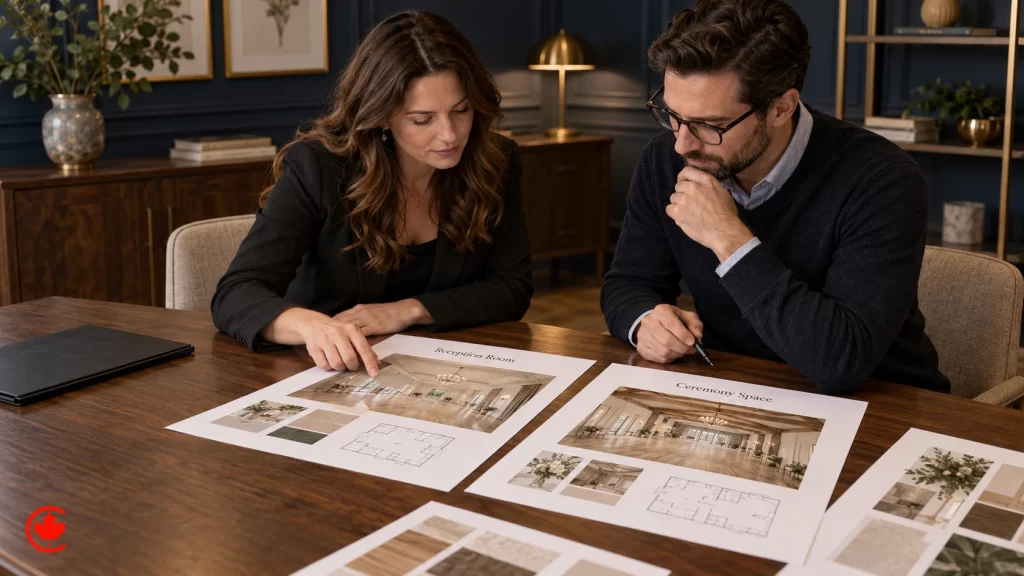
Many venues have one page called Weddings that tries to show everything. Couples looking for a garden ceremony and couples planning a 350 guest reception get the same scroll. We design a page for each space: the grand ballroom, the terrace, the barn loft, the vineyard ceremony site, the lakeside lawn, the private dining room for rehearsal dinners.
What a space page includes
- Seated and standing capacity, with and without a dance floor.
- Floor plans or layout options: long tables, rounds, a cocktail setup, ceremony rows.
- Photos of the space empty and dressed for a real wedding, in daylight and evening light.
- Which packages use this space, and the season it suits.
- The weather plan for outdoor ceremony sites.
- A button to ask about dates for this space.
Comparing spaces side by side
For venues with several rooms, a short comparison page helps couples choose: capacity, ceremony on site, natural light, outdoor access and which packages apply. This also gives your sales team a link to send when a couple is torn between two rooms.
Rehearsal dinners and the wedding weekend
Many couples want the rehearsal dinner, a welcome evening or a next day brunch at the same venue. If you host them, the private dining room or patio page can say so and show the smaller packages, which helps couples planning a full wedding weekend for out of town families.
Package, menu and pricing pages
How much to show about price is one of the first decisions in a venue website project. Some venues publish a starting per person price for each package; others publish a range by day of week or season; a few prefer to share price guidance only after an enquiry. The site should reflect the venue’s choice, but couples comparing six sites tend to shortlist the ones that give them some idea.
Package pages couples can follow
Each package gets a page that lists what is included in plain terms: ceremony setup, cocktail hour, dinner service style, bar package, linens and chair covers, cake cutting, a day coordinator, the bridal suite. Optional upgrades sit below. Where mandatory service charges, admin fees or taxes apply, the page says so beside the price, not at the bottom of a PDF.
Menus and catering
Menu pages show sample menus by package, dietary options, late night food and children’s meals. Venues that allow outside catering explain how it works, which caterers are approved and what fees apply. Cultural banquet halls often show separate menus for different cuisines and multi day events.
Seasonal and day of week pricing
Venues often price a June Saturday very differently from a Friday in November. A simple list of seasons and days, written as text so it reads well on a phone, lets couples see at a glance where their budget fits, and it nudges flexible couples toward dates you want to fill.
Brochure download or web pages
A downloadable brochure still has a place, especially for couples sharing details with parents. But a PDF is hard to read on a phone, cannot be searched, and goes out of date the moment a price changes. We usually put the core information on web pages and offer the brochure as a printable extra, sometimes in exchange for an email address with consent.
Real wedding galleries, video and 360 tours
Photos sell venues. They are also the main reason venue sites load slowly. A well designed gallery shows plenty of real weddings without making a couple wait.
Galleries organized the way couples browse
Instead of one long gallery, we organize real weddings by space, season and style: winter ballroom weddings, summer garden ceremonies, large South Asian receptions, small dinners for 40. Each real wedding can have a short story page naming the room, the season, the guest count and, with permission, the photographer and vendors. Our photography service can fill gaps where the venue has few shots of a space.
Video walkthroughs and 360 tours
A walkthrough video from the entrance to the reception room answers questions about flow, light and scale that photos cannot. A 360 tour lets couples look around a ceremony site before they visit. Both are embedded so they load only when a visitor presses play, which keeps the page fast. New walkthroughs can be filmed by our videography team.
Consent for every image
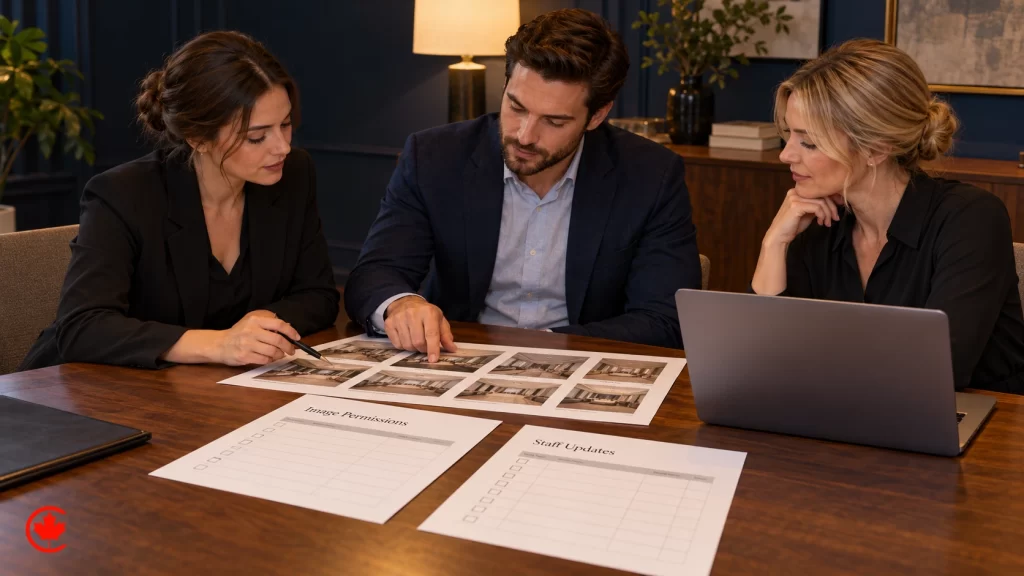
Every photo and video of couples, guests and children on the site needs written consent. We set up a simple record of which images are cleared so your team knows what can go online.
Descriptive names and alt text
Each image gets a file name and alt text that describes what it shows, such as the ballroom set with long tables or the lakeside ceremony arch at sunset. This helps couples who use screen readers and helps search engines understand which room each photo shows.
Date enquiry forms and tour booking
The enquiry form is where a venue site earns its keep. It should be short enough that couples finish it on a phone and detailed enough that your sales team can reply with something useful.
Fields to choose from
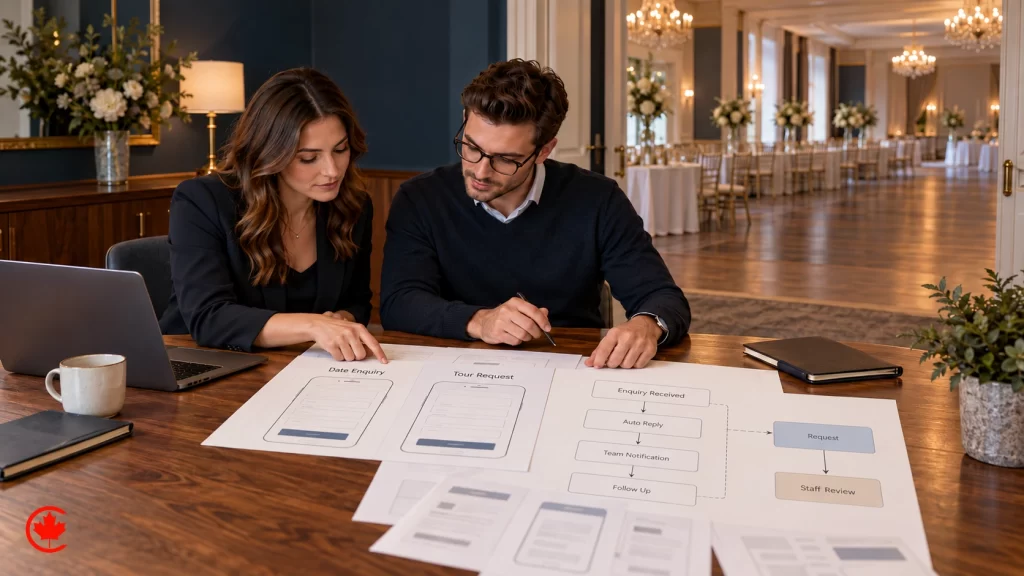
Typical fields are the wedding date or preferred season, a flexible date option, estimated guest count, ceremony on site or elsewhere, the space they are interested in and, if the venue wants it, a budget range. Each extra field costs some enquiries, so we agree with you which ones are essential and which can wait for the first conversation.
Tour booking
Many couples want to book a visit right away. A tour booking step shows the times your team offers, sends a confirmation and a reminder, and gives directions and parking details for the visit. Venues with weekday and weekend tours can show both.
Showing availability
Some venues show open dates on the site; others prefer couples to ask. A middle path is a page of featured open dates, such as remaining Fridays this fall or winter Saturdays, with a package for each. Your team can update that page in minutes, and it gives couples a reason to enquire now.
What happens after the form
After a couple sends an enquiry, a thank you page confirms what happens next and when they will hear back, and an automatic email can send the brochure or package summary they asked for, with consent. At the same moment your coordinator receives the details, so the first personal reply can mention their date, guest count and the space they liked.
Pages for elopements, micro weddings and cultural weddings
Couples planning something other than a standard Saturday reception look for a page that speaks to them. If the venue offers these formats, each deserves its own page rather than a line in a list.
Ceremonies, elopements and micro weddings
A ceremony only page explains the ceremony site, seating, officiant arrangements and photo spots. An elopement page shows the package for the couple and a few witnesses. A micro wedding page covers dinners for small guest lists, often on weekdays or in a private dining room, with price guidance that fits the smaller budget.
Cultural weddings
Venues that host South Asian, Persian, Chinese, Italian, Portuguese, Greek, Filipino and other cultural weddings can show what they handle: very large guest counts, multi day events, mandap or stage setups, tea ceremonies, outside caterers and late finishes. Pages in other languages make sense where families plan in those languages, written by people who speak them.
Multi day celebrations
Some families book the venue for a mehndi or sangeet night, the ceremony and the reception on separate days. A page that shows how the spaces change between events, and how catering, decor and vendor access work across the days, saves your sales team long explanations on the first call.
Catering, vendors, parking, rooms and access
Practical details decide many bookings. A frequently asked questions page, written in your team’s own words, answers what couples otherwise email about.
What the practical pages cover
- Catering: in house, approved caterers or bring your own, and kitchen access.
- Vendors: whether outside vendors are welcome, load in times and insurance needs.
- Parking: number of spaces, overflow parking, shuttles and drop off areas.
- Accommodation: on site rooms, partner hotels and room blocks.
- Accessibility: step free routes, accessible washrooms and elevator access.
- Timings: start and finish times, music cut off and setup windows.
- Deposit terms the owner sets and the booking policy, in plain words.
Preferred vendor pages
A preferred vendor page lists the planners, photographers, florists, DJs and decorators who know the venue well. It helps couples, and vendors often link back to it. Each listing can show a short note on what they do at the venue.
Written in your team’s voice
The richest source for the FAQ is your coordinators’ sent folder: the questions couples ask again and again. We turn those answers into short, friendly entries in the venue’s own tone, so a couple reading the page late at night gets the same answer they would get on a tour.
Speed, accessibility, editing and redesigns
Fast pages full of photos
Venue sites carry more images than almost any small business site. We size and compress every image for the screen it appears on, load galleries as the visitor scrolls, and keep video off the page until it is played. The aim is a gallery that opens quickly on a phone in a parking lot on a weak signal.
Accessible to every couple and guest
We build to WCAG, which matters for couples and families with disabilities and is required for many organizations in Ontario under AODA. That means readable text over photos, alt text on images, forms that work with a keyboard and screen readers, and enough colour contrast.
Your team keeps it current
Dates, packages, menus and open house events change often. The site runs on a content management system, usually WordPress, set up so your coordinators can update open dates, swap a menu or add a real wedding without calling a developer.
Redesigns without losing search traffic
Older venue sites often rank for room names, cities and phrases like barn wedding venue. A redesign keeps the pages that bring visitors, redirects old addresses to new ones and keeps titles and descriptions in place, so the new site does not start from zero. Ongoing website hosting and maintenance and security updates keep it fast and patched after launch.
Hosting that copes with engagement season
Traffic to venue sites jumps after the holidays and around open house evenings. Hosting sized for image heavy pages, with backups and monitoring, keeps galleries and forms working when many couples are looking.
How the site works with ads, search and CS+
The website is the place every other channel sends couples. The whole marketing plan for venues is set out on our venue marketing plan page. Paid campaigns are covered on our page about Wedding venue advertising, and organic search, map results and Google Business Profile are covered on the page about Wedding venue SEO. Enquiries and tour bookings from the site can flow into CS+, our client management system, so each couple gets a reply and reminders before the visit. Our general web design service in Toronto covers sites for other kinds of businesses, and the events and entertainment hub covers related venues. Planners and golf clubs that host weddings are covered on our pages for event planners and golf course marketing.
Pricing display, accessibility, consent and privacy
A few rules shape what goes on a venue site.
- Couples reading your package pages are protected by the Competition Act: the per person figure the site shows has to be what they will actually pay, with mandatory service charges and admin fees disclosed beside it instead of appearing first on the quote. Any “sale” or “regular price” wording on a winter package must be genuine.
- In Ontario, AODA applies to many organizations; building to WCAG is the practical standard.
- Photos and video of couples, guests and children need written consent before use on the website.
- Emails and texts sent to couples who enquire follow CASL: consent, sender identification and an unsubscribe. PIPEDA applies to personal information collected through forms, and analytics should never hold sensitive personal details.
This is a marketing observation, not legal advice.
How we design a venue site and what drives cost
From free review to launch
We start with a free review of your current site, your rooms and packages, and how enquiries reach your team today. You then receive a custom proposal listing the pages, galleries, forms and integrations, with fees quoted in writing. We design the key pages for your approval, build the site, load your content and images, test it on phones and with accessibility checks, and launch at an agreed milestone. The domain, hosting account and site are in the venue’s name.
What drives the price of a venue website
- The number of spaces, packages and menus that need their own pages.
- Gallery size and how many real wedding stories you want at launch.
- Whether new photography, video walkthroughs or 360 tours are needed.
- Pages in more than one language for cultural weddings.
- Tour booking, availability pages and connection to CS+.
- Migrating and redirecting a large older site.
Every quote is in writing, and software licences or hosting are shown separately from our design and build fees.
Choosing a web designer for your venue
Look at the designer’s work on a phone, not just a laptop, and ask:
- Who owns the accounts? The answer should be you. The domain registration, the hosting login, the WordPress admin and the analytics property belong to the venue, never to the designer who built it.
- Can my coordinators update dates, packages and menus without help?
- How will galleries stay fast with hundreds of photos?
- How do you protect search traffic when replacing our old site?
- Will the site be built to WCAG?
- How will package prices show mandatory fees?
Canada Create puts the answers to each question in the written proposal.
Plan your wedding venue website design with a custom proposal
Send us the address of your current venue site, a list of your rooms and ceremony sites and the packages you sell, and we will return a free website review with a custom proposal for the pages, galleries and enquiry forms your couples need. Prefer to talk it through? Call (416) 273-9030, Monday to Friday, 9 am to 6 pm, and Saturday, 10 am to 2 pm. After hours, our 24/7 AI agent answers the toll-free line, +1 (800) 808-9235, and we’ll follow up the next business morning. You can also reach us through our contact page. We reply within one business day, and sales managers are welcome to bring floor plans to our office at 126 Willowdale Avenue, Suite 3, Toronto.
Talk to a strategist
Ready when you are?
Request a custom proposal
Tell us your goals, budget and timeline. You get a custom proposal and a named strategist, so your next stage of growth starts now.
Our wedding venue website design process: review, proposal and build
Each step is in writing, and the domain, hosting and site stay in the venue's name.
- Free review First call
We look at your current site, spaces, packages and enquiry handling.
- Custom proposal Written proposal
Pages, galleries, forms and integrations, with fees quoted in writing.
- Design and build Agreed milestones
Key pages designed for approval, then built, loaded and tested on phones.
- Launch and care Every month
Updates, hosting checks and help adding new real weddings.
Toronto wedding venue website design since 2008, BBB Accredited A+
Since 2008
More than 18 years of websites, search and advertising work for businesses across Canada.
BBB Accredited A+
A BBB Accredited Business with an A+ rating and zero complaints.
Toronto office
126 Willowdale Avenue, Suite 3, Toronto, serving businesses across Canada.
English and French
Our team works in English and French.
Wedding venue website questions
How is the price of a wedding venue website worked out?
A venue with one main room needs fewer pages than a hall, hotel or estate with several spaces, a space comparison page and tour booking. Pages in each language you serve, cultural wedding pages and menus by cuisine add scope, and so does a redesign with redirects from old addresses. Canada Create sends a written quote for the venue site after a free review, with hosting and software licences listed separately.
How should hosting be handled for a wedding venue website?
Venue sites carry heavy galleries and video, so hosting needs to keep pages fast on a phone. Walkthrough videos and 360 tours are embedded to load only when someone presses play, and galleries are split by space and season instead of one long scroll. Hosting is quoted apart from the design and build, so you can see each cost on its own line.
Is the cheapest website builder and host good enough for a wedding venue?
It can get a page online, but venues usually run into trouble with galleries that load slowly, a single Weddings page that tries to cover every room, and editing that needs a developer. Couples flip between several venue sites on a phone and close the slow ones. A purpose built venue site gives each space its own page and lets coordinators update dates, packages and menus themselves.
What are some wedding venue website design ideas that lead to tours?
Build a page for each space, such as the ballroom, the terrace or the lakeside lawn, with capacity, floor plans and photos empty and dressed. Add a short comparison page for couples torn between two rooms, and organize real weddings by space, season and style. Seasonal and day of week pricing written as text nudges flexible couples toward the dates you want to fill.
What does a small wedding venue website in Toronto need?
A home page, a page for the main room or ceremony site, package and menu pages, a gallery of real weddings and a short date enquiry form, plus a practical page on parking, catering and access. If you host elopements, micro weddings or ceremony only events, give each format its own page. Small venues gain the most from showing price guidance clearly, since couples tend to shortlist sites that give some idea of cost.
How should a wedding venue in Toronto pick its web designer?
Ask how they would organize your rooms, packages and real weddings, how fast the galleries will load on a phone and whether your coordinators can edit the site themselves. Confirm the domain is in the venue's name and old addresses will be redirected. Venue owners weighing Canada Create can read its live Google reviews and its A+ BBB accreditation before booking a review call with the Toronto team.
What should a wedding venue website include?
Answers to what couples ask before a tour: whether the ceremony and reception fit in one place, whether their guest count fits with a dance floor, roughly what it costs per person, whether their date is open, and where guests park and stay. Add accessibility details for grandparents and guests using wheelchairs, and real wedding photos rather than empty rooms. Mandatory service charges and fees belong beside the price.
What do good wedding venue website examples show on the first screen?
The venue at a real wedding, one line saying what kind of venue it is and where, and two clear paths: see the spaces or check a date. Menus with a dozen items, autoplay music and email popups before anything is visible tend to send couples back to the next tab. The rest of the home page can lead into space pages, packages and galleries.


Make your site the one couples keep open
Couples compare venue sites side by side on their phones, and the clearest one usually gets the tour. A site built around your spaces and packages makes that comparison simple. Book a free venue website review.