
Toronto · Optometry marketing
Optometry marketing in Toronto
Optometry marketing in Toronto helps patients find your eye care practice, understand its exams and optical services and book, with clinical claims approved by your optometrists.
Optometry marketing for Toronto and GTA eye care practices: local SEO, eye exam and dry eye pages, Google Ads, booking and recalls, from North York to downtown.
- BBB A+ accredited
- 18 years in business
- Mon to Fri 9 to 6, Sat 10 to 2
Get a custom proposal for your optometry marketing
Tell us your services, locations and how patients find you today. A strategist replies within one business day.
Please do not share passwords or other sensitive details here. We never sell your contact information and we comply with Canadian privacy law
(privacy policy).
What optometry marketing can support
Clear exam and booking information
Approved service, location and appointment information for the care your practice offers.
Your actual service offering
Pages for dry eye, myopia and contact lens patients.
Accurate coverage information
Clear pages on coverage and direct billing.
Supported recall communications
Clinician-approved reminders with purpose, permissions and responsibilities agreed.
What optometry marketing includes
We recommend the mix after discovery. Every service is scoped in writing.
- Local SEO for optometristsEligible profiles and agreed location or listings work.
- Eye care service pagesExams, dry eye, myopia and contact lens pages.
- Optometry Google AdsAgreed advertising subject to service, product and platform eligibility.
- Optical promotionClinic-approved eyewear content and accurate offer conditions.
- Online bookingSupported options assessed for compatibility, access and permitted information use.
- Recall remindersClinician-approved reminders assessed separately from promotional messages.
- Reviews and reputationIndependent feedback monitoring and responses approved under applicable professional rules.
- ReportingRecorded exams and optical activity from permitted sources, with gaps explained.
Optometry marketing pricing
Custom-scoped engagements; proposal after discovery. The initial review is free.
Optometry SEO
Custom-scoped engagements; proposal after discovery
Practices building local and service visibility
- Google Business Profile management
- Service and location pages
- Reputation support within applicable rules
- Monthly reporting
Google Ads management
Quoted in writing
Practices considering eligible advertising alongside other enquiry sources
- Agreed search advertising
- Permitted reporting scope
- Optical campaigns
- Monthly reporting
Multi-location program
By proposal
Groups with several clinics
- SEO and eligible ads for agreed locations
- Scoped recall support
- Location reporting
- Quarterly strategy review
Every program is quoted in writing. Ad spend is paid directly to the platforms.
Marketing for optometrists
How optometry marketing works
Patients choose an eye care practice they can find nearby, understand and book quickly. Optometry marketing in Toronto is the work of helping patients find an optometry practice, understand both its clinical eye care and its optical services, and book an exam or fitting. Canada Create has marketed health practices since 2008, is a BBB Accredited Business with an A+ rating and works from 126 Willowdale Ave. in Toronto. We scope local search, service content, advertising, booking support and recall communications around your services and appointment capacity. Routine exams, dry eye care, myopia management, contact lens fittings and eyewear retail have different information and approval needs, and your optometrists approve clinical claims and promotions under the College of Optometrists of Ontario’s rules.
Optometry marketing covers six areas of work:
- Local SEO and Google Maps: a complete profile for each clinic, with hours, services and genuine reviews.
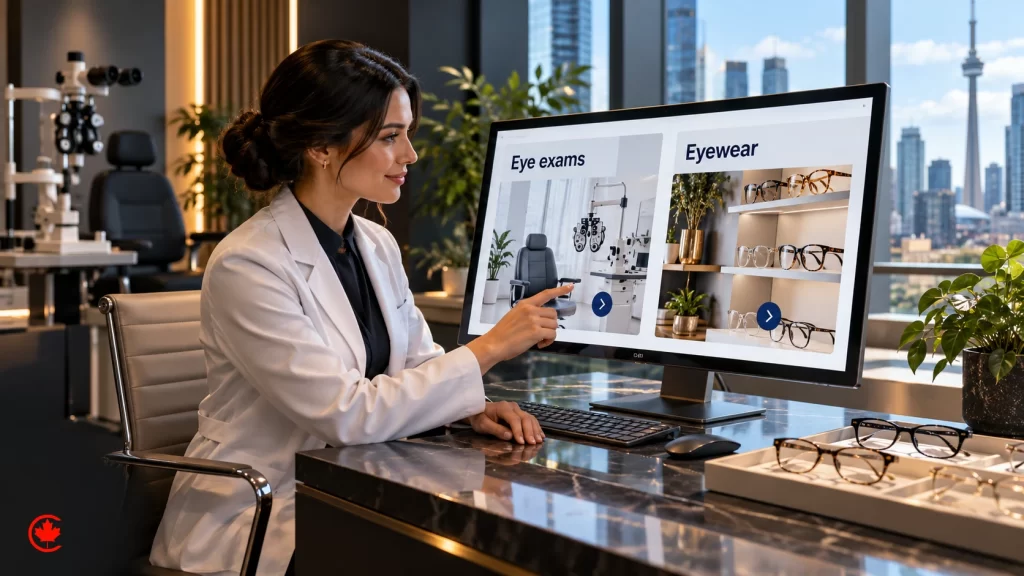
- Service pages: eye exams, dry eye, myopia management, contact lenses and eyewear explained in plain language.
- Coverage and direct billing: accurate OHIP and insurance information patients can understand.
- Google Ads and social: campaigns for the services and locations with open appointments.
- Online booking and recalls: a short booking path and reminders that bring patients back.
- Reporting: booked exams and optical sales where your systems allow.
For one practice, growth means more family eye exams. For another, it means introducing dry eye services, strengthening recall or helping exam patients understand their eyewear options. We plan around your services and appointment capacity, then measure booked exams and optical sales where your systems support attribution.
Helping patients assess your eye care practice
Your clinic information should distinguish exam appointments from optical-retail visits and explain which services are available at each location. The brief can cover hours, accessibility, booking options, current frame and lens offerings, coverage information and direct billing. Your team confirms the facts, availability and any conditions before publication.
The written proposal identifies what will be produced or managed, the staff input required and the fees. We discuss appointment capacity, location coverage, optical priorities and the time your clinical reviewers can provide, so the agreed work fits the practice you operate.
Local SEO for optometry practices
Local search support presents your actual practice locations and services accurately. We agree the location scope and assess profile eligibility before work begins. The proposal can include:
- Google Business Profile: eligible clinic profiles with accurate practice information and approved photographs, with responsibility for updates agreed.
- Location pages: approved information about the services, optometrists, hours, parking, accessibility and booking options at the locations included in your agreement.
- Consistent listings: agreed listings work using clinic-approved contact details, with insurer-listing eligibility confirmed by your team.
- Reviews: monitoring independent feedback and supporting clinic-approved responses. Ontario optometry advertising cannot use patient testimonials. Your practice confirms the permitted approach under its college’s rules; platform standards against incentives or selective positive-only requests also apply. Replies should not disclose a patient relationship or clinical details.
Service pages that explain your eye care offering
We organize optometry content around distinct services and patient questions. Each piece goes to your optometrists for approval:
- Routine eye exams for adults, children and seniors, including how often to book and what the exam checks.
- Children’s eye exams and myopia management, written for parents.
- Dry eye assessment and treatment, describing the services you actually provide.
- Contact lens exams and fittings, including specialty lenses if you offer them.
- Eye emergencies and urgent visits, if your clinic sees them, with clinician-approved instructions for accessing appropriate urgent care.
- Diabetic eye exams and ongoing monitoring, coordinated with family doctors where relevant.
- Eyewear and the optical, showing brands, lens options and services such as adjustments.
Clinical claims need evidence and your optometrists’ approval. Descriptions of dry-eye, myopia or contact-lens services must reflect what the practice provides without implying an unapproved specialist designation or a promised treatment result.
Coverage, insurance and direct billing
Coverage information needs current sources and clinic approval. In Ontario, OHIP eye-exam eligibility and frequency depend on age and eligible eye conditions: children and youth 19 or younger are covered every 12 months; adults 20 or older with eligible conditions are covered every 12 months; adults 65 or older without an eligible condition are covered every 18 months. These are coverage intervals, not advice about an individual’s examination schedule. We link to current OHIP coverage guidance and explain the plans your clinic bills directly using information your team confirms. Direct billing should not be presented as a promise that a plan covers every charge.
Advertising rules for optometrists
Optometrists in Canada are regulated by provincial colleges. Ontario’s optometry advertising rules prohibit testimonials, comparative or superlative claims and unapproved specialist designations in optometrist advertising. Content must be factual, verifiable and understandable. Your practice confirms the requirements that apply in its province and obtains specific professional or legal advice where needed. Eyewear promotions need accurate terms on what is included and any conditions. We prepare agreed content for your optometrists’ approval; agency review is not a regulatory certification. Read our guides on healthcare advertising rules in Canada and how optometry and hearing clinics get more patients.
Paid search and social media
We can manage agreed search and social advertising for your practice, subject to the proposed service, product, country and platform requirements. The scope identifies the budget, creative, approvals and permitted measurement. Exam-related services, condition-focused care and frame promotions need separate assessment; an optical sale must not automatically be treated as ordinary retail data. Your clinic approves service claims, product information and offer conditions. Our Google Ads management and social media ads services can support the agreed work.
Online booking and recalls
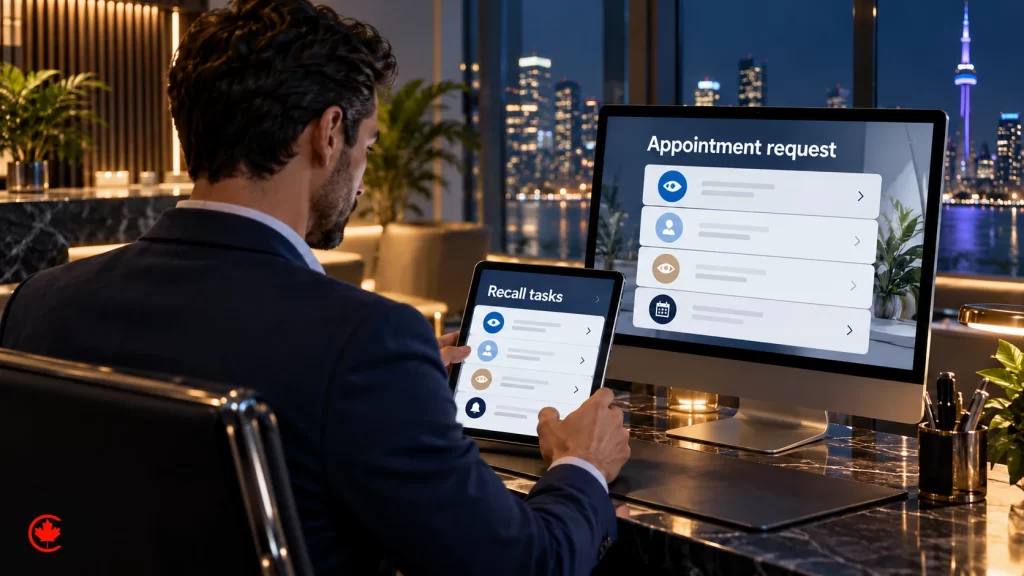
We can connect supported booking options to your website and eligible clinic profile after assessing the software, access, appointment types and permitted records. The agreement identifies the connections and testing included, while your staff confirm availability and handle clinical questions. Recall support uses clinician-approved timing and messages. The purpose and content of a reminder determine its communication requirements; a care label alone does not establish permission for promotion. Consent, identification and unsubscribe arrangements are addressed where applicable. Read our guide to online booking for clinics.
How optometry marketing in Toronto works now
Most patients search for an eye exam, an optometrist or a dry eye clinic near them, and pick from the map pack. Google ranks those results on relevance, distance and prominence: a clinic at Yonge and Sheppard shows more easily for North York searches than for a patient in the Beaches, so each location needs its own complete profile and reviews. Organic results and AI Overviews draw on clear service pages that explain what an exam includes, who is covered and how to book. Parents comparing myopia management, and adults with dry eye, often read several pages before booking, which is why service content matters as much as ads.
What optometry marketing costs in Toronto and what changes the fee
Every program is quoted in writing after discovery, with ad spend paid directly to the platforms. The fee changes with the number of clinics, the services that need their own pages, the advertising channels included, the condition of your website and booking tools, and whether recall communications are part of the scope.
Measuring optometry marketing
We report on recorded new-patient exams, returning patients, contact-lens fittings and optical sales where your approved systems can provide permitted information. The scope separates internal clinical or practice reporting from data that may be sent to marketing platforms. Monthly reviews explain missing records and attribution limits alongside available activity and costs. Changes to scope or budget require your approval; bookings and sales also depend on demand, competitors and your schedule.
How to compare optometry marketing companies in Toronto
- How will you improve our map visibility near each clinic?
- How will you explain coverage and direct billing accurately?
- How do you handle our college’s advertising rules and eyewear promotions?
- How will you measure booked exams and optical sales?
- Who owns the Google Business Profile, ad accounts, analytics and website? (The answer should be the practice.)
- Who does the work each month, what is delivered, and where can we read real reviews of the agency on its own Google Business Profile?
Be wary of anyone who promises first place in Google Maps; rankings depend on distance, competitors and Google’s changes, which no agency controls. Our guide on how to choose a digital marketing agency in Toronto covers the wider checklist.
Optometry marketing connects with our wider healthcare marketing program, and practices that need a new site can add medical website design.
Why eye care practices choose Canada Create
Canada Create was established in 2008 and currently serves businesses in Canada. We are a BBB Accredited Business with an A+ rating. Call (416) 273-9030, Monday to Friday, 9 am to 6 pm, and Saturday, 10 am to 2 pm. After hours, our 24/7 AI agent answers the toll-free line, +1 (800) 808-9235, and we’ll follow up the next business morning. One team coordinates the services in your written agreement, with your optometrists’ approval of clinical information and promotions. Tell us your services, locations and priorities to request a custom proposal; after discovery, you receive a proposal with scope, responsibilities and fees.
Talk to a strategist
Ready when you are?
Request a custom proposal
Tell us your goals, budget and timeline. You get a custom proposal and a named strategist, so your next stage of growth starts now.
How an optometry marketing program starts
Your agreement sets delivery and review points around clinical approvals, system access, permitted information use and the practice’s capacity.
- Free review Discovery
Search, website, profile and booking assessed.
- Scope and approvals Before work starts
Marketing scope, clinical review and client responsibilities agreed.
- Booking and reporting scope Before reporting begins
Supported connections, permissions, exclusions and testing agreed with your practice.
- Practice information review Agreed review points
Your team confirms the service, location and reputation-support information in scope.
- Pages and ads Agreed launch stages
Agreed pages and advertising proceed after clinical approval and applicable platform checks.
- Report and refine Monthly
Review available activity, costs and limits; proposed scope or budget changes require your approval.
Approvals and privacy safeguards in your optometry marketing
One accountable team
One team coordinates the services included in your written agreement.
Clear review responsibilities
Your practice confirms applicable professional requirements and approves public claims.
Your approval first
Optometrists approve every page.
Privacy first
Permitted records, exclusions and safeguards agreed with your practice.
Optometry marketing Toronto: questions practices ask
Do patients have to pay to see an optometrist in Ontario, and should a clinic website explain it?
Coverage for eye exams depends on the patient's age, health conditions and insurance, so the website should explain it clearly. A coverage page that sets out OHIP-insured visits, private-pay exams and direct billing, as your clinic confirms them, answers one of the first questions people ask. Your team checks the facts before publication and updates them when coverage changes.
What are some catchy slogans for optometry practices that stay within the rules?
A slogan should be accurate and something your clinic can stand behind, such as a line about the services or locations you offer. Avoid comparing yourself favourably with other clinics or implying a clinical outcome. Your optometrists approve the wording, since advertising standards from the College of Optometrists of Ontario apply.
Will AI change how patients find an optometry clinic?
AI search tools already summarize clinic information, so accurate, clearly written pages about your exams, dry eye care and locations matter more. Eye exams still need an optometrist in the room, so your pages should make booking straightforward. Clinics whose service and coverage pages answer specific questions give patients and AI summaries the same correct picture.
What optometry marketing ideas help fill exam appointments?
Write separate pages for routine exams, dry eye, myopia management and contact lens fittings, since each draws a different patient. Keep eligible clinic profiles accurate, with real photos and hours. Clinician-approved recall reminders bring existing patients back, kept separate from promotional messages.
Should an optometry clinic use social media marketing?
Social media can introduce your team, frames and services to people near the clinic, as long as posts follow the same accuracy rules as your website. Patient photos or stories need proper consent, and testimonials raise professional rule questions to check with your college first. Optical promotions should state their conditions clearly.
What do optometry digital marketing services include?
They usually include local search for each clinic, eye care service pages, eligible Google Ads, eyewear promotion, online booking support, recall reminders and reporting. The mix depends on whether you want more family exams, a new dry eye service or stronger optical sales. Reports show recorded exams and optical activity from permitted sources and explain any gaps.
How do I choose an optometry marketing agency?
Ask how the agency handles clinical claims, patient privacy and your college's advertising standards, and confirm your optometrists approve everything before it goes live. Look at its office address and its Google reviews as they appear live, and ask that the clinic profiles and ad accounts be held in the practice's name. Eye care practices across Canada work with Canada Create, whose Toronto team has been doing this since 2008.
How much does optometry marketing cost for a clinic?
Optometry marketing cost depends on the number of clinic locations, which services need pages, whether eligible ads and optical campaigns are included and how booking and recall systems connect. Eye care ad budgets are charged by Google itself. After a free consultation about your clinics and services, a custom optometry proposal lists every fee in writing.


Get a custom proposal for your next project
Review the offer, budget and enquiry process before committing your marketing spend.