
How travel agencies get more bookings in Canada

Travel agencies compete with online booking sites by offering expertise, service and protection. “Travel agency” draws an estimated 9,900 searches a month in Canada. That is search demand, not a count of travellers or bookings. Agencies that grow pick a niche, show their registration and consumer protections clearly, advertise prices the way the rules require, and turn every traveller into a repeat client. This guide covers how.
Registration and consumer protection
- In Ontario, travel agents and wholesalers must be registered with the Travel Industry Council of Ontario (TICO), which also administers a compensation fund for eligible consumers. British Columbia and Quebec have their own registration and protection schemes.
- TICO registrants are expected to show their registration number in advertising.
- When TICO registrants advertise a price for travel services in Ontario, the displayed total must include all mandatory fees, charges and taxes, including applicable HST. A separate breakdown of taxes and fees may also be shown, but it does not replace the all-in advertised price. See Ontario’s travel-pricing guidance.
Show your registration number on the website footer, quotes, emails and ads.

Pick a niche
| Niche | Why it works |
|---|---|
| Destination weddings and honeymoons | High value, complex planning |
| Group and corporate travel | Recurring business and larger bookings |
| Cultural and diaspora travel | Language and community trust |
| Cruises, tours and adventure travel | Expertise beats booking sites |
| Accessible travel | Underserved, high trust |
We plan and run travel agency marketing for hospitality, automotive and local businesses in Toronto and across Canada, scoped in writing after a free review.
Content that ranks and converts
- Destination guides written from real experience.
- Entry requirements and travel documents for Canadians, with links to official government advice and dates.
- Travel insurance explained accurately.
- Best time to visit, packing and itinerary ideas.
Turn travellers into regulars
- Post trip follow up and review requests.
- Consent based newsletters with seasonal offers under CASL.
- Referral thank yous and group trip invitations.
- A CRM with birthdays, anniversaries and travel preferences.
Social media and ads
Short videos from real trips, client stories with permission and destination reels perform well. Search ads on niche searches such as “destination wedding travel agent” bring higher value leads than broad terms.
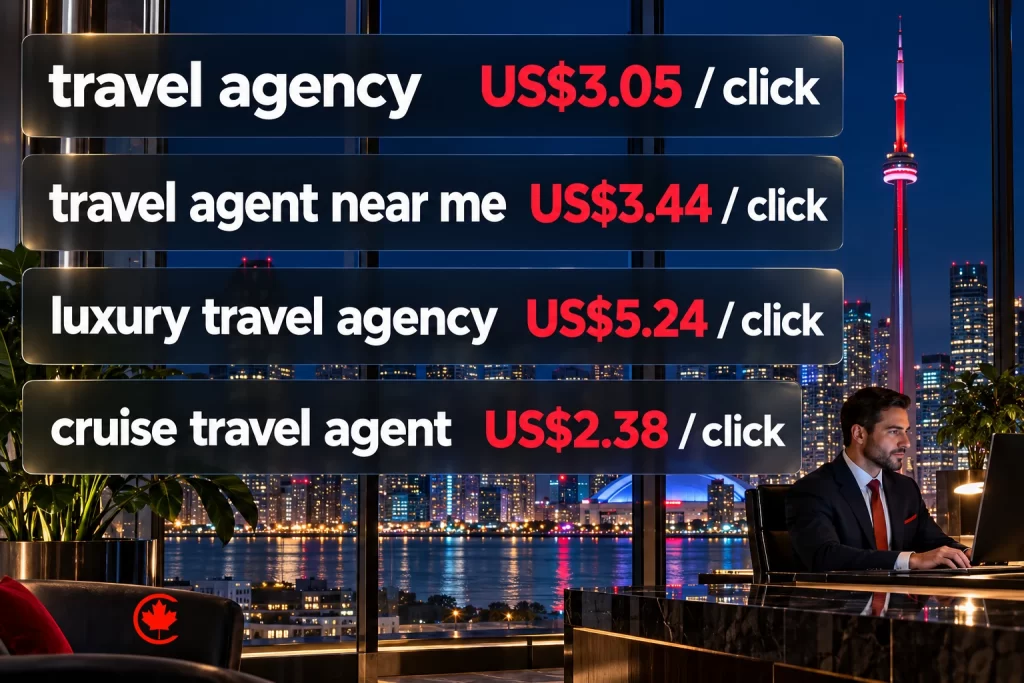
What a travel agency website needs to turn visitors into enquiries
Most travellers who find an agency online have already looked at booking sites. They come to you because they want advice, a person to call when plans change and the protection that comes with a registered agency. The website has to make those three things obvious within a few seconds.
- A clear statement of who you help. “Destination weddings in Mexico and the Caribbean” or “group tours for seniors from the Greater Toronto Area” tells the right visitor they are in the right place. A generic “we book travel” message sends them back to a booking site.
- Real people. Show the advisors, the destinations they know first hand and the languages they speak. Travellers book with a person they trust.
- A short enquiry path. Ask for travel dates, number of travellers, departure city, rough budget and the type of trip. Every extra question costs enquiries, so keep only what you need to prepare a first quote.
- Phone, email and messaging that someone answers. Many travellers want to talk before they commit. Put the phone number in the header and say when the office is open.
- Registration and protection details. Show your provincial registration number and explain in plain words what protection a client has when they book through you.
- Mobile first design. Many trips are researched on a phone in the evening. Test the enquiry form and the click to call button on a phone before anything else.
- Proof of expertise. Add trip reports, sample itineraries and client stories shared with permission. A detailed itinerary for a ten day trip to Portugal shows more knowledge than any slogan.
How to set up Google Business Profile for a travel agency
A complete Google Business Profile helps your agency appear when people search for a travel agent in your city. It also gives travellers a place to read reviews from other clients before they call.
- Choose “Travel agency” as the primary category. Add secondary categories only if they describe real services, such as cruise agency or tour operator.
- Use your registered business name exactly. Adding destinations or keywords to the name can lead to suspension.
- Keep hours accurate, including holiday hours and any days you work by appointment only.
- Add photos of your team and office, plus trip photos you have permission to use.
- Post seasonal updates, such as group departures with space left or a new cruise season, and link each post to the matching page on your website.
- Ask every returning traveller for an honest review, and reply to each one. A calm, helpful reply to a complaint about a delayed flight or a hotel problem shows future clients how you handle things when travel goes wrong.
If you work from home or visit clients, set the profile up as a service area business and hide the address, as Google’s guidelines expect.
Check the profile every few weeks. Owners and the public can suggest edits, and a wrong phone number or closed sign on a busy Saturday costs bookings before anyone notices.
Email marketing and consent under CASL
Email is one of the strongest repeat booking tools a travel agency has, because travellers plan their next trip months ahead. It is also covered by Canada’s Anti-Spam Legislation (CASL), so build the list properly from the start.
- Express consent. Use an unticked checkbox on enquiry and booking forms that says clearly what the traveller will receive, such as seasonal deals and destination ideas. Record when and how each person agreed.
- Implied consent. A purchase creates implied consent that lasts two years from the date of the purchase. Ask past travellers to confirm express consent before that period ends so you can keep writing to them.
- Every message. Identify your agency, include a mailing address and a way to contact you, and include a working unsubscribe link. Unsubscribe requests must be honoured within ten business days.
- Useful content. Send departure reminders, travel document checklists, destination guides and group trip announcements, not only price offers.
Segment the list by trip type and past destinations. A honeymoon couple and a corporate travel manager need different messages, and a targeted email is far more likely to be opened.
How to tell which marketing brings bookings
Travel bookings often happen weeks after the first visit, by phone or in person, so platform reports alone rarely show what is working. A simple tracking routine fills the gap.
- Ask and record the source. Add a “How did you hear about us?” field to the enquiry form and to your CRM, and have advisors confirm it on the first call.
- Tag your links. Use UTM tags on newsletter, social media and ad links so website analytics shows which campaign brought each enquiry.
- Track calls. A call tracking number on ads and the website shows how many enquiries arrive by phone.
- Follow enquiries to bookings. Record in the CRM whether each enquiry booked and the trip value. Then compare channels by bookings and commission, not by clicks.
- Review monthly. Look at which niches, destinations and channels produce booked trips, and move effort toward them.
Keep the routine simple enough that every advisor follows it. A source field that is filled in for every enquiry is worth more than a detailed report that nobody updates. After a few months, the numbers usually show which niche deserves more content, which destinations to feature in ads and which referral partners to thank.
The same records help with planning. If most wedding enquiries arrive nine to twelve months before the date, start promoting those packages early in the year. If group trip enquiries rise after a newsletter, send that newsletter at the same time next year.
See our digital marketing for travel agencies service and how hotels and short term rentals get more direct bookings.

Frequently asked questions
How can a travel agency in Canada get more clients?
Agencies that grow usually pick a niche, show their registration and consumer protection clearly, and turn every traveller into a repeat client. Niches such as destination weddings, group and corporate travel, cultural travel and accessible travel give a clear reason to choose you over a booking site. Content written from real trips and steady follow-up after each trip build on that.
Does a travel agency need to show its registration number in its marketing?
In Ontario, travel agents and wholesalers must be registered with the Travel Industry Council of Ontario, and registrants are expected to show their registration number in advertising. Put it in the website footer and on quotes, emails and ads. British Columbia and Quebec run their own registration and protection schemes, so confirm what each provincial regulator expects before selling there.
How must a travel agency advertise its prices in Ontario?
When TICO registrants advertise a price in Ontario, the displayed total must include all mandatory fees, charges and taxes, including applicable HST. A separate breakdown of taxes and fees may also appear, but it does not replace the all-in price. Getting this right also answers the traveller's worry about hidden costs before they ask.
Will travel agencies survive internet bookings and AI trip planners?
Agencies hold their ground by offering what a booking site cannot: advice, a person to call when plans change, and the protection of a registered agency. Most travellers who reach an agency online have already looked at booking sites. A website that makes those three things obvious within seconds is what turns that visit into an enquiry.
Which travel niches give an agency the strongest marketing angle?
Destination weddings and honeymoons involve high value and complex planning, and group or corporate travel brings recurring, larger bookings. Cultural and diaspora travel wins on language and community trust. Cruises, tours, adventure trips and accessible travel are areas where real expertise beats a booking site.
What helps a travel agency appear when people search for agencies near them?
A complete Google Business Profile with Travel agency as the primary category, your registered name with no added destinations, and accurate hours including holidays. Add team, office and permitted trip photos, post seasonal updates and reply to every review. Check the profile every few weeks, since the public can suggest edits such as a wrong phone number.
What do travellers expect from a travel agency website before they enquire?
They want a clear statement of who you help, the real advisors with the destinations and languages they know, and a short enquiry form asking only for dates, travellers, departure city, rough budget and trip type. Put the phone number in the header with office hours. Sample itineraries and client stories shared with permission prove expertise better than slogans.
How can a travel agency turn one-time travellers into repeat clients?
Follow up after every trip and ask for a review, then keep in touch with consent-based newsletters about seasonal offers. Under CASL, a purchase creates implied consent for two years, so ask past travellers to confirm express consent before that ends. A CRM holding birthdays, anniversaries and travel preferences helps you suggest the next trip at the right time.