
How solar installers find qualified buyers in Canada

Solar installers in Canada sell a large, technical purchase to buyers who research for months, distrust aggressive sales and live in a climate many people still doubt is right for solar. Interest is real, but much of it never turns into a signed project. The installers who grow treat marketing as a long conversation: honest numbers, clear explanations, local proof and patient follow up that keeps them in the buyer’s mind until the timing is right.
This guide covers how buyers choose a solar installer, the rules that shape solar advertising, budget formulas, the pages and channels that work, what your website needs, referrals, follow up and aftercare, a sample installer’s first quarter, what to measure and a 90 day plan.
How buyers choose a solar installer
Residential solar buyers usually move through four stages.
- Curiosity. They wonder whether solar works where they live, what it costs and whether neighbours have done it.
- Research. They read about net metering, batteries, panel types, rebates and financing, often across many sites.
- Comparison. They request two or three quotes and compare system size, equipment, warranties, estimated production and price.
- Decision. They choose the installer they trust most to do the work well and still be there for the warranty.
At every stage the buyer is looking for honesty. Many have met inflated savings promises or high pressure sales before. An installer who explains the assumptions behind a payback estimate, admits where solar makes less sense and shows real local installations stands out.
Commercial and agricultural buyers add energy analysis, tax considerations, structural assessments and internal approvals. Their decisions take longer and involve more people, but projects are larger and often lead to referrals within their networks.
Rules that shape solar advertising
Savings and performance claims are the main risk. The Competition Act prohibits false or misleading representations, and performance claims require adequate and proper testing. Present savings and payback as estimates and state the assumptions: system size, orientation and shading, local sunlight, electricity rates and how they might change, financing costs. Never present a best case as typical.
Rebates, incentives and financing programs change often. Put a date on every mention and check it before each campaign. Explain net metering or billing arrangements accurately for the specific utility and province. Describe warranties exactly as written.
Electrical work on solar systems follows provincial electrical licensing; show only licences and certifications you actually hold. Commercial emails and texts need consent, sender identification and an unsubscribe under CASL, and purchased lists are not consent. Never fabricate reviews. Google prohibits incentivized reviews; other review and endorsement rules also require an honest impression and disclosure of material connections. In Ontario, unsolicited door to door contracts for several home energy products have been restricted since 2018; check whether your products and sales methods are affected.
Budget formulas for solar installers
Solar sales take time, so measure the whole path from lead to signed project.
Cost per signed project = cost per lead ÷ (lead to qualified lead rate × qualified lead to completed assessment rate × assessment to proposal rate × proposal to signed project rate). Use rates from the same lead cohort, expressed as decimals, and include each distinct stage. A cheap lead source that rarely qualifies can cost more per project than an expensive one that does.
Gross profit per signed project = average project value × gross profit share. This is before acquisition costs and any overhead or other costs not already included in gross profit. Set an acquisition-cost ceiling below this figure that leaves room for those costs, your target profit and slow months.
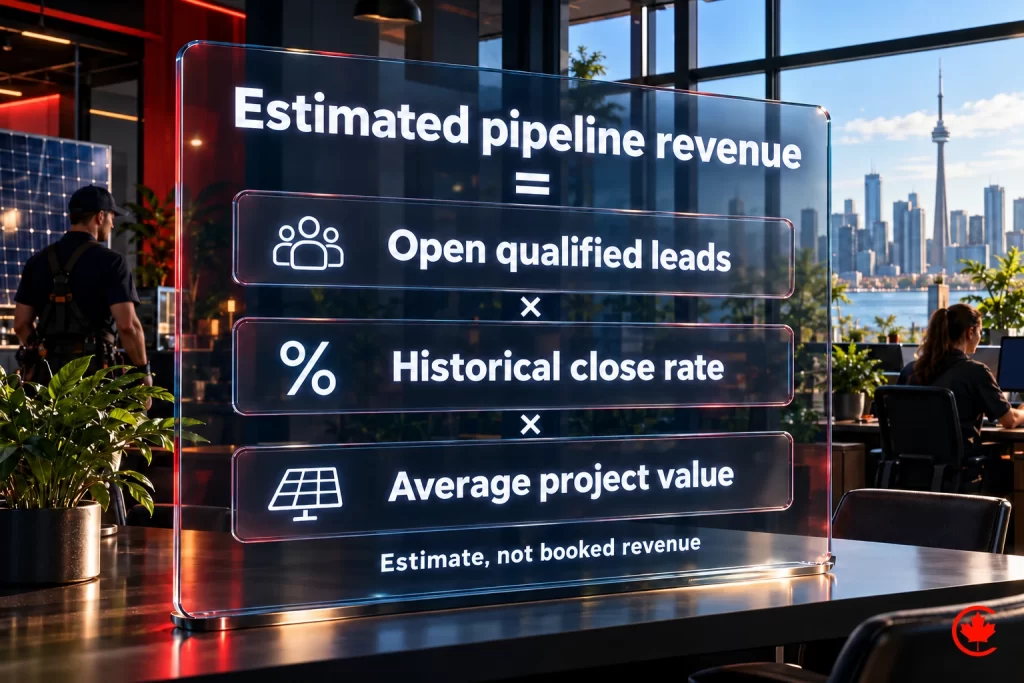
Estimated pipeline value = open qualified leads × a historical qualified-lead-to-signed-project rate × average project value. This is an estimate of potential revenue, not booked revenue or a guarantee. Use comparable lead cohorts and review the close-rate assumption as projects progress.
Track leads by the month they arrived, so leads that close late are credited to the campaign that found them.
Pages and channels that work
Research content. The pages buyers read while deciding do much of the selling:
| Topic | Why it works |
|---|---|
| Is solar worth it in your province? | The first question every homeowner asks |
| How net metering works with your utility | Explains how savings actually happen |
| Solar and batteries in Canadian winters | Answers a common doubt |
| Current rebates and financing, dated | High search demand and trust |
| Payback calculators with stated assumptions | Earns links and leads |
We plan and run solar marketing for home service companies in Toronto and across Canada, scoped in writing after a free review.
Local project galleries. Installations in the buyer’s own area, with system size, roof type and the homeowner’s permission, are some of the most persuasive content you can publish.
Google Business Profile and reviews. Many buyers check reviews before requesting a quote. Ask every customer the same way after the installation is commissioned.
Search ads. Target installation and quote searches in your service area, with negative keywords for DIY kits, jobs and unrelated products. Send each ad group to a matching page with a qualifying form. Our solar marketing service builds and manages these campaigns.
Video and social. Short videos of local installations, snow on panels in winter and battery backup during an outage answer doubts visually. Use them for education and retargeting.
Information sessions. Library talks, community events and webinars attract serious researchers and position you as the local expert.

How solar installers can use Instagram marketing
Instagram marketing suits solar because the product is visual and the doubts are easy to show. A homeowner unsure about panels on a Canadian roof in January is more convinced by a short clip of snow sliding off an array in their own region than by a paragraph of claims. The aim is to stay visible and useful through the long research period, so your name is familiar when the buyer is ready for quotes.
Content that tends to fit the buying stages:
- Installation stories from local roofs, posted with the homeowner’s written permission and without showing house numbers.
- Short explainers on net metering, batteries, roof suitability and what happens during a site assessment.
- Seasonal posts such as winter production, spring booking windows and storm backup with batteries.
- Behind the scenes clips of your crew, safety practices and the inspection process.
- Answers to real questions collected from sales calls and comments, turned into short reels or carousels.
The same advertising rules apply on Instagram as anywhere else: present savings as estimates with assumptions stated, date every rebate mention and disclose any paid partnership with a creator. Paid placements can then show your best educational posts to homeowners in your service area and retarget people who visited your calculator or rebate pages. Our Instagram ads service covers those paid campaigns.
Website essentials for a solar installer
- A clear explanation of your process: assessment, design, permits, utility connection, installation, inspection, monitoring.
- A calculator that shows every assumption and lets the buyer change them.
- Dated rebate and financing information.
- Equipment and warranty details exactly as written.
- Local project gallery with permission.
- A qualifying form asking about roof, ownership, location, electricity use and timeline.
- Reviews, licences and team photos.
- Fast pages on mobile, with click to call.
A professional website design makes these elements easy to find and use.
Referrals and partnerships
Satisfied solar customers are strong referral sources because neighbours see the panels and ask. A simple referral program with clear conditions, disclosed where the customer shares it publicly, encourages those conversations. Useful partners include roofers (who know which roofs are ready), electricians, home builders, energy advisors, EV charger installers and local environmental groups. Keep partner arrangements in writing.
Follow up and aftercare
Most solar leads are not ready on the day they enquire. A patient follow up program keeps you in the conversation: a helpful guide after the first call, a clear and complete proposal, answers to every question and, with consent, occasional updates on rebates or new battery options. Avoid pressure; it damages trust and referrals.
After installation, aftercare becomes marketing. Explain monitoring, check in after the first season and share production tips. Customers who feel looked after write reviews, refer neighbours and come back for batteries or EV chargers. CS+, Canada Create’s CRM, can track every lead and customer from first enquiry through aftercare.
A sample installer’s first quarter
Consider a hypothetical residential solar installer in Ontario with two crews. The company buys shared leads, closes few of them and has no idea what a signed project costs.
Month one. The team sets up lead stages in a CRM, from enquiry to signed project. It rewrites the website calculator to show assumptions, dates every rebate mention, publishes a gallery of ten local installations with permission and adds a qualifying form.
Month two. New pages go up on net metering with the local utility, solar in winter and batteries for backup. A search campaign targets installation and quote searches within the service area. A short follow up sequence goes to consenting leads who are not ready yet.
Month three. The owner compares cost per signed project for shared leads and the new campaign, calculates pipeline value and plans two community information sessions for the winter research season.
No result is promised. The installer now sees the full path from lead to signed project and can decide where to spend with evidence.
Mistakes that cost solar installers sales
Inflated savings promises. A best case payback presented as typical wins a click and loses the sale when a competitor explains the real numbers, and it can mislead under the Competition Act. State assumptions every time.
Out of date rebates. Incentive programs change. An expired rebate on your website makes buyers doubt everything else you say. Date every mention and review it before each campaign.
Buying shared leads without measuring them. Leads sold to several installers create a race to the bottom on price. Compare cost per signed project, not cost per lead, before committing budget.
Pressure selling. Solar buyers research for months and talk to neighbours. Pressure damages trust, reviews and referrals, and some door to door methods face legal restrictions.
Dropping leads that are not ready. Many buyers sign a season or a year after first enquiring. Without patient follow up, those sales go to whoever is in touch when they are ready.
Neglecting aftercare. Customers who never hear from you after installation rarely refer neighbours. Monitoring help and a first season check in turn customers into advocates.
A seasonal calendar for solar marketing
- Winter: research season. Publish and promote content on solar in Canadian winters, batteries and backup power, and run information sessions for spring installations.
- Spring: quote and site assessment demand rises; search campaigns and fast follow up matter most.
- Summer: installation season; share local project galleries and production updates with permission.
- Fall: buyers who want systems running before the next season decide; follow up with open proposals and promote battery and EV charger additions to past customers with consent.
Track enquiries and signed projects by month for a full year. Your own data shows when buyers in your area research and when they sign.
What to measure
| Measure | What it tells you |
|---|---|
| Leads by source | Which channels bring interest |
| Qualification rate | Whether leads fit your offer and area |
| Site assessments booked | Whether follow up moves buyers forward |
| Proposal close rate | Whether your proposals persuade |
| Cost per signed project | The real price of a customer by channel |
| Pipeline value | Whether marketing is building future revenue |
A 90 day plan
Days 1 to 30. CRM stages set up, calculator assumptions shown, rebates dated, local gallery published, qualifying form live.
Days 31 to 60. Research pages for your province and utility, a search campaign in your service area, a follow up sequence for leads who are not ready.
Days 61 to 90. Cost per signed project compared by source, budget moved to what works, information sessions or webinars planned, referral program launched.
To have a team run this plan with you, see our solar panel marketing service and lead generation. Canada Create has served Canada since 2008, and your custom proposal follows discovery.
Frequently asked questions
How do residential buyers choose a solar installer near them?
Most move through curiosity, research, comparison and decision, often over months. They request a few quotes and compare system size, equipment, warranties, estimated production and price. In the end they pick the installer they trust most to do the work well and still be around for the warranty.
How should a solar installer mention government incentives in its ads?
Put a date on every mention of a rebate, incentive or financing program, and recheck the details ahead of every new ad push, as these programs change often. A dated page on current rebates and financing draws steady search interest and builds trust. Never let an expired program sit on the website.
How should a solar company explain selling power back to the grid?
Explain net metering or the billing arrangement accurately for the buyer's specific utility and province, since that is how savings actually happen. A plain page on how net metering works with each utility you serve answers one of the first research questions. Keep any figures as estimates with their assumptions shown.
How can a solar installer answer doubts about solar panels in Canadian winters?
Show rather than argue: short videos of local installations, snow sliding off panels and battery backup during an outage settle doubts quickly. Publish a page on solar and batteries in Canadian winters, and be willing to say where solar makes less sense. That honesty makes an installer stand out to buyers who have met inflated promises before.
What makes buyers trust one solar company over another in Canada?
Buyers look for honesty: savings estimates with the assumptions explained, warranties described exactly as written and local installations they can see. Show only the electrical licences and certifications you actually hold. Genuine reviews, requested the same way from every customer after commissioning, add proof.
What rules apply when selling solar panels in Canada with savings claims?
The Competition Act prohibits false or misleading representations, and performance claims need adequate and proper testing. Present savings and payback as estimates and state the assumptions, including system size, shading, local sunlight, electricity rates and financing costs. Never present a best case as typical.
How does a solar installer work out the true cost of each signed project?
Divide cost per lead by the product of each stage's conversion rate, from lead to qualified lead through assessment and proposal to signed project, using decimals from the same lead group. A cheap lead source that rarely qualifies can cost more per project than an expensive one that does. Track leads by the month they arrived so late closes are credited correctly.
Can solar companies sell door to door in Ontario?
Ontario has restricted unsolicited door-to-door contracts for several home energy products since 2018. Check whether your products and sales methods are affected before any campaign. Commercial emails and texts also need consent, sender identification and an unsubscribe under CASL, and purchased lists do not count as consent.
What content helps Ontario solar panel installers win local buyers?
Local project galleries are among the most persuasive things an installer can publish: installations in the buyer's own area, with system size and roof type, shared with the owner's permission. Add search ads aimed at installation and quote searches in your area, with negative keywords for DIY kits and jobs. Library talks and webinars also attract serious researchers.