
How to build a B2B sales pipeline in Canada
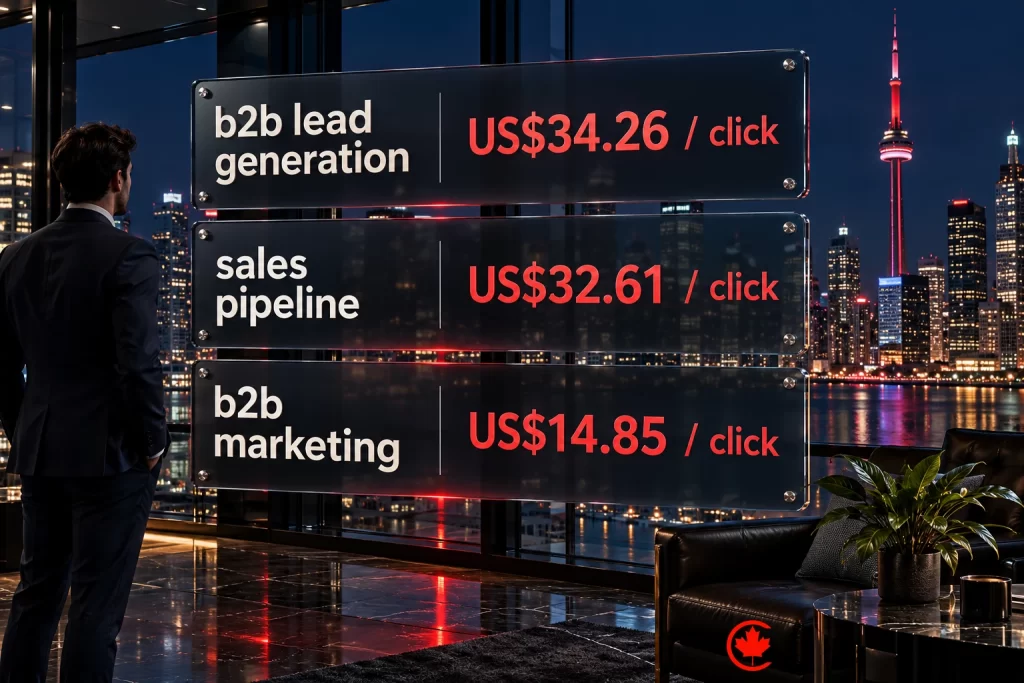
B2B lead generation is not about volume. It is about producing conversations your sales team can turn into revenue, at a cost the business can sustain. In Canada, search ads on terms such as “B2B lead generation”, “B2B marketing agency” and “account based marketing” are among the more expensive per click, with “B2B lead generation” the highest of the three. This guide covers how Canadian B2B companies build a pipeline that holds up: who to target, what to offer, which channels work, how to qualify and hand off leads, and how to measure what actually becomes revenue.
Actual campaign costs vary. These are marketing-related queries, not the buyer keywords every B2B company would target.
Start with the ideal customer profile
Every strong B2B program starts with a tight definition of who you sell to:
- Firmographics: industry, company size, region and growth stage.
- Trigger events: funding, hiring, expansion, new regulation, a failed vendor, a contract renewal.
- Buying group: the economic buyer, the user, the technical evaluator and the person who can block the deal.
- Disqualifiers: who you should not sell to, which saves sales time.
Write this down and share it between marketing and sales. Most lead quality arguments disappear once both teams agree on it.
Offers that earn B2B conversations
| Offer | Best for |
|---|---|
| Assessment or audit | Services and complex solutions where buyers need a diagnosis first |
| Pricing or ROI calculator | Buyers building an internal business case |
| Demo or trial | Software and products buyers want to see working |
| Benchmark report | Earning attention and links from your market |
| Workshop or webinar | Educating a buying group together |
We plan and run B2B marketing across search, ads, content and email for Canadian companies.
“Contact us” is not an offer. Give buyers a specific, useful reason to talk.
Channels that work in Canadian B2B
- SEO and content: rank for problem, comparison and “how to choose” searches buyers use during research. See how B2B SEO works for long sales cycles.
- Google Ads: capture high intent searches, measured on qualified opportunities, not form fills.
- LinkedIn: reach the buying group by role, company and industry. See how to target buying committees with LinkedIn Ads.
- Account based marketing: coordinated outreach, ads and content for a defined list of target accounts.
- Email and outbound: relevant, permission aware outreach and nurture sequences.
- Partners and referrals: complementary vendors, consultants and associations.
- AI search: being cited when buyers ask AI assistants for vendor shortlists. See AI Overviews versus Perplexity for B2B buyers.
Email and CASL
Canada’s anti spam law (CASL) applies to B2B email too. Commercial messages generally need express or implied consent, clear sender identification and an unsubscribe. One form of implied consent applies when a person has conspicuously published their business email without saying they do not want messages, and your message is relevant to their role. Keep consent records, and do not treat purchased lists as consent.
Qualify and hand off properly
- Agree on definitions: marketing qualified lead, sales qualified lead, opportunity.
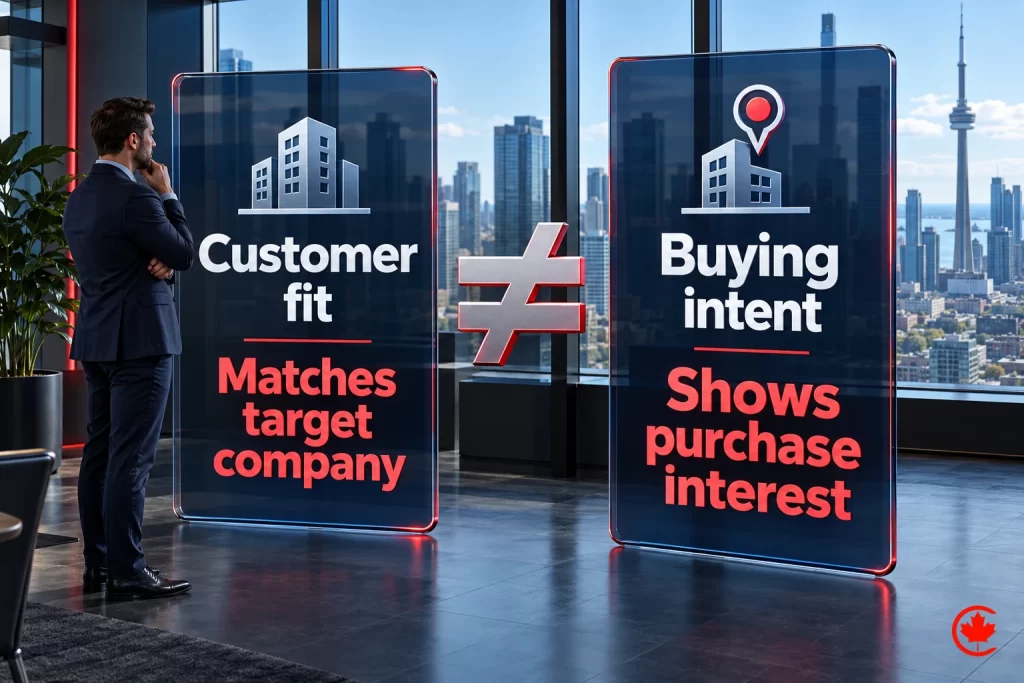
- Score leads on fit (ICP match) and intent (pages viewed, offers taken).
- Route qualified leads to sales within minutes, with context on what they did.
- Nurture leads that are not ready, rather than discarding them.
- Review closed and lost deals monthly together.
A properly set up CRM makes this possible. See the best CRM for small business in Canada.
Measure pipeline, not leads
| Metric | Why it matters |
|---|---|
| Cost per sales qualified lead | Shows real lead quality by channel |
| Pipeline created by source | Ties marketing to revenue potential |
| Win rate by source | Reveals which channels bring buyers, not browsers |
| Sales cycle length | Helps set realistic expectations and budgets |
| Customer acquisition cost and payback | Tells you how much you can afford to spend |
Use closed-deal reporting to assess lead quality. Where permitted, send eligible conversion signals to Google Ads and LinkedIn after checking consent, the fields being shared and each platform’s customer-data rules. Keep sensitive deal details and confidential customer records in your CRM.
Want a pipeline program built and run for you? See our B2B marketing, lead generation and fractional CMO services.
Industry guides for B2B sellers: staffing and recruitment agencies, trucking and logistics and money transfer and fintech.

Frequently asked questions
What does pipeline management mean for a B2B sales team?
It means marketing and sales agree on what a marketing qualified lead, a sales qualified lead and an opportunity are, then score leads on fit and intent. Qualified leads go to sales quickly with context on what they did, while the ones not ready are nurtured. Both teams review closed and lost deals together each month, which a properly set up CRM makes possible.
How do B2B companies in Canada get sales leads that turn into revenue?
Give buyers a specific, useful reason to talk, since a contact page alone is not an offer. An assessment suits complex services, a pricing or ROI calculator helps buyers build an internal case, and a demo or trial suits software. Benchmark reports and workshops earn attention from a whole buying group.
What is the biggest mistake in B2B lead generation?
Chasing volume. A pile of form fills means little if sales cannot turn them into revenue at a cost the business can sustain. Judge each channel on cost per sales qualified lead, pipeline created and win rate, and write down an ideal customer profile both teams accept so arguments about lead quality stop.
Which strategies generate B2B leads in Canada?
SEO and content that rank for problem, comparison and how-to-choose searches reach buyers during research. Google Ads captures high-intent searches, LinkedIn reaches the buying group by role and industry, and account based marketing focuses ads and content on a defined set of target accounts. Partners, referrals and being cited in AI assistant answers fill out the mix.
How fast should sales follow up on a qualified B2B lead?
Within minutes, with context on the pages the person viewed and the offer they took. Speed matters most for leads that fit your ideal customer profile and show clear intent. Leads that are not ready yet should move into a nurture sequence rather than being dropped.
How do you build a B2B email list that complies with CASL?
CASL applies to business email too, so commercial messages generally need express or implied consent, clear sender identification and an unsubscribe. Implied consent can apply when someone has conspicuously published a business email without refusing messages and what you send is relevant to that person's job. Keep consent records, never treat a purchased list as consent, and confirm the current CASL requirements with the CRTC.
Where should you start when building a pipeline for sales?
Start with a written ideal customer profile shared by marketing and sales. Define firmographics such as industry, size, region and growth stage, the trigger events that create need, the people in the buying group and the disqualifiers that tell sales who to skip. Offers, channels and scoring all follow from that definition.
Which numbers show whether B2B pipeline building is working?
Look at cost per sales qualified lead, pipeline created by source, win rate by source, sales cycle length, and customer acquisition cost with its payback. Closed-deal reporting is the real test of lead quality. Where permitted, share eligible conversions with Google Ads and LinkedIn once consent and customer-data rules are confirmed.