
General SEO Agency vs Dental-Specific SEO: Does the Niche Focus Matter?
Executive summary. If you run a dental practice, the label on an agency’s homepage matters far less than whether that agency has already solved the problems dentists actually face: a Map Pack crowded with clinics within two kilometres, patients who choose by reviews before they read a word, procedure pages that have to be accurate as well as persuasive, and, for groups, several locations competing against each other in the same search results. A dental-specific SEO provider usually starts with that knowledge. A strong general agency can match it, and often brings the Google Ads, Meta ads, website and branding work a growing practice needs under one roof. The practical answer for most Ontario practices is neither label but a team that does both, which is what our dental SEO and dental marketing services are built to be.
What a dentist is actually buying when they buy SEO
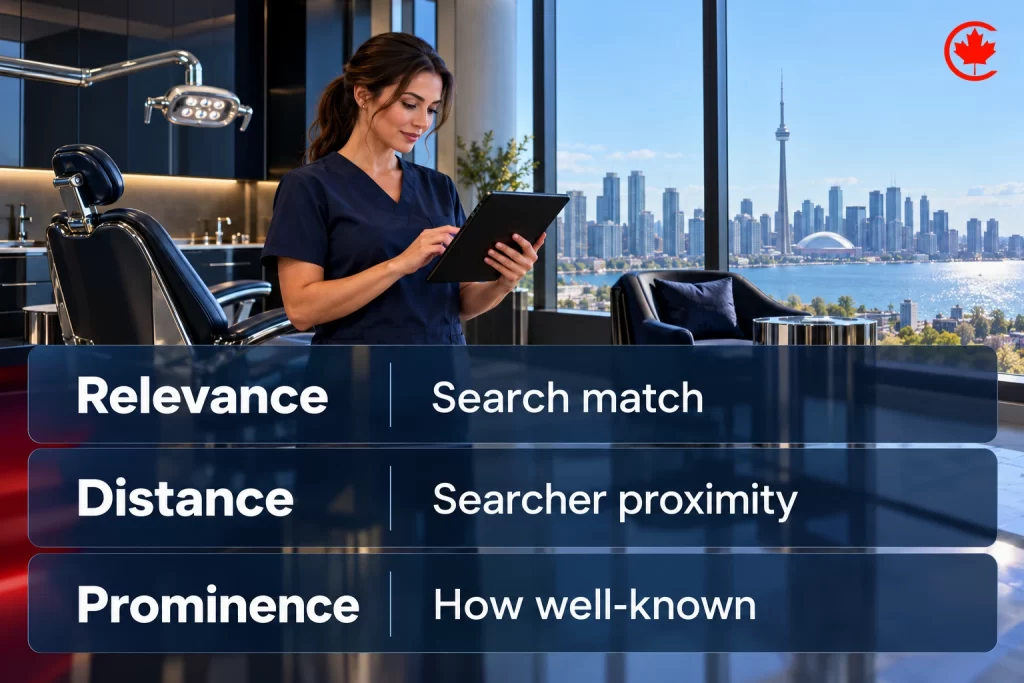
Search engine optimization for a clinic is not “ranking for dentist near me”. It is a set of jobs: make the practice appear in the Google Map Pack for the neighbourhoods it serves, make each procedure page answer the question a patient typed (cost of a crown, is Invisalign covered, emergency tooth extraction today), earn and answer reviews so the star rating supports the click, keep the website fast on a phone, and report captured calls and booking requests alongside the source information the approved setup supports. Ask either kind of agency for relevant dental experience, a clinical-review process and an understanding of the rules that apply to your practice. Useful checks include accurate insurance language, the distinction between provider roles, procedure-specific search intent and the Royal College of Dental Surgeons of Ontario’s advertising requirements. A general SEO agency in Toronto can do this work well when it has that experience.
Side by side: general SEO agency vs dental SEO
| What matters to a practice | General SEO agency | Dental-specific SEO provider |
|---|---|---|
| Cost | Compare the quoted scope, hours and included channels | Check what dental-specific research and delivery the quote includes |
| Knowledge of dental search patterns | Varies widely; must be checked with real dental results | Stronger from day one |
| Procedure content | Check dental experience and the clinical review process | Check clinical accuracy and the same review process rather than relying on the specialist label |
| Google Business Profile and reviews | Standard local SEO process | Tuned to clinic review patterns and RCDSO advertising rules |
| Multi-location groups | Depends on local SEO maturity; cannibalization is the common failure | Built for one page architecture per location |
| Paid search, Meta ads, website, branding | Often under one roof | Often SEO only, extra vendors for the rest |
| Reporting | Traffic and rankings unless you ask for more | Usually new-patient calls and bookings |
We help dental practices rank in local search and fill appointment books.
The plain read: compare the proposed work and the team’s relevant experience. A dental focus can be useful, but neither a specialist label nor a broad service menu tells you what the practice will receive for its budget. The same test applies when you hire an SEO consultant in Toronto for a second opinion: ask what they would change first and why.
Where a general agency wins
A single-location practice in a mid-sized Ontario city with moderate competition rarely needs a specialist premium. What it needs is technical rigour, a clean Google Business Profile, ten well-written procedure pages and a review process the front desk actually follows. If that practice also wants paid search, a new website and a refreshed brand, a strong general agency saves the cost and coordination of three vendors. Our dental Google Ads and dental branding work sits next to the SEO for exactly that reason.
Where dental-specific depth wins
A multi-location dental group in Toronto, Mississauga, Vancouver or Calgary needs a clear plan for each clinic. Check whether overlapping procedure or location pages answer the same need, and whether patients can find the right clinic’s services and booking path. Build distinct, useful location content, Google Business Profiles for eligible locations, accurate hours and categories, and internal links that explain which clinic serves each area. Ask prospective agencies to explain how they would handle those decisions for your group.
The stack a growing practice ends up needing
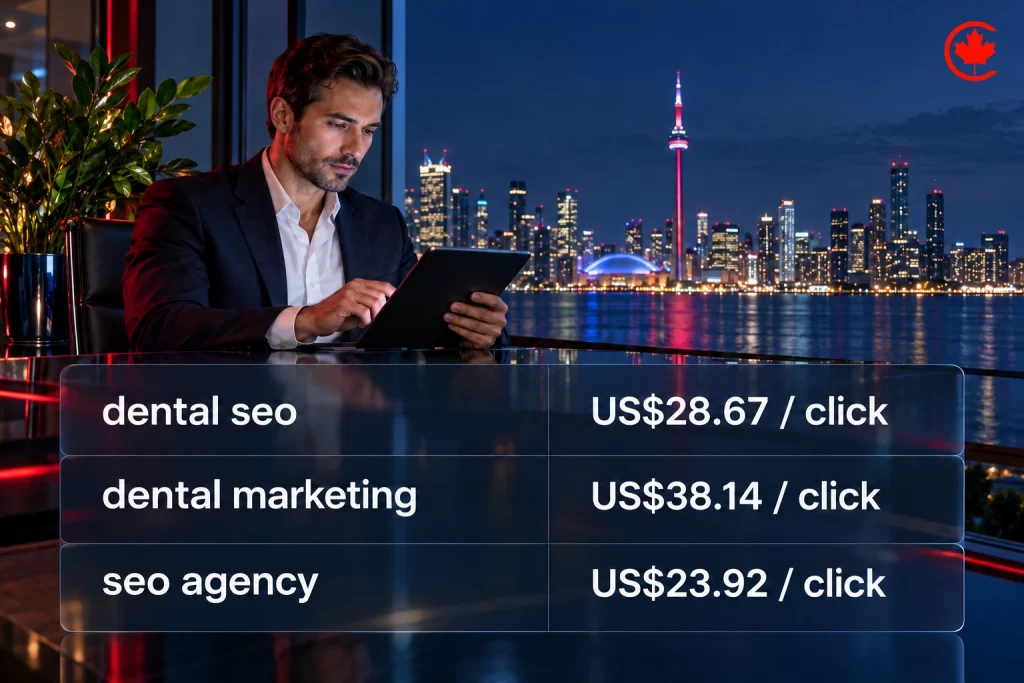
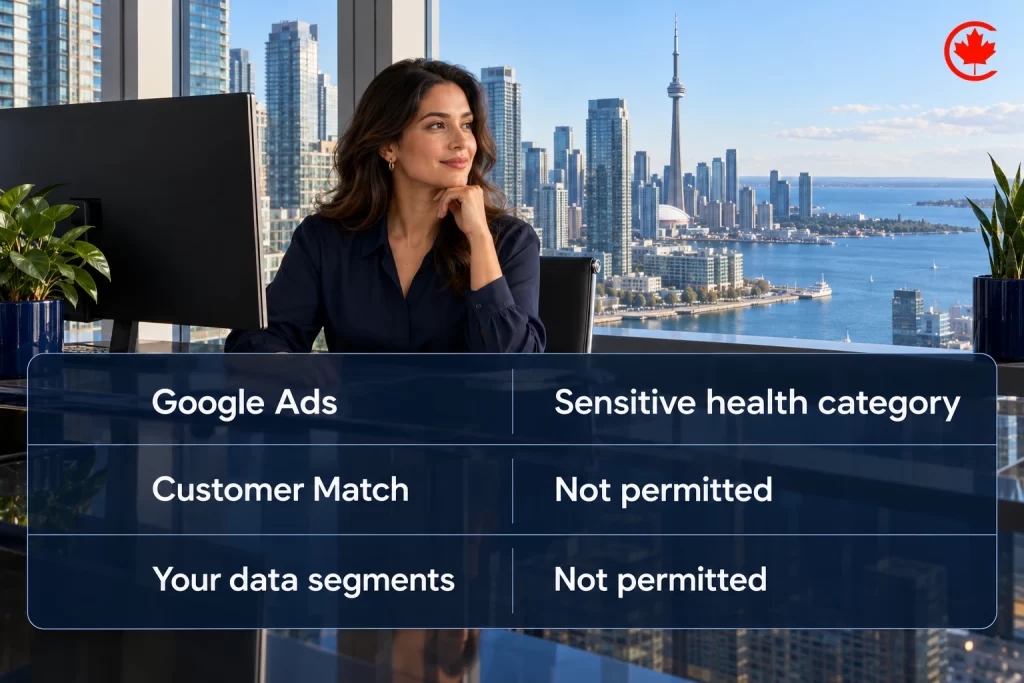
SEO, paid campaigns and intake systems can support different parts of the patient journey. Local SEO and the Google Business Profile bring the searches that already exist. Google Ads can target relevant emergency and procedure searches once the campaign is approved and running. Meta ads on Facebook and Instagram can introduce relevant dental services to an eligible local audience. Choose permitted offers, audiences and event data for the service being promoted; a visit to a treatment page is not automatic permission to build a health-related retargeting audience. Reddit, where Toronto and GTA residents ask each other for dentist recommendations in local subreddits, is a reputation channel worth monitoring and, for the right offer, worth a small paid test. A dental AI receptionist can handle supported after-hours enquiries and booking steps. One team can coordinate campaign and intake reporting, using the data available across the agreed systems.
Questions to ask any agency before you sign
- Show me ranking and call data from a current dental client, with the client’s permission, not a case study PDF.
- Which procedure pages will you write first, and who checks them for clinical accuracy?
- How will you handle my second location without splitting my rankings?
- What exactly will you report each month: rankings and traffic, or new-patient calls and bookings?
- Who answers the phone when the site goes down on a Saturday?
Clear answers give you a stronger basis for comparing providers. Check the evidence, the written scope and who will do the work before you sign.
The mistake we see most often
Practices choose on the label. A dental-branded agency is assumed to know the category; a general agency is assumed not to. Both assumptions fail regularly. We have seen dental-labelled shops deliver templated local pages with no technical depth, and general agencies run excellent dental campaigns because they took the time to learn the category instead of applying a standard playbook. The check is the same either way: ask for real dental results before you sign.
The second mistake is buying more than the market needs. A practice in a low-competition town often needs a modest local SEO tune-up and a review process, not a full agency engagement. We say so when it is true, because a patient schedule that fills at the right cost is the only result that matters.
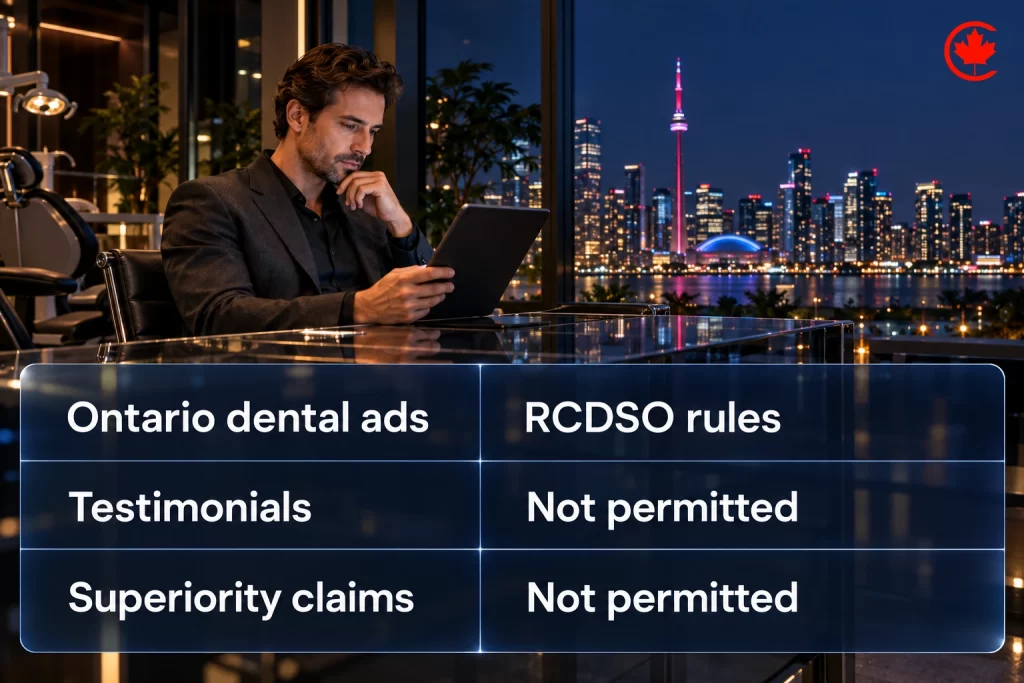
How we run it for dental practices
Our dental SEO service starts with a market-density check: how many clinics compete for your neighbourhoods, which procedures have real search demand nearby, and where your Google Business Profile stands today. From there we fix the website, write the procedure pages a dentist reviews, set up the review-handling process the practice approves under its professional rules, and, where the agreed strategy supports it, add Google Ads, Meta ads and an AI receptionist with configured routing and booking rules. Reporting connects supported calls, forms and booked appointments with the source information available, and makes tracking gaps visible. Read dental SEO services in Toronto for what a full program includes, and why dental practices struggle to rank in local search if you want to diagnose the problem before you compare providers. Since 2008, BBB Accredited with an A+ rating, with a custom proposal after discovery.
Frequently asked questions
What does SEO for a dental practice actually involve?
Dental SEO is a set of jobs rather than one ranking. The practice needs to appear in the Google Map Pack for the neighbourhoods it serves, and each procedure page has to answer what a patient typed, such as the cost of a crown or whether Invisalign is covered. Reviews need to be earned and answered, the site has to stay fast on a phone, and reporting should track captured calls and booking requests.
Should a dental practice hire a general SEO agency or a dental-focused one?
Choose on evidence rather than the label on the homepage. A dental-focused provider usually starts with more knowledge of dental search patterns, while a strong general agency can match that and often adds Google Ads, Meta ads, website and branding work under one roof. Ask either kind for ranking and call data from a current dental client, shared with permission, and for the name of the person who checks procedure pages for clinical accuracy.
Does a dental-specific SEO provider cost more than a general agency?
Not necessarily, so compare the quoted scope, hours and included channels rather than the niche. With a dental-focused provider, check what dental research and delivery the quote actually includes. A single-location practice in a mid-sized Ontario city with moderate competition rarely needs to pay extra for a niche focus, while a busy multi-location group may need more planning work either way.
How does local SEO differ from organic SEO for a dental clinic?
Local SEO puts the clinic in the Google Map Pack, which depends on an accurate Google Business Profile, correct hours and categories, and a steady flow of answered reviews. Organic SEO is about the regular results below the map, where procedure pages that answer a patient's question in plain, accurate language do most of the work. Most clinics need both, because patients often compare map listings and then read a procedure page before booking.
What does on-page SEO look like on a dental website?
On-page work for a dentist centres on procedure pages that match patient search intent, such as emergency extractions, crowns or clear aligners. Each page has to be accurate as well as persuasive, which is why a dentist should review the clinical content before it goes live. Insurance wording, the difference between provider roles and fast loading on mobile also belong to on-page quality.
What mistakes do dental practices make when choosing an SEO provider?
The most common one is choosing on the label, assuming a dental-branded shop knows the category and a general agency does not. Both assumptions fail often, since some dental-labelled providers deliver templated local pages with no technical depth. The second mistake is buying more than the market needs: a practice in a low-competition town may only need a modest local SEO tune-up and a review process.
What SEO setup does a dental group with several Toronto clinics need?
Each clinic needs its own plan, with distinct location content, a Google Business Profile for every eligible location, and accurate hours and categories. Check that overlapping procedure or location pages are not competing for the same search, which is the usual failure for groups. Internal links should make clear which clinic serves each area so patients reach the right booking path.
Is SEO enough on its own to fill a dental practice's schedule?
SEO brings in the searches that already exist, but a growing practice often adds other channels. Google Ads can target emergency and procedure searches, and Meta ads can introduce services to an eligible local audience, as long as offers, audiences and event data respect health privacy limits. A visit to a treatment page is not automatic permission to build a health-related retargeting list, and an AI receptionist can cover supported after-hours enquiries.
Which advertising rules should a dental SEO company in Mississauga or elsewhere in Ontario follow?
In Ontario, the dental regulator, the RCDSO, sets advertising requirements for dentists, and procedure pages, reviews and Google Business Profile content should respect them. In practice that means accurate insurance language, clear distinctions between provider roles and a review-handling process the practice approves under its professional rules. Confirm the latest version of those rules with the RCDSO before you publish new claims.