
Full-Service Agency vs Specialist Shops: Which Fits a Growing Toronto Business?

A full-service agency wins for growing businesses that need coordinated strategy across multiple channels without managing several vendors directly, while specialist shops win for companies that already have a strong internal marketing lead and need deep, narrow execution in one specific channel. This is a practical framework for business owners weighing this decision.
Neither model is inherently superior. The right choice depends on how much internal marketing capacity and coordination bandwidth your business already has.
How we approach this comparison at Canada Create
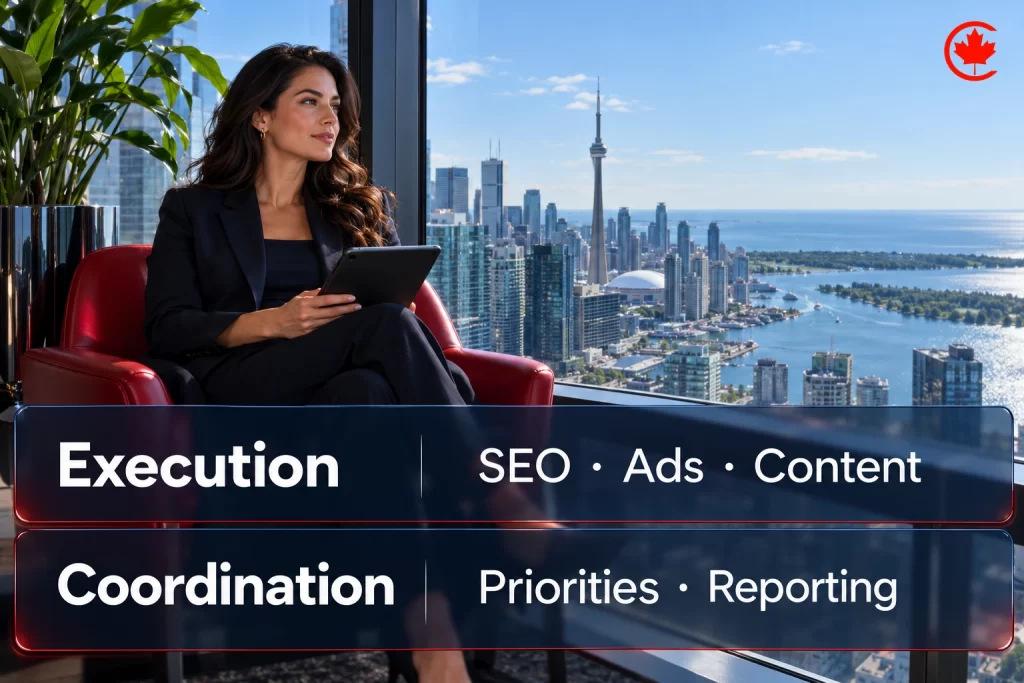
At Canada Create, we walk clients through four factors when this question comes up: internal coordination capacity, budget efficiency, depth versus breadth of expertise needed, and the actual complexity of the channel mix the business requires. A business running SEO, paid media, content, and web design simultaneously creates real coordination overhead if those four functions live at four different specialist vendors with no one connecting the strategy across them.
Specialist shops can absolutely outperform a generalist full-service agency on a single channel. Cross-channel coordination still needs a named owner, whether that person is internal, at a lead agency or separately contracted.
Side by side: the real differences that matter
| Dimension | Full-service agency | Specialist shops |
|---|---|---|
| Coordination overhead | Low, one point of contact | High, client must coordinate across vendors |
| Depth in any single channel | Strong, not always the deepest possible | Focused expertise to assess through relevant work |
| Cost efficiency at scale | Compare combined fees and coordination time | Compare the specialist fee and internal coordination work for the required channel scope |
| Strategic cohesion | Built in, one team sees the whole funnel | Requires an internal owner to maintain cohesion |
| Flexibility to swap vendors | Lower, more embedded in your operations | Higher, easier to replace one specialist |
We plan and run B2B marketing across search, ads, content and email for Canadian companies.
Compare coordination work explicitly: who sets priorities, shares findings, resolves conflicting recommendations and reconciles reporting? The number of channels alone does not decide which arrangement offers better value.
Where a full-service agency wins
A growing Toronto professional services firm or SME that needs SEO, paid media, and content working together toward one lead-generation goal, without a dedicated internal marketing director to coordinate multiple vendors, may benefit from a full-service agency with a clearly assigned coordination role. We have seen clients waste real budget when three unconnected specialist vendors independently optimized for their own channel’s metrics with no shared view of overall lead quality or cost per acquisition.
Where specialist shops win
A business with an experienced internal marketing director and a narrow, well-defined need, for example, a company that already has strong SEO and content in-house but needs elite-level paid media execution specifically, is well served by a specialist paid media shop. In that scenario, the internal marketing director is already doing the coordination work a full-service agency would otherwise provide, so paying for that coordination again is redundant.
How to make a set of specialists work together
If you choose specialist shops, the arrangement can work well as long as the coordination is designed rather than assumed. A few practical steps make a big difference.
- Name one owner. One person, internal or contracted, sets priorities across channels and has the final say when recommendations conflict.
- Agree on one goal and one definition of a lead. Every vendor should report against the same business outcome, such as qualified leads or booked consultations, not only their own channel metrics.
- Share one source of truth. Give each vendor appropriate access to the same analytics property and CRM data, so reports can be reconciled instead of argued over.
- Hold a regular joint review. A short monthly call with all vendors surfaces overlaps, such as paid ads bidding on terms that already rank well organically, and gaps nobody owns.
- Document who owns what. Tracking, landing pages, creative and the website itself are common areas where two vendors each assume the other is responsible.
The mistake we see most often
The mistake we see most often is hiring multiple specialist shops without appointing anyone internally to own the cross-channel strategy, then being surprised when the channels do not reinforce each other. Coordination failure, not execution quality, is the most common reason multi-vendor marketing setups underperform relative to their combined budget.
Here is the honest caveat worth stating directly. A full-service agency is not automatically better just because it is more convenient. If your business’s growth genuinely depends on one channel being executed at an elite level, a specialist with relevant category experience may be the stronger fit. Convenience and outcome quality are not the same thing, and we would rather lose the engagement than pretend otherwise.
Questions to ask before you decide
Whichever model you lean toward, these questions help you compare proposals on equal terms.
- Who will be my day to day contact, and who actually does the work on each channel?
- How do you report results, and can the reports be tied to leads and sales in our CRM?
- What will you need from our team each month, such as approvals, content or sales feedback?
- How do you work with other vendors or our internal staff when responsibilities overlap?
- Can you show relevant work for businesses with a similar sales cycle or audience?
- Who owns the ad accounts, analytics, website and creative files if we change direction later?
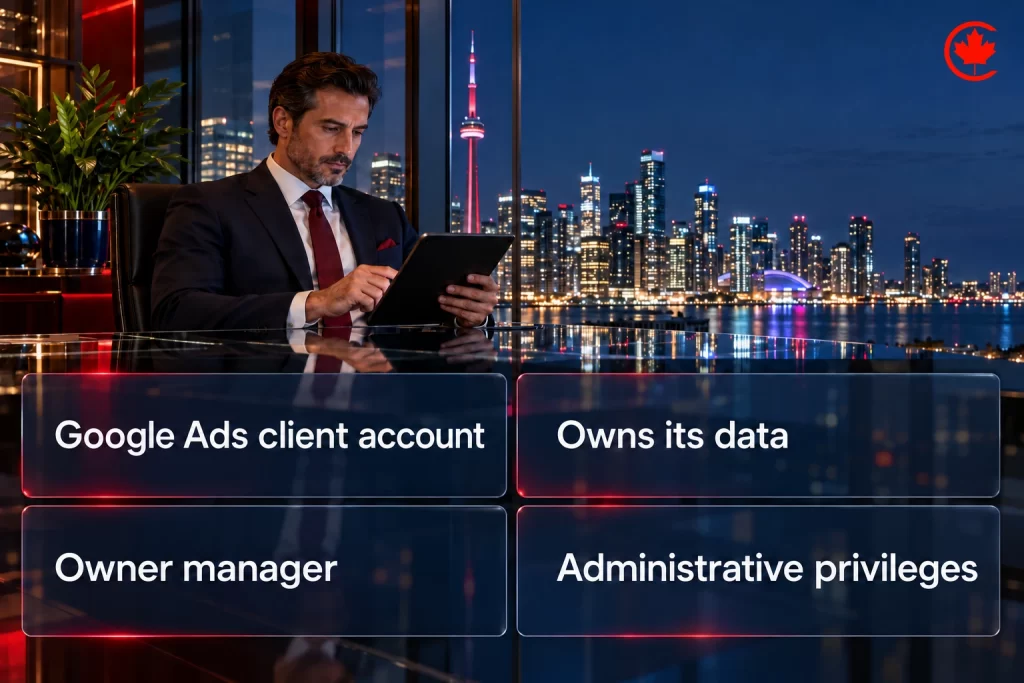
Ownership of accounts and assets matters in both models. Make sure your business holds the main ad accounts, analytics properties, domain and website access in its own name, with vendors added as users.
Signs it is time to change models
The right setup can change as a business grows. A specialist arrangement that worked with two channels may start to strain once you add a third or fourth, and a full-service relationship may feel too broad once you hire a strong internal marketing lead. Watch for these signals:
- Your team spends more time reconciling vendor reports than acting on them.
- Channels are working against each other, for example messaging or offers that do not match between ads, website and email.
- One channel has become so important to growth that it needs deeper attention than your current partner can give.
- You have hired internal marketing staff who can now take on coordination or execution themselves.
Changing models is easier when the business already owns its accounts and data, and when each vendor’s work is documented well enough for someone else to pick up.
Making the final call
If you are still deciding, go back to the fundamentals in our companion post on what to look for in a Toronto digital marketing agency, which covers the evaluation criteria that matter regardless of which model you choose. For a closer look at how Canada Create specifically structures full-service engagements, our homepage walks through our current service lines and how our team coordinates across them for clients.
In the eighteen years Canada Create has operated as a full-service agency in Toronto, we have watched this decision play out both ways for different clients, and honestly, some of those clients were better served by a specialist for a specific project before eventually consolidating with us as their needs broadened. That flexibility, being honest about when we are not the right fit yet, is part of how we have kept clients for many years. Whichever model you choose, our SEO and paid media teams are structured to work either as a fully coordinated unit or as a standalone specialist engagement, depending on what your business actually needs right now.
Frequently asked questions
What does a full-service marketing agency do that specialist shops do not?
A full-service agency runs several channels, such as SEO, paid media, content and web design, under one team with one point of contact. Its main value is coordination: one group sees the whole funnel and can set priorities across channels. Specialist shops go deep on a single channel, which leaves someone on your side to connect the strategy between vendors.
When is a full-service agency worth hiring for a growing Toronto business?
It tends to make sense when SEO, paid media and content need to work toward one lead-generation goal and nobody internal has the time to coordinate several vendors. Unconnected specialists can each optimize for their own channel's metrics with no shared view of lead quality or cost per acquisition. Make sure the agency names who holds the coordination role.
What drives the cost of a full-service agency compared with several specialists?
Cost depends on how many channels are in scope, how much work each needs and how much coordination your own team would otherwise do. With specialists, add each vendor's fee to the internal hours spent setting priorities and reconciling reports. Canada Create sets out its own fees in a written proposal built around the channels you actually need.
What hidden costs come with using several specialist marketing shops?
The largest is coordination time: someone has to set priorities, share findings, settle conflicting advice and reconcile reports. Budget can also leak through overlaps, such as paid ads bidding on terms that already rank well organically. Gaps cost money too, since tracking, landing pages and creative are often left unowned when each vendor assumes another is responsible.
When do specialist shops beat a full-service agency?
Specialists fit a business with an experienced internal marketing director and a narrow, well-defined need. A company with strong SEO and content in-house that needs top-level paid media execution is a typical example. In that case the director already does the coordination a full-service agency would sell, so paying for it twice adds little.
How can a business get several specialist agencies to work together?
Name one owner, internal or contracted, who sets priorities and has the final say when advice conflicts. Ask every vendor to report against the same business outcome and the same definition of a lead, using shared access to one analytics property and CRM. A short monthly joint review helps catch overlaps, and a written list of who owns tracking, landing pages, creative and the website closes the usual gaps.
What should I ask before choosing between a full-service agency and specialist shops?
Ask who your day-to-day contact is and who actually does the work on each channel. Find out whether results can be tied to leads and sales in your CRM, and what each provider needs from your team every month. Also ask how they work with other vendors, and confirm your business holds the main ad accounts, analytics, domain and website access in its own name, with vendors added as users.