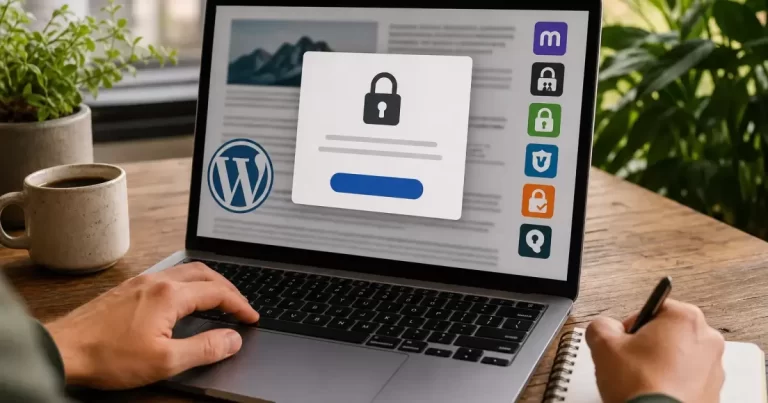
Adding social login to a WordPress site allows visitors to authenticate using existing third-party identities such as Google, Facebook, or Apple. This reduces initial friction for registration, whether visitors need to log in before posting an advertisement, access digital downloads, or complete a store checkout. However, third-party authentication is not an all-or-nothing identity solution. WordPress core does not contain native social authentication out of the box; it relies on local user accounts, including password hashes, stored in the wp_users table. When you implement a social sign-on extension, you are introducing a bridge between an external identity provider and a local WordPress profile.
Without a deliberate plan for account linking and recovery, users face account duplication, locked profiles, and authorization mismatches. Understanding how identity bridging works under the hood ensures you maintain secure user administration without compromising account access.
How Account Linking Operates Under the Hood
Social authentication plugins evaluate credentials in stages to connect incoming requests to an existing local database profile. As outlined in the WooCommerce Social Login login process documentation, the handshake typically executes two primary verification steps when an external profile returns from an OAuth or OpenID identity provider:
- Social Identifier Verification: The extension examines the unique user identifier transmitted by the provider. If that specific social identifier is already stored in the WordPress user metadata, the user is authenticated immediately into the associated account.
- Email Reconciliation: If no matching social identifier exists, the plugin searches the database for a matching email address returned by the social provider. If an identical verified email address exists, the plugin links the social profile to the existing WordPress account and establishes the session.
Distinguishing visibility from authorization is critical during this process. Displaying a “Log in with Google” button on a registration form merely provides an entry point; it does not guarantee that the external provider will authorize the request, return an email claim, or validate user identity. Furthermore, receiving an authorization token from a provider is a request success, but it does not equal a completed local session until the plugin successfully maps that token to a valid local user record.
Security cautions also apply to administrative accounts. Allowing automatic linking strictly based on incoming email addresses can present a risk if higher-privilege profiles exist on the site. Developers often limit email-based linking to specific front-end roles. For instance, the WooCommerce Social Login developer docs detail the wc_social_login_find_by_email_allowed_user_roles filter, which restricts non-logged-in automatic linking to basic customer profiles by default. Administrators can audit and adjust these settings alongside general WordPress roles and capabilities to ensure staff accounts require manual verification rather than loose OAuth matching.
Designing an Independent Account Recovery Route
Third-party login systems are inherently fragile if treated as the sole method of entry. Social networks deprecate API versions, users deactivate their third-party accounts, and network outages occur. A proper implementation ensures that every social profile possesses an independent fallback route.
Preserving Core Password Access
For a customer site that permits local password login, social authentication can act as a secondary entry route. If an organization deliberately enforces SSO or MFA, design recovery within that policy rather than introducing an unapproved password bypass. When an extension creates a user profile via OAuth, it should still generate a standard WordPress record. If an external provider experiences downtime, the customer must be able to use the core WordPress password recovery form to trigger a password reset link to their primary email address. This ensures access remains available through standard wp-login.php or custom front-end login forms.
Handling Unlinking and Profile Persistence
Users frequently adjust privacy settings or swap external profiles. According to the WooCommerce Social Login documentation, unlinking a connected social profile simply removes the provider connection; it does not delete the underlying WordPress user account. Your account management page must give authenticated users the interface to disconnect social networks safely, while warning them to maintain an updated email address and standard password before disconnecting their primary third-party provider.
Step-by-Step Implementation Strategy
Follow these operational stages when deploying social login on your WordPress site:
- Evaluate Candidate Plugins: Select an extension that fits your workflow. Nextend Social Login, Super Socializer, and WooCommerce Social Login are common candidates to evaluate based on your e-commerce and membership requirements.
- Configure External Provider Consoles: Register applications inside developer portals (such as Google Cloud Console or Meta for Developers). Set accurate redirect URIs, request the least necessary permission scopes (usually public profile and verified email), and store client secrets securely.
- Establish Account Linking Controls: Configure the plugin to prompt unauthenticated users for password confirmation if an incoming social email matches an existing account with elevated capabilities.
- Enable My Account Self-Management: Embed connection management controls in the user dashboard. Allow logged-in members to connect or disconnect secondary identity networks at will.
- Validate the Password Fallback: Test the WordPress password recovery pipeline to verify that users created through social login receive functional password reset emails.
Troubleshooting Common Linking Failures
| Symptom | Root Cause | Resolution Step |
|---|---|---|
| Duplicate accounts generated on social login | The email address provided by the social platform differs from the primary email of the existing account. | Instruct the user to log in with their original credentials and link the new social network from their account settings page. |
| Missing email errors during registration | Certain platforms (such as X or restricted Apple IDs) do not share an email address by default. | Collect and verify any required email address before using it for account linking or recovery. A typed address alone does not prove ownership. |
| Endless redirect loops during authentication | Misconfigured redirect URIs in the provider app console or conflicting caching rules on the authorization callback path. | Verify that OAuth callback URLs match site permalinks precisely, and exclude dynamic authentication endpoints from page caching. |
| Insufficient permissions notice on linking | The existing user account holds an administrative or editor role excluded from automated email linking. | Log in directly using standard credentials, navigate to user profile settings, and perform an authenticated link manually. |
Canada Create™ builds and optimizes WordPress sites for Toronto businesses. Tell us your goals and we will recommend the right setup.
Hypothetical Implementation Example
Consider a community portal named Prairie Classifieds that requires users to log in before posting an advertisement. A contributor named Alex registers using a Google profile associated with alex@example.com. The registration routine creates a standard WordPress profile with the Contributor role, storing the Google identifier in user meta.
Six months later, Alex attempts to sign in using a GitHub profile linked to alex.work@example.com. Because the email addresses do not match, the plugin does not link the accounts automatically; instead, it generates a new account or halts the request based on admin policy. To resolve this without manual database intervention, Alex signs into Prairie Classifieds using the original Google route, navigates to the account profile screen, and clicks “Link Account to GitHub”. The authenticated linking flow associates both provider identities with the single local user ID. If Alex later leaves the GitHub organization, the Google profile and standard password reset route ensure continued access to past classified advertisements.
Account Linking and Recovery Readiness Checklist
- External developer applications use HTTPS callback URLs matching site permalinks.
- Elevated WordPress roles are protected from unauthenticated, automatic email matching.
- Standard password reset mechanisms remain accessible from all login interfaces.
- Authenticated users have access to an account management panel to link or unlink providers.
- Dynamic OAuth callback paths are excluded from server and plugin caching layers.
- Missing-email flows verify ownership before linking or enabling email-based recovery.
Frequently Asked Questions
What is social login for WordPress?
It lets users sign in with Google, Facebook or other accounts.
What happens if a user loses social account access?
Offer email login and account recovery.
Is social login secure?
Yes, when configured with trusted providers.
Who can set up WordPress logins?
Our WordPress development team.