
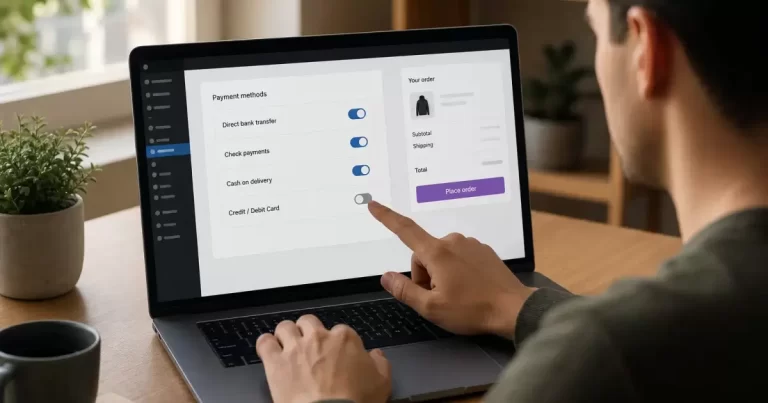
Transforming a single-seller WordPress store into a collaborative multi-vendor marketplace requires more than installing a plugin. Store owners must balance administrative oversight with vendor autonomy, ensuring sellers can publish items and fulfill orders without compromising site security or customer trust. Without defined boundaries, store managers quickly become bogged down in resolving catalogue conflicts, handling commission errors, and tracking missing dispatches.
Distinguish Core Features From Marketplace Extensions
Core WooCommerce is engineered for a single merchant operating under a unified payment and fulfilment pipeline. It does not provide vendor logins, individual commission ledgers, or vendor-specific reporting out of the box. To introduce multi-tenancy, administrators must integrate specialized extensions.
Official tools like Product Vendors for WooCommerce are candidates to evaluate when store owners want to maintain central payment processing while delegating catalogue management to independent vendors. In this architecture, customer payments flow directly through the primary store payment gateway. The marketplace operator assumes initial financial custody and subsequently distributes commissions to vendors according to established rules, rather than allowing each vendor to attach their own isolated payment gateway at customer checkout.
Establish Role Governance: Visibility Versus Authorization
Managing a marketplace requires strict separation between what a user can view and what they are authorized to modify. Hiding a dashboard link or product tab through interface styling affects visibility, but only WordPress user roles and capabilities enforce true authorization. If permissions are misconfigured, a vendor could inadvertently access another seller’s customer details or edit storewide shipping rates.
When evaluating permissions, review how your site handles WordPress roles and capability changes to prevent accidental privilege elevation. According to the Product Vendors FAQ, the platform introduces specific roles such as Pending Vendor, Vendor Manager, and Vendor Admin:
- Pending Vendor: Assigned to applicants who complete registration; this role holds no product editing capabilities until approved by an administrator.
- Vendor Manager: Granted permissions to manage only their own catalogue items, helping restrict administrative exposure.
- Vendor Admin: Permitted to manage broader vendor-specific settings, including vendor profiles and team access, while still restricted from main store settings.
- Shop Manager: A core WooCommerce role retained by the primary marketplace owner to oversee sitewide operations, audits, and payouts.
Plan Catalogue Taxonomies and Product Attribution
When multiple sellers upload products, catalogue organization can disintegrate into duplicate categories and disorganized tags. Marketplace operators should establish structured classification rules prior to onboarding. Consulting a structured guide to plan WordPress categories and subcategories helps keep your main navigation cohesive while multiple contributors submit stock.
As outlined in the WooCommerce Product Vendors documentation, each vendor is provisioned a dedicated profile page. When multiple sellers create items, the internal product administration screen renders a specific filter so users can view only their own assigned inventory. Marketplace administrators should configure whether vendor submissions publish immediately or default to a pending review status, ensuring product descriptions, pricing, and imagery comply with marketplace guidelines before going live.
Configure Commissions, Gateway Flows, and Payouts
Multi-vendor accounting involves two distinct phases: checkout payment collection and subsequent vendor commission distribution. Confirm that the chosen gateway and marketplace extension support the intended checkout and settlement model. However, vendor disbursement functions under a separate mechanism.
According to the WooCommerce Vendor Guide, store administrators can set commissions as fixed amounts or percentages at the sitewide, vendor, or product level. Product-level rates override vendor and sitewide defaults, offering flexibility for high-margin items or promotional collaborations.
Automated payouts within Product Vendors rely on PayPal Payouts, though store owners may also reconcile commissions manually outside the extension. It is critical to distinguish between payout request success and actual fund settlement. An API endpoint might confirm receipt of a disbursement request, but banking holds, incorrect vendor email addresses, or account restrictions can delay actual delivery to the vendor balance. Store owners should implement a delay period for commission releases to accommodate customer refunds or shipping delays before clearing balances for disbursement.
Troubleshoot Common Marketplace Bottlenecks
Operating a marketplace introduces edge cases that single-merchant stores rarely encounter. Addressing these systematically prevents operational friction:
- Line-Item Refunds: Test the selected extension’s treatment of full and partial refunds, both before and after payout. Confirm which adjustments are automatic and which require manual reconciliation; an order refund and a vendor clawback are separate operations.
- Payout API Errors: If scheduled disbursements stall, verify that the payout credentials possess sufficient account balance and appropriate permissions. Do not assume a completed order status automatically guarantees successful external fund transfer.
- Taxonomy Sprawl: Restrict vendor capabilities regarding term creation. If vendors are granted free rein to generate tags and categories, search filters quickly degrade, confusing prospective buyers.
- Order Notification Drops: Ensure transactional emails are configured with authenticated SMTP delivery. Vendors rely on immediate dispatch alerts, and unauthenticated server notifications frequently land in spam folders.
Hypothetical Implementation: The Maritime Artisan Exchange
Consider a hypothetical regional collective called Maritime Artisan Exchange, bringing together twelve independent woodworkers and ceramicists across Atlantic Canada. The marketplace owner operates the domain, manages sitewide marketing, and processes payments through an integrated credit card processor.
To maintain brand consistency, the owner configures all onboarded sellers as Vendor Managers. When a vendor lists a new hand-carved cutting board, the item remains in a draft state until the marketplace administrator reviews imagery and dimensions. The marketplace’s intended share is fifteen percent, rising to twenty percent for the agreed ceramics programme. The team checks whether each setting represents the vendor’s share or the operator’s fee: a vendor-share field would use eighty-five or eighty percent respectively, subject to the extension’s documented tax and shipping treatment.
Customer orders are accepted centrally. The platform holds commission balances for fourteen days, matching the marketplace return policy. Once this clearance window expires, the administrator initiates bi-weekly automated payouts, while retaining a process for disputes or returns that arrive after payout. Fourteen days is this hypothetical policy, not a guarantee that all disputes are resolved.
Marketplace Launch Checklist
| Operational Area | Task Requirement | Target Status |
|---|---|---|
| Access Control | Verify Vendor Manager capabilities restrict core store configuration access | Enforced |
| Taxonomy | Lock main category creation to Shop Managers only | Enforced |
| Publishing Flow | Set default product submissions to pending administrative review | Enabled |
| Payout Cadence | Establish a return-clearing delay prior to commission distribution | Configured |
| Order Alerts | Test multi-recipient transactional email dispatch using authenticated SMTP | Verified |
Canada Create™ builds and optimizes WordPress sites for Toronto businesses. Tell us your goals and we will recommend the right setup.
Frequently Asked Questions
How do I build a marketplace on WooCommerce?
Use a multi-vendor plugin and define vendor roles, commissions, payouts and support rules.
Who handles refunds in a marketplace?
Decide in advance and write it into vendor terms.
Is WooCommerce good for marketplaces?
Yes, for small to medium marketplaces.
Who can build a marketplace?
Our ecommerce website team.