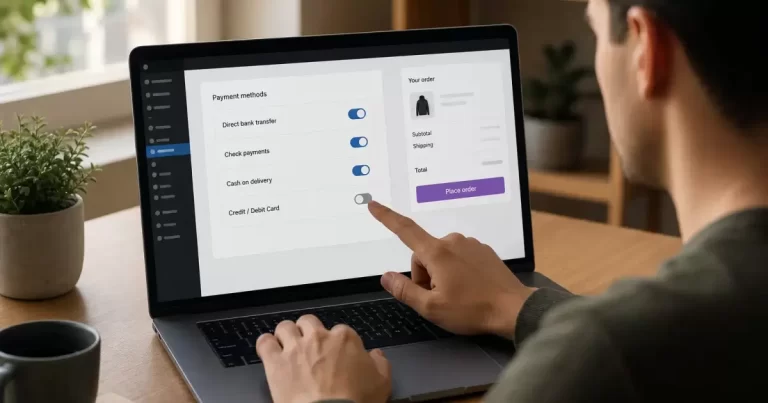

Membership site operators often review monthly cancellations as a single blended number. When a dashboard reports that twenty members left in a single billing cycle, the natural reaction is to look for content deficiencies, community friction, or pricing issues. Treating all departures identically, however, creates flawed operational conclusions. A member who navigates to an account page and clicks a cancellation button is making an intentional choice about value. A member whose renewal payment fails due to an expired credit card or a temporary banking hold may still want the membership, but a payment failure alone does not establish their intention.
To reduce churn effectively, site managers must distinguish between voluntary cancellations and involuntary payment failures. Each mechanism requires a distinct administrative response, different tracking logic, and separate product workflows. Mixing them together obscures whether an organization has a product retention issue or a technical billing recovery issue.
Define Who Counts in the Churn Rate
Before implementing recovery workflows, administrators must clarify how churn is measured. A common reporting mistake is dividing total losses in a month by the ending member count, or allowing new members who joined and left within the same period to distort the numerator. This practice creates volatile numbers that make operational changes difficult to evaluate.
A cleaner framework tracks a clearly defined starting paid cohort over a single defined period. Consider a hypothetical group of 100 members who all hold active paid status on the first day of a calendar month. If exactly 10 members from that starting group lose paid access by the final day of the month, the churn rate for that cohort is 10 percent. This figure is strictly a chosen measurement baseline for internal tracking, not an industry standard or performance benchmark. Any members who join after the first day of the month belong to a subsequent cohort and should not be counted in the numerator or denominator of the initial group. Isolating the starting cohort prevents mid-period sales spikes from masking retention problems.
Separating Voluntary Exits from Involuntary Failures
Within that hypothetical lost group, each departure must be sorted into its actual category. Voluntary churn occurs when an active subscriber explicitly decides to end their agreement. Payment-related loss occurs when a renewal failure leads to lost access. Investigate that separately from a recorded cancellation, and leave the member’s intention unknown unless there is evidence.
| Attribute | Voluntary Cancellation | Involuntary Payment Failure |
|---|---|---|
| Member Intent | Explicit decision to discontinue access | Not established by a payment failure alone |
| Primary Cause | Perceived value, cost, or lack of time | Expired cards, fraud flags, or credit limit thresholds |
| Technical Manifestation | Cancellation event recorded in account management | Gateway decline response codes and retry sequences |
| Appropriate Intervention | Frictionless cancellation and optional exit feedback | Automated retry logic and self-serve billing update notices |
Canada Create™ builds and optimizes WordPress sites for Toronto businesses. Tell us your goals and we will recommend the right setup.
Another operational nuance involves timing. When a member voluntarily cancels halfway through a prepaid monthly or annual term, their status must be recorded carefully. Depending on the policy and configuration, a scheduled cancellation may leave access active until the prepaid term finishes. Treating that subscriber as immediately churned skews access numbers. For the access-based metric defined here, record the actual end of paid access rather than assuming it from the cancellation-request date.
Configuring Gateway Recovery Tools
For involuntary churn, modern payment processors provide automated infrastructure to recover declined transactions before an account is terminated. Official Stripe revenue recovery documentation details tools such as Smart Retries, automatic customer email notifications for failed payments, and built-in recovery analytics. Smart Retries use machine learning to attempt charges at optimal times rather than on a rigid, arbitrary schedule.
Site administrators must understand the operational boundaries of these tools. Retries may recover some failed payments, but they cannot guarantee payment. Furthermore, the exact implementation depends heavily on the membership software handling the site’s permissions. Check when your installed integration changes local access during a failed payment, a retry and a successful recovery.
When selecting and auditing WordPress paywall plugins, operators must verify how the local database synchronizes with gateway states. Never assume that a plugin automatically reflects every status transition in your gateway dashboard. If a gateway enters a three-day retry window while a membership plugin immediately revokes content permissions, the member encounters a broken experience despite never cancelling their subscription. Regular reconciliation between gateway logs and local membership ledgers is essential.
Ethical Handling of Voluntary Cancellations
Addressing voluntary churn requires a completely different approach focused on clarity and respect rather than automated retry loops. When a user decides to leave, the cancellation flow should be transparent and straightforward. Using dark patterns—such as hiding the cancellation link, requiring manual telephone calls, or forcing users through repetitive, multi-step retention screens—makes the departure harder without establishing that the member wants to stay.
Site owners can offer an optional exit survey during the cancellation process to learn about friction points. A single, optional multiple-choice question regarding why the member is departing provides valuable qualitative data. However, completion must never be mandatory to finalize the cancellation. Keep the optional feedback distinct from the action that ends the membership.
Reviewing first-use friction can often reduce voluntary exits before they materialize. For example, difficulty finding a promised resource is one possible issue to investigate through support requests and optional feedback. Ensuring that welcome emails clearly explain how to access content, reset credentials, and join discussions helps members realize initial value long before their first renewal date arrives.
A Single-Change Monitoring Framework
Attempting to fix every aspect of the member journey simultaneously makes it harder to determine what influenced retention. Instead, adopt a disciplined approach where only one variable is altered for an upcoming cohort.
- Audit gateway decline codes to assess how many accounts fail due to temporary holds versus permanent card expirations.
- Refine failed-payment notification emails to link directly to a secure, frictionless card-update form.
- Standardize how local software responds during retry sequences according to your clearly stated grace-period and access policy.
- Observe the defined starting cohort over a full billing cycle to assess whether that single adjustment altered recovered revenue.
Every administrative team must accept honest limitations. No billing recovery setting will retain an unengaged member indefinitely, and no onboarding tweak will prevent cards from being lost or reissued. By separating payment issues from product preferences and monitoring cohorts cleanly, operators can protect legitimate revenue without frustrating their community.
Frequently Asked Questions
What causes membership churn?
Failed payments, low engagement, unclear value and difficult cancellation or pausing options.
How do I reduce involuntary churn?
Use card updaters, retry failed payments and send friendly dunning emails.
How do I reduce voluntary churn?
Onboard new members well, deliver regular value and offer pause or downgrade options.
Who can automate retention emails?
Our email marketing team builds retention sequences.