
Running a reward program on an online store requires strict ledger accuracy. When points convert into currency discounts, improper tracking directly affects store revenue. Store owners must confirm how orders, cancellations, and returns alter customer point balances before launching any loyalty incentive.
Comparing Commercial and Directory Plugin Options
Store owners commonly evaluate two distinctly published extensions. According to the WooCommerce Points and Rewards documentation, points can be awarded on payment completion or specified order-status transitions, including movement from on-hold to processing or completed. Redeemed points deduct during checkout and restore upon cancellation or refund. Points earned from a purchase are reversed when that order is cancelled or refunded, which can result in a negative customer balance if those points were already spent elsewhere. The extension records balance changes in a dedicated points log. In contrast, the directory listing for Points and Rewards for WooCommerce by WP Swings offers a free plugin covering basic actions and redemption, while a separate premium edition contains extended features that store managers must verify individually.
Defining Arithmetic Rules Before Plugin Configuration
Clear reward rules keep your program predictable. For this guide, consider a proposed hypothetical model: a customer earns 2 points per 1 unit of currency spent, and 100 accumulated points redeem for a 1 unit discount. Under this specific formula, the baseline reward return equals 2 percent. This is an illustrative formula, not a suggested default for every store. Establishing exact formulas on paper before adjusting plugin settings helps you verify that redemption caps prevent unintended zero-total orders. Document every formula so staff can verify whether recorded point allocations match expectations.
Setting Up Ledger Auditing and Admin Balance Controls
A useful points history should explain how a customer’s balance changed. Store managers must verify where transactions appear inside the WordPress dashboard. Check that the plugin writes an entry whenever points accrue, expire, or redeem. If a shopper disputes their balance, administrators need clear manual controls to credit or debit points directly on the user profile. Ensure the ledger captures manual admin adjustments with explanatory notes. Without persistent audit trails, identifying manual calculation mistakes or configuration errors becomes difficult during routine bookkeeping reviews.
Evaluating Guest Checkouts Versus Registered Accounts
A reusable points balance needs a dependable way to identify the customer. When planning your workflow, evaluate how the system handles guest checkout. Some stores force account creation during purchases that award or redeem points, while others require buyers to log in beforehand. While referral incentives often focus on acquiring external audiences, as discussed in our referral program workflow guide, store loyalty systems depend heavily on persistent customer IDs. Check your checkout settings to prevent orphan orders where guests earn rewards that fail to attach to a reusable profile.
Testing Order Lifecycle Statuses and Point Awards
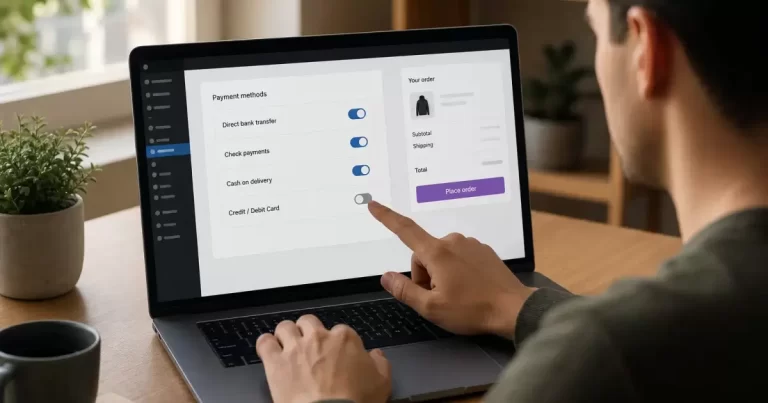
Payment flows require distinct order status transitions. Set up staging transactions to observe when the software awards points. Use the actual payment methods enabled on your store. Check the status recorded before payment, after confirmation and after any manual staff action; do not assume all gateways follow the same sequence. Compare the observed award event with your written rule. If you want rewards available only after payment, verify that an unpaid attempt cannot unlock them. Payment confirmation and bank payout are separate events, so specify which event your programme uses.
Simulating Full and Partial Refunds
Return workflows introduce mathematical edge cases into reward programs. When an entire order is refunded, the system must reverse the points earned from that sale. If the customer redeemed points to lower the purchase price, those spent points should return to their balance. Partial refunds demand extra scrutiny. When refunding one item from a multi-item purchase, verify whether the software reduces points proportionally or leaves the original total intact. Check whether reversing points drops the customer ledger below zero, and decide in advance whether your store policy permits negative balances.
Preventing Coupon Stacking and Double Awards
Coupon stacking can erode profit margins when standard discount codes combine with reward redemptions. Open your coupon settings to inspect how point redemptions interact with percentage-off coupons or free shipping codes. Many stores restrict redemptions so customers cannot apply promotional discount codes and point deductions simultaneously. In addition, review subtotal calculations: decide whether the earning base is the discounted amount, which items qualify and how the plugin handles your selected rules. Testing these boundary rules prevents customers from compounding offers beyond acceptable operational parameters.
Designing a Routine Staging Environment Audit
Plugin updates, database migrations, and checkout template changes can disrupt balance tracking over time. Maintain a staging copy of your store to perform routine audit checks before applying updates to production. Run through standard purchases, manual balance adjustments, cancellations, and partial refunds on the staging site. Verify that point logs capture every balance change with precise timestamps. Regularly comparing transaction totals against customer ledgers keeps reward programs accurate, protects store margins, and ensures shoppers receive dependable loyalty credits.
Write down the expected balance before testing
Use a worksheet with an opening balance, event, expected change and closing balance. Start with a purchase, then redeem some points on a second order before refunding the first. This exposes a different case from immediately refunding an untouched purchase. Run the scenario using test orders, and compare the observed records with the worksheet rather than accepting a single final number.
Include a staff correction too. Record why it was needed and check whether another authorized staff member can understand it later. If an update changes the calculation, pause new promotional promises until you have reconciled the difference. A clear customer explanation is part of the programme: describe earning, redemption, returns and any restrictions using the same rules you tested, without promising that points alone will produce repeat purchases.
Frequently Asked Questions
How do WooCommerce loyalty programs work?
Customers earn points for purchases or actions and redeem them for discounts.
What happens to points when an order is refunded?
A good setup deducts points automatically; test this before launch.
Do loyalty programs increase sales?
They can increase repeat purchases when rewards are simple and attainable.
Who can build a loyalty program?
Our ecommerce website team.