
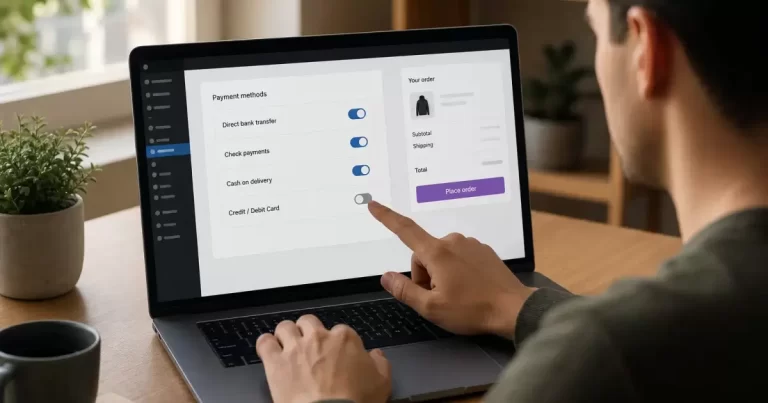
A customer landing on a single product page is evaluating whether an item meets their specifications, timeline, and budget. When store layouts bury critical information beneath unrelated upsells or obscure the main call to action, shoppers experience unnecessary hesitation. Modern block themes give merchants no-code visual control to restructure product templates so key details align directly with how buyers evaluate value. Customizing the layout around the purchase decision means organizing pricing, product options, media, and reassurance cues so that shoppers can evaluate essential details without scrolling past confusing distractions.
Understanding Single Product Template Architecture
In modern WordPress block themes, WooCommerce controls layout through block templates rather than rigid PHP template files. According to the WooCommerce Templates documentation, editing a template in the Site Editor changes the structure across every product assigned to that template. This architectural shift provides merchants with a visual canvas to reposition elements that directly influence purchasing confidence.
As detailed in the WooCommerce Single Product template documentation, a standard single product layout contains a hierarchy of inner blocks. Understanding each block’s standard function helps you decide whether it assists or impedes the buyer’s evaluation process:
| Inner Block | Standard Purpose | Role in the Purchase Decision |
|---|---|---|
Store Breadcrumbs |
Displays contextual hierarchy | Lets shoppers retreat safely to relevant category archives. |
Product Gallery |
Renders featured media and thumbnails | Provides visual proof of dimensions, texture, and variants. |
Product Title |
Displays item name | Confirms the exact model or product match immediately. |
Product Price |
Shows unit cost and sale states | Establishes cost transparency before options are selected. |
Product Summary |
Short description excerpt | Delivers the primary value proposition in two to three sentences. |
Add to Cart with Options |
Variant selectors and submit trigger | The functional core where shoppers finalize their selection. |
Product Meta |
Displays SKU, category, and tags | Provides secondary validation for technical and catalogue queries. |
Canada Create™ builds and optimizes WordPress sites for Toronto businesses. Tell us your goals and we will recommend the right setup.
Distinguish core platform capabilities from optional extensions. Core WooCommerce blocks display standard attributes, variation dropdowns, and basic pricing logic natively. If your sales funnel requires custom tiered pricing tables, dynamic bundle calculation, or complex bulk quantity inputs, evaluate candidates such as dedicated bulk discount plugins or third-party product addon extensions rather than expecting core blocks to manage complex calculations automatically.
Steps to Restructure the Product Template
Refining a product page layout requires systematically reordering inner blocks to address common customer objections before they reach the cart button. You can access and edit these components directly through the WordPress administrative dashboard:
- Navigate to Appearance > Editor from the WordPress menu.
- Select Templates, then locate and open the Single Product template under the WooCommerce section.
- Review the overall column structure. Most default layouts use a two-column group, placing the
Product Galleryon the left and commercial details on the right. - Open the Document Overview (List View) icon in the top toolbar to inspect the nesting order inside the right-hand column.
- Reposition the
Product Summarydirectly below theProduct TitleandProduct Price. Keeping this narrative concise helps keep the interactive controls visible without excessive scrolling. - Examine the position of the
Add to Cart with Optionsblock. Ensure this block sits immediately beneath your core variable attributes so the customer transitions seamlessly from choosing options to committing to an order. - Insert relevant contextual blocks near the purchase button, such as a paragraph block outlining estimated fulfillment timelines, return policies, or local delivery zones.
- Save your template modifications and review the live shop to verify that the layout renders correctly on various display widths.
When organizing elements near the cart button, maintain crisp visual feedback. If custom styling is applied to hover or active states on variant swatches, review techniques for optimizing interactive states to prevent lagging response times on mobile touch screens.
Supporting Complex Orders and Decision Paths
Not every purchase decision follows a simple single-item checkout workflow. Wholesale clients, trade professionals, and repeat commercial buyers often require fast item entry rather than immersive imagery. For stores with catalog-style purchasing, relying exclusively on individual product pages can create excessive administrative overhead.
In such business models, pairing standard product pages with dedicated wholesale forms allows trade customers to bypass single-item browsing entirely. You can evaluate solutions detailed in our guide on order form plugins for item and quantity handoffs to give high-volume customers a direct, tabular alternative to the conventional single product presentation.
Remember that hiding an element visually within a template block does not enforce server-side business rules. Visual modifications only alter what is displayed in the browser. If a product must be restricted by customer role or inventory threshold, implement server-side authorization controls rather than merely toggling block visibility in the editor.
Hypothetical Example: Restructuring an Artisan Goods Page
Consider a hypothetical Canadian specialty kitchenware store named Northern Maple Cookware. The store offers handmade cutting boards with optional custom laser engraving. Under the default template layout, the customer saw the product image, price, a lengthy fifty-word description, several metadata tags, and finally the option selectors at the bottom of the viewport.
Shoppers frequently reached the checkout without selecting their engraving option or abandoned the page because shipping estimates were unclear. To address this friction, the store administrator opened the Site Editor and restructured the Single Product template:
- Moved the
Product Metablock containing SKUs and tag links below the main product tabs, removing visual noise from the top section. - Placed the engraving text field addon directly beneath the wood species variation selector.
- Added a compact two-column layout immediately under the
Add to Cart with Optionsblock displaying regional delivery timelines across Canadian provinces alongside straightforward return instructions. - Positioned social proof ratings directly adjacent to the price block rather than buried under the review tabs.
By restructuring the inner blocks, all essential criteria needed to evaluate, configure, and purchase the cutting board became visible without unnecessary scrolling.
Troubleshooting Template Layout Problems
Template customizations occasionally present unexpected layout or rendering behaviours. Here are standard diagnostic steps for resolving common issues:
- Add to Cart button fails to update pricing: When using variable products, ensure you have not separated the price block from the core variation wrapper. Some themes require the dynamic price display to reside within the single product container to process real-time script updates when variants change.
- Template edits fail to appear on specific items: Check whether individual products have an assigned custom template override. If a specific product was assigned an alternate template in its individual post settings, changes made to the global
Single Producttemplate will not apply until the override is reset. - Unexpected mobile horizontal overflow: Wide galleries or nested table blocks inserted into the template can force mobile viewports to scroll horizontally. Inspect parent column containers to confirm minimum width rules are set to relative percentages rather than rigid pixel dimensions.
- Form submission returns successful status without updating the cart: Visual blocks initiate browser requests, but security nonces or server-side cache layers may intercept the payload. Test the purchasing flow while logged out across non-cached sessions to verify that session data persists reliably.
Product Page Decision Checklist
- Ensure
Product Title,Product Price, and stock indicators are immediately readable. - Keep the
Product Summarybrief so variant selectors stay above the fold on laptops. - Place fulfillment and return policies directly adjacent to the
Add to Cart with Optionsblock. - Move non-essential taxonomy tags and SKUs to the footer of the page layout.
- Verify that tap targets for size or colour swatches meet mobile usability guidelines.
- Confirm that block visibility rules are supported by proper server-side data validation.
Frequently Asked Questions
How do I customize a WooCommerce product page?
Use the block editor, a page builder or theme templates to arrange images, price, details and reviews.
What should a product page include?
Clear photos, price, key benefits, specs, shipping and returns, reviews and a visible add-to-cart.
Does product page design affect SEO?
Yes. Unique descriptions and structured data help ranking. See our SEO services.
Who can design product pages?
Our ecommerce website team.