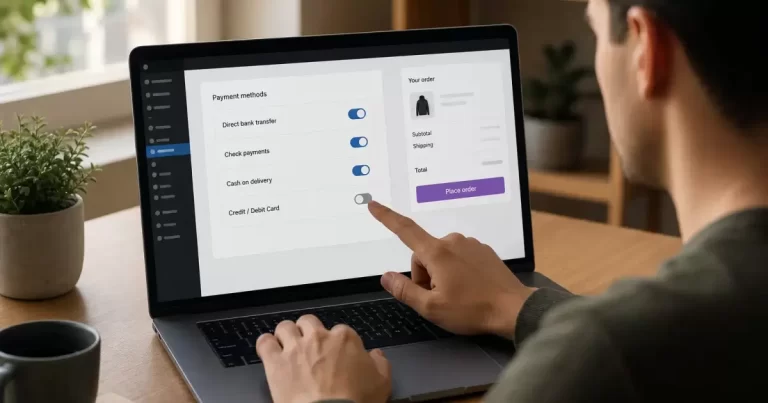
A TikTok Pixel installation is only useful when the events describe what visitors actually do. A tag detected on the homepage does not prove that a lead form or checkout is measured correctly. Before optimizing a campaign around those events, verify the important journey from the visitor’s action to the destination’s received record.
This guide focuses on verification for WordPress websites. It applies whether the implementation uses a supported integration, a tag manager or custom work, but the exact setup must follow the current documentation for the chosen route.
Choose the business event first
Write down the outcome the campaign should produce: an accepted enquiry, a completed registration or a successful purchase. Avoid treating every button click as an equivalent result. Someone opening a form has not necessarily submitted it, and someone reaching checkout has not necessarily paid.
Define the expected trigger in a short specification. Include the page or interaction, the event name used by the destination and the parameters needed to interpret it. Assign a business owner who can confirm that the event represents a useful outcome.
Keep secondary interactions separate. They may help diagnose a journey, but they should not silently replace the final outcome when evaluating campaign performance. A growing event count can be misleading if the underlying action is much easier than becoming a customer.
Inventory every tracking route
Check whether a plugin, tag manager, theme setting or separate integration already sends TikTok data. Record the pixel identifier and the responsible implementation. Do not add another copy solely because you cannot see the existing code in one place.
Include server-side delivery if Events API is used. Document which events travel through the browser, which travel through the server and which deliberately use both. The resulting map should explain why each route exists.
Preserve the current configuration before changes and use a controlled testing process. Avoid disabling unrelated analytics or advertising tags to troubleshoot one destination. A narrowly scoped change is easier to verify and reverse.
Check one event with known data
Complete a harmless test lead or a supported test purchase. Record the action, timestamp and expected values. Use the destination’s available testing and diagnostic tools to confirm receipt rather than relying only on a browser extension’s indication that a tag exists.
For a purchase, compare the value, currency, item identifiers and quantities with the store’s order record. For a lead, verify that the trigger represents a successful submission rather than a click on a submit button that failed validation.
Inspect the payload for unnecessary personal information. Free-text form answers and sensitive details should not enter tracking parameters accidentally. Follow the platform’s rules and the site’s approved data-handling design before enabling additional matching information.
Verify browser and server deduplication
TikTok’s event-deduplication guidance states that deduplication is required when Pixel and Events API send duplicate copies of the same event. This is a deliberate integration requirement, not something to assume simply because both connections show activity.
Check that the paired records use the expected event identity and matching event identifier according to the current specification. The identifier should represent the same underlying action across both routes. Different actions must not be collapsed into one shared identifier.
Test a confirmation-page reload and an interrupted connection. Observe whether the same purchase produces unintended additional records or whether a legitimate second purchase remains distinguishable. Keep the original order reference with the test evidence so another reviewer can follow the comparison.
Test consent behaviour deliberately
Review the website’s consent design with the person responsible for privacy decisions. Then test the available choices and document when browser and server events occur. Do not assume that controlling the browser tag automatically controls an independent server integration.
Repeat the test in a fresh browser context to avoid confusing a saved preference with the default experience. Check whether changing a preference later produces the intended behaviour. Record limitations rather than claiming universal coverage from one successful test.
If implementation details conflict with the approved policy, resolve that before campaign launch. A technically functioning event pipeline is not sufficient when it collects or sends information outside the agreed design.
Check the WordPress journey that customers use
Include the real form or checkout variant, mobile layout and supported payment-return path. Plugins can use different events or page transitions, so a test on a standard demo form may not represent the live customer experience.
Test validation failures and cancelled payments as well as success. These should not accidentally trigger the final conversion you defined. If a page builder or form plugin changes its submission behaviour after an update, repeat the relevant checks.
For ecommerce, Canada Create™’s measurement-planning guide offers a broader way to distinguish reporting purposes. Each advertising and analytics destination still needs its own verified event contract.
Reconcile before interpreting performance
Compare a small set of known business outcomes with the corresponding tracking evidence. Explain expected differences caused by collection conditions, processing and attribution definitions. Do not insist that every dashboard must match the store ledger exactly without understanding what each system counts.
Keep a release record containing the configuration owner, event specification, test cases and unresolved issues. Repeat tests after changing forms, payment systems, consent controls or tracking integrations. This makes troubleshooting much faster when reported performance changes unexpectedly.
A verified implementation lets you ask better campaign questions. It does not guarantee sales, accurate attribution in every circumstance or a particular return. Start with trustworthy event definitions and a traceable test, then use the data within its demonstrated limits.
Assign someone to review diagnostics after launch. An integration can pass its initial test and later fail because a plugin, checkout route or permission setting changes. A brief recurring review is more useful than assuming the original installation remains correct forever.
Frequently Asked Questions
How do I install the TikTok Pixel on WordPress?
Use TikTok’s official plugin, a tag manager or Events API integration, then verify events in TikTok Events Manager.
Why verify TikTok events before scaling ads?
Wrong or duplicate events mislead the algorithm and waste budget.
Should I use the Events API as well as the pixel?
Yes. Server-side events help recover data lost to browser restrictions.
Who can run TikTok ads for my business?
Our social media advertising team sets up tracking and campaigns.