
Toronto · Grocery store marketing
Marketing for grocery stores in Toronto
Local search, a specials page people open on a phone, consent-based lists and community content that keep regulars coming back every week.
A whole marketing plan for independent grocers, supermarkets, specialty and halal grocers, butchers and convenience stores in Toronto and the GTA and across Canada, from local search to the weekly flyer.
- BBB A+ accredited
- 18 years in business
- Mon to Fri 9 to 6, Sat 10 to 2
Get a custom proposal for your grocery marketing
Tell us about your store, your flyer and the shoppers you want more of. We reply within one business day.
Please do not share passwords or other sensitive details here. We never sell your contact information and we comply with Canadian privacy law
(privacy policy).
Store profiles, specials and regular shoppers: grocery marketing results
A profile shoppers trust
Correct hours, real photos and departments on each store's Google Business Profile.
A flyer people open
A specials page that reads well on a phone and matches the shelf tags.
A list of regulars
Email and text sign-ups with recorded consent, segmented by store and interest.
Plain monthly reporting
Calls, directions, specials page visits, list growth and reviews per store.
What a grocery marketing plan includes
Choose the parts that fit your store and your calendar; each one is quoted in writing after a free review.
- Business Profile careCategories, hours, holiday hours, photos, products and posts for each location.
- Specials pageA weekly flyer page on your website that staff can update.
- Local SEOStore pages and cuisine pages that match what nearby shoppers search.
- Email and text listSign-up points in store and online, consent records and weekly sends.
- Loyalty ideasSimple members' offers your till can honour without errors.
- Community contentHoliday guides, recipes and product stories in your shoppers' languages.
- Online ordering adviceA clear choice between apps, click and collect and your own delivery.
- Reviews and CS+Review replies, plus catering and bulk orders tracked in CS+.
How grocery marketing is priced
SEO is quoted in writing after a free consultation. Every other part is quoted in writing; ad spend and software licences are paid to the platform and shown separately.
Profile and specials
Quoted in writing
A single store that needs to be found and show its flyer
- Business Profile clean up
- Specials page build
- Holiday hours plan
- Monthly reporting
Regulars program
Quoted in writing
Stores ready to build an email and text list
- In-store sign-up points
- Consent records
- Weekly flyer email
- Segments by store
Community and content
Quoted in writing
Specialty grocers selling a cuisine
- Holiday guides
- Recipe and product posts
- Store photography
- Content in more than one language
Multi-store plan
Quoted in writing
Grocery groups with several locations
- Profile per store
- Store pages
- Ordering advice
- Per store reporting
Ad spend and software licences are paid to the platform directly and shown separately from our fees.
Grocery store marketing
How independent grocers keep their aisles busy every week
This page explains marketing for grocery stores from the owner’s side of the counter: how an independent grocer, supermarket, halal or Asian or Indian grocery, butcher, bulk and organic store or busy convenience store gets found by nearby households, turns the weekly flyer into something people open on a phone, builds a list of regulars with their consent and keeps the aisles busy between holidays. It is written for owners and managers who run one store or a small group and want one clear plan instead of scattered ideas. Canada Create is a Toronto digital agency with an office at 126 Willowdale Avenue, Suite 3, serving businesses across Canada since 2008, in English and French.
- How shoppers pick a grocery store
- Local search and your Business Profile
- Moving the weekly flyer online
- Email, texts and loyalty with consent
- Cuisine, community and content
- Online ordering, pickup and delivery choices
- Reviews and in-store moments that lead online
- Where paid ads fit
- The grocery year across cultures
- Price, food claim and privacy rules
- How we work with grocers
- What grocery marketing costs
- Choosing a grocery marketing partner
- Book a grocery store marketing review and get a custom proposal
How shoppers pick a grocery store
Grocery shopping is a habit with a short radius. Many households have a main store and one or two others they visit for a particular cut of meat, a brand of rice, fresh paneer, a bakery counter or a better price on produce. When a shopper looks for a new store, the searches are plain: “grocery store near me”, “supermarket open now”, “halal grocery”, “Asian grocery”, “Indian grocery”, “organic grocery”, “butcher near me” and, every week, “flyer this week”. Delivery shoppers add “grocery delivery” and a neighbourhood name.
What actually decides the visit
The deciding points for a grocery run are practical: distance and driving time, parking or transit, opening hours, the product range for the family’s cuisine, the look of the produce and meat counter, and this week’s specials. A store that carries the right basmati, the right goat cuts, fresh tortillas or the regional vegetables a community cooks with can pull shoppers past two larger stores. Your marketing has to show those things quickly, because the shopper is often deciding in the car or on the bus.
What owners search for
Owners tend to search “grocery store marketing ideas”, “grocery marketing strategy” and “how to increase grocery store sales”. The honest answer is that grocery marketing is mostly about frequency and basket size from people who live within a short drive, plus a steady trickle of new households moving into the area. The rest of this page follows that logic: get found locally, make the specials easy to see, keep in touch with regulars, give the community a reason to choose you, and decide carefully on online ordering.
Local search and your Business Profile
For a grocer, the Google Business Profile is often the first and only thing a new shopper sees before driving over. It shows your hours, holiday hours, photos, the map pin, reviews and the questions people ask. Getting it right is one of the most useful pieces of local SEO for a neighbourhood store.
What a grocery profile needs
- The right primary category (grocery store, supermarket, Asian grocery store, Indian grocery store, halal market, butcher shop, organic food store or convenience store) and sensible secondary ones.
- Hours that are correct every day, including special hours for statutory holidays, Eid, Diwali and the days before Christmas and Thanksgiving when stores stay open late.
- Photos of the produce wall, the meat and fish counter, the hot table or bakery, the parking lot and the front of the store so first visitors recognize it.
- Products and attributes: halal certified meat, wheelchair access, delivery, in-store pickup, accepted payments.
- Posts for weekly specials and new arrivals, so the profile looks alive.
If you would rather hand this off, our Google Business Profile management service keeps hours, photos, posts and review replies current. Multi-store grocers need one profile per location with its own phone number, hours and photos; copying one profile’s content to all of them weakens each one.
Your website in local search
Your site supports the profile. A page per store with the address, parking notes, departments and the specials link, plus pages that describe what you carry for each cuisine, help you appear for searches like “Filipino grocery” or “Persian grocery” in your part of town. Our search engine optimization service covers this site side work, quoted in writing after a free consultation.
Moving the weekly flyer online
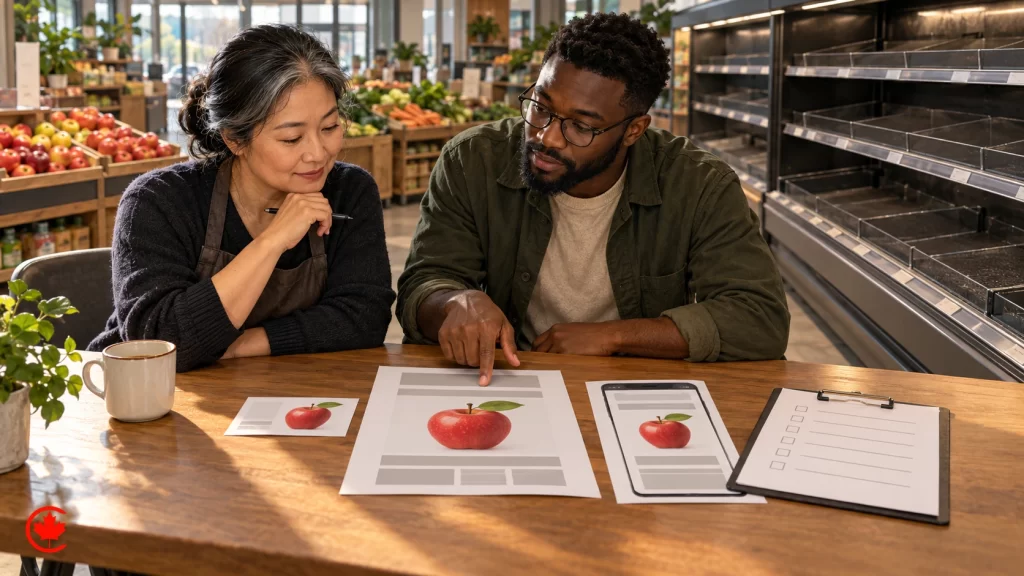
The paper flyer is still how many grocers set the week’s traffic, but more shoppers look for it on a phone than at the door. A flyer that lives only as a large PDF is hard to read on a small screen and invisible to search. Moving it online properly means a specials page on your own website that updates with each flyer cycle, loads quickly and can be shared in a message.
What a good specials page has
- This week’s dates in plain words at the top, so nobody arrives for a deal that ended yesterday.
- Items grouped by department: produce, meat and seafood, dairy, pantry, frozen, bakery, household.
- Clear prices, sizes and limits, with the same wording as the in-store shelf tag.
- A link to each store’s hours and directions, and a way to join the email or text list.
- A printable or downloadable version for shoppers who still want one, without making it the only option.
We design and build these pages as part of website design in Toronto, usually with a simple way for your staff to update prices without calling a developer. If you later want shoppers to order from the same catalogue, the specials page becomes the starting point for an online store with delivery or pickup.
Making the flyer work harder
Once specials live on your site, each flyer can go out through your profile posts, your email and text list, your social channels and a printed QR code at the till. The same items, prices and dates appear everywhere, which matters for both shopper trust and the price rules described later on this page.
Email, texts and loyalty with consent
A grocery store sees its regulars every week but often knows nothing about them. A short, consent-based list changes that: shoppers who opt in get the flyer, the weekend deal on chicken thighs, the arrival of Alphonso mangoes or the reminder that the butcher takes holiday turkey and lamb orders. That kind of message gets opened because it is useful.
Building the list at the till
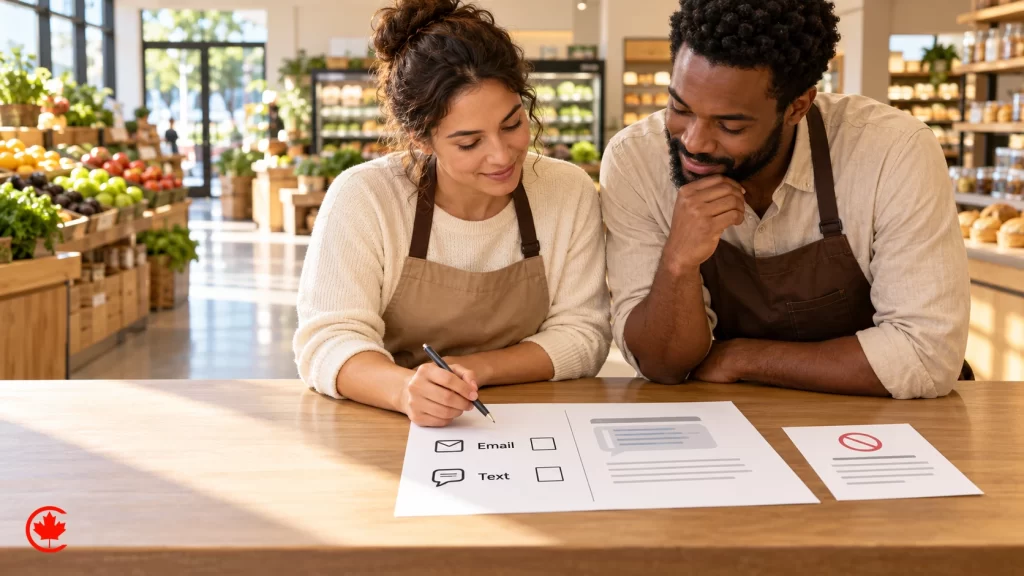
The simplest sign-ups happen in store: a sign at the cash with a QR code, a line on the receipt, a tablet at the customer service desk, a form on the specials page. Ask for as little as you need, usually a first name, an email or mobile number, the store they shop at and perhaps a preferred language. Record when and how each person agreed, because Canada’s anti-spam law expects you to show consent.
What to send and how often
A weekly flyer email, a short text for a weekend or holiday special, and occasional notes for catering trays, bulk rice and oil deals or new imported lines are usually enough. Segment by store and by interest (for example meat counter, organic, baby and family) rather than sending everything to everyone. Our email marketing team writes and sends these, and grocers who already sell on Shopify can use Shopify email flows for order and pickup messages.
Loyalty without a big program
Large chains run points programs. An independent grocer can do something simpler: a stamp for every tenth bag of rice, a members’ price on the list, birthday treats from the bakery or early access to holiday orders. The right loyalty idea is one your cashiers can explain in one sentence and your system can honour at the till without errors.
Cuisine, community and content
A specialty grocer’s real advantage is knowledge of a cuisine and a community. The Korean grocer knows which gochugaru is for kimchi, the Caribbean store knows the difference between the peppers on the shelf, the Middle Eastern market knows which cheese a family wants for breakfast. Content that shares that knowledge brings people in and gives search engines something to read.
Content that suits a grocery store
- Short guides: what to buy for a Diwali sweets table, a Lunar New Year hot pot, an Iftar spread or a Thanksgiving dinner.
- Product pages or posts for hard to find items: a new shipment of saffron, fresh curry leaves, a seasonal fish.
- Butcher counter explainers: cuts for a barbecue, how to order a whole lamb, halal certification in plain words.
- Recipes from staff or local cooks, filmed at the counter, with the ingredients linked to the specials page.
- Notes on local producers, farm deliveries and Ontario or Quebec produce in season.
Our content writers for food retail can produce these in English and French, and our food and store photography gives you real images of your aisles instead of stock pictures of a store that is not yours. On social channels, ongoing social media management keeps the posts tied to the flyer and the calendar rather than random.
Community ties
Grocers are part of the neighbourhood: they sponsor school fun fairs, donate to food banks, host tastings and support places of worship during religious holidays. Telling those stories honestly on your site and channels builds the kind of loyalty a discount cannot. Bakeries inside or next to grocery stores can also borrow ideas from our page on digital marketing for bakeries.
Online ordering, pickup and delivery choices
Every grocery owner eventually asks whether to sell online. There are three common paths, and each one changes your staffing, your prices and your marketing.
Third party delivery apps
Listing with delivery apps gets you in front of app users quickly, but the app owns the customer relationship, sets fees and often expects higher shelf prices online. It suits stores with a distinctive range that people cannot find elsewhere, or convenience stores selling snacks and essentials late at night.
Your own click and collect
Your own online store with curbside or in-store pickup keeps the shopper and the data with you. It needs a clean product catalogue, accurate stock, substitution rules, pickup windows and someone in store to pick orders. Many grocers start with a smaller range: pantry staples, bulk items, pre-ordered meat, catering trays and holiday boxes. A Shopify build for food retailers is one common way to set this up, with the platform chosen to fit your stock system.
Your own delivery
Delivering yourself inside a set radius works well for stores with loyal, older or busy customers nearby. The marketing question is how far to go and what minimum order makes sense.
Catering and bulk orders
Party trays, whole lambs for Eid, cases of produce for restaurants and large orders for places of worship are high value and often handled by phone. Logging them in CS+, our CRM gives you one place to see who ordered what, when to follow up and which customers come back every season. Grocers who also supply restaurants and cafés sometimes add a wholesale ordering portal, which our Shopify B2B wholesale page covers.
Reviews and in-store moments that lead online
Grocery reviews are usually about freshness, cleanliness, prices, staff help and parking. A few honest complaints about a wilted lettuce display are normal; a pattern of comments about expired dairy or rude service is a business problem, not a marketing one. Reply to every review in a calm, specific way, thank people by mentioning what they bought, and fix what keeps coming up.
Asking for reviews the right way
Ask at moments of happiness: when a shopper finds the hard to get item, when the butcher cuts a special order, when catering is picked up on time. A small sign at the till or a link in the receipt email works. Never offer discounts in exchange for positive reviews, and never post reviews yourself. Our reputation management for local stores handles replies and patterns across locations.
Linking the store and the phone
Every physical moment can lead somewhere online: a QR code on the shelf talker for the recipe, a sign on the meat counter about ordering ahead, a sticker on the bulk bin about the email list, a card in the delivery bag asking for a review. These small links are how a store with no ad budget builds a list and a reputation over a year.
Where paid ads fit
Paid ads have a place in a grocery plan, but they come after the profile, the specials page and the list are working. Map and search ads around the store, social ads for a big weekend special and campaigns for a new opening can all make sense, and we run Google local ads for nearby shoppers when they do. We cover campaign detail, radius targeting and measuring visits on our separate page, Grocery store advertising, so this page stays on the whole plan. A short rule of thumb: if the specials page is out of date or the profile shows the wrong hours, fix that first, because ads only send more people to whatever you already have.
The grocery year across cultures
A grocery calendar in a Canadian city is crowded, because each community in your trading area has its own peak weeks. Planning the year in advance lets you order stock, schedule staff and line up marketing at the same time.
Peaks to plan for
- Lunar New Year: produce, seafood, dumplings, oranges and gift boxes.
- Ramadan and Eid: dates, meat, sweets and late hours through the month, with Eid orders for whole animals and trays.
- Easter and Passover: lamb, eggs, baking supplies and specialty breads.
- Barbecue season from Victoria Day weekend to Labour Day: meat, marinades, corn and drinks.
- Back to school: lunch items, snacks and quick dinners.
- Thanksgiving: turkeys, squash, cranberries and pie supplies.
- Diwali: sweets, dry fruits, ghee, flour and gift boxes.
- Christmas and New Year: roasts, seafood, baking and party trays.
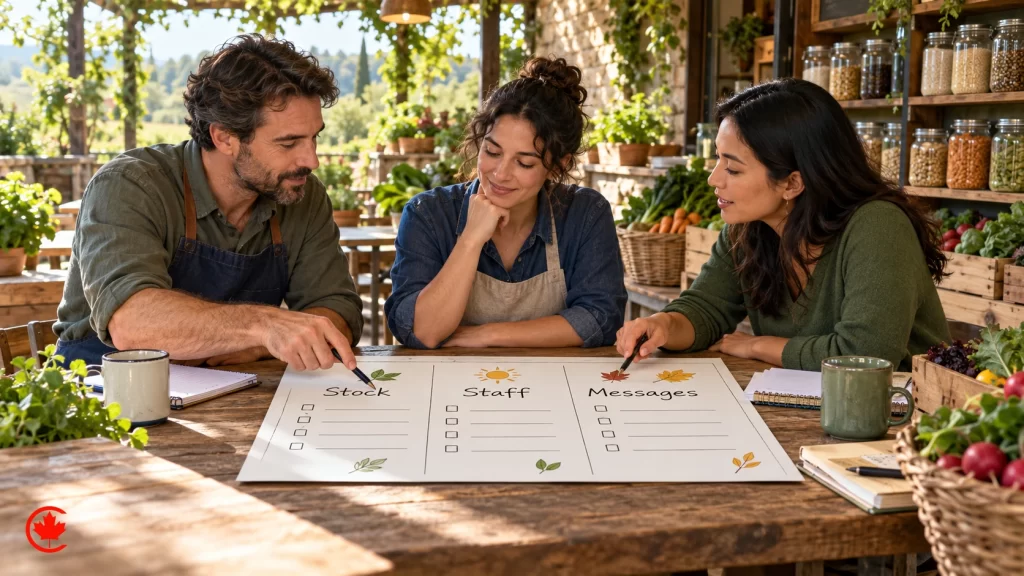
The dates of Ramadan, Eid, Lunar New Year and Diwali move each year, so the plan should be set by each year’s calendar. For each peak, decide early what the hero products are, when pre-orders open, what the hours will be and which messages go out on the list, the profile and social channels.
Openings and renovations
A new store or a refit is the one time when a grocer can earn many new regulars at once. Profile set up before opening, a launch week specials page, sign-ups at the door and a clear message to the neighbourhood matter more than a large ad burst.
Price, food claim and privacy rules
Several rules touch grocery marketing, and they are worth knowing before the next flyer goes out. This is a marketing observation, not legal advice.
Prices and sale claims
The federal Competition Act expects advertised prices and “sale” claims to be genuine. If the flyer says a price was reduced, the regular price should be one you actually charged, and the advertised item should be available in reasonable quantity or clearly limited. Keep the specials page, the shelf tag and the email identical.
Food claims and origin
The Canadian Food Inspection Agency sets rules for food labelling and claims. “Product of Canada” means all or nearly all of the ingredients and processing are Canadian, and “Made in Canada” claims carry their own conditions. Be careful when your marketing repeats these phrases or claims such as “organic” or “local”.
Quebec stores
Grocers in Quebec follow the Charter of the French Language for signs, flyers and commercial material, with French given its required place. Our team works in English and French.
Email, texts and personal information
CASL applies to commercial emails and texts: you need consent, clear sender identification and a working unsubscribe in every message. PIPEDA governs how a business collects and uses personal information in general terms, and Quebec has its own privacy law. Keep sensitive personal details, such as religion inferred from purchases, out of analytics and ad targeting.
How we work with grocers
We start with a free review of your store’s marketing: the Business Profile for each location, the website and specials page, how the flyer reaches shoppers today, any lists you already have, reviews and any ads you run. We look at it the way a new household in your area would.
You then get a custom proposal. It sets out what we would do first (often profile fixes and a specials page), what follows (list building, content for your cuisines, holiday campaigns), and the fees for each part quoted in writing. We build and launch in agreed milestones, testing the specials page on a phone in the parking lot, so to speak.
Every month you get plain reporting: profile views, calls and direction requests per store, specials page visits, list growth and opens, reviews and what we recommend next for the coming flyer cycles and holidays. Your profiles, website, domain, email platform and lists are in your store’s name, so the shopper data built over the years stays with the business.
What grocery marketing costs
Grocery marketing is priced by the work, not by a package. Everything is quoted in writing after the review, and any ad spend or software licences are paid to the platform and shown separately from our fees.
What moves the price for a grocer
- The number of stores, because each location needs its own profile, page, photos and reporting.
- How often specials change and who updates them: a weekly flyer with hundreds of items is more work than a monthly feature list.
- Languages: a store marketing in English, French and a community language needs more writing and checking.
- Whether you add online ordering, and how many products, substitutions and pickup windows it needs.
- How much content, photography and video the plan includes around holidays.
- The size of the email and text list and how many segments you want.
A single neighbourhood butcher with one profile and a monthly email costs far less than a three store supermarket group with a weekly flyer, click and collect and holiday campaigns in several languages. The proposal will show each piece so you can start with the parts that matter most.
Choosing a grocery marketing partner
Ask any agency, including us, a few direct questions before you hire them for grocery work.
- Who owns the accounts? The answer should be you: profiles, website, domain, analytics, email platform and the shopper list.
- How will the weekly specials get from your buyer’s spreadsheet to the website, list and profile, and who does it?
- How do you handle several languages and several communities without stereotyping anyone?
- What will the monthly report show for each store, in plain words?
- How do you keep price claims and food claims consistent with the shelf?
- Which holiday peaks in our trading area will you plan around, and when will you start?
Look for a partner who asks about your suppliers, your counters and your shoppers before talking about channels. A plan built for a downtown organic store will not fit a suburban halal supermarket. Our retail marketing work and the wider ecommerce and retail hub show how grocery fits next to other kinds of shops, and grocers who want senior planning without a full time hire can look at our fractional CMO service.
Book a grocery store marketing review and get a custom proposal
Grocers usually come to us with one of three problems: the flyer still lives only on paper, the map shows last year’s holiday hours, or the store has hundreds of regulars and no way to tell them about Saturday’s meat special. Whichever it is, the first step is a free grocery marketing review. Canada Create checks each store’s profile, specials page, sign-up points and reviews, then sends a custom proposal with every fee quoted in writing. Call (416) 273-9030, Monday to Friday, 9 am to 6 pm, and Saturday, 10 am to 2 pm. After hours, our 24/7 AI agent answers the toll-free line, +1 (800) 808-9235, and we’ll follow up the next business morning. We reply within one business day. You can also reach us through our contact page. Store owners are welcome at 126 Willowdale Avenue, Suite 3, Toronto.
Talk to a strategist
Ready when you are?
Request a custom proposal
Tell us your goals, budget and timeline. You get a custom proposal and a named strategist, so your next stage of growth starts now.
How we work with your store
Plain steps in writing, with every account kept in your store's name.
- Free review First call
We check your profile, specials, list, reviews and site the way a new shopper would.
- Custom proposal Written proposal
Priorities and fees quoted in writing, store by store.
- Build and launch Agreed milestones
Profile fixes, specials page, sign-up points and content go live.
- Report and adjust Every month
Results per store and the plan for the next flyer cycles and holidays.
Why grocers choose Canada Create
Since 2008
More than 18 years of websites, search and advertising work for businesses across Canada.
BBB Accredited A+
A BBB Accredited Business with an A+ rating and zero complaints.
Toronto office
126 Willowdale Avenue, Suite 3, Toronto, serving businesses across Canada.
English and French
Our team works in English and French.
Grocery store marketing questions
How do you promote a grocery store without paid ads?
Get the Google Business Profile right for each store, with the correct category, hours including holidays, photos of the produce and meat counters and posts for weekly specials. Move the flyer onto a specials page that reads on a phone and matches the shelf tags. Build an email and text list with recorded consent, and share holiday guides and recipes in your shoppers' languages.
How can a supermarket attract new households nearby?
New households search plainly, with phrases like grocery store near me, supermarket open now or halal grocery, often from the car or bus. Show what decides the trip: distance, hours, parking, the range for their cuisine and this week's specials. A store carrying the right basmati, goat cuts or regional vegetables can pull shoppers past larger stores when its profile and site make that obvious.
How do the five Cs of marketing apply to a grocery store?
The five Cs are context, company, customers, competitors and collaborators; some versions say climate in place of context. For a grocer, that means knowing your strengths, such as a halal counter or bakery, the households within a short drive, the other stores they visit, the suppliers and community groups you can work with and the local holiday calendar. A plan built on these is more specific than a list of generic grocery ideas.
What does marketing for a grocery store cost?
It depends on the number of locations and the parts you add: a Business Profile cleanup and specials page, an email and text list program, content in more than one language, or a multi-store plan with per-store reporting. Grocery SEO is priced following a free consultation, and each other part has its own written price. Any ad spend and software licences sit on separate lines.
What social media marketing works for grocery stores?
Grocery posts earn attention when they are useful: this week's specials, new arrivals, holiday guides and recipes using what you stock. Photos of the produce wall, meat counter or hot table help first visitors recognize the store. Posting in the languages your shoppers speak reaches families who cook from those cuisines.
What marketing does a convenience store need?
A convenience store lives mostly on people within a few blocks, so the Business Profile does most of the work: correct hours, a photo of the storefront, attributes such as accepted payments and quick review replies. A simple members' offer the till can honour without errors gives regulars a reason to return. Store pages on a website help once you run more than one location.
Should a grocery store add online ordering to its digital marketing?
It depends on your staff, your shoppers and the cost of filling each order. The choices are delivery apps, click and collect or your own delivery, and each changes who keeps the customer relationship. Canada Create gives advice on that choice as part of a grocery marketing plan, so the decision fits how your store runs.
What loyalty and email ideas suit a grocery store?
Put sign-up points at the till and on the specials page, record consent as Canada's anti-spam law (CASL) requires, and segment the list by store and interest. A weekly flyer email suits regular shoppers. Keep loyalty offers simple enough that cashiers can honour them without errors.


An empty aisle on a Tuesday is a marketing problem
Shoppers who never see your specials or find the wrong hours on the map go to the next store. A clear profile, a specials page and a list of regulars fix much of that. Book a free grocery marketing review and see what we would fix first.