
How to market a manufacturing company in Canada: RFQs, catalogues and distributors

Many Canadian manufacturers grew for decades on a handful of loyal customers, a sales rep or two and a booth at the same trade shows every year. That model still works until a large customer moves production, a key rep retires or a new competitor shows up at the top of Google. Marketing a manufacturing company today means making it easy for engineers, buyers and distributors to find you, understand what you can make and send you a request. This guide walks through how to do that, step by step. If you would rather hand the work to a team, see our manufacturing marketing agency page.
It covers contract manufacturers and job shops, original equipment manufacturers, food and consumer product makers and distributors. The tactics differ by business model, so each section notes where they apply.
Know which of three business models you are marketing
Before choosing tactics, be clear about how you make money, because each model is marketed differently.
| Model | Who buys | What they need from you | Main marketing goal |
|---|---|---|---|
| Contract manufacturer or job shop | Engineers and buyers at OEMs | Capabilities, tolerances, capacity, quality system, lead times | Qualified RFQs |
| OEM selling its own products | End users, specifiers, dealers | Specifications, applications, pricing approach, support | Specifications and dealer demand |
| Distributor or wholesaler | Contractors, plants, retailers | Catalogue, stock, pricing, ordering, delivery | Accounts and repeat orders |
We plan and run manufacturing marketing for B2B and software companies in Toronto and across Canada, scoped in writing after a free review.
Many manufacturers combine two models. Map each one separately so your message and website do not try to talk to everyone at once.
Define the work you want more of
Marketing should fill your plant with the right jobs, not only more jobs. Sit down with operations and sales and agree on:
- Target work: the processes, materials, part sizes, volumes and finishes that suit your equipment.
- Target sectors: the markets where your quality system and experience give you an edge, for example food processing, medical devices, aerospace, agriculture or construction.
- Ideal customer: annual spend, repeat potential, location and the people who decide.
- Proof you can show: certifications your company holds, inspection equipment, documented processes and customer stories you have permission to use.
Write a one paragraph positioning statement from these answers, for example: “We machine tight tolerance aluminum and stainless parts in low to medium volumes for food equipment and medical device makers.” Every page, ad and trade show banner should support it.
Build a website that wins RFQs
Engineers visit supplier websites to answer one question: can this company make my part well and on time? Help them decide in minutes.
Capability pages
Create one page per process (CNC machining, laser cutting, press brake forming, welding, powder coating, assembly) and state materials, tolerances, maximum part sizes, typical volumes and secondary operations. Engineers want numbers, not adjectives.
Market pages
Write a page for each sector you serve and explain the standards and documentation you work to there, such as material traceability, cleanliness requirements or first article inspection.
Equipment and quality
Publish your equipment list and your quality system: certifications held, inspection tools, documentation you provide with shipments. Keep it current; outdated lists cost credibility.
The RFQ form
Provide a secure upload route for CAD files and drawings, ask for quantity, material, finish and target date, and tell the buyer when they will hear back. Explain who can access the files, agree to any required confidentiality terms and keep customer drawings out of public media libraries and ad tracking. Route requests to an estimator immediately. A slow or broken RFQ path quietly loses work.
Catalogues, product data and ecommerce
OEMs and distributors live or die on product information. Engineers and buyers expect searchable catalogues with specifications, drawings, CAD downloads and documentation. Good practice includes:
- A product database with consistent attributes (dimensions, materials, ratings, compliance marks) that feeds your website, dealer portals and printed material.
- Product pages written for search, with part numbers, common names and application language.
- Downloadable spec sheets and installation guides as fast loading files.
- For repeat buyers, a B2B portal with customer specific pricing, order history and easy reordering. Our B2B ecommerce service covers this.
Work with distributors and dealers
If you sell through distributors, your marketing must make them successful too. Give dealers accurate product data, images and descriptions they can use, co branded campaigns and clear rules on pricing and advertising. Add a dealer locator to your website so end users can buy locally. Track which dealers sell which lines so you can support the active ones. Distributors can see our B2B wholesale marketing page.
Get found in search
Industrial searches have lower volume than consumer searches, but the intent is strong. An engineer searching for “ISO 9001 sheet metal fabrication” or “food grade stainless welding” is often close to a request.
- Map keywords to pages: one process, material or application per page.
- Use buyer language: include common names and abbreviations engineers actually type.
- Fix technical basics: fast pages, clean structure, descriptive image names and schema for your organization and products.
- Claim local listings: a Google Business Profile for each eligible customer-facing location, using your real business name, and accurate listings in supplier directories.
- Publish answers: design guides, comparisons and frequently asked technical questions bring engineers early in their research.
Our SEO service builds this for manufacturers.
Paid search and LinkedIn
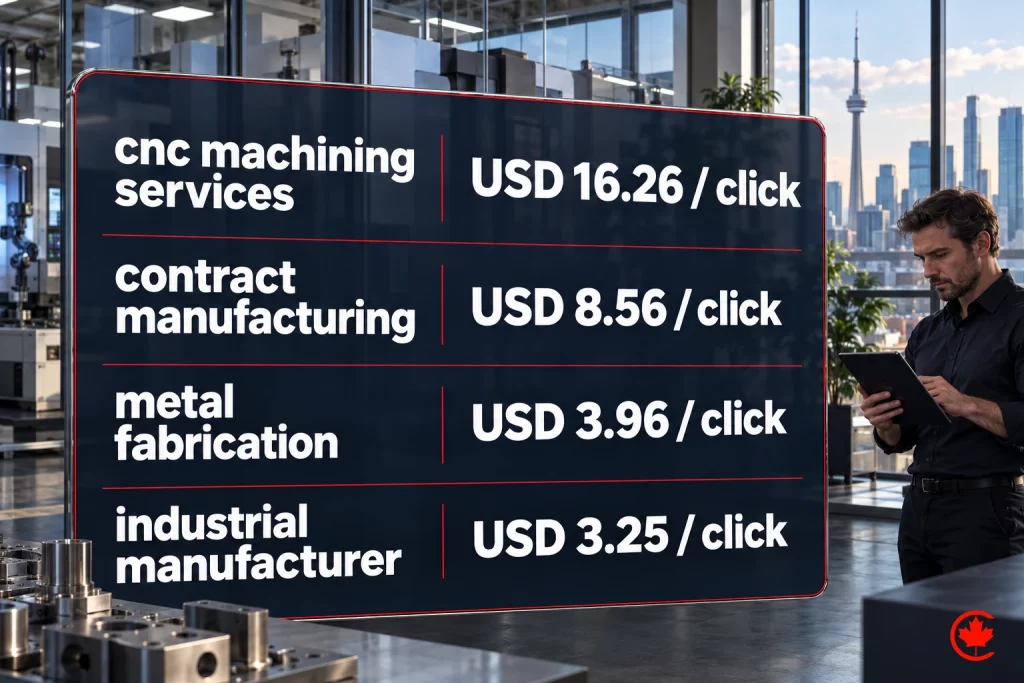
Google Ads catches buyers who need a supplier quickly. Keep campaigns narrow: process and part keywords, negative keywords for jobs, training and consumer searches, and landing pages with an RFQ form. Judge results by quoted value, not clicks.
LinkedIn reaches engineers, procurement managers and operations leaders by title and company. Use it to show your shop floor, share case studies and stay familiar with target accounts during long buying cycles. Account based campaigns focus spend on a defined list of companies you want to win. See our Google Ads and B2B marketing services.
Make trade shows pay off
Trade shows remain valuable for manufacturers, but too many leads die in a pile of business cards. Before the show, invite your target list with a reason to visit your booth. During the show, log every conversation in your CRM with notes and next steps. After the show, follow up within days with the specific information each visitor asked for, and add contacts to a promotional nurture sequence only where you have a valid CASL basis. A badge scan or business card does not automatically authorize ongoing marketing. Measure each show by RFQs and won work, not badge scans.
Content engineers trust
Useful technical content is the strongest long range marketing a manufacturer can produce:
- Design for manufacturability guides for your processes.
- Comparisons that help engineers choose between processes or materials.
- Case studies, with permission, written as problem, approach and practical result.
- Short videos of machines, inspection and finishing.
- A newsletter for consenting contacts with new capabilities and capacity updates.
Keep every claim accurate. Lead times, tolerances and certifications must match what you can deliver. Under the Competition Act, misleading claims are prohibited and performance claims need proper testing.
Email and CASL
Commercial email to business contacts is covered by Canada’s Anti Spam Legislation. You need consent (express, or implied where the rules allow, such as an existing business relationship or a conspicuously published business address related to the person’s role), clear sender identification and a working unsubscribe. Purchased lists are not consent. Keep transactional messages such as order confirmations separate from promotional ones.
Selling into Quebec and other provinces
If you sell into Quebec, the Charter of the French Language sets requirements for commercial communications, packaging and websites aimed at that market; get legal advice for your products. For buyers in other provinces, make shipping times, freight costs and support hours clear, and check any provincial rules that apply to your products.
Follow up every RFQ
A quote that nobody follows up is marketing money thrown away. Log every RFQ with its source in a CRM, set a follow up schedule, and record outcomes and reasons for losses. Over time you will see which channels bring work you win and which bring price shoppers. Our manufacturing CRM page explains the setup.
Measure what matters
- Qualified RFQs by channel and by capability.
- Quoted value and won value by channel.
- Win rate on qualified RFQs.
- Time from RFQ to quote, which affects win rate.
- Repeat orders and revenue per customer.
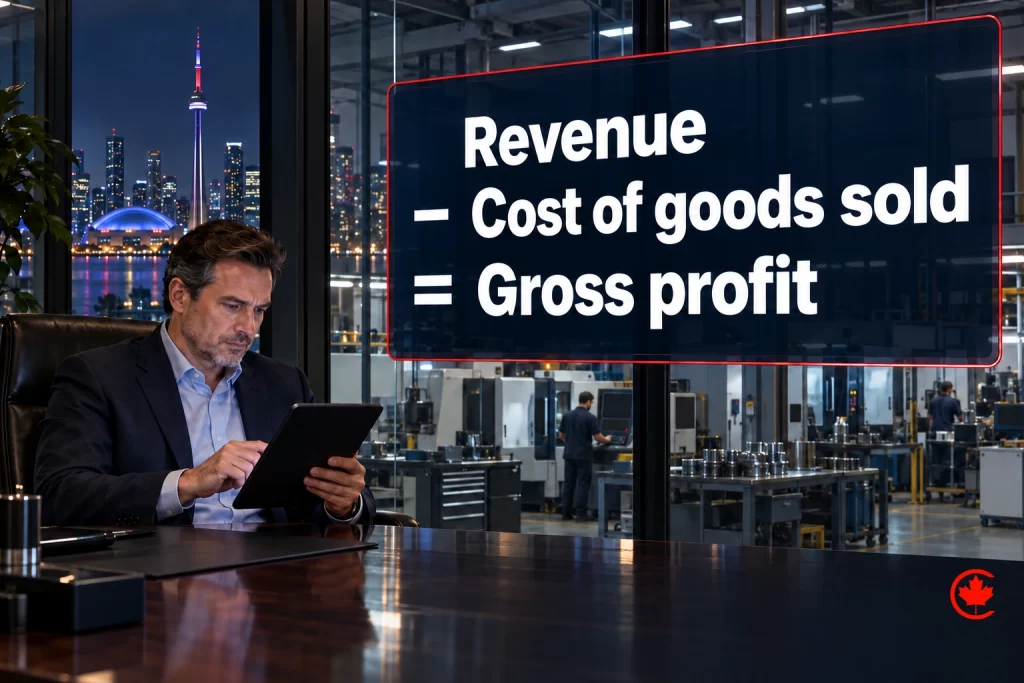
To set a budget, estimate a qualified RFQ’s expected contribution: average annual order revenue, times gross margin, times expected years of repeat business, times your win rate. Then allow for sales and servicing costs, uncertainty and your profit target. Compare acquisition costs against that allowance rather than against gross revenue.
Align sales and marketing
In many manufacturing companies, sales and marketing work separately: marketing produces brochures and trade show booths, sales chases relationships. Growth comes when they share goals and data. Agree on what a qualified RFQ looks like, how fast sales follows up, which information marketing needs back (wins, losses and reasons) and which content sales needs to close deals. Meet monthly to review the pipeline together.
Answer the questions engineers and buyers ask
Common questions in manufacturing searches and sales calls make excellent content: what tolerances a process can hold, how material choice affects cost, what minimum order quantities apply, what lead times look like for prototypes versus production, how first article inspection works, what documentation ships with parts. Answering them clearly on your website saves your estimators time and attracts buyers who already understand how you work.
Show your people and your plant
Buyers choose suppliers they trust, and trust grows when they see the people and processes behind the parts. Photos and short videos of your team, machines, inspection room and shipping area make your company real. Introduce key contacts, such as estimators and quality managers, with their permission. Plant tours, in person or virtual, are powerful for larger prospects.
Common manufacturing marketing mistakes
- Websites that list every capability in one long paragraph.
- Outdated equipment lists and certifications.
- No way to upload drawings with a quote request.
- Generic stock images instead of real parts and machines.
- Trade show leads that never get followed up.
- Measuring traffic instead of RFQs and won work.
Plan a realistic marketing budget
Manufacturers often ask how much to spend. There is no universal number, because the value of a customer varies enormously between a job shop making brackets and a supplier of engineered systems. Build your budget from three questions. First, what is a new customer worth over the years you expect to serve them? Second, how many qualified RFQs does it take to win one? Third, what do you need to build first: a website and capability pages, or campaigns to fill the pipeline? Most manufacturers invest first in the website, tracking and core content, then add paid search, LinkedIn and trade show follow up. Review spend against qualified RFQs and won work every quarter and move money to what performs.
Keep marketing going when the plant is busy
A common pattern in manufacturing is feast and famine: marketing stops when the shop is full, then restarts in a panic when work dries up. Because industrial buying cycles are long, the RFQs you receive next quarter come from marketing you do this quarter. Keep a steady baseline of content, search visibility and relationship building even in busy periods, and use full capacity to be more selective about the work you accept rather than to go quiet.
Use customer stories the right way
Case studies are among the most persuasive content a manufacturer can publish, but they need care. Many customers do not allow their names or parts to be shown, and some work is covered by confidentiality agreements. Ask permission in writing before publishing anything, and offer an anonymized version when a customer prefers privacy: describe the sector, the challenge, the process you chose and the practical outcome without identifying details. Even anonymized stories show engineers how you think, which is often what they want to know most.
Testimonials work the same way. A short quote from a purchasing manager about communication or delivery reliability, used with permission, can reassure a new buyer more than any description of your equipment.
A 90 day plan
Days 1 to 30: agree on target work and sectors, write your positioning statement, fix the RFQ form and tracking, update the equipment and quality pages.
Days 31 to 60: publish capability pages for your top three processes and two market pages, set up Google Business Profiles for eligible customer-facing locations and launch one narrow search campaign.
Days 61 to 90: start LinkedIn posting with shop floor content, publish the first design guide, plan follow up for your next trade show and review RFQs and quoted value by source.
Frequently asked questions
How do you market a manufacturing company that relies on a few loyal customers?
Start by naming which business model you are marketing, because a contract shop, an OEM selling its own products and a distributor each need different things. Then make it easy for engineers, buyers and distributors to find you, see what you can make and send a request. Relying only on a handful of accounts and a sales rep works until a large customer moves production or a key rep retires.
What should a contract manufacturer's website show to win more RFQs?
Give each process its own page with materials, tolerances, maximum part sizes, typical volumes and secondary operations, since engineers want numbers. Publish a current equipment list and your quality system, including certifications and the documentation that ships with parts. The RFQ form needs a secure upload route for CAD files and drawings and should tell the buyer when they will hear back.
Which types of marketing suit a manufacturing company in Canada?
Search, narrow Google Ads campaigns, LinkedIn, trade shows, technical content and consent-based email all have a place. Industrial searches have lower volume than consumer ones, but someone typing a process and certification is often close to sending a request. Measure each channel by qualified RFQs and won work.
How should a manufacturer present itself to medical device makers?
Write a market page for the sector that explains the standards and documentation you work to, such as material traceability, cleanliness requirements or first article inspection. Show only certifications your company actually holds and customer stories you have permission to use. Performance claims need proper testing, since the Competition Act prohibits misleading claims.
Is SEO worth it for an industrial manufacturer with low search volumes?
Often yes, because industrial searches carry strong intent even when the numbers are small. Map one process, material or application to each page and use the abbreviations and common names engineers actually type. Fast pages, clear structure and schema for your organization and products cover the technical basics.
How can an aerospace parts manufacturer reach engineers and buyers on LinkedIn?
LinkedIn lets you target engineers, procurement managers and operations leaders by title and company. Use it to show your shop floor, share case studies with permission and stay familiar with target accounts through long buying cycles. Account based campaigns focus spend on a defined list of companies you want to win.
How can a food manufacturer turn trade show conversations into orders?
Invite your target list before the show with a reason to visit the booth, and log every conversation in your CRM with notes and next steps. Follow up within days with exactly what each visitor asked for. A badge scan or business card does not by itself allow ongoing marketing email under CASL, so add contacts to a nurture sequence only with a valid basis.
How should an electronics manufacturing services company set a marketing budget?
Estimate what a qualified RFQ is worth: average annual order revenue, times gross margin, times expected years of repeat business, times your win rate. Allow for sales and servicing costs, uncertainty and your profit target. Compare what it costs to win a customer against that figure, not against gross revenue.