
How to choose a Google Ads agency in Toronto: questions, warning signs and the first 90 days

Google Ads is the fastest way for a Toronto business to appear in front of people who are searching for what it sells right now, and the fastest way to spend a budget with nothing to show for it. The difference is almost always management: who sets up the account, how the campaigns are structured, what is measured, and how often someone with real skill looks at the numbers. Choosing the agency is therefore the most important decision in the whole channel. This guide explains how to make it.
If you would rather see how one agency answers these questions, our Google Ads agency in Toronto page sets out how we manage accounts, measure enquiries and report.
Know what a lead is worth before you talk to anyone
An agency cannot judge whether an account is working unless you both agree on what a result is and what it is worth. Before the first call, work out the enquiry types that matter (calls, booked appointments, quote requests, online orders), roughly how many of each become customers, and what an average customer is worth over a year. With those three numbers you can tell any agency what a lead can cost, and you can judge every report they send against it. Agencies that ask for these numbers in the first meeting are the ones who manage to results rather than to clicks.

What to ask to see
Accounts they manage for businesses like yours
Ask for an anonymized view of a live account in a comparable industry: the campaign structure, the search terms report, the conversion tracking and the last three months of results. Numbers on a slide can be anything; a real account view shows how the agency actually works. Pay attention to whether the search terms report is clean, because wasted spend on irrelevant searches is the most common fault in badly managed accounts.
Conversion tracking they set up
Ask how calls, forms, bookings and chats are tracked, whether the tracking is checked after website changes, and whether it feeds back into Google’s bidding. An agency that cannot explain its tracking in plain words is optimizing blind.
The landing pages they recommend
Ads are only half the system. Ask whether the agency builds or improves landing pages, how it decides where each ad should land, and how it tests changes. Sending paid traffic to a generic home page is a sign that the agency manages the account and not the result.
Reporting
Ask for a sample monthly report. It should show spend, enquiries by type, cost per enquiry, the searches that produced them, what was changed in the account and what will change next. A report that leads with impressions and clicks is designed to look busy.

Questions that separate good agencies from the rest
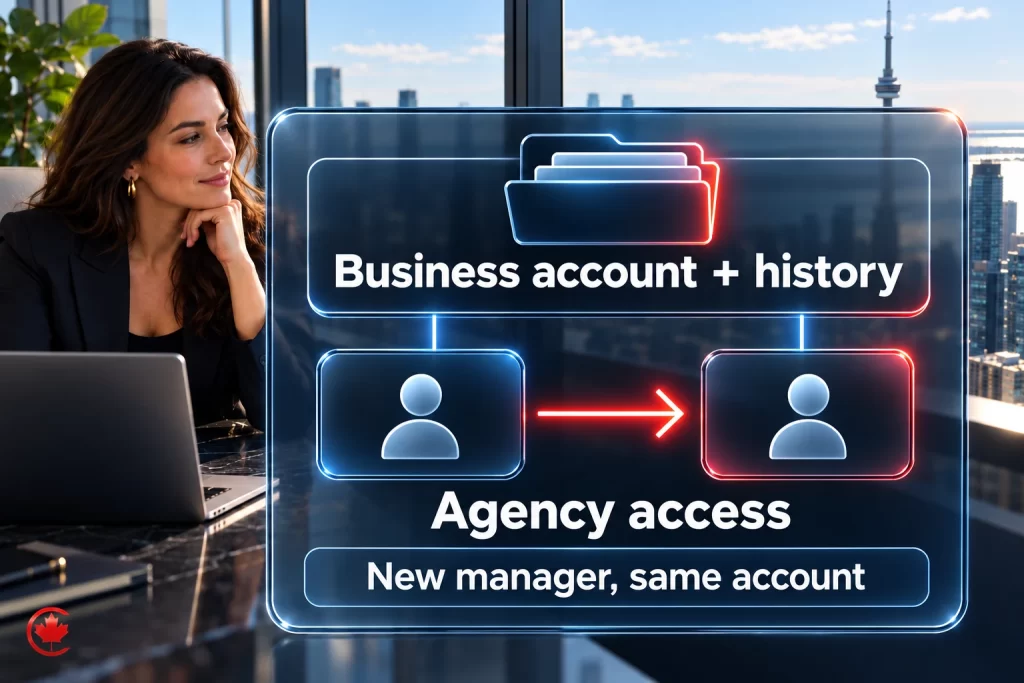
- Who owns the account? The Google Ads account, the billing and the conversion data belong to you, with the agency added as a manager. If the account is in the agency’s name, your history leaves with them.
- Who does the work day to day? Ask how many accounts each specialist manages and whether the person on the sales call will touch yours.
- How do you decide budget? Good answers start with your lead value and the search demand in Toronto and the GTA, not with a standard package.
- How do you handle local targeting? Toronto accounts need decisions about neighbourhoods, the suburbs you can serve, people merely interested in the area, and the hours you can answer the phone.
- What do you refuse to do? An experienced agency will say what it will not run: searches with the wrong intent, claims you cannot support, or industries with advertising rules it does not know. In regulated fields such as health, legal, finance and real estate, ask how the agency keeps ads within the regulator’s rules.
- Can we speak to a current client? One call with a client who has been with the agency for a year tells you what the proposal cannot.

Warning signs
- Results promised before discovery. Nobody can promise leads at a price before seeing your market, your site and your tracking.
- Management fee tied only to spend. A fee that rises with your budget rewards spending, not results. Ask how the agency is paid and why.
- No search terms review. If nobody can tell you which actual searches triggered your ads last month, money is being wasted.
- Everything on automated settings. Automation is useful with good data and bad with poor data. Ask what the agency controls by hand and why.
- Silence on landing pages and tracking. If the proposal is only about ads, the results will be too.
We build and run Google Ads campaigns measured on calls, forms and booked jobs, not clicks.

What the first ninety days should look like
Month one is setup: tracking confirmed, the account structured around your services and areas, negative keyword lists built, first ads and landing pages live. Month two is learning: search terms cleaned weekly, bids and budgets adjusted, the first landing page changes made. By month three, cost per enquiry should be settling toward a number you can live with, and the agency should be able to show which searches, ads and pages produce customers and which do not. If after ninety days nobody can show you that, ask for a written explanation.
Comparing proposals
Put the proposals side by side and score the same lines: understanding of your lead value, tracking and measurement, campaign structure, landing page plan, the people on the account, reporting and ownership. Fees matter, but a poorly managed account wastes more in media than any fee saves. Ask each agency to quote the work in writing after a discovery call so the scope matches your business rather than a package.
Where Canada Create fits in your comparison
If you are comparing agencies, we are happy to be one of the proposals. See our Google Ads management in Toronto, lead generation services and landing page design, and judge us on the same lines as everyone else.
Frequently asked questions
How much does a Google Ads agency cost for a Toronto business?
Agency fees depend on the scope: how many campaigns and services are advertised, whether tracking and landing pages are included, how often someone reviews the account and how reporting works. The money spent on clicks is paid to Google and should appear separately from the management fee. Be careful with a fee tied only to spend, since it grows with your budget whatever the account delivers. Ask each agency to quote the work in writing after a discovery call so the scope matches your business.
Are Google Ads still worth it for a Toronto business in 2026?
They can be, provided the account is managed against what a lead is worth to you. Google Ads puts a business in front of people searching for what it sells right now, and it can just as easily burn through a budget. Before you decide, work out which enquiry types matter, how many become customers and what an average customer is worth over a year. Those figures tell you what a lead can cost and let you judge every report.
How do I compare Google Ads agencies in Toronto before hiring one?
Judge each agency on how it works, because a ranking cannot tell you which one suits your account. Ask for an anonymized view of a live account in a similar industry, including its search terms report and conversion tracking. Find out who handles the account day to day, how budget is decided and what the agency refuses to run. Then score every proposal on the same lines: lead value, tracking, structure, landing pages, people, reporting and ownership.
Can a Toronto business start Google Ads on a small monthly budget?
That depends on what a lead is worth to you and how much search demand exists for your services in Toronto and the GTA. A good agency starts the budget conversation from your lead value and local demand instead of a standard package. A modest budget goes further when targeting is tight, search terms are cleaned regularly and ads land on a relevant page. If the economics cannot carry the cost of a lead, more spend will not fix it.
How do Google Ads agencies make their money?
Most charge a management fee for the work, set either as a fixed amount for a defined scope or as a share of the ad spend, while the media itself is paid to Google. A fee linked only to spend is a warning sign in this guide, because it rises with your budget even when results do not. Ask how the agency is paid, why it chose that model and get the answer in writing.
Does a Google Ads agency near me need to understand Toronto targeting?
Yes, because Toronto accounts need decisions about neighbourhoods, the suburbs you can actually serve, people who are merely interested in the area and the hours your phone is answered. An agency that asks about those details early is already thinking about real customers. Whoever you hire, keep the Google Ads account, billing and conversion data in your own name and give the agency manager access.
How does Google Ads work for a local service business?
Advertisers choose the searches they want to appear for, and Google shows their ads in an auction, usually charging when someone clicks. What happens after that depends on management: how the account is set up, how campaigns are structured, what gets measured and how often someone skilled looks at the numbers. For a local business, location settings, call hours and the landing page matter as much as the ad text.
What should the first three months with a new Google Ads agency look like?
Month one is setup: tracking confirmed, the account built around your services and areas, negative keyword lists in place and the first ads and landing pages live. Month two is learning, with search terms cleaned weekly, bids and budgets adjusted and early landing page changes made. By month three, cost per enquiry should be settling and the agency should show which searches, ads and pages bring customers. If nobody can show you that, ask for a written explanation.
Can a Toronto agency manage Google Ads for a business elsewhere in Canada?
Yes, since campaigns are run online and the important knowledge is your service area and your customers. Ask any agency how it handles location targeting outside its own city, and keep the account in your business's name. Location targeting should follow the places where you can actually deliver the work.