
How SEO Changes: A Practical Guide for Canadian Businesses

SEO changes because search technology, customer expectations, websites, and the information available on the web change. That does not mean a business should chase every headline, automate pages at scale, or rebuild a site whenever a platform announces a feature. A more durable approach is to maintain a useful website, verify what users and search engines can access, measure the right evidence, and improve priority pages deliberately.
TL;DR: What should businesses do when SEO changes?
Start with the audience and the pages that matter to the business. Keep information accurate, useful, well-organized, and clearly authored; review technical access and page experience; use data to understand what people are finding; and document changes before judging their effect. Google says there are no secrets that automatically place a site first in Search, and changes can take hours to several months to be reflected. A responsible SEO program therefore uses evidence and iteration rather than predictions or fixed result dates.
AI can support research, structure, and routine analysis, but it should not replace subject-matter judgement or become an unreviewed publication process at scale. Google’s guidance emphasizes accuracy, quality, relevance, and added value. Whether work is completed in-house or with a specialist, keep one accountable owner for the source material, approval, implementation, and measurement.
Start with what should not change
A useful SEO plan begins with the business rather than a platform trend. Identify the audience, primary services or products, important locations, conversion paths, subject-matter expertise, and pages that already matter. A website should still make sense to a visitor who arrives directly from a referral, email, social post, or bookmark. Google describes people-first content as content created primarily to help visitors, not to manipulate rankings.
That principle makes it easier to reject weak tactics. Do not add pages merely because a query appears popular, repeat keywords until the copy is difficult to read, or change dates without substantially improving information. Do not treat a new search feature as proof that a particular format will work for every customer. When a proposed change does not serve a real audience or business purpose, it needs a stronger case before it enters the backlog.
A practical framework for keeping SEO current
Maintain accurate, useful content
Review priority pages for accuracy, completeness, clarity, and relevance to the customer’s task. Update information that has genuinely changed, remove unsupported claims, add first-hand expertise where it is available, and cite reputable sources when a reader benefits from verification. A clear title and headings help visitors understand what a page covers. Google’s helpful-content guidance also encourages clear authorship where readers would expect it.
Content maintenance is not a race to a specific word count. Some questions need a short answer; others need a detailed guide, examples, or decision support. The standard should be whether the page gives the intended reader enough accurate context to make progress without needing to search again for basic information.
Review technical access and site quality
Search engines need to be able to access the same important resources that users receive. A practical review may include whether key pages are crawlable and indexable, whether preferred URLs are clear, whether internal links point to relevant destinations, and whether templates render important content reliably. It may also include reviewing redirects, structured data, image descriptions, and page performance constraints. The right checks depend on the site and the change under consideration.
Separate a diagnosis from a production change. A technical review can identify a possible issue, but implementation may require a developer, CMS owner, hosting provider, designer, legal reviewer, or content owner. Record the proposed change, expected user benefit, dependencies, owner, test method, and rollback path. That is more reliable than applying unreviewed global changes across a website.
Treat page experience as a whole
Page experience includes more than one score or metric. Readers should be able to understand content, navigate, use a page on their device, and access the resources that make the page work. Google advises site owners to consider the overall page experience rather than focus on only one or two signals. Review the visitor journey: can someone find the relevant service, understand the offer, read the content, use navigation, and reach a valid next step without friction?
For a service website, the relationship between content, navigation, form usability, and technical rendering matters. If the site foundation needs attention, a web design review may be part of the broader conversation.
Use AI as an assisted workflow, not an autopilot
Generative AI can be useful for organizing research questions, identifying recurring themes in approved source material, preparing a first outline, or helping a team compare versions. It still needs human review for accuracy, originality, customer context, brand voice, citations, legal or commercial claims, and suitability for the page. Google warns that generating many pages without added value may violate its spam policy on scaled content abuse.
A sensible workflow keeps the source of truth visible. Give a knowledgeable person responsibility for the final page, preserve evidence for time-sensitive claims, and check the page’s title, description, structured data, image alt text, and visible copy before publication. If readers would reasonably ask how automation shaped a substantial piece of content, provide appropriate context. For a broader service discussion, see our AI search-visibility overview.
Measure context, not a single number
Google Search Console can help teams analyze the queries that lead to a site, along with impressions, clicks, and position. It also supports sitemap/URL submission and provides crawl, index, and serving details through URL Inspection. Use those reports alongside business context, changes to the site, seasonality, data limitations, and the quality of the underlying pages.
Before acting on a trend, define the baseline and question. Is a priority page no longer eligible for indexing? Did an important page change? Are search impressions shifting for a relevant customer question? Is a title accurately describing the page? A measurement plan should explain what was observed, what was changed, when it changed, and when the result will be reviewed.
How to prioritize SEO work when the landscape changes
| Question | Evidence to review | Responsible next step |
|---|---|---|
| Does a priority page still help its intended reader? | Accuracy, completeness, author expertise, user task, source support, and page clarity. | Refresh or clarify the page only when a documented gap exists. |
| Can users and crawlers access the important content? | Rendered page, canonical signal, indexability, internal links, redirects, and resource delivery. | Create a scoped technical ticket with an owner, test, and rollback path. |
| Is automation adding value? | Originality, factual checks, editorial review, source traceability, and whether a visitor benefits. | Use AI as assistance only where human accountability and added value remain clear. |
| Is a new opportunity worth pursuing? | Audience fit, customer need, business relevance, existing content, demand evidence, and duplication risk. | Prioritize a useful page or improvement, not a bulk set of speculative pages. |
| Did a completed change help? | Search Console context, page quality, business signals, implementation notes, and enough review time. | Document the result and decide whether to continue, refine, or stop the work. |
Our SEO team plans, fixes and reports on the work in this guide every month for Canadian businesses.
Common misconceptions to avoid
“A new SEO trend requires an immediate site-wide change.”
Not necessarily. First identify the affected pages, actual user need, available evidence, implementation cost, and risk. A small test or a focused review may be more appropriate than an unreviewed global template, CMS, or plugin change.
“AI-written content is automatically bad or automatically good.”
Neither conclusion is useful. Google’s guidance focuses on accuracy, quality, relevance, and added value. The question is whether the published page is genuinely useful, responsibly reviewed, and supported by the people and sources behind it.
“One search metric explains everything.”
Search data needs context. Changes in impressions, clicks, or position can coincide with demand shifts, page changes, indexing conditions, seasonality, competitors, or measurement choices. Investigate the page and business context before drawing a conclusion.
“Good SEO means a fixed ranking or result deadline.”
Google says changes may be reflected in a few hours or take several months, and not every change produces a noticeable impact. Compare a provider or plan by the scope, evidence, implementation process, and reporting, not by a claimed outcome or a calendar promise.
SEO changes, but the core work remains practical: help the right audience, keep information accurate, maintain a reliable site, review evidence, and make carefully scoped improvements. For a review tailored to your site’s current priorities, explore our SEO services or request a proposal.
Sources and disclosure
These Google guides explain the content, technical and measurement practices discussed above.
- Google: Creating helpful, reliable, people-first content.
- Google: Generative AI content guidance.
- Google: SEO Starter Guide.
- Google Search Console overview.
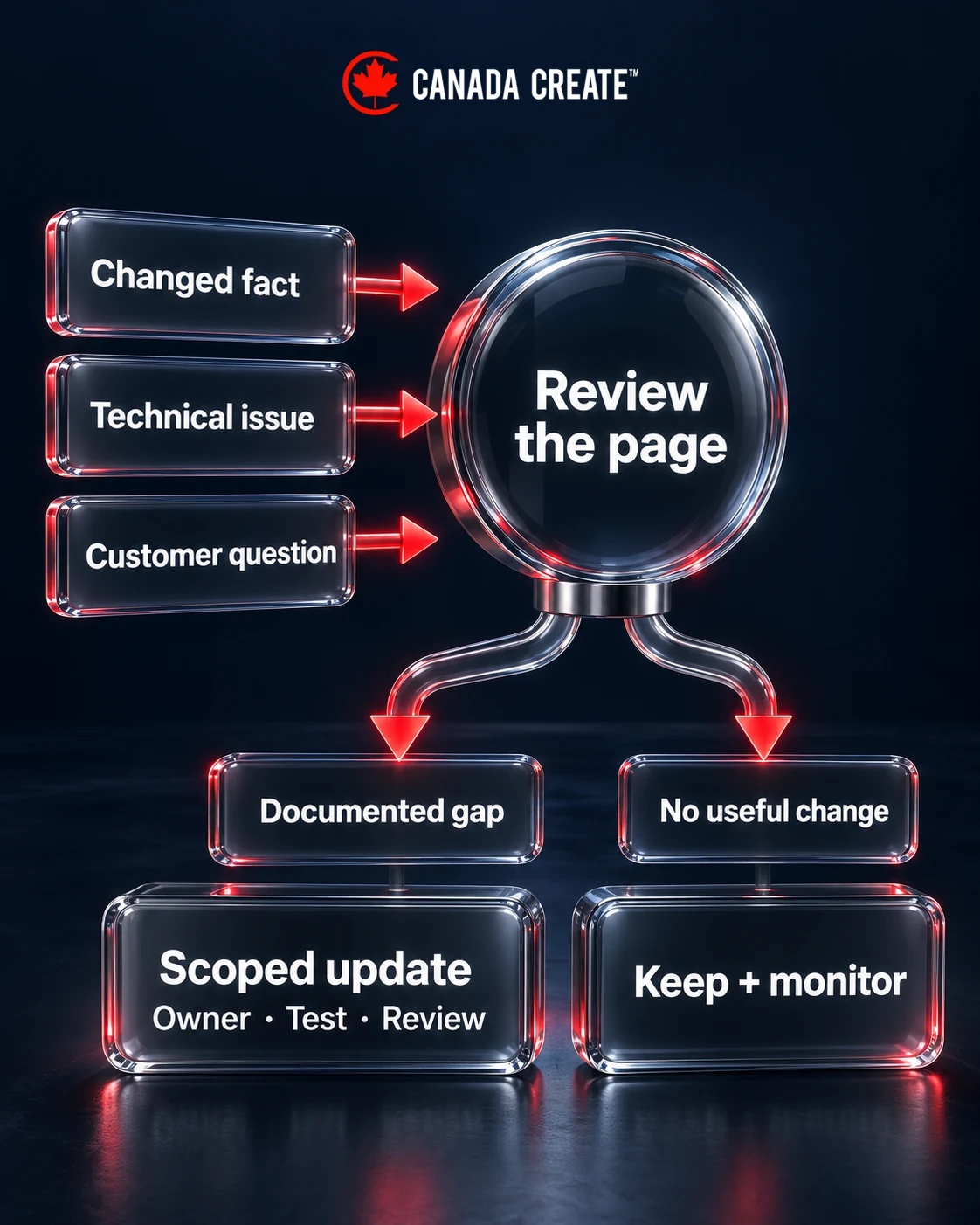
Use evidence, documented ownership, and a people-first approach when reviewing SEO changes.
Frequently asked questions
How has AI changed SEO for Canadian businesses?
Generative AI can help organize research questions, prepare a first outline or compare drafts. Every page still needs a knowledgeable person to check accuracy, originality, claims and brand voice before it goes live. Google warns that churning out many pages without added value can breach its spam policy on scaled content abuse.
Should a business react to every new SEO trend?
No, first work out which pages are affected, what users actually need, what evidence exists and what the change would cost. A small test or a focused review is often wiser than a site-wide template or plugin change. Platform announcements do not prove that a format will suit your customers.
Will SEO still exist as search technology keeps changing?
Search will keep evolving, but helping people find accurate, useful information remains the core of the work. Google says there are no secrets that automatically put a site first. A business that keeps its site reliable, reviews evidence and improves priority pages carefully stays in a good position whatever the format.
When do SEO changes start to take effect in Google?
Google says a change may show up within a few hours or take several months, and some changes never make a visible difference. Write down what changed and when, then set a date to review it. Judge a plan by its scope and reporting, not by a promised calendar.
What SEO mistakes come from chasing search changes?
Typical ones are adding pages only because a query looks popular, repeating keywords until the copy is hard to read and changing dates without improving the information. Another is treating a new search feature as proof that one format will work for every customer. Each change should serve a real audience or business purpose.
How do businesses keep their SEO current over time?
Review priority pages for accuracy and clarity, and update only what has genuinely changed. Check that crawlers and users can reach important content, and look at page experience as a whole. Record each change with an owner, a test method and a rollback path.
Why does SEO keep changing?
Search technology, customer expectations, websites and the information on the web all keep shifting. That pushes search engines to adjust how they find and present results. It does not mean a business should rebuild its site every time a platform announces a feature.
How can I tell whether a Google update affected my website?
Define a baseline and a clear question before acting. Look at queries, impressions, clicks and position in Search Console, then weigh them against site changes, seasonality, competitors and indexing conditions. One metric moving on its own rarely explains what happened.
Is one page speed score enough to judge page experience for SEO?
Google advises site owners to consider the whole page experience instead of one or two signals. Check whether visitors can understand the content, navigate, use the page on their device and reach a valid next step. On a service website, form usability and reliable rendering matter as much as raw speed.