
How home builders and condo developers sell more homes in Canada

Home builders and condo developers in Canada sell homes that often do not exist yet. Buyers commit to one of the largest purchases of their lives based on floor plans, renderings, a sales centre and the builder’s reputation, then wait months or years for completion. Interest rates, incentives and competing projects shift the market constantly. The builders who sell well make the future home feel real, explain the process and protections clearly, follow up with every interested buyer and keep purchasers informed until the keys are handed over.
This guide covers how new home buyers decide, the rules that shape builder marketing, budget formulas, the pages and channels that work, what a project website needs, referrals, buyer care, a sample builder’s first quarter, what to measure and a 90 day plan.
How new home buyers decide
New home buyers weigh location, price, floor plans, finishes, timing and the builder’s track record. Different buyers emphasize different things:
- First time buyers focus on price, deposit structure, incentives and how much home they get for the money.
- Move up families care about schools, space, community amenities and closing dates that match their sale.
- Downsizers look for low maintenance living, accessibility and a builder they trust to deliver quality.
- Condo investors compare the developer’s history, occupancy timing, rental demand and deposit terms.
- Custom home clients choose a builder for a long personal relationship, judged on portfolio, process and budget management.
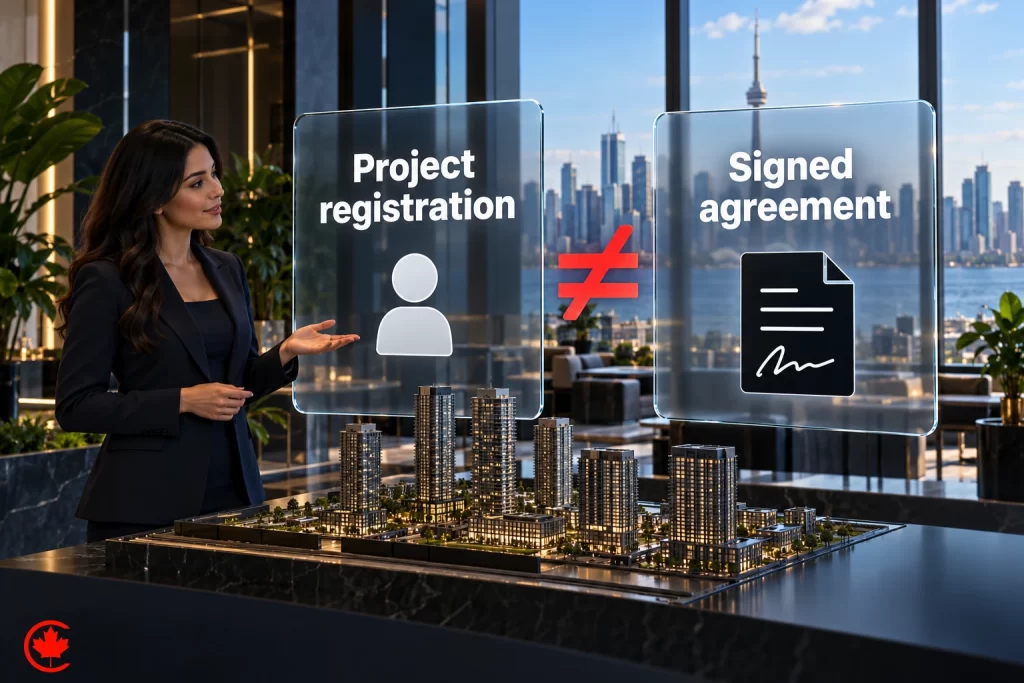
Behind every decision sit the same worries: Will the builder finish on time and to the standard shown? What is included, and what costs extra? What protection do I have if something goes wrong? Builders who answer these questions openly sell faster and face fewer disputes later.
Rules that shape builder marketing
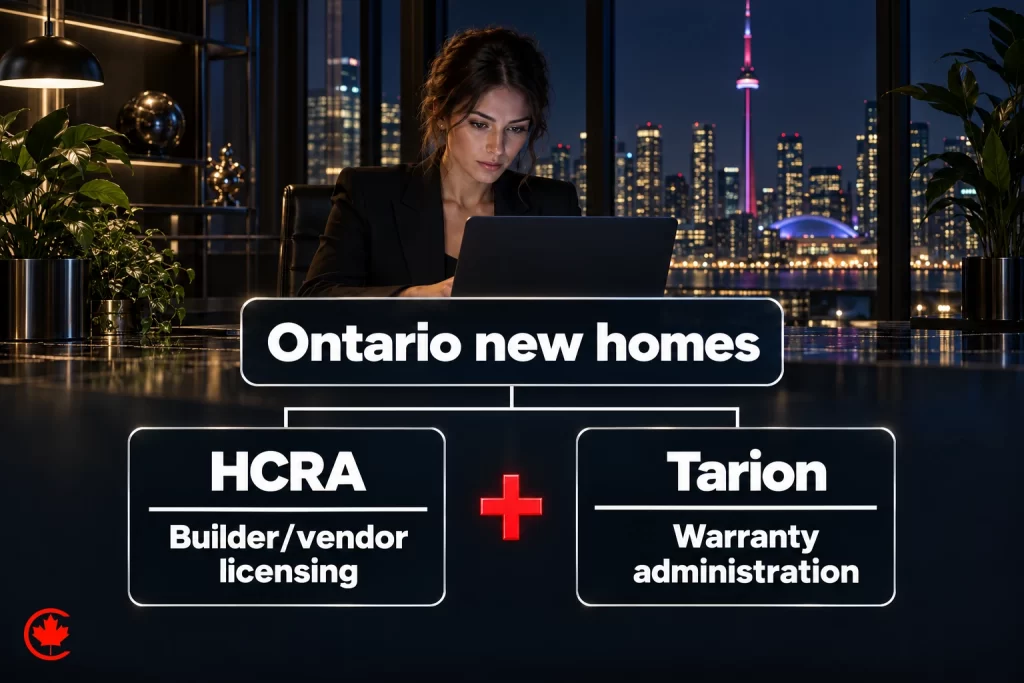
In Ontario, new home builders and vendors are licensed by the Home Construction Regulatory Authority (HCRA), and the new home warranty is administered by Tarion. Buyers of new condominiums receive a disclosure statement and have a cooling off period. Other provinces have their own licensing and warranty programs; describe the protections that apply where you build.
Renderings should be labelled as artist’s concepts and stay faithful to what will be built. Prices, incentives, square footage, included features and completion or occupancy dates must not mislead, under the Competition Act and builder licensing rules; state conditions clearly and update marketing when plans change. Housing is a special ad category on Meta, so targeting by age, gender or postal code is restricted. Promotional registration emails and buyer campaigns generally need consent, sender identification and an unsubscribe under CASL. Transactional construction or closing updates may fall within an exception; assess the actual message and keep promotional consent separate. Human rights law applies to how housing is advertised. Check current HCRA requirements before you publish project claims.
Budget formulas for builders
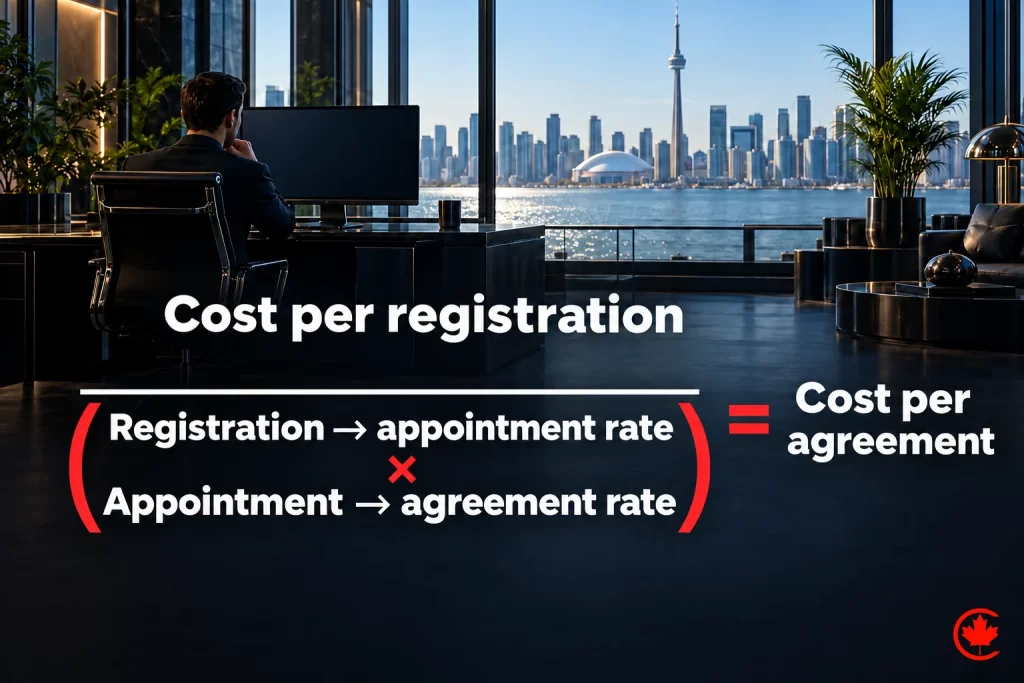
Cost per signed agreement = cost per registration ÷ (registration to appointment rate × appointment to agreement rate). Registrations are easy to buy; appointments and agreements are what matter.
Marketing budget per home = total project marketing budget ÷ number of homes or units. Many builders plan marketing as a share of project revenue; whatever method you use, track actual cost per agreement against it as the project sells.
Absorption pace = agreements signed per month. Compare it with the pace your financing and construction schedule need. If sales lag, the marketing plan, pricing or product needs attention, and the data shows which.
Calculate these per community or project, because each has its own buyer and competition.
Pages and channels that work
Project websites. Each community or condo project needs its own focused site or section: location and neighbourhood, site plan, floor plans, features and finishes, renderings, deposit information where appropriate, the builder’s story and a registration form.
Visual tools. Buyers purchase from images, so invest in them:
| Tool | Use |
|---|---|
| 3D renderings | Exteriors, amenities and interiors before construction |
| Virtual tours and model suites | Let buyers walk through floor plans |
| Drone footage | Site context, views and neighbourhood |
| Interactive site plans | Lot or unit availability and pricing |
We plan and run home builder marketing for builders, contractors and designers in Toronto and across Canada, scoped in writing after a free review.
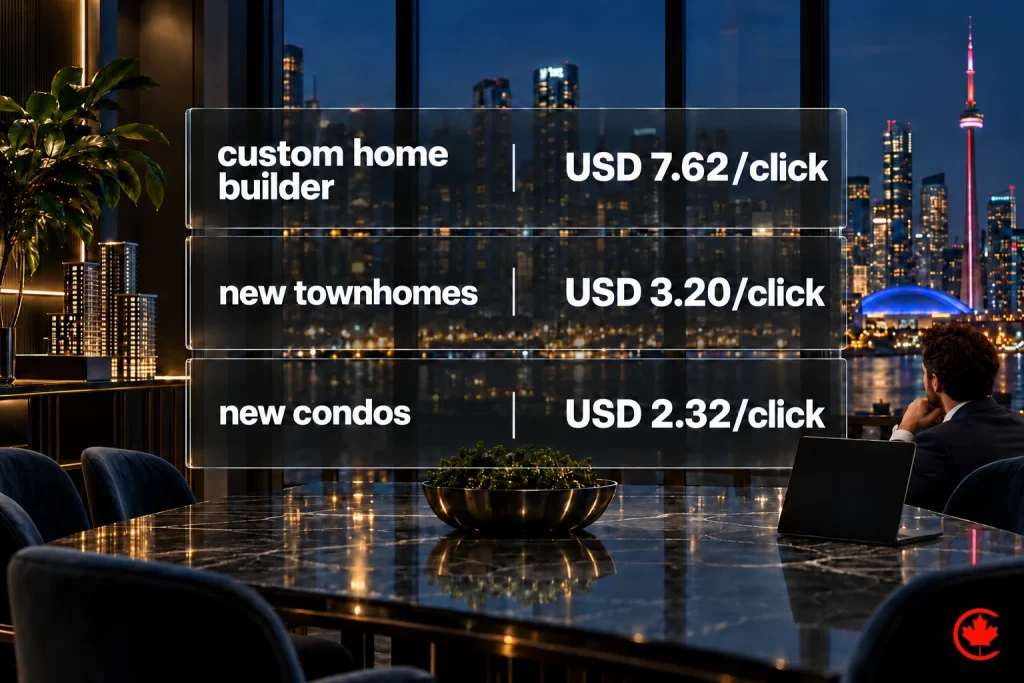
Registration campaigns. Before launch, search and social campaigns build a list of interested buyers who receive updates and launch invitations. Search targets the community name, the area and home types. Our home builder marketing service builds and runs these campaigns.
Realtor programs. Many new home sales involve cooperating realtors. A broker portal, clear cooperation terms published to realtors and broker events extend your sales team.
Builder reputation. Buyers research the builder by name. A strong about page, completed projects, customer care information and reviews support every project.
What a project website needs
- Location, neighbourhood amenities and commute information.
- Site plan with availability, and floor plans with dimensions.
- Features and finishes, with what is standard and what is an upgrade.
- Renderings labelled as artist’s concepts.
- Pricing and incentives with conditions and dates, where you publish them.
- Warranty and licensing information as it applies.
- A registration or appointment form that works well on phones.
- The builder’s story, completed communities and customer care process.
For visual assets, see our architectural rendering and virtual staging services.
Referrals and partnerships
Past purchasers are a builder’s best advertising. Families who had a good experience bring friends and relatives into the next phase. A simple purchaser referral program with clear conditions, disclosed where required, encourages them. Realtors, mortgage brokers, architects, interior designers and lot sellers are the other important partners, particularly for custom builders.
Buyer care from agreement to closing
The time between signing and closing can be long, and silence creates anxiety. Regular construction updates with photos, design centre reminders, explanations of the pre delivery inspection and closing steps, and a clear customer care contact keep purchasers confident. Updates sent with consent are part of your marketing: purchasers who feel informed write reviews and refer others. CS+, Canada Create’s CRM, can track every registrant and purchaser and send scheduled updates.
A sample builder’s first quarter
Consider a hypothetical builder planning a townhome community of about 80 homes in a growing Ontario town, with a sales centre opening in four months. Past projects sold mainly through realtors and signs.
Month one. The builder launches a project website with location, site plan, floor plans, labelled renderings and a registration form. Tracking is set up from registration to appointment to agreement. A builder about page is rewritten with completed communities and customer care information.
Month two. Search campaigns target the community name, the town and townhome searches. Social campaigns run within housing category limits, sending registrants to the site. Registrants receive a monthly update with consent. A broker preview is planned with local realtors.
Month three. The team reviews registrations by source and how many book appointments, adds a virtual tour of the main floor plan and prepares the sales centre opening invitation for registrants.
No result is promised. The builder now has a registration list it owns, a measured funnel and visual tools ready for launch.
Mistakes that slow new home sales
Unlabelled or idealized renderings. Buyers who feel the finished home does not match what was shown become unhappy purchasers and poor references. Label concepts and keep them faithful.
Incomplete pricing and incentives. Incentives with hidden conditions, or prices that leave out mandatory items, damage trust and can breach advertising rules. State conditions and dates clearly.
Buying registrations without follow up. A large registration list that receives nothing until launch day goes cold. Regular, useful updates sent with consent keep registrants engaged.
One message for every buyer. First time buyers, move up families, downsizers and investors want different information. Segment content and follow up by buyer type where you can do so lawfully and without restricted targeting.
Ignoring the builder brand. Buyers research the builder before they sign. A thin about page and no completed project information leave doubts unanswered.
Silence during construction. Purchasers who hear nothing for months flood your sales team with calls and are less likely to refer friends. Scheduled construction updates prevent both problems.
A launch calendar for a new community
- Six months before launch: project website, registration form, labelled renderings and tracking; builder reputation pages updated.
- Four months before: registration campaigns on search and social within housing category limits; first registrant update.
- Two months before: realtor preview and broker materials; virtual tour or model suite planned; registrant updates with floor plan details.
- Launch: sales centre opening for registrants first, appointment booking, pricing and incentives with conditions.
- After launch: availability updates, retargeting, purchaser care and referral program for the next phase.
Adjust timings to your approvals and construction schedule, and track each stage so the next community launches with better data.
What to measure
| Measure | What it tells you |
|---|---|
| Registrations by source | Which channels bring interested buyers |
| Registration to appointment rate | Whether follow up moves buyers forward |
| Appointment to agreement rate | Whether product, price and sales process persuade |
| Cost per signed agreement | The real price of a sale by channel |
| Absorption pace | Whether sales keep up with the plan |
| Purchaser referrals | Whether buyer care builds the next phase |
A 90 day plan
Days 1 to 30. Project website live with labelled renderings and registration, funnel tracking set up, builder reputation pages updated, claims reviewed by counsel.
Days 31 to 60. Search and social registration campaigns, monthly registrant updates with consent, realtor program prepared.
Days 61 to 90. Appointment conversion reviewed, virtual tour or model added, launch event planned, budget moved to the channels that bring appointments.
To have a team run this plan with you, see our home builder marketing service and real estate marketing. Canada Create has served Canada since 2008, and your custom proposal follows discovery.
Frequently asked questions
How do buyers search for new home builders near them?
Many search the community name, the area and the home type, then look up the builder by name before they register. Search campaigns should target those terms and lead to a focused project site with a registration form. A strong about page, completed communities, customer care details and reviews support every project the builder sells.
How should a condo developer market units to investors?
Condo investors compare the developer's history, occupancy timing, rental demand and deposit terms, so the project site should cover each of those plainly. Keep claims about prices, incentives and occupancy dates accurate, since the Competition Act and builder licensing rules forbid misleading them. Avoid any promise about future value.
How do buyers decide which condo developer to trust?
They look at the builder's track record, completed projects, customer care process and reviews, and they want to know what protection they have if something goes wrong. In Ontario, builders and vendors are licensed by the HCRA and the new home warranty is run by Tarion, so explain both. Other provinces have their own programs, so describe the protections where you build.
What helps a new home community sell faster?
Builders who sell well make the future home feel real, explain the process and protections, follow up with every interested buyer and keep purchasers informed until closing. Track absorption pace, meaning agreements signed per month, against what your financing and construction schedule need. When sales lag, the numbers show whether marketing, pricing or the product needs attention.
How should a builder advertise prices and incentives when the condo market shifts?
State the conditions and dates for every price and incentive, and update marketing as soon as plans change. Prices, square footage, included features and occupancy dates must not mislead under the Competition Act and builder licensing rules. Have counsel review project-specific claims and check current HCRA requirements.
How do condo builders set a marketing budget per unit?
Divide the total project marketing budget by the number of homes or units. Many builders plan marketing as a share of project revenue, but whatever method you use, compare it with the actual cost per signed agreement as the project sells. Work these figures out per project, since each has its own buyers and competition.
How can a developer show buyers a condo before it is built?
Use 3D renderings for exteriors, amenities and interiors, virtual tours and model suites for floor plans, drone footage for views and site context, and interactive site plans for availability. Label every rendering as an artist's concept and keep it faithful to what will be built. Floor plans with dimensions and a clear list of standard features and upgrades answer the next questions.
How do custom home builders win new clients?
Custom clients choose a builder for a long personal relationship, judged on portfolio, process and budget management. Show completed homes, explain how you manage a build and the budget, and make past clients easy to hear from. Realtors, mortgage brokers, architects, interior designers and lot sellers are the partners who refer much of this work.