
How cosmetic surgery clinics attract patients within the rules
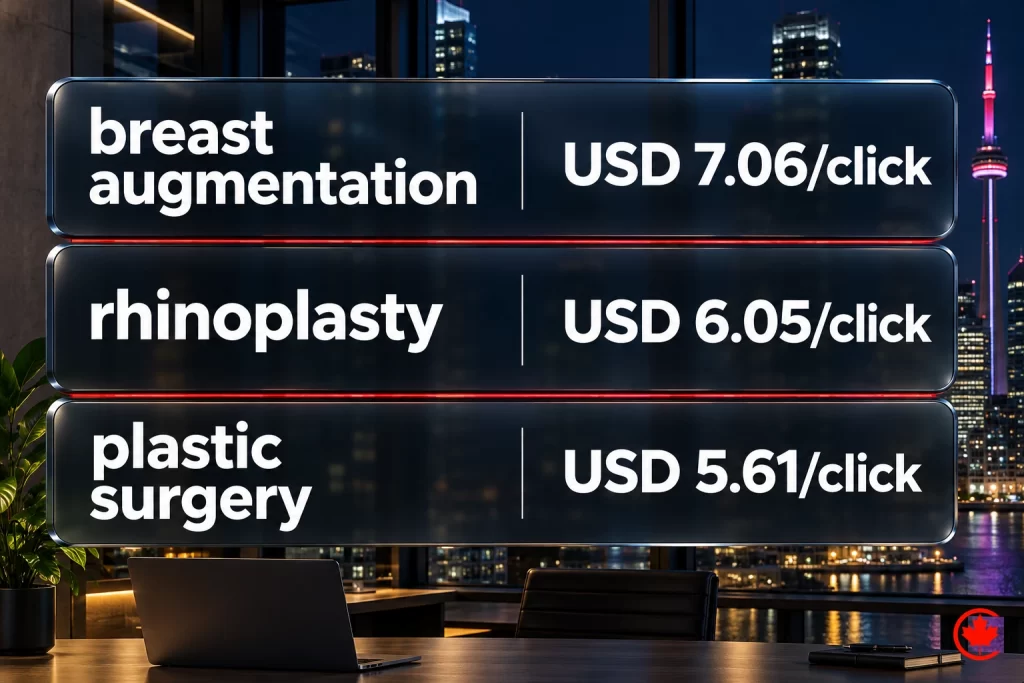
Cosmetic surgery patients research intensely: credentials, photos, recovery, cost and reviews. In Canada, “rhinoplasty” draws about 9,900 searches a month, “breast augmentation” about 6,600 and “plastic surgery” about 5,400. Of the three, “breast augmentation” has the highest estimated cost per click and “plastic surgery” the lowest. It is also one of the most regulated areas of health marketing, with rules on titles, before and after photos, testimonials, prescription products and offers. The clinics that grow build trust patiently, educate better than their competitors and make the consultation easy to book.
This guide covers how cosmetic and plastic surgery clinics in Canada market themselves well: how patients decide, titles and credentials, the rules that apply, procedure pages, photos, local search and reviews, paid and social advertising, the consultation journey, pricing and financing, and how to measure results.
How patients decide
Very few patients book surgery after one search. A typical journey runs over months:
- Curiosity: social media, friends’ experiences and general questions about a procedure.
- Research: what the procedure involves, recovery, risks and cost.
- Shortlisting: comparing surgeons’ credentials, photos, reviews and where surgery takes place.
- Consultation: often with more than one surgeon.
- Decision: based on trust in the surgeon, comfort with the team, clarity of the plan and cost.
Marketing has to support each stage without rushing it. Pressure and discounts work against trust in surgery, and in many cases against the rules.

Titles and credentials
- “Plastic surgeon” generally means a physician certified in plastic surgery by the Royal College of Physicians and Surgeons of Canada.
- “Cosmetic surgeon” is not a recognized specialty in Canada. Clinics where other physicians perform cosmetic procedures should state each practitioner’s actual certification and training.
- Facial plastic surgeons, dermatologists and oculoplastic surgeons have their own certifications. Describe them accurately.
- Nurses and other practitioners performing non-surgical treatments should be described by their actual registration, and the rules on who may perform which procedures vary by province.
Make credentials easy to verify: certification, training, hospital privileges where relevant, professional memberships and the accredited facility where surgery is performed.
The rules that shape cosmetic surgery marketing
- Physician advertising rules. Provincial colleges regulate physician advertising. Common restrictions cover testimonials, superiority claims, promised outcomes and misleading content. Check your college’s current policy.
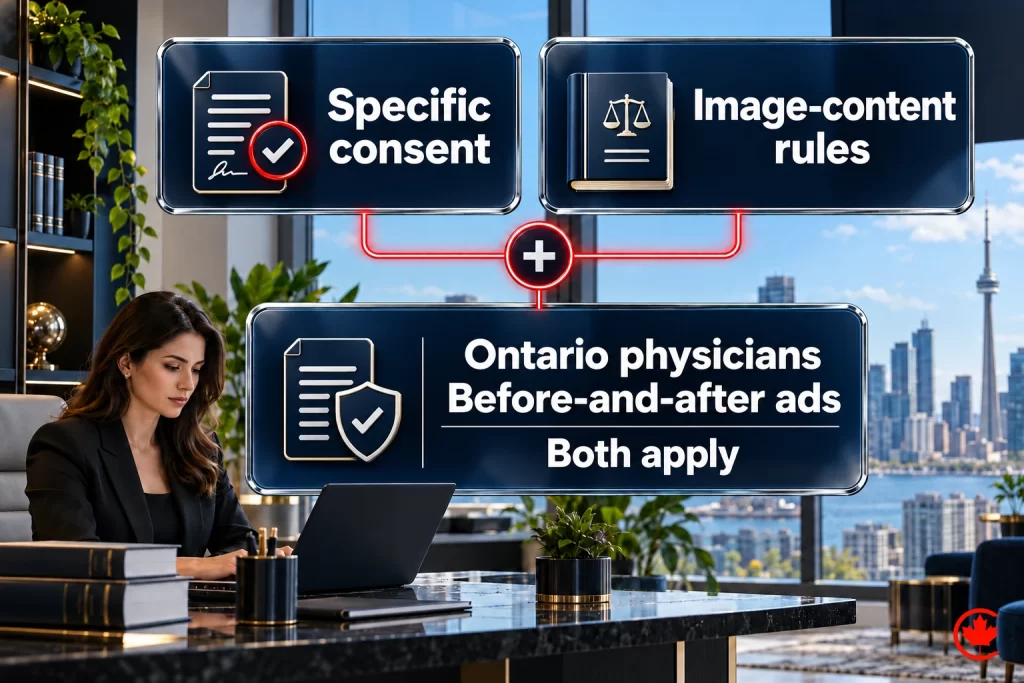
- Prescription drugs. Federal consumer advertising rules limit prescription drug promotion, including botulinum toxin products, to name, price and quantity. Professional rules can be stricter: Ontario physicians must not reference specific branded drugs in their advertising. Promotional content about their effects, including before and after images and testimonials, is not permitted, and that applies to influencers too.
- Medical devices. Many fillers, lasers and energy devices are regulated as medical devices, with claims limited to their licensed uses.
- Competition Act. False or misleading representations, fake reviews and undisclosed paid endorsements are prohibited.
- Privacy. Patient information is protected by federal and provincial privacy law. Health details never go into analytics or ad pixels.
- Platform policies. Google, Meta and TikTok restrict cosmetic procedure ads, targeting and some imagery, including age restrictions.
Read healthcare advertising rules in Canada and med spa advertising rules in Canada for more detail.
Procedure pages that answer every question
| Section | What to include |
|---|---|
| Who it suits | General candidacy information, with a consultation required to decide |
| The procedure | What happens, anaesthesia, how long it takes and where it is performed |
| Recovery | Typical timelines, time off work and restrictions |
| Risks | Honest, balanced information about possible complications |
| Cost approach | What a fee includes and how it is quoted |
| Your surgeon | Who performs it, with a link to their profile |
| Next step | How to book a consultation and what to bring |
We plan and run plastic surgery marketing for clinics and practices in Toronto and across Canada, scoped in writing after a free review.
Build a page for each priority procedure, such as rhinoplasty, breast augmentation, breast reduction, abdominoplasty, liposuction, blepharoplasty and facelift. Supporting articles cover recovery week by week, how to prepare, how to choose a surgeon and the difference between surgical and non-surgical options. Have your surgeons review every page.
Before and after photos
Photos are among the most persuasive content in cosmetic surgery, and among the most watched by regulators. If the rules that apply to your practitioners allow them:
- Get express consent for the specific use. In Ontario, discuss advertising consent after treatment, show the final images and explain withdrawal and the limits of removing images shared online. Do not offer incentives for consent.
- Use consistent lighting, angles and photographic techniques; never manipulate images to misrepresent the result.
- Show results patients can reasonably expect. In Ontario, use actual patients treated by the physician named in the advertisement, and place images only where people seek them out, not in unsolicited ads.
- Add context: the procedure, the time since surgery and a note that results are not guaranteed and may vary between patients.
- Never use photos for prescription drug treatments in promotional content.
- Remove identifying features unless the patient has agreed to be identifiable.
Local search and reputation
Patients search for a plastic surgeon near them and compare clinics in the map results.
- Use your real clinic name and accurate categories, with profiles for eligible clinic locations.
- Add real photos of the facility, consultation rooms and team.
- List procedures as services and keep hours accurate.
- Follow the physician regulator’s rules on reviews. In Ontario, do not use testimonials in advertising or direct patients to review sites. Keep public replies general and protect patient confidentiality.
- Keep surgeon profiles on directories and hospital listings consistent with your site.
Paid and social advertising
Paid search reaches people comparing surgeons and clinics. Run campaigns by procedure and location, send each to the matching procedure page and track consultations. Exclude searches for celebrities, cheap surgery abroad and jobs. Social media is best for education and familiarity: surgeons explaining procedures, a look inside the facility, recovery tips and answers to common questions. Influencer partnerships need clear disclosure, compliant claims and no promotion of prescription drugs. Do not build audiences from health conditions or send health information to ad platforms. See influencer marketing rules in Canada.
The consultation journey
Cosmetic surgery enquiries are valuable and slow to convert, so the journey after the first contact matters as much as the ad:
- Reply to calls, forms and messages quickly and warmly.
- Explain the consultation: who the patient meets, how long it lasts, any fee and what to bring.
- Offer virtual pre-consultations where your workflow allows.
- Follow up with consent, at the patient’s pace, without countdowns or pressure.
- Track consultations and booked procedures by source.
Pricing and financing
Cost is one of the most searched questions. Explain what a surgical fee usually includes (surgeon, anaesthesia, facility and follow-up visits) and what may be extra, and quote in writing after the consultation. If you offer financing through a third party, describe it accurately. Avoid discounts, limited time offers or bundles that encourage rushed decisions about surgery.

Measuring results
| Measure | What it shows |
|---|---|
| Enquiries by procedure and source | Which pages and campaigns bring interest |
| Consultations booked | Whether enquiries turn into appointments |
| Consultation to surgery rate | Whether the right patients are coming |
| Time from enquiry to surgery | How long nurturing needs to run |
| Cost per booked procedure | Where to invest next |
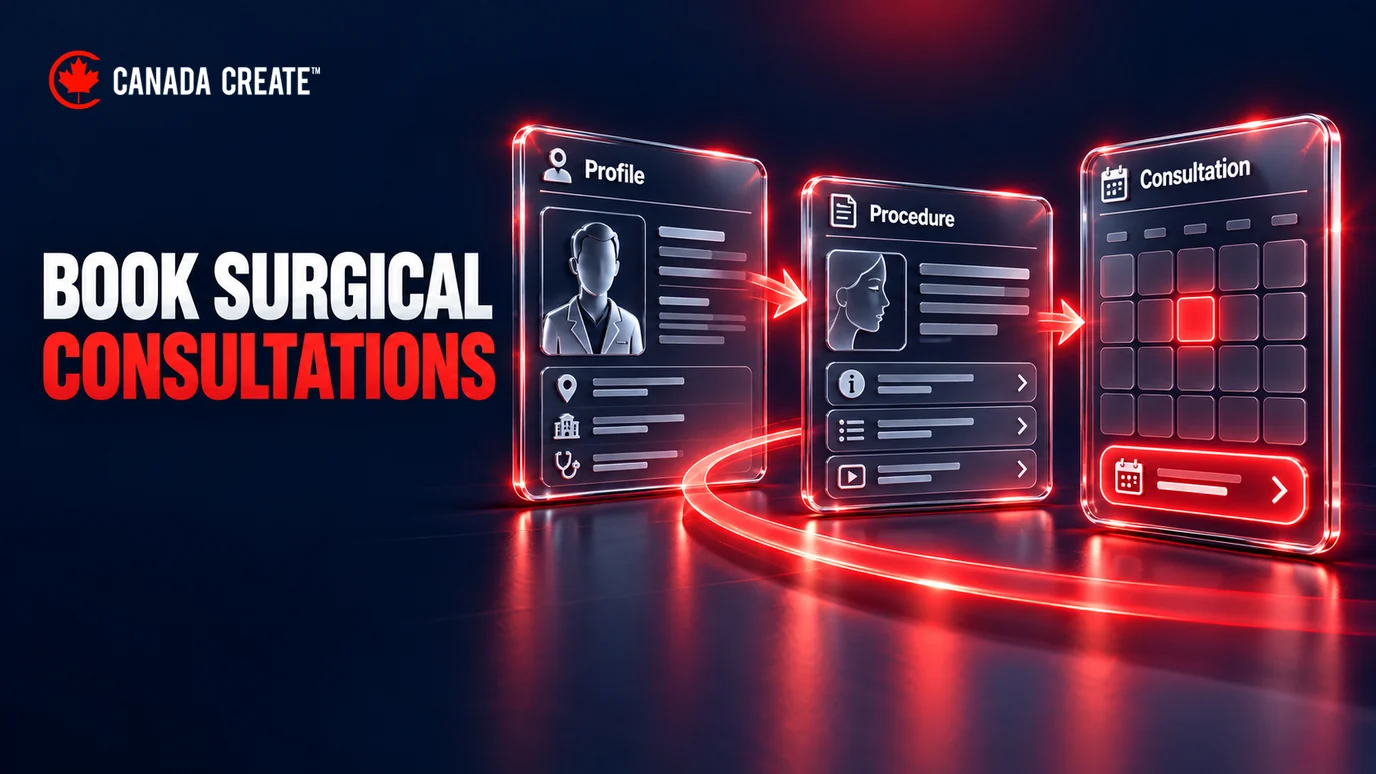
Surgeon profiles that do the selling
For many patients, the decision comes down to the surgeon. A strong profile answers the questions patients ask themselves before booking:
- Training and certification: medical school, residency, Royal College certification and any fellowship training, stated accurately.
- Focus: the procedures the surgeon performs most and why.
- Where surgery happens: hospital privileges and the facility used for private procedures.
- Approach: how the surgeon runs a consultation and plans care, in their own words.
- Memberships and teaching: professional societies, academic roles and publications.
- A video introduction so patients can hear the surgeon explain their approach.
Avoid superlatives, rankings or honours that cannot be verified, and keep every statement current.
Non-surgical treatments alongside surgery
Many surgical practices also offer injectables, skin treatments and laser services. These bring patients in more often and can lead to surgical consultations later, but they come with their own rules. Federal prescription drug advertising limits do not override stricter professional rules, including Ontario physicians’ prohibition on advertising specific drug brands. Device-based treatments must be described within their licensed uses. Who may perform each treatment depends on the province and the practitioner’s registration. Keep non-surgical pages separate from surgical ones, state who performs each treatment and avoid effect claims for prescription products. See med spa advertising rules in Canada.
Patient education that reduces anxiety
Patients who understand what to expect are more comfortable booking and better prepared for recovery. Useful education content includes:
| Content | Purpose |
|---|---|
| Preparing for surgery checklists | Reduces pre-operative calls and builds confidence |
| Recovery week by week | Sets realistic expectations |
| Questions to ask at your consultation | Positions the clinic as transparent |
| Surgical versus non-surgical options | Helps patients choose the right path |
| How to check a surgeon’s credentials | Shows confidence in your own team |
Every piece should be reviewed by a surgeon, avoid promises and include a reminder that a consultation is needed to decide what is appropriate.
Patients from out of town
Some patients travel from other cities or provinces for surgery. Pages for travelling patients can explain virtual pre-consultations, how many days to plan for, follow-up arrangements and coordination with their local doctor. Be careful never to downplay recovery or the importance of follow-up care.
Privacy in every system
Cosmetic surgery is deeply personal. Protect privacy in every system your marketing touches:
- No health or procedure details in analytics events or ad pixels.
- No remarketing that reveals a person’s interest in a specific procedure.
- Secure, encrypted forms and limited staff access to enquiries.
- Written consent before any photo, video or story is used, with an easy way to withdraw it.
- Review replies that never confirm someone was a patient.

A worked example
Consider a practice with two plastic surgeons and a small non-surgical team. Its website has short procedure pages, mixed surgical and injectable content and a contact form that collects detailed health information. In the first month it rebuilds surgeon profiles, separates surgical and non-surgical sections, simplifies the contact form and sets up privacy-safe tracking. In the second month it rebuilds its three most requested procedure pages with recovery and risk information, sets a photo consent process and launches procedure-based search campaigns. In the third month it starts short educational videos from each surgeon and reviews consultations by source. The practice can then see which procedures and channels bring consultations that turn into surgery. Use that information to improve procedure pages, consultation follow-up and the booking process.

A 90 day plan
- Days 1 to 30: review college and Health Canada rules, rebuild surgeon profiles, tidy your Google Business Profile and set up privacy-safe tracking.
- Days 31 to 60: rebuild your top three procedure pages, set a photo consent process and launch procedure-based search campaigns.
- Days 61 to 90: publish recovery and cost articles, start educational social content and review consultations by source.
Common mistakes
- Calling a practitioner a cosmetic surgeon without stating their actual certification.
- Promoting Botox or other prescription drugs with effect claims or photos.
- Discounts and countdowns for surgery.
- Edited or untypical before and after photos.
- Remarketing that reveals someone’s interest in a procedure.
Want help growing a surgical practice? See our plastic surgery marketing service and med spa marketing, or read the clinic marketing guide.
Frequently asked questions
Can a clinic advertise a physician as a cosmetic surgeon rather than a plastic surgeon in Canada?
Cosmetic surgeon is not a recognized specialty in Canada, while plastic surgeon generally means a physician certified in plastic surgery by the Royal College of Physicians and Surgeons of Canada. Clinics should state each practitioner's actual certification and training. Make credentials easy to verify, including hospital privileges where relevant and the accredited facility where surgery takes place.
How should a cosmetic surgery clinic explain the cost of a procedure online?
Each procedure page should explain what a fee includes and how it is quoted, so patients understand the approach before a consultation. Under the Competition Act, prices and financing must not be false or misleading. Pressure tactics and discounts work against trust in surgery, and in many cases against the rules.
Can a cosmetic surgery clinic promise that a facelift will make a patient look younger?
No, provincial colleges commonly restrict promised outcomes, superiority claims and testimonials in physician advertising. Describe what the procedure involves, the recovery and the risks instead. Where photos are allowed, add a note that results are not guaranteed and may vary between patients, and check your college's current policy.
What should a facelift page say about who is a suitable candidate?
Give general candidacy information and make clear that a consultation is needed to decide. The rest of the page should cover what happens, anaesthesia, where the surgery is performed, typical recovery and honest information about possible complications. Have the surgeon review the page and link to their profile.
Can a cosmetic surgery clinic promote Botox and fillers alongside its surgical work?
Only within tight limits. Federal rules restrict consumer advertising of prescription drugs, including botulinum toxin products, to name, price and quantity, and Ontario physicians must not reference specific branded drugs in their ads. Many fillers, lasers and energy devices are regulated as medical devices, so claims must stay within their licensed uses.
How openly should a cosmetic surgery website discuss health risks?
Fully and calmly, because patients research risks long before they book. Each procedure page should give honest, balanced information about possible complications, typical recovery timelines, time off work and restrictions. Supporting articles on preparing for surgery and comparing surgical with non-surgical options help patients arrive at the consultation informed.
How do patients find cosmetic surgery clinics near them?
Many search for a plastic surgeon nearby and compare clinics in the map results. Use your real clinic name and accurate categories, add real photos of the facility and team, list procedures as services and keep hours current. Follow your physician regulator's rules on reviews, since Ontario bars testimonials in advertising.
Can a Toronto cosmetic surgery clinic post before and after photos?
Only if the rules for your practitioners allow it, and Ontario adds conditions: use actual patients treated by the physician named in the ad, and place images where people seek them out rather than in unsolicited ads. Get express consent for the specific use after treatment, without incentives, and never manipulate images. Before and after images are not allowed in promotion of prescription drug treatments.
How should a clinic support patients from consultation to decision?
Respect that the journey often runs over months, from curiosity and research to shortlisting and consultations with more than one surgeon. Make the consultation easy to book and explain what to bring. Patients decide on trust in the surgeon, comfort with the team, a clear plan and cost, so marketing should support each stage without rushing it.