
Adding credit card processing to a WordPress website requires more than picking a popular name and activating a plugin. The technical architecture you select directly influences your server security obligations, how customer trust is maintained during checkout, and the ongoing labour required to reconcile incoming transactions against fulfilled orders.
E-commerce platforms like WooCommerce provide flexible foundations for handling transactions, but store owners must choose how customer payment data flows between their website and processing networks. Understanding the structural differences between offsite redirects and onsite integrated checkouts helps you balance administrative overhead, user experience, and risk.
Understanding the Architecture: Offsite vs Integrated Gateways
When planning how to accept card payments, the primary architectural decision is where the customer enters sensitive account details. Payment gateways generally follow one of two checkout models: offsite hosted redirects or integrated on-site fields.
Hosted checkout redirects the buyer to the processor’s payment interface. This can reduce the amount of card data handled by your site, but it does not remove merchant security obligations. Verify the chosen integration and requirements with the processor; the return page alone is not proof of payment.
Some integrated gateways use provider-hosted fields or tokenization so raw card details do not pass through WordPress. Confirm the exact extension architecture rather than assuming every on-site form works this way. Protect the site, scripts and checkout dependencies as well as the connection.
Evaluating Core Gateways, Merchant Accounts, and Costs
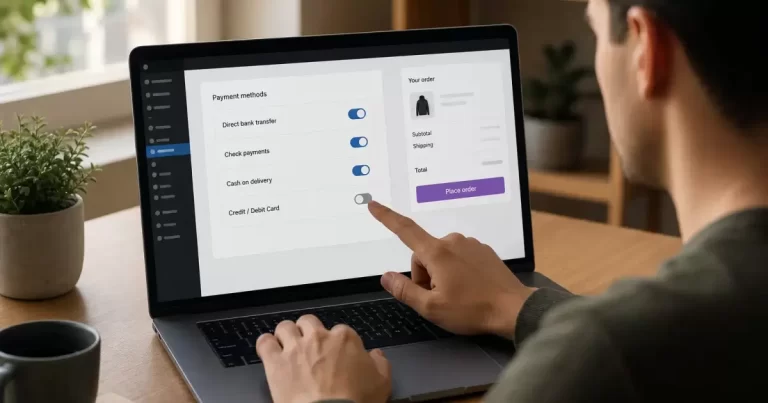
WooCommerce includes manual methods such as direct bank transfer, cheque and cash on delivery. These methods require reconciliation by staff. The core method itself does not impose a processing fee, but bank, provider and operational charges may still apply.
Automated payment methods require a merchant relationship with an external payment service provider. When evaluating these services, distinguish between plugin software costs and payment handling expenses:
- Plugin Licensing: While many basic gateway extensions are available without upfront software fees, premium options or extensions supporting specialized subscription rules often require an ongoing annual license for technical updates and support.
- Merchant Account Charges: Processors assess per-transaction interchange fees, percentage cuts, and occasionally fixed monthly subscription or account maintenance fees.
- Currency and Geographic Constraints: Payment processors limit support based on merchant location and operating currency. A gateway operating only in US dollars or specific jurisdictions will reject onboarding for stores established in other countries.
Reviewing these factors early prevents technical rework. It also ensures that transaction receipts match the bookkeeping workflow mapped out in your WordPress payment plugin order reconciliation system.
Hypothetical Implementation Plan: The Regional Specialty Merchant
To examine how checkout decisions operate under realistic constraints, consider a hypothetical regional artisan supply business named Northpine Crafts. This illustrative scenario represents an operational plan rather than a case study.
Northpine Crafts sells ceramic kits and craft subscriptions. They currently accept manual e-transfers, marking orders paid after inspecting their banking portal. As sales volume grows, manual verification creates fulfillment delays, and they decide to deploy card processing.
For this hypothetical shop, automated recurring charges require a gateway and subscription extension that support the intended billing model. Provider-managed payment tokens should be used; raw card numbers should not be stored in WordPress.
Their rollout plan proceeds through distinct phases:
- Establish the merchant account with the chosen processing network and verify regional account activation.
- Install the processing extension on a non-public staging site, leaving live transactional tools untouched.
- Apply test API keys and perform simulated checkouts for one-time and subscription cart combinations.
- Configure automated webhooks so order statuses transition properly from pending to processing without human intervention.
Pre-Flight Verification and Failure Checks
Never assume an automated payment pipeline functions simply because a gateway reports an active connection status. Controlled tests must include intentional failure checks to ensure edge cases fail gracefully without stranding customer funds or corrupting order tables.
| Verification Test | Expected System Behaviour | Failure Indicator to Investigate |
|---|---|---|
| Invalid Card Expiration | Clear field error; checkout halted; order record remains uncreated or unpaid. | Page reloads with empty fields; unhandled script errors; silent white screen. |
| Network Timeout / Abandonment | Order marked Pending Payment; inventory held temporarily based on store rules. | Order status automatically advances to Processing without received funds. |
| Webhook Delivery Failure | Inspect documented webhook retries and reconciliation tools; confirm the order can be recovered without a duplicate charge. | Funds settle at processor, but WordPress order remains permanently Pending. |
Canada Create™ builds and optimizes WordPress sites for Toronto businesses. Tell us your goals and we will recommend the right setup.
If automated webhooks fail to reach your server due to strict firewall rules or bad endpoint routing, order statuses will stall. Always verify communication logs on both the payment processor portal and your WordPress backend before accepting public traffic.
Managing Controlled Rollouts and Replacement Order
When upgrading from an older gateway, changing payment processors, or introducing a new model, maintaining transactional continuity is critical. Disabling an existing payment channel before confirming the operational status of the replacement can stop sales entirely.
Follow a disciplined sequence for configuration changes:
- Verify the Replacement Mechanism First: Fully configure the new gateway with test credentials and validate synthetic transactions before making the method visible on the production checkout screen.
- Retain Legacy Methods Temporarily: Keep secondary payment methods visible during initial deployment. If a shopper encounters an unexpected browser conflict with a new integrated form, an alternative hosted or manual option prevents total cart abandonment.
- Audit Order Webhooks Under Production Traffic: Once live keys are enabled, place an authentic micro-transaction using a real payment card. Verify that the processor successfully notifies your WordPress installation and that the order moves to processing immediately.
- Deactivate Outdated Gateways: Only after live authorizations, captures, and automated status updates succeed should you retire old payment extensions. Keep a record of the change as part of your broader control over WordPress automatic updates and core maintenance schedule.
Card Payment Gateway Readiness Checklist
Before launching credit card capabilities on your public checkout page, confirm each requirement below:
- Hosting environment enforces valid HTTPS across all site pathways, not merely checkout URLs.
- Merchant processor account is active and verified for your specific operational currency and region.
- Plugin licensing is confirmed to receive ongoing security patches and API updates.
- Test modes were verified using vendor-supplied test card numbers for approvals, declines, and postal code mismatches.
- Webhook notification endpoints are tested and receiving event signals through any active security plugins or firewalls.
- A real-money test transaction has been executed, verified in the processor ledger, and successfully refunded.
Next Steps for Your Store
Review your current checkout conversion and support inquiries. If shoppers frequently contact you regarding payment confusion or abandoned carts, evaluate whether an integrated or hosted gateway matches your team’s maintenance capabilities. Begin by setting up a staging environment to audit potential gateway extensions against your existing theme and active plugins, ensuring your hosting stack meets the processor’s minimum technical requirements before adjusting production settings.
Frequently Asked Questions
How do I accept credit cards on WordPress?
Use a payment gateway such as Stripe, PayPal, Square or Moneris through WooCommerce or a form plugin.
Which checkout model is safest?
Hosted or embedded fields from the gateway keep card data off your server and reduce PCI scope.
What fees apply to card payments in Canada?
Gateways charge a percentage plus a fixed fee; check each provider’s current rates.
Who can set up payments?
Our ecommerce website team.