Image zoom should help a visitor inspect something that matters: stitching on a product, small labels in a diagram or details in a portfolio photograph. When clicking does nothing, the enlarged picture looks soft or a phone becomes difficult to navigate, adding another plugin is rarely the best first diagnostic step.
Start by identifying the failure, then change one thing at a time on a test copy. This guide focuses on repairing an existing WordPress image interaction. Before changing settings, save the affected post and record which theme, block or plugin currently controls its images.
Define what the image is supposed to do
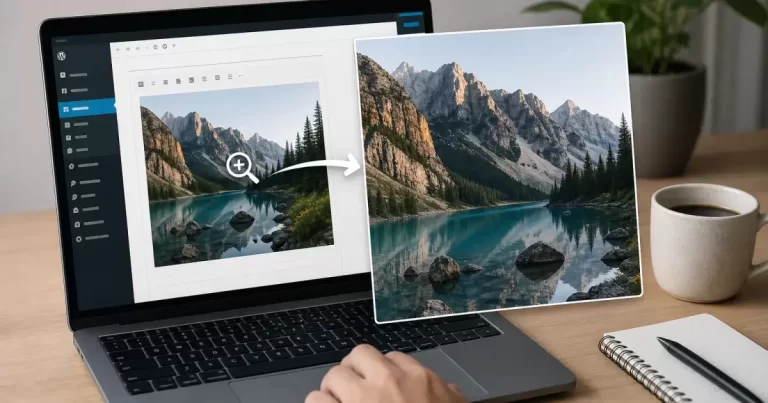
A lightbox opens a larger view over the page. A magnifier enlarges a selected area while the visitor moves across the image. A decorative scale effect simply makes the displayed element bigger. These behaviours solve different problems, so “zoom does not work” is not yet a useful diagnosis.
Write down the expected action and actual result. For example: tapping a product photograph should open a larger view, but it currently opens the media file in another tab. Record the device and browser too. That description gives you a repeatable test instead of an open-ended search through settings.
Find the component that owns the interaction
Open the affected content in its editor and select the image itself. Determine whether it is a standard Image block, a gallery item, a page-builder widget or part of a store gallery. A setting for one component will not necessarily affect the others.
The WordPress Image block documentation describes an Enlarge on click option in the image-link controls. It opens a lightbox without taking the visitor away from the page. Older interfaces may use different wording or placement, so check the documentation against the editor you actually have.
Developers can also control lightbox availability through theme lightbox settings. If the expected option is missing, investigate the theme and block configuration before assuming the installation needs another extension. Avoid changing global settings merely to repair one photograph.
When the enlarged photograph is blurry
Inspect the actual file opened by the zoom feature. A small thumbnail can look acceptable inside a narrow article column but reveal obvious softness when stretched across a monitor. Compare that file with the original upload, including its pixel dimensions and the amount of visible detail.
If the original is sharp but the enlarged view is soft, investigate which image size the component requests. If the original is already blurred or heavily compressed, changing the zoom setting cannot recover the missing information. Replace the source with a better photograph or export before adjusting presentation.
Judge the result using the detail the visitor needs. For a fabric photograph, inspect texture; for a screenshot, check whether labels are readable. Do not enlarge every source indiscriminately. A very large file that reveals no additional useful detail creates download work without improving the experience.
When clicking does nothing or opens two overlays
Check whether the image has an ordinary destination link competing with the intended interaction. Then list the components capable of handling image clicks: the theme, a builder and any gallery or lightbox extensions. Two systems listening to the same click can produce confusing behaviour.
On a staging copy, test with a single intended handler. Disable the competing feature through its own settings where possible, rather than removing unrelated functionality. Keep notes after each change. If the problem disappears, restore the other settings individually until the responsible combination becomes clear.
If nothing changes, inspect the browser console for script errors and the network panel for missing assets. These are clues, not permission to delete scripts broadly. A developer should trace the failing request or error to its owner and test a targeted correction before deploying it.
When desktop works but mobile fails
A mouse-hover interaction needs a deliberate alternative on a touchscreen. Test the actual phone experience: one tap to open, an obvious control to close and a clear way back to the article. Confirm that trying to scroll does not repeatedly trigger the magnifier.
Check both portrait and landscape orientation. Important image detail should remain reachable, while controls should stay visible without covering the content being inspected. If a magnifier makes the phone experience awkward, use a simpler enlarged view for that context instead of forcing identical behaviour everywhere.
Also test keyboard access. Can a visitor reach the trigger, open the image, locate the close control and return to the content? Treat these as acceptance checks for the chosen component. A visually attractive overlay is unfinished if someone cannot operate or dismiss it.
When the enlarged view loads slowly
Separate the initial page load from the additional request made when opening the image. Use the network panel to identify the file transferred and its size. Then compare the same interaction before and after a targeted image export or configuration change.
Keep a sharp source appropriate for the inspection task and an efficient preview for the page. Compression should be checked visually at the enlargement people will use. Save the original separately so you can revise the export without repeatedly recompressing an already degraded copy.
If a repair appears in the editor but not publicly, clear only the relevant page or image cache and retest while logged out. Do not disable caching across the entire website simply because one component shows an older asset.
Choose an extension only when a requirement remains
A specialized tool may be appropriate when you need a genuine magnifying lens or a gallery interaction your existing component cannot provide. For example, the WP Image Zoom listing describes magnifying functionality. Read its current compatibility notes and test your exact gallery before adopting it.
Complete the repair with a short acceptance record: clear source image, correct click behaviour, usable mobile view, working keyboard controls and acceptable loading. Save the settings that passed. Canada Create™ can help evaluate image interactions as part of a website design review, with the emphasis on what visitors need to see and do.
Frequently Asked Questions
Why is my WordPress image zoom blurry?
The zoom is loading a smaller image size. Upload larger originals and make sure the gallery uses the full-size image for zoom.
Why doesn’t image zoom work on mobile?
Many zoom scripts rely on hover, which phones do not have. Use tap-to-open lightbox galleries instead.
Does image zoom slow down my site?
It can if it loads large files on page load. Load full-size images only when the user taps.
Who can fix image and gallery issues on WordPress?
Our WordPress development team fixes galleries without hurting speed.