
Toronto · Property manager CRM
Property manager CRM in Toronto
We set up CS+ so every owner enquiry, board RFP, referral partner and new mandate sits in one system beside your property management software, in your firm's name.
A CRM for property management firms in Toronto and the GTA, built on CS+: owner pipelines, condo board proposals, referral partners and onboarding, for management companies across Canada.
- BBB A+ accredited
- 18 years in business
- Mon to Fri 9 to 6, Sat 10 to 2
Get a custom proposal for your property manager CRM
Tell us how owner enquiries, proposals and onboarding are tracked today and which management software you run. We reply within one business day.
Please do not share passwords or other sensitive details here. We never sell your contact information and we comply with Canadian privacy law
(privacy policy).
Tracked owner enquiries, RFPs and referrals in a property manager CRM
Every owner enquiry tracked
Landlord, investor, board and commercial enquiries in one pipeline with the source and next step recorded.
Board RFPs on the calendar
Questions deadlines, site tours, interviews and decision meetings visible to the whole team.
Referral partners in the open
Realtors, lawyers, accountants and lenders recorded with every owner they sent and what became of it.
Growth reports by door count
Mandates won and lost by source and portfolio type, beside the software that runs your buildings.
What is included in a property manager CRM
We choose the parts after a free review of how your firm wins and onboards owners. These are the pieces management firms use most.
- Owner and investor pipelineStages from enquiry to proposal to signed mandate, with door count, property type and lease end fields.
- Condo board pipelineCorporation records, board roles, AGM dates, RFP deadlines and proposal versions.
- Commercial pipelineSeparate stages for plazas, office and industrial owners and their asset managers.
- Referral partner recordsRealtors, lawyers, accountants and lenders with referrals sent, outcomes and last contact.
- Onboarding checklistsTask templates by mandate type created automatically when an owner signs.
- Enquiry routingOwner, tenant, applicant and vendor enquiries sorted to the right team as they arrive.
- Consent based email and textTemplates for owners and partners with consent, sender identification and unsubscribe recorded.
- Growth reportingEnquiries, proposals, mandates and lost reasons by source, team member and portfolio type.
Property manager CRM: fees quoted in writing
Our fees are quoted in writing after a free review. CS+ licences are paid separately and shown apart from our setup and support fees.
Owner pipeline setup
Quoted in writing
Residential firms tracking landlords and investors
- Owner pipeline and fields
- Website and inbox capture
- Follow-up reminders
- Source reporting
Board and commercial pipelines
Quoted in writing
Firms bidding on condo corporations or commercial buildings
- Corporation and board records
- RFP date tracking
- Proposal stages
- Handover checklists
Partner and onboarding
Quoted in writing
Firms growing through referrals
- Referral partner records
- Mandate onboarding templates
- Owner relationship notes
- Partner reports
Connected CRM
Quoted in writing
Firms linking CS+ to their management software
- Integration where available
- Enquiry routing
- Role based access
- Monthly report review
Ad spend and software licences are paid to the platform directly and shown separately from our fees.
Property manager CRM
Every owner, board and referral partner in one place
A property manager CRM is the system a management firm uses to win and keep owners: every landlord, investor, condo board and commercial owner who might hand you a building, every realtor or lawyer who sends them, every proposal in progress and every new mandate being onboarded. It is for residential rental managers, condo management firms, commercial and industrial property managers and furnished rental operators who already run their portfolio in property management software but still track growth in inboxes, notebooks and spreadsheets. Canada Create is a Toronto digital agency at 126 Willowdale Avenue, Suite 3, serving businesses across Canada, and we set this up on CS+, our CRM, as part of our CRM and automation services.
- Why management firms go looking for a CRM
- A CRM is not your property management software
- An owner and investor pipeline
- Condo board RFPs and management proposals
- Referral partners who send owners your way
- Onboarding new mandates and keeping owners
- Routing tenant and applicant enquiries
- Reporting by source and portfolio type
- Licensing, rental ad rules and privacy
- How we set up CS+ for a management firm
- What a property manager CRM costs
- Choosing a CRM partner for a management firm
- Book a review of your owner pipeline and property manager CRM
Why management firms go looking for a CRM
Firm owners usually type “property management CRM” or “property management lead tracking” into a search bar after something slips. An investor who owns four condo units downtown filled in the website form on a Friday, nobody called back until Tuesday, and by then she had signed with another manager. A condo board sent an RFP to the general inbox and the deadline passed before anyone on the business development side saw it. A portfolio manager left and took the only list of owners who had asked to be called back after their tenant moved out.
The moments that start the search
- Owner enquiries arrive through the website, the phone, referral partners and the leasing inbox, and nobody can say how many came in last quarter.
- Management proposals live as attachments in one person’s sent folder with no follow-up date.
- The firm cannot tell which realtors and accountants actually send owners and which only ask for favours.
- Onboarding a new building depends on one coordinator remembering every step.
- The principal wants growth numbers by door count and portfolio type, and the only answer is a guess.
What owners and boards judge you on
When a landlord or a condo board compares managers, three things decide it: how quickly and clearly you respond, how good your reporting looks, and whether they trust you with their building and their tenants. A CRM helps with all three before the owner has signed anything. It makes sure every enquiry gets a recorded reply, every proposal gets a follow-up on the date promised, and every conversation about fees, repairs approval limits or reporting format is written down where the next person on your team can read it.

A CRM is not your property management software
Your property management software is, and should stay, the system of record for the buildings you already manage. It holds the rent roll, trust or operating accounts, leases, owner statements, work orders, vendor invoices and the tenant and owner portals. Nothing we set up replaces it, and we would advise against any plan that tries to run accounting in a CRM.
CS+ covers the part your software was never built for: people and buildings that are not under management yet, and the relationships around the ones that are. A prospective owner has no unit in your ledger. A condo board in an RFP process has no account. A mortgage broker who refers investors is not a tenant, an owner or a vendor. Those records need pipeline stages, tasks, follow-up dates and a history of every call and email, which is what a CRM does.
Which system owns what
- Property management software: units, leases, rent, deposits held, maintenance, owner statements, accounting and tenant portals.
- CS+: prospects, proposals, board RFPs, referral partners, onboarding tasks, owner relationship notes, marketing consent and growth reporting.
- Both, linked: the owner’s contact details and the buildings they own, with one system named as the place where changes are made.
Connecting the two
Where your software allows an export or an integration, we connect it so that a signed mandate in CS+ can start the property setup on the operations side, or so that owner contact changes do not have to be typed twice. What is possible depends on the software and its access options, so we look at it during the free review and the connection work is quoted in writing. A residential sales team that also lists and sells for investor clients may be better served by our CRM for realtors and sales teams, which is built around buyers, sellers and showings rather than management mandates.

An owner and investor pipeline
The core of a property manager CRM is a pipeline that follows an owner from first enquiry to a building under management. We build the stages around how your firm actually sells, and most management firms will see something close to this.
- New enquiry: an owner or investor asks about management, with the source recorded.
- Discovery call: unit count, building type, location, current tenants, how the property is run now and what went wrong.
- Property review: a walkthrough or a desk review of the unit, the multiplex or the building.
- Rental analysis or proposal sent: the document, the version and the date it went out.
- Follow-up and questions: fee questions, scope questions, references requested.
- Signed management agreement: the mandate is won and onboarding starts.
- Not now: the owner is not ready, with a reason and a date to come back.
Fields that matter to a management firm
Generic CRM templates ask for company size and industry. A management firm needs different fields: number of doors, property type (condo unit, house, duplex or triplex, small multiplex, purpose built rental, mixed use, commercial or industrial), city and neighbourhood, whether units are tenanted or vacant, when the current lease ends, whether the owner self manages or is leaving another manager, and whether the owner lives nearby or out of province. These fields drive who gets the lead, how quickly someone calls, and what the proposal includes.
Owners who say not yet
Many owner enquiries are early. A landlord tired of midnight calls may only switch when the current tenant moves out, and an accidental landlord who inherited a house may wait until the estate is settled. The pipeline keeps those owners with a reason and a return date tied to their own timeline, so the follow-up happens when their situation changes rather than when someone remembers. Investors who are still buying go into a separate list with the realtor who is helping them, because the right moment to talk management is just before closing.
Commercial and industrial owners often move through a longer, multi-party process with asset managers and brokers involved. Firms that manage plazas, office buildings or industrial units can run a separate commercial pipeline, and teams whose main work is leasing and sales of commercial space may also look at our commercial real estate CRM setup.
Condo board RFPs and management proposals
Winning a condominium corporation is a different sale from winning a landlord. The buyer is a board of volunteer directors, the process usually runs through a request for proposals with fixed dates, and the decision is made at a board meeting after interviews. A lost RFP can come back years later when the board changes or the incumbent manager’s service slips. A CRM built for condo management treats each corporation as a long relationship, not a single deal.
What we record for each corporation
- The building, its address, unit count, age and type (high rise, townhouse complex, mixed use, commercial condo).
- Board members and their roles, with the date of the last annual general meeting so you know when the board may change.
- The incumbent manager, if known, and what owners have said about service.
- RFP dates: questions deadline, site tour, submission deadline, interview and decision meeting.
- Each proposal version, the people who worked on it and the questions the board asked.
- The outcome and the reason, whether the board stayed, chose another firm or chose you.
Proposal stages and handover
The board pipeline has its own stages: building identified, relationship started, RFP received, site tour booked, proposal submitted, interview, decision, handover. When a board appoints you, the handover from the outgoing manager is often the hardest part, with records, keys, vendor arrangements and owner lists to collect. CS+ turns that into a checklist with owners and due dates so the board sees an organized start from the first week. When you lose, the record stays open with a follow-up after the next AGM, because boards remember who was professional during the process.
Referral partners who send owners your way
For many management firms, many of the owners worth having do not come from ads at all. They come from realtors whose investor clients just closed on a rental condo, real estate lawyers handling a purchase or an estate, accountants who see rental income on a client’s return, and mortgage brokers and lenders financing investment properties. Those partners are a sales channel, and they deserve their own records in the CRM.
What a partner record holds
- The partner, their firm and the kind of owners they tend to send.
- Every referral they sent, its stage and whether it became a signed mandate.
- The last time someone from your firm spoke to them, and a reminder when it has been too long.
- Referrals you sent back, such as owners who want to sell and need a realtor, or investors who need a lender.
- Their marketing consent, so updates go only to partners who agreed to receive them.
Over a year the partner report shows who actually sends owners and who sends only tenants looking for a unit. That changes where your business development time goes. Partners who want regular market notes can receive a short owner and investor update, and our real estate newsletter service covers how that content is written and sent; the CRM side is making sure every send is logged on the partner’s record.

Onboarding new mandates and keeping owners
The first weeks after an owner signs set the tone for the whole relationship. Onboarding a rented condo unit, a vacant house and a forty unit building are very different jobs, so we build a checklist template for each mandate type and let CS+ create the tasks automatically when the pipeline moves to signed.
A typical onboarding checklist
- Owner details, banking and tax forms collected through your usual secure process, not by email attachment.
- Keys, fobs, parking and locker information logged.
- Existing leases, tenant contacts and deposits held confirmed and handed to the operations team.
- Insurance certificate, condo status documents or building records requested.
- Preferred trades and the owner’s repair approval limit recorded.
- Welcome call booked and the date of the first owner statement confirmed.
Owner relationship records
Once a property is set up in your management software, the CRM keeps the relationship side: how the owner likes to be contacted, what they complained about, whether they own other properties you do not manage yet, whether they plan to buy again or sell, and the anniversary of the mandate. Portfolio managers get a reminder to call owners who have not heard from the firm outside of statements. When an owner mentions buying another unit, the record moves back into the pipeline as an expansion opportunity, which is often the quickest new door a firm can add.
Owner retention also depends on catching problems early. Complaints, slow repair approvals and disputed charges can be logged as relationship issues with a follow-up owner and a resolution date, so the principal sees which owners are unhappy before one of them asks for the handover file.
Routing tenant and applicant enquiries
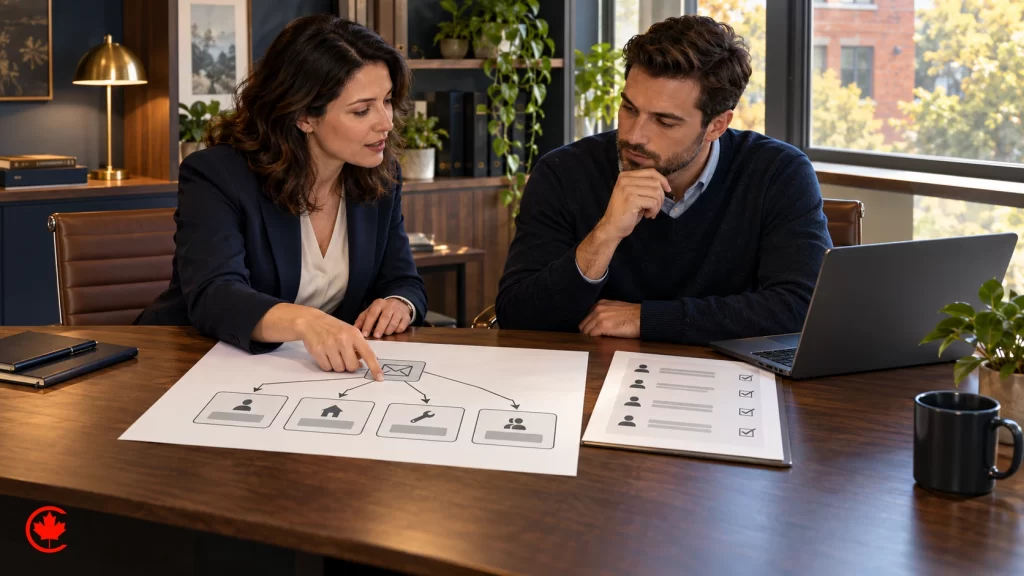
A management firm’s inboxes are full of tenant traffic: people asking whether a two bedroom is still available, applicants sending documents, current tenants reporting a leak. Owner enquiries get buried in that stream. Part of the CRM setup is sorting enquiries as they arrive so each type goes to the right place.
How enquiries are sorted
- Owner and board enquiries go straight into the business development pipeline with an alert to the right person.
- Prospective tenants asking about a vacancy go to leasing, grouped by building, with replies tracked.
- Current tenant maintenance requests are pointed to the maintenance portal in your management software, where work orders belong.
- Vendors and trades asking for work are filed separately so they do not clutter either pipeline.
Applicant records hold only what leasing needs to reply and book a viewing. Screening documents, credit details and income information stay in the system your firm uses for applications, not in marketing records. Calls that arrive after hours can be answered and sorted with an AI receptionist for after-hours calls that asks whether the caller is an owner, a tenant or an applicant and logs the call in CS+.
Email and text replies to owners, partners and prospective tenants go out from CS+ with templates your team can edit, and every message is logged on the person’s record. Commercial messages are sent only with consent and carry your identification and an unsubscribe option.
Reporting by source and portfolio type
A principal running a management firm wants to know where the next hundred doors will come from. The reports we build in CS+ answer that in the firm’s own terms rather than generic sales metrics.
- Owner enquiries by where they came from, such as the website, referral partner, board network, existing owner, ads, events.
- Proposals sent and signed mandates by portfolio type: condo units, houses, multiplexes, purpose built rentals, condo corporations, commercial.
- Doors added and doors lost by month, with reasons for losses.
- How long enquiries wait for a first reply and for a proposal, by team member.
- Lost proposal reasons: fee level, scope, owner chose to self manage, board stayed with the incumbent.
- Referral partner performance, from referrals sent to mandates signed.
The CRM is one part of a firm’s growth. Our property management marketing plan covers the full mix of owner, board and tenant marketing, and the wider real estate marketing services page shows how the pieces fit for agents, brokers, developers and managers. Three companion pages in this group go deeper on their own subjects: Property manager leads covers campaigns that bring owners to you, Property management website design covers the site those owners land on, and SEO for property managers covers organic search. This page stays on the system that catches and keeps them.
Licensing, rental ad rules and privacy
Two licensing points shape the records and templates in a management firm’s CRM. In many provinces, a firm that leases or rents units for owners may come under real estate licensing rules, so proposal templates and email signatures in CS+ can carry the registration details your firm is required to show. In Ontario, condominium management is licensed by the CMRAO, which is worth reflecting on corporation records and in board proposal templates.
Stored reply templates for vacancy enquiries respect human rights rules: no saved line says who may or may not rent a unit. Where the firm manages residential units in Ontario, the Residential Tenancies Act sits behind many tenant conversations, which is one more reason disputes are handled in your operations system rather than in sales templates. This is a marketing observation, not legal advice.
Consent and personal information
CASL applies to commercial email and texts, so CS+ records consent for each owner, partner and prospect, identifies your firm in every message and carries an unsubscribe that is honoured automatically. PIPEDA sets general expectations for how personal information is collected, used and protected. In practice that means role based access so leasing staff do not see owner banking notes, no sensitive tenant details in analytics or ad audiences, and a clear rule that screening documents stay outside the CRM. Our email marketing service covers campaign sends to owners who have agreed to receive them.
How we set up CS+ for a management firm
We start with a free review. You show us where owner enquiries, board RFPs, referral notes and onboarding checklists live today, which management software you run and how many people touch business development. We then send a custom proposal with the pipelines, fields, roles, automations, reports and any integration, and our fees quoted in writing.
The build follows agreed milestones: pipelines and fields first, then forms and inbox routing, then onboarding templates, then reports. We import your existing owner lists, partner contacts and open proposals after cleaning duplicates, so the CRM starts with your history rather than an empty screen. Business development, leasing and portfolio managers are trained on the parts they use. After launch we review the reports with you every month and adjust stages and automations as your firm grows. The CS+ account and every record sit in your firm’s name.
What a property manager CRM costs
Our fees for a property manager CRM are quoted in writing after the free review. CS+ licences are shown separately from our setup and support fees. The main things that change the price for a management firm are:
- How many pipelines you need: residential owners only, or residential, condo boards and commercial separately.
- The state of your existing data: a tidy owner list against years of spreadsheets, sent folders and a departed manager’s notes.
- Integration with your management software, which depends on what that software allows.
- Number of users and roles across business development, leasing, onboarding and portfolio management.
- Enquiry routing from several inboxes, listing replies and phone lines.
- Bilingual templates for firms serving owners in English and French.
Choosing a CRM partner for a management firm
Ask these questions of anyone who offers to set up a CRM for your firm, including us.
- Who owns the accounts? The answer should be you: the CS+ account, the owner records and the partner list in your firm’s name.
- Do they understand the difference between a mandate and a lease? A partner who only knows sales CRMs will try to run tenants through an owner pipeline.
- Will they leave your management software alone? The CRM should connect to it, not compete with it.
- How do they handle condo board processes? RFP dates, board turnover and handovers need their own stages.
- How do they keep tenant and applicant data out of marketing? Ask about roles, consent records and what is never stored.
- Who trains your portfolio managers? Owner relationship notes only work if the people who talk to owners use them.
Book a review of your owner pipeline and property manager CRM
Book a free CRM review and bring the owner list, this year’s proposals and a rough picture of the inboxes where owner enquiries land. Canada Create will map them into pipelines, partner records and onboarding checklists in CS+ and send back a custom proposal with fees stated.
- Toronto office: (416) 273-9030
- Toll-free +1 (800) 808-9235, Mon to Fri 9 to 6, Sat 10 to 2
- Online: our contact form for a CRM review
- Visit: 126 Willowdale Avenue, Suite 3, Toronto
We reply within one business day. You can read more about our agency and how we work before you call; we work with management firms across Canada in English and French.
Talk to a strategist
Ready when you are?
Request a custom proposal
Tell us your goals, budget and timeline. You get a custom proposal and a named strategist, so your next stage of growth starts now.
Review, proposal, build and import for your property manager CRM
Clear steps, fees quoted in writing and the CS+ account in your firm's name.
- Free review First call
We look at your owner lists, sent proposals, inboxes and management software.
- Custom proposal Written proposal
Pipelines, fields, roles, routing, reports and any integration, with fees quoted in writing.
- Build and import Agreed milestones
Pipelines built, history cleaned and imported, forms connected and the team trained.
- Report review Every month
We review mandates won and lost by source and adjust stages and automations.
A Toronto agency since 2008 running your property manager CRM
Since 2008
More than 18 years of websites, search and advertising work for businesses across Canada.
BBB Accredited A+
A BBB Accredited Business with an A+ rating and zero complaints.
Toronto office
126 Willowdale Avenue, Suite 3, Toronto, serving businesses across Canada.
English and French
Our team works in English and French.
Property manager CRM questions
What does a CRM system do for a property management firm?
It tracks the work of winning and keeping owners: every landlord, investor, condo board and commercial owner who might hand you a building, every partner who sends them and every proposal in progress. New mandates move into onboarding checklists when they sign. Canada Create sets this up on CS+ in the firm's name.
How should a management firm pick a CRM for property management?
Choose one that can hold the fields a management firm needs, such as doors, property type, lease end and whether the owner self manages. It should track condo board RFP dates and referral partners and sit alongside your property management software without replacing it. Ask who sets it up, who trains the team and whether the data stays in your name.
Does a property manager CRM replace the software property managers already use?
No, the property management software stays the system of record for rent rolls, leases, owner statements, work orders and portals. The CRM covers what that software was never built for, such as prospective owners, board RFPs and referral partners. Where your software allows an export or integration, the two can be linked.
Can a property management firm get by with a free CRM?
Free tools exist, but generic templates ask for company size and industry rather than doors, building type and lease end dates. A management firm also needs pipelines for owners, boards and commercial buildings and follow up dates that the whole team can see. The real question is how much setup it takes to make any tool fit that work.
Can a property manager track owner leads in a spreadsheet instead of a CRM?
A spreadsheet works until something slips: an investor's Friday enquiry not returned until Tuesday, or a board RFP missed in the general inbox. When a portfolio manager leaves, the list of owners waiting for a call can leave too. A CRM gives each enquiry a recorded reply and a follow up date.
What does a property manager CRM cost to set up in Canada?
Setup and support fees depend on how many pipelines you need, whether onboarding templates and referral records are included and whether CS+ is connected to your management software. Canada Create quotes this in writing after a free review. CS+ licences are billed on their own, outside the setup fee.
Which property management CRM tools help with condo board RFPs?
A board pipeline with corporation records, board roles, AGM dates, RFP deadlines and proposal versions. Question deadlines, site tours and interviews then sit on a calendar the whole team can see. A missed deadline hidden in one person's inbox becomes much less likely.
How do property management CRM systems handle tenant and applicant enquiries?
Enquiry routing sorts owner, tenant, applicant and vendor messages to the right team as they arrive. Tenant and applicant requests reach the people who handle them, while owner enquiries stay in the growth pipeline. That keeps the pipeline clean and the reports by source accurate.


Owner enquiries should not wait in the leasing inbox
When owner leads sit beside tenant emails, the investor who asked on Friday signs with someone else by Tuesday. Start with a free review of how your firm tracks owners, boards and partners.