You may have heard about Google’s E-E-A-T guidelines and are curious about their implications for your WordPress website.
Google’s search algorithm and guidelines are continuously evolving to ensure that search engine results pages (SERPs) prioritize high-quality, helpful, and accurate content. While E-E-A-T is not a direct ranking factor, Google aims to display results that exhibit strong E-E-A-T.
In this article, I will clarify what E-E-A-T entails and how you can apply it to your website.
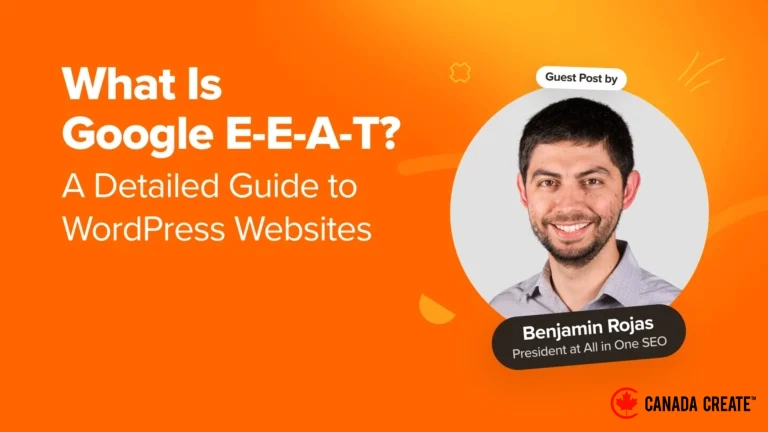
Important Note:This article is a guest contribution by Benjamin Rojas, the president of All in One SEO, the leading WordPress SEO plugin available. This expert column is published bi-weekly, featuring insights from a WordPress expert to share valuable experiences with our audience.
What Does E-E-A-T Mean?
E-E-A-T stands for Expertise, Experience, Authoritativeness, and Trustworthiness.
These four interconnected factors are essential for identifying reliable and trustworthy sources of information that rank highly in search engine results.
The ‘Experience’ component of E-E-A-T was introduced in a Google update in 2022; prior to that, it was simply referred to as E-A-T.
Here’s how each factor plays a role:
- Expertiseallows a writer to showcase a thorough understanding of a subject, particularly when they possess relevant training or qualifications.
- Experienceenables an author to create content based on personal experience, which helps them deliver more accurate and useful information.
- Authoritativenessrefers to when a writer is acknowledged by recognized experts in the field or contributes to a website known for its credibility.
- Trustworthinessis derived from impartial and objective content on a website that is clear about its sources and funding, prioritizing the safety and security of its audience.
To meet the E-E-A-T criteria, you should incorporate these elements into your WordPress website.
Keep in mind that E-E-A-T is just one aspect. To achieve high rankings, you must implement a well-rounded SEO strategy.
How Does Google E-E-A-T Impact SEO?
It’s easy for misinformation to circulate from individuals lacking expertise or experience in their topics, which undermines the trustworthiness of online content.
Google has established E-E-A-T guidelines to prevent the spread of misinformation. These principles help Google evaluate whether a webpage is a credible and trustworthy source of information.
This is especially crucial when misinformation can impact a reader’s health, safety, happiness, or financial stability. Google refers to these topics as YMYL.
What Does YMYL Mean?
YMYL, which stands for ‘Your Money or Your Life,’ is Google’s classification for topics where misinformation can have severe consequences, particularly in areas like finance and health.
This includes topics such as:
- Health and Wellness,including medical and health websites that provide health advice, medical information, drug content, fitness routines, and more.
- Finance and Money,covering financial websites that offer advice, investment insights, tax law guidance, and similar topics.
- News and Current Events,which includes sites that report on news, international events, science, politics, natural disasters, and emergency preparedness.
- Government and Law,referring to websites that educate people about legal matters, official rulings, voting processes, social services, and related issues.
- Shopping and E-commerce.websites that provide product reviews, comparisons, and sell products.
If your website addresses these topics, it’s crucial to reduce the potential harm your content may cause, ensuring users can trust the information you share.
Additionally, keep in mind that Google will be increasingly vigilant in ensuring your content is accurate and trustworthy, making it vital to showcase E-E-A-T on sites that fall under the YMYL category.
How E-E-A-T Enhances SEO
E-E-A-T is not an official ranking factor, meaning it doesn’t directly affect your site’s SEO.
Rather, it is included in Google’s Search Quality Evaluator Guidelines, a comprehensive 168-page PDF manual for Quality Raters. This global team assesses the quality of search results and provides feedback to Google to enhance their algorithms.
These elements, including E-E-A-T, can indirectly improve your SEO.
Thus, strong E-E-A-T signals can help elevate your website’s ranking in search results, particularly for competitive keywords related to YMYL topics.
Understanding E-E-A-T Levels
Regrettably, there is no method to quantify the E-E-A-T score for your website.
Google’s guidelines provide a clear understanding of what different levels of E-E-A-T look like on websites.
- Websites with very high E-E-A-T feature well-researched articles that demonstrate deep knowledge and expertise on specific topics. These authors and sites are recognized as the most reliable sources online.
- Websites exhibiting a high level of E-E-A-T present content that reflects personal experience and specialized knowledge. These pages are deemed trustworthy or highly trustworthy.
- Web pages that lack sufficient E-E-A-T may have a good reputation in other areas but fail to demonstrate expertise in their subject matter. For example, a well-known cooking website might publish an article on tax, or a reviewer might write about a restaurant they have never visited.
- Websites with the lowest E-E-A-T often appear spammy and provide a poor user experience. Their main content may be hard to access, and they might include harmful downloads.
Striving for a high level of E-E-A-T on your website is essential, and achieving this will require time and effort.
Here are some effective strategies to align with Google’s E-E-A-T content guidelines and significantly enhance your WordPress site’s SEO:
- Produce High-Quality Content That Is Valuable and Informative
- Consistently Publish Fresh Content on Your Website
- Identify and Address Gaps in Your Content
- Regularly Update Your Content to Keep It Relevant
- Incorporate Personal Experiences into Your Content
- Effectively Manage Your Website’s Online Reputation
- Highlight the Experience and Expertise of Your Business and Team
- Emphasize the Qualifications and Expertise of Individual Authors
- Enhance Author SEO with All in One SEO Tools
- Claim and Optimize Your Google Knowledge Panel
- Gain Recognition from Industry Experts
- Have Professionals Review Your Website Content
- Build Trust by Acquiring Authoritative Backlinks
- Maintain Your Site’s Technical SEO Standards
Develop High-Quality, Informative Content That Provides Value
Google’s E-E-A-T guidelines promote content that is useful, accurate, and relevant. Start by creating this type of information.
Focus on producing original content that serves the needs of your audience rather than just appealing to search engines. Aim to answer their questions and provide valuable insights.
Ensure your content is accurate, thoroughly researched, and authored by experts or knowledgeable individuals.
Structure your content effectively and adhere to best practices for writing engaging blog posts.
Begin by clearly introducing your topic, using headings to organize your content, and incorporating images and videos to enhance user engagement.
Create detailed, comprehensive articles on key topics relevant to your industry or niche. This foundational content will help you establish authority and build a strong reputation.
2. Keep Your Website Content Fresh
Experts continually find new experiences and insights to share, ensuring they always have fresh content to write about.
Regularly adding new content to your website signals to Google that it is active and well-maintained. It also reflects your ongoing learning, growth in expertise, and acquisition of new experiences.
Consistently brainstorm new content ideas and plan your editorial calendar in advance. Utilize online blog post idea generators and analyze your competitors’ websites for inspiration.
When conducting a Google search, you will often find suggestions for related topics to explore. Additionally, the ‘People also ask’ section on the search results page can provide insights into questions that people are seeking answers for.
3. Fill Knowledge Gaps in Your Content
A crucial step in creating new content for your website is to identify knowledge gaps. These are subjects that your audience is interested in but have not yet been addressed by you or your competitors.
Addressing a knowledge gap and providing fresh insights is a powerful way to showcase E-E-A-T. This could involve presenting new information that hasn’t been discussed before or offering a unique perspective based on your personal experiences.
To achieve this, you will need to conduct a content gap analysis.
For instance, you can utilize Semrush’s Keyword Gap tool to find keywords that your competitors are ranking for but you are not. This will generate a list of seed keywords to inspire your content ideas.
Next, optimize your current blog posts to address those gaps or add new articles covering those topics to your content calendar.
4. Keep Your Content Fresh
Information evolves. Content that was once accurate and valuable may not remain so over time. As a result, these articles can become outdated and attract less traffic, a phenomenon known as content decay.
Regularly review your articles and refresh any outdated or inaccurate information. It’s advisable to check and update each article on a consistent schedule, such as every six months.
Utilize SEO tools like All in One SEO to identify outdated content that requires updates. Focus on posts that have experienced a significant decline in traffic.
The Content Performance report in All in One SEO can help you pinpoint the posts that have lost the most traffic and engagement.
Leverage AIOSEO’s integrated SEO recommendations to refresh your underperforming content and improve your search engine rankings.
5. Share Personal Experiences in Your Content
It’s important to convey that your content is based on personal experiences rather than solely on online research. Share your unique, first-hand stories in your articles.
For instance, when reviewing a restaurant, describe your visit, the quality of service, and your impressions of the meal.
Google recognizes phrases like these as indicators of personal experience:
- In my experience…
- In our tests…
- When we tried…
- We found that…
If you’ve tested a product, include the measurements and statistics from your tests. Additionally, share subjective insights based on your experience with the product, such as how it felt to use, whether you enjoyed it, and specific benefits you discovered.
Use first-person pronouns like ‘I’ or ‘we’ to share your personal experiences and expertise, rather than referring to others.
Incorporate original screenshots and images in your posts, such as pictures of your equipment or the final results of your tutorials. Google values originality, which helps showcase your personal experience.
6. Manage Your Website’s Online Reputation
A brand with a poor reputation lacks credibility.
Establishing a positive brand starts with creating a high-quality website that you own and control. This helps build trust, promote yourself, and manage your online reputation effectively.
Ensure your visitors remember your brand by designing a clear and relevant logo displayed in the header. Choosing a cohesive color scheme can also enhance your website’s visual appeal.
Managing your reputation extends beyond your website to include social media and review platforms. It’s essential to monitor these channels for negative comments or reviews and respond promptly and professionally.
Enhance your website’s credibility by showcasing positive reviews and testimonials. Utilize tools like Smash Balloon Reviews Feed Pro to aggregate and display testimonials from various review platforms seamlessly on your site.
7. Highlight the Experience and Expertise of Your Business and Team
Clearly articulating your experience and expertise is essential. Be specific and truthful as you present your qualifications, experience, and accomplishments in your industry, avoiding any misrepresentation.
Many websites incorporate this information on an About page or Team page.
An About page provides visitors with insights into the purpose of your website and business, outlining its mission and values. This transparency helps set expectations for your site and fosters trust among visitors.
For multi-author websites, consider creating a Team page. This page can feature the names of your writers along with their qualifications and experience. Including individual photos of each team member or a group photo of the entire team is also recommended.
Incorporate a contact form on this page or create a dedicated Contact page, along with icons linking to your social media profiles. This transparency will help visitors trust you more, as they can easily reach out with questions or to verify information on your site.
Ensure these pages are included in your site’s navigation menu for easy accessibility.
8. Highlight the Experience and Expertise of Individual Authors
Enhance your website’s E-E-A-T by showcasing the qualifications and expertise of your authors in their profiles. Introducing readers to the individuals behind each post can significantly boost credibility.
Include E-E-A-T indicators such as education, job title, employer, and areas of expertise. This information helps Google and other search engines recognize your authors’ credentials.
This information can be automatically displayed on the posts through an author info box, allowing visitors to view qualifications without needing to navigate to your About page.
There are numerous free author bio box plugins available that can enhance the profiles of your team members.
9. Improve Author SEO with All in One SEO
The fastest way to showcase the expertise and experience of your authors is by utilizing the powerful Author SEO add-on from All in One SEO.
This tool is specifically crafted to enhance E-E-A-T by incorporating essential details like education, employer, and job title into your author bios.
You can also include areas of expertise, which helps search engines and readers recognize your knowledge on the subjects you cover.
All of this author information is formatted as schema markup, making it easier for search engines to discover and interpret when ranking your content.
Additionally, you can present this information to your website visitors using its integrated author blocks.
10. Claim Your Google Knowledge Panel
In search results, you may notice a panel on the right side of the screen that displays information about a company, individual, or product. This is known as a Google knowledge panel.
For instance, here’s a Google knowledge panel for the technology company Apple. It features the company’s logo, website, information sourced from Wikipedia, a list of related products, and much more.
Knowledge panels can also showcase author and business details from your website if you have included them using schema markup, such as through the All in One SEO Author SEO add-on mentioned earlier.
Knowledge panels enhance your search results and increase traffic to your website. They also improve brand visibility, signaling to users that Google considers your site credible and trustworthy.
When you are logged into a Google account associated with your business, Google provides an option to claim your business’s knowledge panel, allowing you to verify ownership. This feature enables you to select a prominent image for the panel and suggest edits to Google.
11. Gain Recognition from Industry Experts
E-E-A-T signals are influenced not only by the experience and qualifications of your team members but also by recognition from external experts in your field.
A simple way to achieve this is by incorporating citations from respected industry experts into your content. You can reference official studies, research papers, and even tweets or blog posts from recognized authorities.
This approach is particularly beneficial for validating the accuracy of your content on topics beyond your team’s expertise. It shows Google and your audience that you prioritize accuracy and are committed to verifying your information.
Another effective strategy is to invite an expert to contribute a guest post on your blog or to request an interview with them, which you can then publish on your site.
12. Have Experts Evaluate Your Website Content
One effective way to enhance credibility and ensure accuracy is by having experts evaluate your content. This reinforces your E-E-A-T signals by demonstrating that your information has been thoroughly fact-checked.
Utilize the Author SEO addon from All in One SEO to include a reviewer for your articles.
This is a crucial strategy for improving E-E-A-T in YMYL articles, where it is vital to show that your content is precise and current.
13. Establish Trust by Creating Authoritative Backlinks
Backlinks play a vital role in developing E-E-A-T content because they indicate that others consider your content valuable and informative.
These links connect other websites back to yours. When a reputable website links to your content, it serves as a strong endorsement of your expertise in the field.
The greater the number of backlinks to one of your posts, the more authoritative it is perceived to be.
You can increase the number of backlinks to your site by producing high-quality content that people are eager to share with their networks and by fostering relationships with influencers and other website owners in your niche.
14. Prioritize Your Site’s Technical SEO
Google will not consider your website trustworthy if your technical SEO is lacking. Addressing these technical aspects of your site is crucial for ensuring a safe environment for your visitors and delivering a positive user experience.
For instance, if your website processes payments, it is essential to install an SSL certificate to secure these transactions. An unsecured connection sends a negative signal regarding E-E-A-T.
The same principle applies to other technical problems that can harm user experience, such as 404 errors and neglecting to include alt text for your images.
To prevent these issues from impacting your site’s ranking, it’s important to perform regular technical SEO audits.
You can identify necessary actions by using the SEO audit checklist from All in One SEO and reviewing reports in Google Search Console.
We hope this article has helped you understand how to apply Google’s E-E-A-T guidelines to enhance your website’s ranking. You may also find our guide on improving WordPress performance or our expert recommendations for the best analytics tools for WordPress users useful.
If you enjoyed this article, please consider subscribing to our YouTube Channel for WordPress video tutorials. You can also connect with us on Twitter and Facebook.