
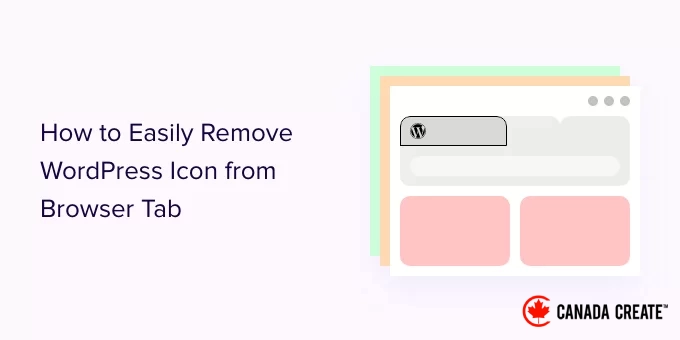
The WordPress icon, commonly referred to as the favicon, is automatically displayed in the browser tab for your website.
While it serves its purpose during the development of your site, many website owners choose to replace or eliminate it to better align with their brand identity.
Having created numerous websites on WordPress, including blogs and eCommerce platforms, we always prioritize replacing the default icon with a favicon that accurately represents our brand.
This straightforward adjustment has significantly enhanced our brand identity, increased the trustworthiness of our sites, and elevated their overall visual appeal.
In this article, we will guide you through the process of easily removing the WordPress icon from your browser tab.
Reasons to Remove the WordPress Icon from Your Browser Tab
The WordPress icon in your browser tab can give your website a generic and unprofessional appearance. With many tabs open, users may find your website title difficult to see.
When only the WordPress logo is visible in the tab, users may struggle to recognize your site among numerous others.
By removing the WordPress icon and adding a favicon (your site icon), you can showcase your brand logo and enhance the user experience for your visitors.
A favicon is a small image that appears next to your website’s title in the browser tab.
The favicon helps users quickly identify your website and switch between tabs effortlessly. Regular visitors will even develop a strong recognition for that small image in their browser.
Now, let’s explore how to easily remove the WordPress icon from your browser tab. We will discuss two methods, allowing you to choose the one that suits you best:
- Method 1: Remove the WordPress Icon Without a Plugin
- Method 2: Remove the WordPress Icon Using a Plugin
- Bonus: How to Add Browser Tab Notifications in WordPress
- Frequently Asked Questions
Method 1: Remove the WordPress Icon Without a Plugin
If you are using a block theme in WordPress, you can use this method to remove the WordPress icon from your browser tab.
As of this writing, the default WordPress theme, Twenty Twenty-Three, does not include a site icon block to change your favicon from the WordPress logo.
First, navigate to Appearance » Editor in your WordPress admin dashboard to access the full site editor.
Unfortunately, you cannot change your favicon or remove the WordPress icon from your browser tab directly from this location. To do so, copy and paste the following URL into your browser to access the theme customizer:
https://example.com/wp-admin/customize.php
Make sure to replace ‘example.com’ with your own website’s domain name.
This link will direct you to the Theme Customizer, where you should click on the ‘Site Identity’ tab.
Once there, scroll down to find the ‘Site Icon’ section.
Here, simply click the ‘Select Site Icon’ button to access the WordPress media library.
You can now choose any image you wish to use as a favicon to replace the WordPress icon in your browser tab.
For detailed instructions on creating a favicon, check out our tutorial on adding a favicon in WordPress. If the image you selected exceeds the recommended size, WordPress will give you the option to crop it.
Once you are happy with your selection, click the ‘Publish’ button at the top.
Removing the WordPress Icon in a Theme without Full-Site Editing
If you are using a classic theme, you can go directly to the Theme Customizer at Appearance » Customizeto remove the WordPress icon from your browser tab.
For websites that do not support the full-site editor, the WordPress theme customizer provides options to modify various aspects of your site, including the favicon, typography, default colors, footer, and more.
In the Theme Customizer, navigate to the ‘Site Identity’ section. This process is similar to what we previously described. You can easily remove the WordPress icon by uploading a custom site icon of your preference.
Once you are satisfied with your selection, click the ‘Publish’ button to save your changes.
Method 2: Removing the WordPress Icon with a Plugin
Alternatively, you can utilize a plugin to eliminate the WordPress icon and substitute it with your chosen favicon.
Begin by installing and activating the Heroic Favicon Generator plugin. For detailed instructions, refer to our beginner’s guide on how to install a WordPress plugin.
Disclaimer: This plugin has not been tested with the latest version of WordPress. However, we found it to function well with both classic and block themes. If you have concerns, please check our guide on using outdated plugins.
After activation, go to the Settings » Heroic Favicon Generator page in your WordPress dashboard and click the ‘Select Favicon’ button.
This will take you to the WordPress media library, where you can select and upload any image you wish to use as a favicon.
After that, scroll down to the ‘Previews’ section to see how the favicon will appear on your WordPress site.
Once you are happy with the preview, scroll down and click the ‘Save Changes’ button.
You have successfully replaced the WordPress icon with your new favicon.
Bonus: Implement Browser Tab Notifications in WordPress
In addition to adding a custom favicon to attract user attention, you can also implement browser tab notifications to encourage return visits to your website.
This notification is a message that appears in your browser tab when the user is on a different website, helping to reduce cart abandonment and increase traffic to your site.
You can easily set up browser tab notifications in WordPress using WPCode, the leading plugin for adding custom code snippets safely and effortlessly.
After installing the plugin, simply navigate to the Code Snippets » + Add Snippet page in your WordPress admin sidebar and click ‘Use Snippet’ under the ‘Add Your Custom Code (New Snippet)’ option.
This will direct you to the ‘Create Custom Snippet’ page, where you need to choose ‘JavaScript Snippet’ as the ‘Code Type’ from the dropdown menu on the right.
Next, insert the following custom code into the ‘Code Preview’ box:
let count = 0;
const title = document.title;
function changeTitle() { count++; var newTitle = '(' + count + ') ' + title; document.title = newTitle;
}
function newUpdate() { const update = setInterval(changeTitle, 2000);
}
document.addEventListener('DOMContentLoaded', newUpdate );
Finally, click the ‘Save Snippet’ button and switch the ‘Inactive’ toggle to ‘Active’.
You have successfully added a browser tab notification to your website that will display the number of new updates.
If you wish to show a message or change favicons in your browser tab, check out our complete tutorial on how to easily add browser tab notifications in WordPress.
Frequently Asked Questions
Here are some common questions from our readers regarding the removal of the WordPress icon from the browser tab:
What does the WordPress icon in the browser tab represent?
The small logo displayed next to the page title in your browser tab is known as a favicon or site icon.
In WordPress, you can usually set this underSettings » General (orAppearance » Customize » Site Identity). If you haven’t changed it, WordPress will use its default logo.
Although it may seem insignificant, this small image helps users easily identify your site among multiple tabs. Keeping the default icon can make your site appear generic and negatively impact your brand recognition.
Why is the WordPress icon still visible after I removed it?
If you’ve updated or deleted the WordPress favicon but it continues to appear, don’t worry—this is a common issue. It typically occurs because your browser or website is still displaying a cached version of the previous icon.
Here are a few steps you can take:
- Clear your browser cache and site cache:Browsers often aggressively store favicon images. Try clearing your browser cache or refreshing the page usingCtrl + F5 (Windows) or Command + Shift + R (Mac).
- Purge your CDN cache:If your website is linked to a content delivery network (CDN) like Cloudflare, it may be showing an outdated version of your favicon. Log into your CDN account and clear the cache to ensure your new icon appears.
- Check for theme or plugin overrides:Certain themes and plugins have their own favicon settings that can replace your global site icon. Verify that there isn’t a favicon configured in your theme options or by a plugin, such as a page builder or SEO tool.
- Remove hard-coded favicon links:In some instances, a favicon may be hard-coded in your theme’s header.php file. Search for any
ortags and remove or modify them as necessary.
After implementing these changes, refresh your site in an incognito or private browser window to check if the new favicon is displayed correctly.
What steps should I follow to ensure my favicon appears correctly on all devices?
Using the appropriate favicon format and size is crucial for ensuring it displays correctly across all devices and browsers. If your favicon appears blurry or fails to update properly, adhere to these best practices:
- Use square images with a minimum size of 512×512 pixels.
- Include an
.icofile for compatibility - Add the appropriate
HTML tags in the header of your website - Clear both your browser and site caches
By implementing these suggestions, your favicon will appear correctly, look crisp, and enhance your site’s brand identity.
We hope this article has helped you understand how to remove the WordPress icon from your browser tab. You might also find our beginner’s guide on obtaining website design feedback in WordPress and our top examples of WordPress websites useful.
If you enjoyed this article, please subscribe to our YouTube Channel for WordPress video tutorials. You can also connect with us on Twitter and Facebook.