Not every user on your WordPress site requires access to allthe blocks in the editor.
After managing a multi-author blog for over a decade, we’ve discovered that restricting block access helps maintain content consistency and prevents unintentional changes to your site’s layout or design.
One of the advantages of WordPress is the ability to customize the editing experience according to user roles. This allows you to provide each team member with the specific tools they need while concealing blocks that may lead to confusion or clutter in the editor.
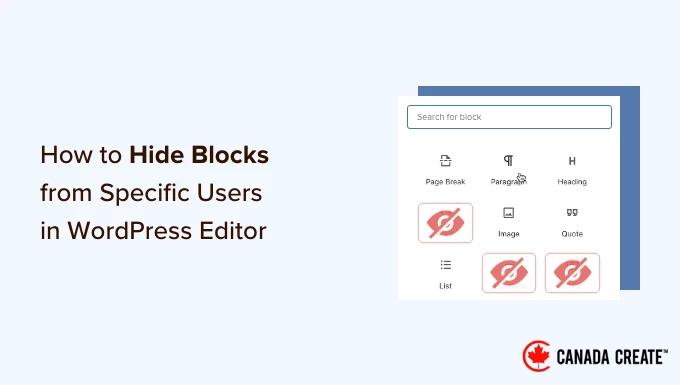
In this guide, we will demonstrate how to easily hide particular blocks from certain users in the WordPress content editor.
Why Should You Hide Blocks from Specific Users in the Content Editor?
WordPress blocks, commonly referred to as Gutenberg blocks, are the content components used to create posts and pages. While having a variety of blocks is beneficial, it can also lead to a disorganized workspace for your team.
Hiding certain blocks for specific user roles provides several important advantages:
- Enhance the Editorial Workflow:A streamlined editor with fewer options enables your content creators to concentrate on writing. They only see the tools that are relevant to their role.
- Preserve Design Consistency:You can conceal layout blocks such as ‘Columns’ or ‘Spacer’ for specific users, ensuring that all blog posts adhere to a uniform and branded template.
- Minimize Errors and Enhance Security:For instance, you might want to hide the ‘Custom HTML’ block from authors to prevent them from inserting code that could disrupt your site. This also allows you to manage the placement of plugin blocks, such as those from WPForms.
It’s crucial to understand that while the WordPress editor allows you to lock individual blocks to stop them from being moved or deleted, it lacks a built-in feature to hide blocks based on different user roles.
This is where a plugin becomes vital, providing you with the exact control you need.
With that in mind, let’s explore how to hide or disable blocks for particular users on your WordPress site.
Concealing Blocks from Specific Users Using a Plugin
The most effective way to manage block visibility according to user roles is by utilizing the PublishPress Blocks plugin. This tool offers greater control over the WordPress block editor and introduces additional blocks like an image slider, search bar, pricing table, and more.
Begin by installing and activating the PublishPress Blocks plugin. The free version is ideal for this tutorial, while the Pro version provides enhanced features, such as the ability to restrict blocks for specific users rather than just user roles.
If you need assistance with installing the plugin, please refer to our guide on how to install a WordPress plugin.
After installation, navigate to the Blocks » Block Permissions settings in your WordPress dashboard.
From the dropdown menu at the top, choose the user role you wish to customize.
To hide a block from the selected user role, simply toggle the switch to disable it.
For instance, in the image below, we will disable the ‘Heading’ and ‘Quote’ blocks for users with the Author role.
Remember to click the ‘Save Block Permissions’ button once you finish.
Additionally, you can select ‘Enable or disable all blocks’ to manage all blocks simultaneously for a specific user role. This feature is useful if the user should not have access to edit your post or page content, such as a subscriber.
Congratulations! You have successfully hidden a block for a specific user role on your WordPress site. You can now repeat this process to manage visibility for other user roles as well.
Common Questions About Hiding Blocks for Specific Users in WordPress
Here are some frequently asked questions from our readers regarding the process of hiding specific blocks on their websites:
Is it possible to hide editor blocks in WordPress without using a plugin?
Yes, you can hide blocks by using custom code to deregister them for certain user roles. This involves adding PHP snippets to your site’s files.
This approach can be risky if you lack development experience. For most users, utilizing a plugin like PublishPress Blocks is the safest and most straightforward option.
What happens to existing content if I choose to hide a block?
Hiding a block will not impact content that has already been published. The content within those blocks will continue to display correctly on your live site.
It simply removes the block from the editor for designated users, preventing them from adding it to new posts or pages in the future.
Can I assign block permissions to an individual user instead of an entire role?
The free version of PublishPress Blocks mainly manages permissions based on user roles (such as Author, Editor, etc.).
For more precise control over individual users, consider upgrading to the premium version of the plugin.
Alternative Methods to Personalize the Block Editor
If you’re looking to enhance the functionality of the Gutenberg block editor, here are some additional suggestions you can explore:
- How to Enable Collaboration in the WordPress Block Editor (Similar to Google Docs)
- How to Change the ‘Add Title’ Placeholder Text in WordPress
- A Beginner’s Guide to Using the Distraction-Free Fullscreen Editor in WordPress
- How to Incorporate a Blog Post Checklist into the WordPress Editor
- How to Easily Create a Custom WordPress Block
- The Ultimate Guide to Customizing the Background Color of the WordPress Block Editor
- How to Turn Off the Fullscreen Editor in WordPress
We hope this article has helped you understand how to hide blocks from specific users in the WordPress editor. You may also want to check out our guide on WordPress post revisions and our expert recommendations for the best Gutenberg block plugins for WordPress.
If you enjoyed this article, please subscribe to our YouTube Channel for WordPress video tutorials. You can also connect with us on Twitter and Facebook.