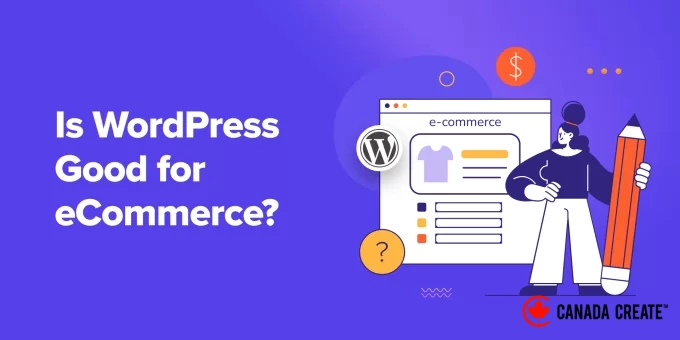
Many people ask, ‘Can WordPress really support a serious eCommerce business?’ We understand why.
The answer may surprise you – WordPress powers some of the largest online stores, including our own, but it may not be the ideal choice for everyone.
While many successful eCommerce stores operate on WordPress, some business owners opt for managed platforms like Shopify. The choice often hinges on understanding the strengths and limitations of WordPress before making a decision.
In this article, we will explore the genuine advantages and disadvantages of utilizing WordPress for eCommerce. These insights are based on years of experience and feedback from business owners who have used WordPress for their online stores.
Reasons to Choose WordPress for eCommerce
WordPress is the leading website builder globally, powering over 43.1% of all websites on the internet. A significant number of these websites are eCommerce stores, including several of our own.
We leverage WordPress for eCommerce due to its flexibility and control. Here are some of the ways we utilize WordPress for our online business:
- We utilize Easy Digital Downloads to sell software. For more details, check out our comprehensive review of Easy Digital Downloads.
- For selling physical products, we utilize WooCommerce, which is perfect for items that need shipping and inventory management. Check out our detailed WooCommerce review for more information.
- We also utilize MemberPress for managing online subscriptions and courses. Discover more in our comprehensive MemberPress review.
After extensively using WordPress as our main eCommerce platform, we confidently recommend it. Here are some compelling reasons why it stands out as an excellent choice:
- 🔓 Complete Ownership: With WordPress, you have full ownership of your eCommerce store. Unlike other platforms, no third party can control how you operate your business.
- 🤝 Extensive Community: By choosing WordPress, you become part of a large community of entrepreneurs. This network provides a wealth of resources, support, and tools to help you thrive.
- 🌍 Greater Flexibility: WordPress supports more payment gateways than any other eCommerce platform. It also enables you to create multilingual stores and manage multiple currencies effortlessly.
- 🚀 Accelerated Growth: WordPress seamlessly integrates with almost every marketing and growth tool available, making it significantly easier to scale your eCommerce business over time.
Based on our experience, WordPress stands out for its flexibility and scalability, making it the preferred choice for creating an online store. It provides exceptional versatility for selling physical goods, digital products, or memberships.
To gain a deeper understanding, read our comprehensive WordPress review that highlights its benefits and drawbacks.
What Are the Advantages and Disadvantages of Using WordPress for eCommerce?
When we began utilizing WordPress for our eCommerce initiatives, we carefully considered both its benefits and potential challenges. It’s crucial to assess these elements before selecting WordPress as your eCommerce solution.
Here’s a summary of the key advantages and disadvantages of using WordPress for eCommerce.
Advantages of Using WordPress for eCommerce
1. WordPress Is Free
The WordPress software is available for free download and use. We have implemented it for various projects, tailoring it to fulfill specific requirements without the burden of initial software costs.
However, you will still need to pay for hosting, a domain name, and additional features. For more information on costs, refer to our guide explaining why WordPress is free and the associated expenses.
2. No Transaction Fees
Unlike many other eCommerce platforms, WordPress does not impose transaction fees. We have significantly reduced costs by only paying fees to payment processors such as PayPal or Stripe.
3. You Have Full Control Over Costs
WordPress empowers you to manage every aspect of your budget. For instance, we have selected specific hosting plans, premium plugins, and marketing tools that align with our business objectives.
This flexibility allows you to reinvest the money you save into expanding your business. Check out our comprehensive guide on eCommerce website costs for an in-depth analysis.
4. Extensive Plugin Options
WordPress boasts over 59,000 plugins. We have utilized plugins to enhance features such as contact forms and improve shopping cart functionality.
Explore some of the top WooCommerce plugins for online stores to discover tools that cater to your store’s specific requirements.
5. Numerous Payment Gateway Options
WordPress is compatible with major payment processors like Stripe and PayPal, along with various regional providers. Accepting online payments is simple, as detailed in our guide on how to accept payments on WordPress.
6. A Wide Variety of Themes and Styles
WordPress offers thousands of themes to help you design your eCommerce store. You can easily customize the design of your eCommerce website to suit your preferences.
We have utilized tools such as SeedProd and Thrive Architect to effortlessly design custom landing pages.
7. Unlimited Products and Sales Potential
With WordPress, you can add an unlimited number of products and make as many sales as you want. This flexibility has enabled us to expand our online stores as needed.
8. Complete Ownership and Control of Your Website
Unlike many other platforms, WordPress guarantees that you maintain ownership of your website. We have successfully migrated websites between hosting providers using backups, ensuring we retain full control over our data and operations.
Drawbacks of Using WordPress for eCommerce
We have leveraged WordPress for numerous eCommerce projects, and while it presents significant benefits, it is crucial to recognize its challenges as well. Being aware of these can help you prepare and find effective solutions as your business expands.
1. Slight Learning Curve Involved
Starting with WordPress involves a bit of a learning process. Like any business software, you’ll need to familiarize yourself with its interface and features to use it effectively.
We have simplified this process by offering free, step-by-step WordPress tutorials. These instructional videos are tailored for beginners and will help you get up to speed quickly.
Based on our experience, most beginners quickly gain confidence with WordPress after some practice, transitioning to advanced users in no time.
2. You Are Responsible for Software Updates and Backups
WordPress requires regular updates to maintain security and introduce new features. As a website owner, you will need to install these updates, which is a straightforward but essential task.
Updating WordPress is simple. Just follow our comprehensive guide on safely updating WordPress, where we outline the process in detail.
Backups are another crucial responsibility. Regular backups ensure you can restore your site if necessary or easily migrate to a new host. We suggest using tools like Duplicator Pro for automated backups and swift restoration.
For more information, check out our guide on maintenance tips for eCommerce websites.
3. Increased Scalability May Lead to Higher Costs
We suggest starting with budget-friendly hosting options like Bluehost or Hostinger. This strategy helps keep your initial expenses low.
As your business expands, your website will require additional resources. You might need to upgrade to managed hosting services like SiteGround, which can increase costs.
Nevertheless, we have found that the flexibility of WordPress makes this investment worthwhile, as it enables your business to grow sustainably.
4. You Are Responsible for Your Website’s Security
With WordPress, ensuring your website’s security is up to you. This involves taking proactive measures to safeguard your site against potential threats.
Fortunately, many hosting providers offer built-in security features. Additionally, services like Cloudflare CDN and plugins such as Sucuri provide extra layers of protection.
These services also include a firewall that blocks harmful traffic before it can reach your website. For more information, check out our guide on eCommerce security tips.
What eCommerce Solutions Can You Use with WordPress?
When evaluating eCommerce platforms, you’ll find that some are better suited for specific product types while others may not perform as well.
For example, Shopify excels at selling physical products that require shipping but is not ideal for offering online courses.
In contrast, WordPress stands out as the only eCommerce platform that effectively supports the sale of all types of products and services through its robust add-ons.
Here are some of the leading eCommerce solutions compatible with WordPress, tailored to fit your business needs.
- WooCommerce – As a free WordPress plugin, WooCommerce is the world’s leading eCommerce platform. It empowers you to build any type of online store, enabling sales of both physical goods and digital products.
- MemberPress – An effective eCommerce platform designed for selling subscription-based products such as online courses, premium content, pay-per-view websites, community memberships, and more.
- WP Simple Pay – Ideal for those selling a limited number of products or services, WP Simple Pay simplifies the process of accepting online payments without the need for a shopping cart plugin on your site.
- MyPayKit – If you’re already using Square for in-person payments, MyPayKit allows you to easily accept payments on your website as well. Just integrate Square payment forms and start selling online.
- Easy Digital Downloads – Specifically designed for selling digital products like software, eBooks, music, digital art, and more.
- WPForms Payments – This tool enables you to accept online payments by creating custom payment forms, making it perfect for selling individual products, services, online bookings, and more.
How Does WordPress Compare to Other eCommerce Platforms?
WordPress stands strong against leading eCommerce platforms, excelling in flexibility, cost-effectiveness, and widespread accessibility.
What Advantages Does WordPress Offer Over Other eCommerce Platforms?
- WordPress helps you save money when launching your eCommerce business. You can start with minimal investment and only pay for the tools and services you actually need.
- WordPress does not charge fees for individual transactions, allowing you to develop a long-term sustainable business model.
- There are no limits on the number of products or sales you can achieve. Many leading eCommerce platforms require you to upgrade your plan once you hit a specific limit on products or sales.
- You have complete ownership of your website and its data, enabling you to transfer it to any other hosting service or eCommerce solution as needed.
For further information, check out these comparisons of different platforms:
- WooCommerce vs. Shopify
- WooCommerce vs. BigCommerce
- WordPress vs. Squarespace
- WordPress vs. Wix
How to Launch an eCommerce Business with WordPress
To launch your eCommerce venture using WordPress, you will first need to create a WordPress website.
There are two versions of WordPress available.
The first is WordPress.org, which is the software we discussed in this article and is our recommended option. The second is WordPress.com, a hosted website platform similar to Wix or Squarespace. For more details, refer to our article comparing WordPress.com and WordPress.org.
To get started with WordPress.org, you will need a hosting account and a domain name.
Typically, the cost for basic hosting plans begins at $7.99 per month, usually billed annually, while domain registration is approximately $16.99 per year.
Fortunately, Bluehost is offering CanadaCreate users an exclusive discount on hosting along with a complimentary domain name. You can kickstart your website for just $1.99 per month.
As previously mentioned, WordPress provides a wide range of options. You can also consider starting with Hostinger or any of these leading WordPress hosting providers.
When you register with Bluehost, they will automatically set up WordPress for you. All other hosting providers also feature a 1-click WordPress installation option available in your hosting account.
Need additional assistance? Check out our tutorial on how to launch an online store with detailed, step-by-step guidance.
Helpful Tip:If you require professional help in setting up your eCommerce store on WordPress, consider utilizing CanadaCreate Pro Services for expert support.
We hope this article clarified whether WordPress is suitable for eCommerce, along with its advantages and disadvantages. You may also want to explore our guide onleveraging automation to boost WooCommerce sales or check out our comprehensive eCommerce setup guide.
If you enjoyed this article, consider subscribing to our YouTube Channel for insightful WordPress video tutorials. You can also connect with us on Twitter and Facebook.