Selling digital products has transformed my life in incredible ways, providing opportunities I never imagined possible.
When I began my journey in digital downloads over a decade ago, I quickly realized the immense potential of this business model.
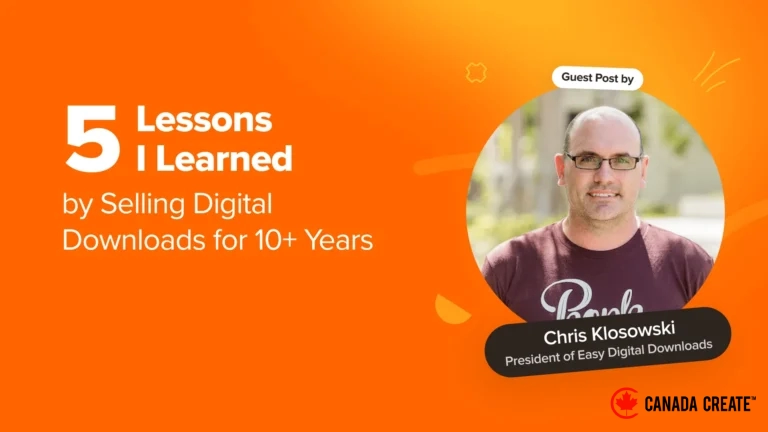
Currently, I serve as the President of Easy Digital Downloads, where I have assisted thousands of entrepreneurs and small businesses in converting their expertise into profitable digital products.
These digital offerings include eBooks, software, online courses, and various documents, all marketed through WordPress websites.
Through years of experience in selling digital products and guiding others, I have gained valuable insights into what strategies are effective and which ones fall short.
In this guide, I will outline five crucial lessons that can significantly enhance your chances of success. These insights will help you sidestep common pitfalls and accelerate the growth of your digital product business.
Important Note:This article is a guest contribution from Chris Klosowski, the President of Easy Digital Downloads, recognized as the leading digital eCommerce plugin for WordPress. We feature expert columns every other Thursday, inviting WordPress specialists to share their knowledge with our audience.
What Are the Benefits of Selling Digital Downloads for Passive Income?
Creating and selling digital downloads is one of the most effective ways to earn a passive income online with minimal effort.
Success Doesn’t Require High Traffic
While you can generate income through advertising, it often requires significant traffic to be profitable, which can be a time-consuming and tedious process.
With affiliate marketing, you lack control over the quality of the products you promote.
Selling digital products gives you complete control over your offerings. You don’t need a large audience; instead, focus on attracting the right target market that is genuinely interested in your products.
For example, Sam Parrett from SetSailStudios.com successfully monetizes his website by creating and selling niche-specific downloadable fonts, which aligns perfectly with his passion as a graphic designer.
Unlike those who rely on ads for monetization, he doesn’t need to choose a broad niche he’s unfamiliar with or create content solely to drive higher traffic.
For him, producing and selling digital downloads in a niche he knows well is more straightforward than generating revenue through ads in a wider market.
Create Once, Sell Indefinitely
Digital products offer distinct advantages over physical goods.
You will never run out of inventory since digital products can be sold repeatedly without limits. This eliminates the need for inventory management and restocking.
You won’t incur storage costs or spend time packaging and shipping items to customers. Anyone worldwide can easily purchase and download a digital file, allowing you to sell from home with minimal investment.
1. Select a Digital Product Aligned with Your Expertise
The key to selling digital downloads lies in the product itself; your first task is to determine which products to offer. There are many popular digital product ideas to consider.
eBooks are among the most sought-after digital products for monetization. However, you can also sell music, videos, or audiobooks depending on your area of expertise.
If you’re looking for inspiration, here are examples from our customers who successfully sell various digital products:
- EscapeRoomGeeks.com: They design and sellPrintable Escape Room Kitsdesigned for various age groups. Customers can purchase a kit or a bundle of kits, download the printable materials, set up the challenges, and then a group of kids can attempt to solve them.
- BrushGalaxy.com: Brush Galaxy is an online marketplace where you can buy and sellcustom brushes for Procreate(the leading digital illustration app for iPads)
- MrsMactivity.co.uk: This website offers membership access to thousands of creative resources aligned with primary education curricula.
When selecting a new product, ensure it aligns with your expertise and the format you are comfortable working with.
2. Ensure Your Product Addresses a Specific Need
You need to develop a product that addresses a genuine need. Ultimately, potential customers will visit your website only if it provides a solution to their problem.
Consider the following questions: Why would someone choose to buy your product? What specific issue are you aiming to resolve?
I have found that crafting a mission statement can help clarify these questions.
The statement should clearly outline the specific problem(s) you are aiming to address.
You can present these as benefits on your website.
This approach will establish a loyal customer base and ensure that you fulfill your customers’ expectations throughout the post-purchase experience.
3. Identify Your Target Audience
The next important question is, ‘Who is your target audience?’ Take some time to reflect on this and write down your insights.
Develop a comprehensive profile of your ideal customer. Visualize their characteristics and preferences clearly.
Keeping this customer in mind at every stage will help you stay focused. Consider them when adding new features, crafting your website content, and troubleshooting issues.
For instance, one of our clients, Mrs Mactivity Resources, successfully sells online resources for Early Years educators. Their website clearly defines their target audience, allowing teachers to easily determine if the resources are suitable for them.
4. Select the Right Selling Platform
There are numerous platforms available where you can effortlessly sell digital products.
You can choose to sell your products on a third-party marketplace or set up your own online store. Be cautious, as switching platforms later can be challenging, so research thoroughly before making your choice.
Sell on a Third-Party Marketplace
While third-party marketplaces offer easy sign-up and low initial costs, they charge high transaction fees of up to 30% on each sale.
You do not own your data; you merely lease it. Your product listings, customer details, and sales data are hosted on another company’s server, making it challenging to switch platforms later.
Consider Building Your Own Online Store
Another option is to set up your own digital download store using WordPress, the leading platform for creating websites and online shops.
With a digital eCommerce solution like Easy Digital Downloads, you incur no transaction, monthly, or listing fees.
Additionally, you will have full ownership of your data. License keys are stored in your WordPress database, along with purchase data and customer information. This allows for easy migration to a new website if needed.
Follow these step-by-step instructions to create your own digital downloads store.
5. Set an Optimal Price to Maximize Your Revenue
When pricing your products, keep these three important principles in mind.
Simplify the Decision-Making Process for Your Customers
The first essential aspect of your product offering is to simplify the decision-making process for customers. This is particularly important when you have a wide range of products, as it can be challenging for potential buyers to identify which item best addresses their needs.
Many of our clients effectively address this issue through product bundling. By grouping similar items together or those that contribute to a specific outcome, customers can avoid the hassle of selecting individual products. Instead, they pay a single price and receive all the items in the bundle.
Bundles are an excellent solution for alleviating choice overload. They also enhance your pricing page by allowing you to showcase bundles rather than listing every single product individually.
Additionally, bundles can help lower your refund rates. Without a bundle, a customer might choose Product A when they actually need Product B, leading to refund requests. With a bundle, they receive both options and can select the one that best fits their needs.
Avoid Competing on Price Alone
Competing solely on price can hinder your business growth.
You may encounter a competitor offering thousands of PDF documents and printables for just $1.25. It can be tempting to view that as the benchmark for your pricing.
This approach could hinder your growth as well.
Online businesses typically factor in all their expenses in their pricing, which includes web hosting, domain registration, software licenses, email marketing services, and more.
It’s crucial to recognize that there are additional expenses, known as soft costs, associated with running a business, such as customer support. If your pricing is too low, the first customer support inquiry could consume any profits from the initial sale.
Be mindful of your soft costs, as they can significantly impact your profits. Ensure that you incorporate these costs into your pricing strategy.
Test Different Pricing Strategies
Feel free to experiment with your pricing. Adjusting your prices slightly can help you discover the optimal point for maximizing conversions.
If your product effectively addresses a problem, attracting customers should be manageable. However, it’s essential to identify the price point that ensures profitability, and testing different prices can assist in this process.
That’s all!
I hope these actionable insights help you kickstart your journey in selling digital downloads. You might also find these additional resources on selling digital downloads with WordPress useful:
- Beginner’s Guide to Selling Digital Downloads on WordPress
- Creating a Digital Product Marketplace Using WordPress
- Top Digital Products You Can Sell Online
- Step-by-Step Guide to Selling Videos Online with WordPress
- Step-by-Step Guide to Selling Music Online with WordPress
- Comprehensive Guide to Selling Fonts Online with WordPress
- Step-by-Step Guide to Adding Ebook Downloads in WordPress
- How to Create a Customer Reviews Page in WordPress
- Beginner’s Guide to Setting Up a Referral Program in WordPress
If you enjoyed this article, please subscribe to our YouTube Channel for WordPress tutorials. You can also connect with us on Twitter and Facebook.